Pull up a chair. Let’s take this one clear step at a time. If my little hedgehog sidekick could fit inside your freezer drawer, I would, because I love a stash of meatballs for fast spaghetti nights and cozy soup upgrades.
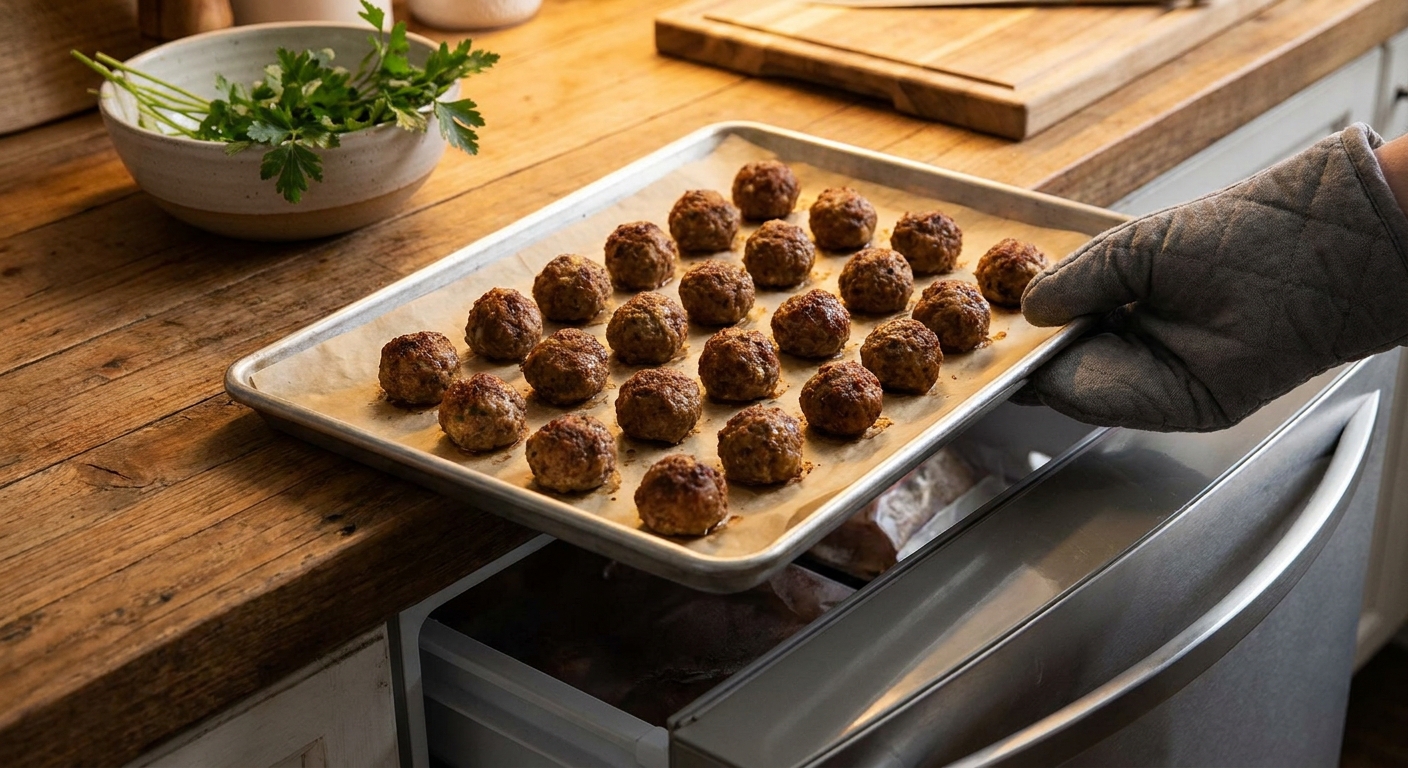
This guide is all about storage and reheating. If you already have a favorite meatball method, great. The trick is freezing them so they stay separate, avoid freezer burn, and reheat juicy.
Before you freeze: cooked vs uncooked
You can freeze meatballs either way. Here’s how I decide:
- Freeze cooked meatballs if you want the fastest future dinners. They reheat straight from frozen and are easier to portion.
- Freeze uncooked meatballs if you want the freshest texture later or you plan to bake them the day you serve them.
Food safety note: Work quickly and keep raw meatballs cold. Do not leave raw meatball mixture sitting out at room temperature.
The best method: tray freezing
Tray freezing is the freezer equivalent of giving every meatball its own little bubble of personal space. Once they are frozen solid, you can toss them into a bag without them turning into a single meatball boulder.
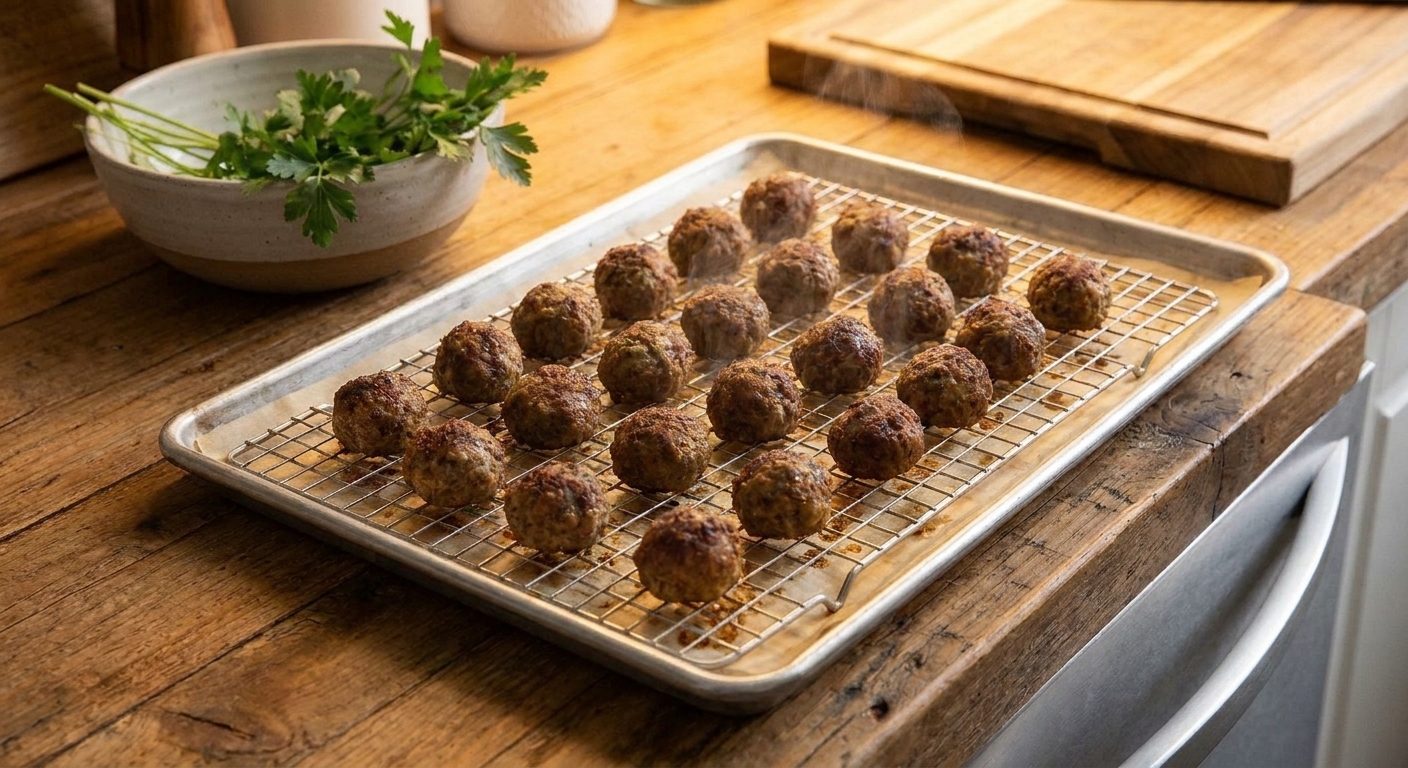
How to tray-freeze cooked meatballs
- Cool safely and quickly. Spread cooked meatballs on a plate or baking sheet so heat can escape. Let them cool briefly, then refrigerate until fully cold. (Do not leave cooked meatballs out for more than 2 hours, or 1 hour if your kitchen is very warm.)
- Line a baking sheet with parchment paper or a silicone mat.
- Arrange meatballs in a single layer with a little space between them.
- Freeze until solid, about 1 to 2 hours (longer for jumbo meatballs).
- Transfer to a freezer bag or container and label.
Why this helps: Freezing while warm can trap steam in the container, which turns into ice crystals and can rough up the texture later. Cold meatballs freeze faster and cleaner.
How to tray-freeze uncooked meatballs
- Shape the meatballs and place them on a parchment-lined baking sheet.
- Freeze until firm, 1 to 2 hours.
- Transfer to a freezer bag or airtight container and label.
Helpful tip: If your uncooked meatballs feel soft, chill the tray in the fridge for 15 to 20 minutes before freezing. Cold meatballs keep their shape better.
Packaging that prevents freezer burn
Air is the enemy of good freezer flavor. Your goal is to keep meatballs airtight and protected.
- Freezer bags: Great for saving space. Press out as much air as possible before sealing. For extra air removal, try the water-displacement method: seal the bag almost closed, lower it into a bowl of water (keeping the zipper above the waterline), then finish sealing as the water pushes air out.
- Vacuum sealer (optional): The neatest, least fussy way to remove air if you have one.
- Airtight containers: Great for preventing squishing. Choose a container that fits the portion you will use so there is less empty space.
- Extra protection for longer storage: Wrap tray-frozen meatballs in a layer of foil or plastic wrap before bagging if you know they will sit for a while.
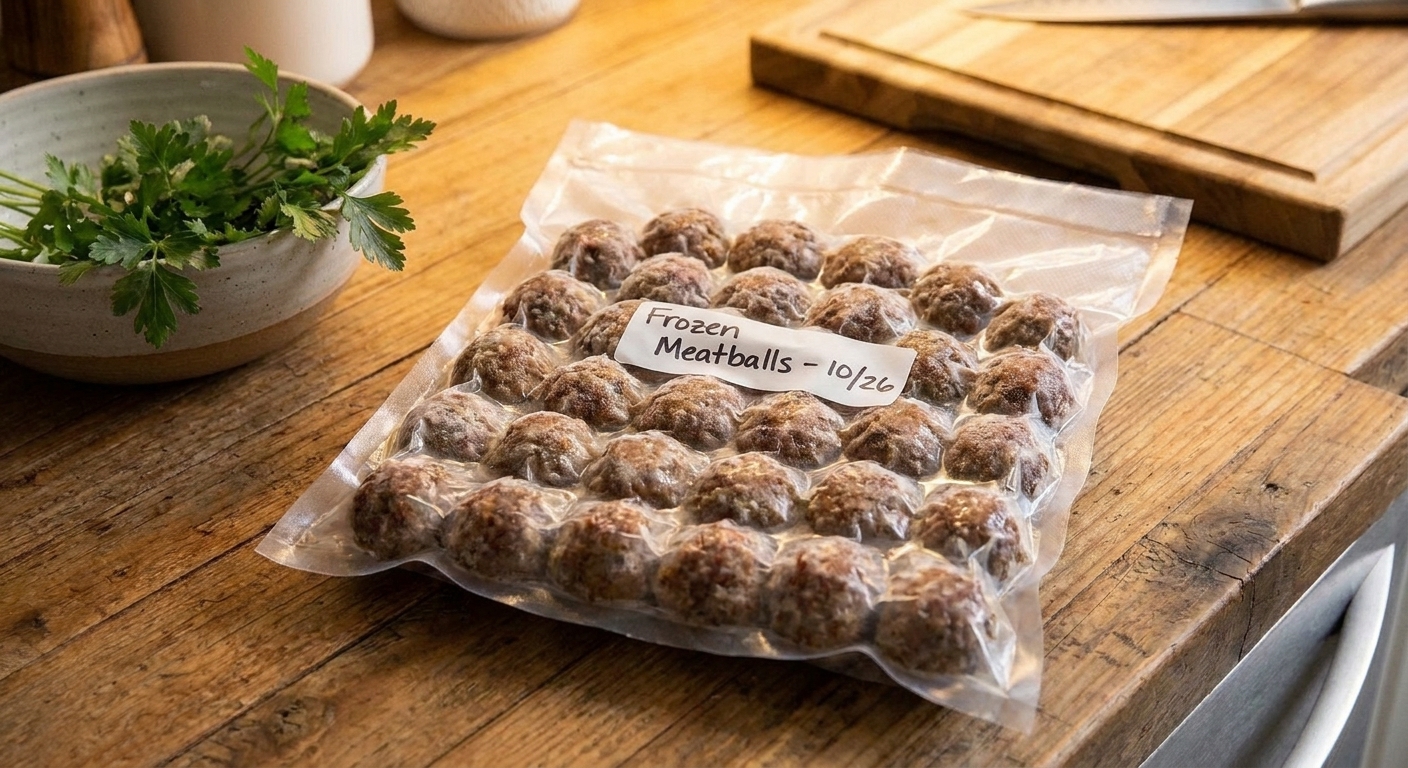
How to label meatballs
Labels turn “mystery freezer meat” into “dinner plan.” On each bag or container, write:
- What it is: Meatballs (beef, turkey, chicken, pork, or mixed)
- Cooked or uncooked
- Count or weight: 12 meatballs, 1 pound, etc.
- Date
- Optional: Sauce type if they are frozen in sauce (marinara, Swedish-style gravy, etc.)
Portion idea: Freeze in dinner-sized packs, like 10 to 12 meatballs for spaghetti night, and smaller packs for lunches.
How long do meatballs last?
Frozen food stays safe longer if it remains frozen solid, but quality drops over time. For best taste and texture:
- Cooked meatballs: best within 2 to 4 months
- Uncooked meatballs: best within 1 to 2 months
- Meatballs frozen in sauce: best within 2 to 3 months
Freezer tip: Set your freezer to 0°F (or colder) for best results, and store meatballs toward the back where the temperature is most stable. The door is the warmest, most sloshy part of the freezer.
Thawing meatballs
You do not always need to thaw meatballs before reheating, but thawing helps them warm more evenly.
- Best method: Thaw overnight in the refrigerator.
- Faster method: Place the sealed bag in a bowl of cold water for 30 to 60 minutes, changing the water once or twice if needed.
- Avoid: Thawing raw meatballs on the counter at room temperature.
How to reheat meatballs
The secret is gentle heat and a little moisture. Meatballs dry out when they are blasted with high heat or reheated too long.
Best option: simmer in sauce
This is the coziest, most forgiving method.
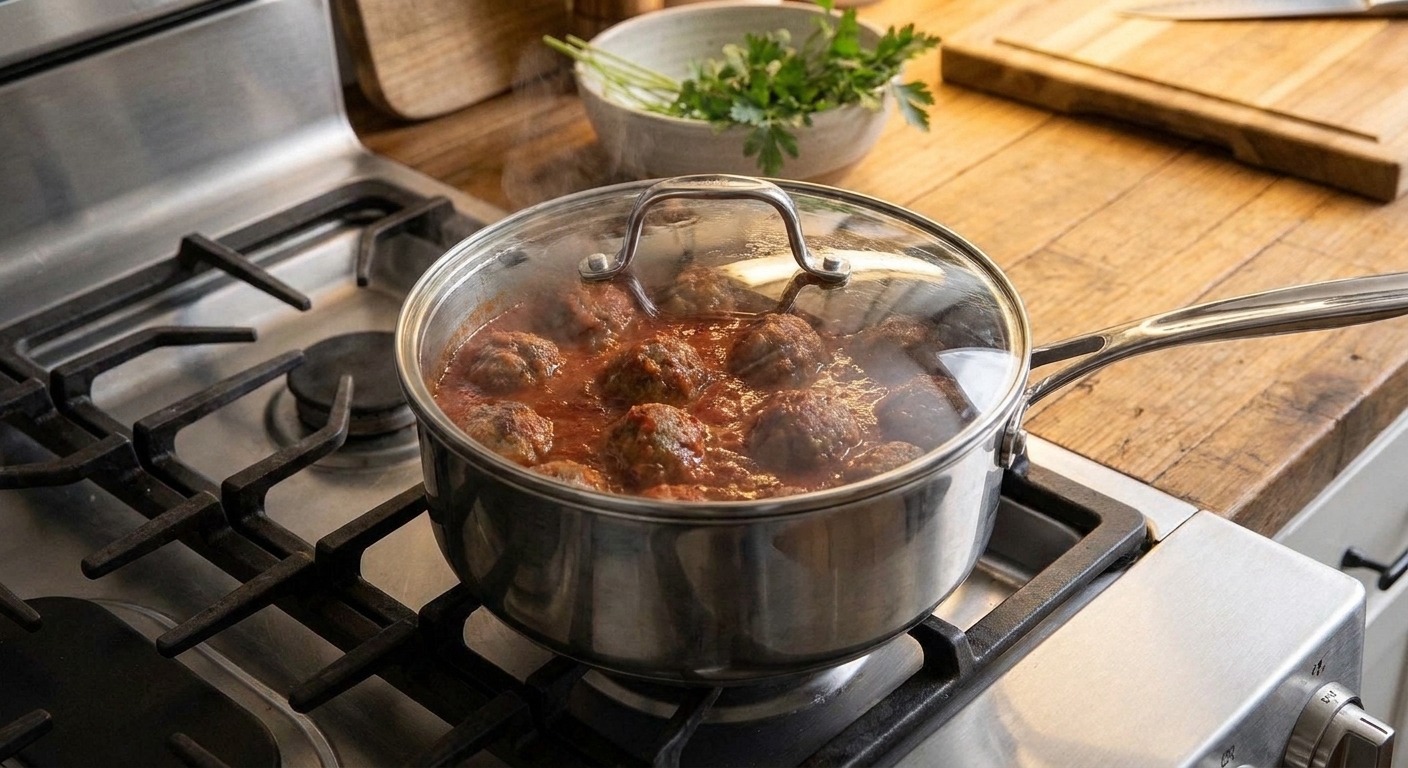
- Add sauce to a saucepan and bring to a gentle simmer.
- Add meatballs (frozen is fine), cover, and cook on low, stirring occasionally.
- Timing: plan on about 15 to 20 minutes for average-size meatballs from frozen, or 8 to 12 minutes if thawed. Jumbo meatballs can take longer.
- Cook until hot all the way through. If you use a thermometer, aim for 165°F in the center.
Temperature note: 165°F is a solid universal target (and especially important for poultry). For fully cooked beef or pork meatballs, you can also reheat just until they are steaming hot throughout.
Oven reheat: keep it covered
- Place meatballs in a baking dish with a splash of broth, water, or sauce.
- Cover tightly with foil.
- Bake at 325°F to 350°F until heated through.
- Timing: about 20 to 30 minutes from frozen for average-size meatballs, or 15 to 20 minutes if thawed.
Why it works: The foil traps steam so the meatballs heat gently instead of drying out.
Microwave reheat: short bursts
- Place meatballs in a microwave-safe bowl with a spoonful of sauce or a splash of broth.
- Cover loosely.
- Microwave in 30 to 45 second bursts, stirring and turning meatballs between bursts.
- Timing: many portions land around 2 to 4 minutes total, depending on your microwave and meatball size.
Pip’s tiny kitchen warning: Microwaves love making one meatball lava-hot and the next one chilly. Stirring fixes a lot.
Air fryer: crisp edges
If you like a browned outside, the air fryer is great, but it can dry meatballs if you overdo it.
- Air fry at 320°F to 350°F until hot inside, shaking the basket once.
- Timing: about 8 to 12 minutes from frozen for average-size meatballs, less if thawed.
- For extra insurance, brush with a little olive oil or serve with warm sauce on the side.
Freezing meatballs in sauce
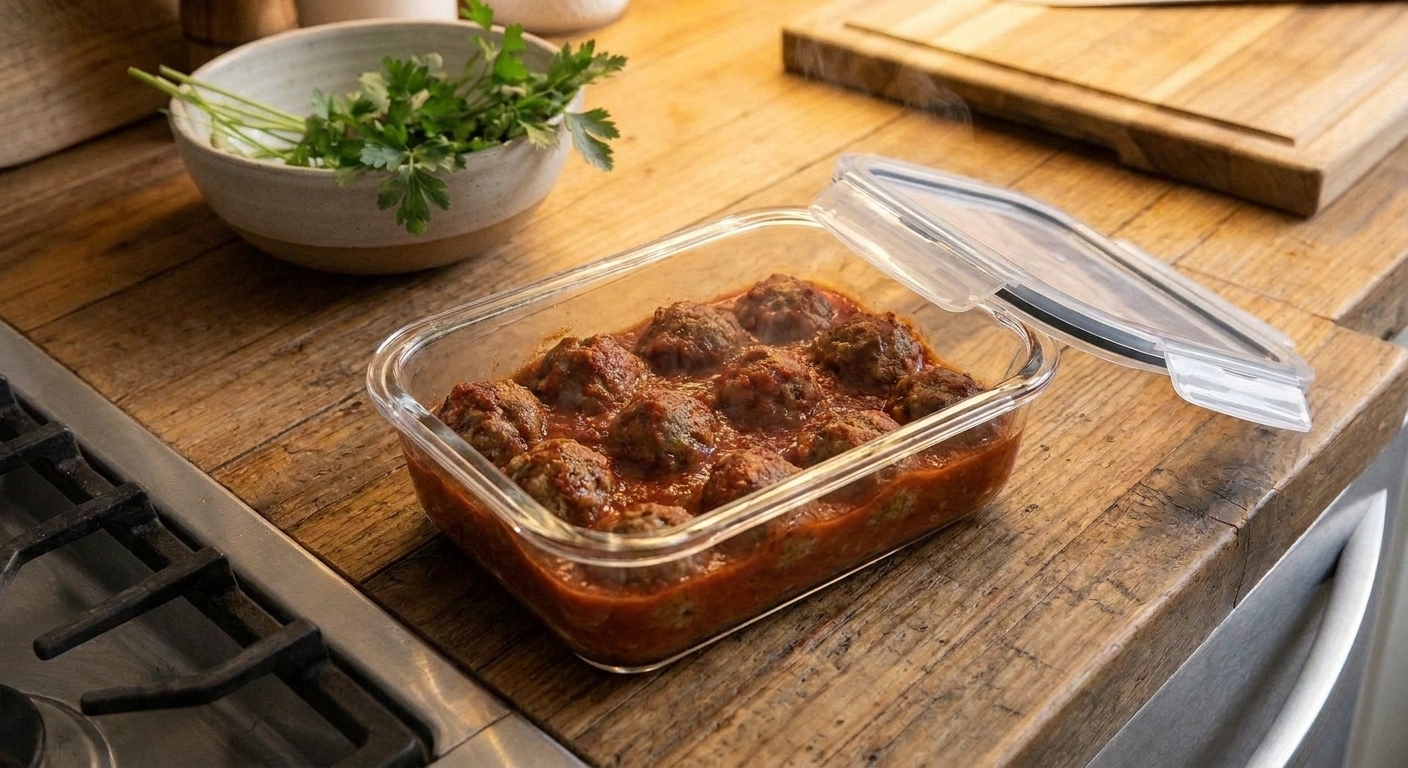
Yes, and it is a smart move for easy dinners. Cool the meatballs and sauce safely, then pack into freezer-safe containers or bags.
- Cool quickly, then chill: Let sauce cool briefly, then refrigerate until cold before freezing.
- Leave a little headspace in containers because liquids expand as they freeze.
- Freeze flat in bags for quick thawing and neat stacking.
Common freezer problems
Meatballs stuck together
They were bagged before they froze solid. Next time, tray-freeze first, then bag.
Dry or crumbly after reheating
- Reheat in sauce or covered with a splash of liquid.
- Use lower heat and more time, not high heat and panic.
- Stop reheating as soon as they are hot all the way through.
Freezer burn
That is usually air exposure. Press out air, use freezer-grade bags, and aim to use within the best-quality window.
Quick FAQ
Is it better to freeze meatballs cooked or uncooked?
For convenience, cooked wins. For the freshest just-cooked texture later, uncooked is great. Both freeze well when tray-frozen and sealed airtight.
Can I cook meatballs from frozen?
Yes. Cooked meatballs can be reheated from frozen in sauce, in the oven (covered), or in the microwave with moisture. Uncooked meatballs can be baked from frozen too, but they will take longer and the outside can brown before the center is cooked. If baking uncooked meatballs from frozen, consider covering the pan for the first part of baking, and always cook until they reach 165°F internally.
How many times can I refreeze meatballs?
It is best to avoid refreezing once thawed, especially for raw meatballs. Portion into smaller freezer packs so you only thaw what you need.