
I love zucchini bread season for exactly one reason: it turns a garden problem into a loaf you can eat for breakfast. The only downside is the prep. Shredding zucchini is not hard, but it is one more step on a day when you are already juggling dinner, dishes, and someone asking for a snack while you are holding a box grater.
The fix is simple. Freeze shredded zucchini now, and bake the loaf later. The key is freezing it in a way that matches how zucchini bread recipes actually work, so you do not thaw a bag of watery green confetti and accidentally dilute your batter.
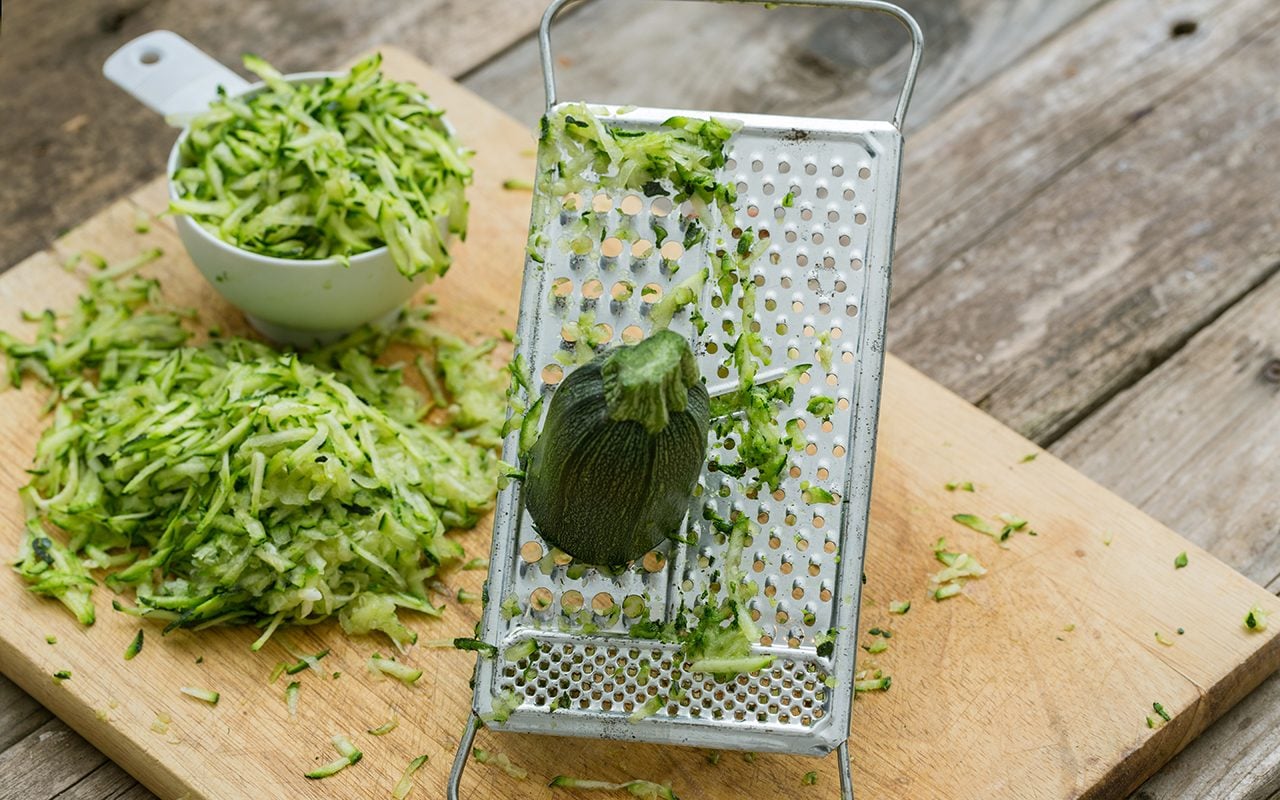
Should you salt and squeeze shredded zucchini before freezing?
For zucchini bread, you have two good options. Which one you pick depends on how you like your baking to go.
Option 1: Freeze it unsqueezed (my weeknight-friendly default)
If your goal is quick future loaves, freeze the zucchini raw and not squeezed. Most zucchini bread recipes are written for zucchini that still has moisture in it. That moisture is part of why the loaf stays tender.
Best for: zucchini bread, muffins, quick breads, pancakes, and anything where a little extra moisture is welcome.
Option 2: Salt and squeeze first (best if your zucchini is extra watery)
If your zucchini is huge, older, or visibly watery, salting and squeezing can make your future baking more consistent. This is also smart if you know you are going to be using a recipe that expects well-drained zucchini.
How to do it:
- After shredding, toss zucchini with about 1/2 teaspoon Diamond Crystal kosher salt per pound of shredded zucchini (or about 1/4 teaspoon Morton kosher salt).
- Let it sit 10 to 15 minutes.
- Squeeze very well in a clean kitchen towel or several layers of paper towels.
Important: If you salt first, you are seasoning the zucchini. In sweet bread, that small amount is usually fine, but it can add up if you go heavy-handed. Stick to a light, measured salt, and squeeze well.
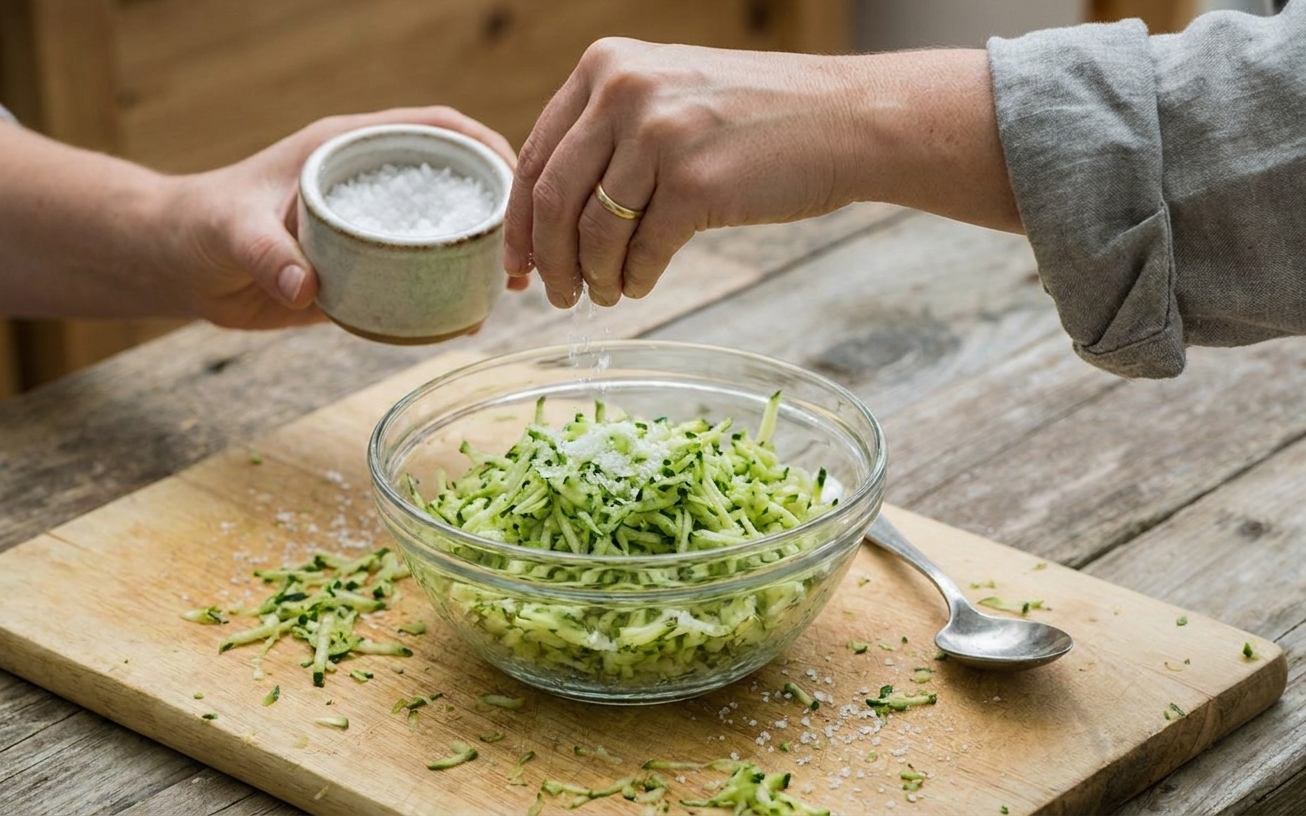
How to prep shredded zucchini for the freezer
Step 1: Wash, trim, and decide on peeling
Wash zucchini well and trim the ends. Peeling is optional. For breads, I usually leave the skin on. It disappears into the loaf and adds little green flecks that say, yes, there is a vegetable in here.
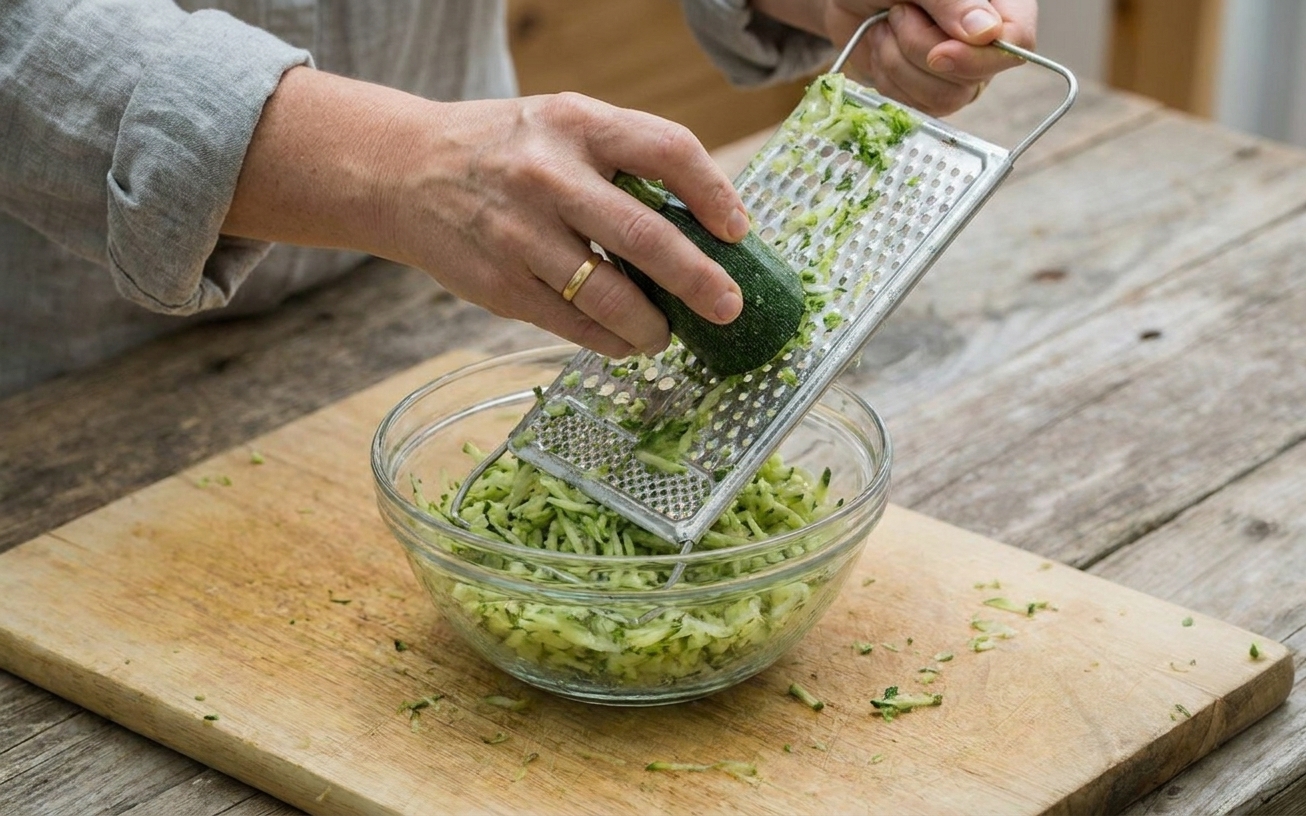
Step 2: Shred it
Use the large holes on a box grater, or a food processor shredding disk if you are doing a big batch.
Quick tip: If you are freezing a lot, shred directly into a big bowl set in the sink. Zucchini gets slippery and likes to escape.
Portioning: the one step that saves you later
Portion before freezing. Future-you does not want to chisel zucchini out of a frozen brick.
Best portion sizes for baking
Many zucchini bread recipes call for 1 to 2 cups shredded zucchini per loaf. I like freezing in these two sizes:
- 1-cup portions: flexible, easy to combine
- 2-cup portions: grab-and-go for a typical loaf
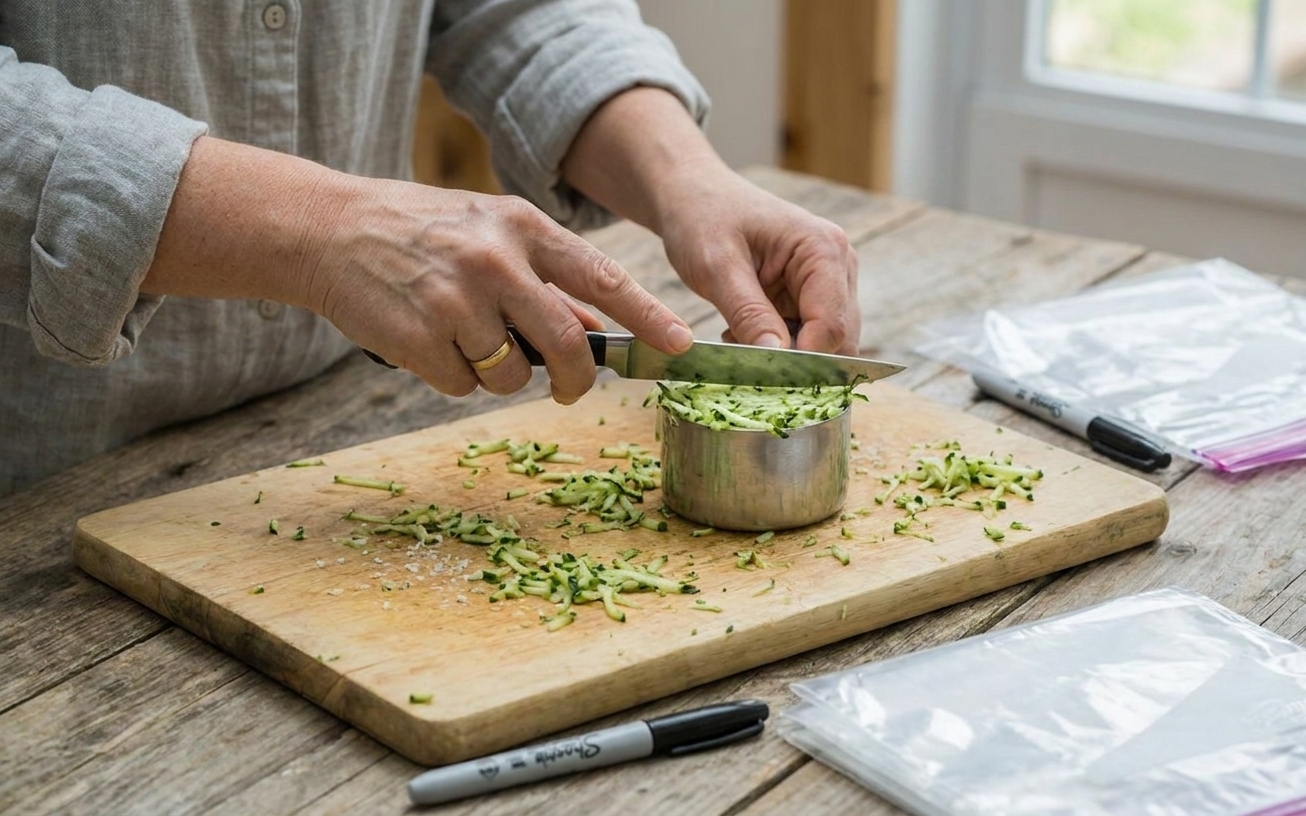
How to portion accurately: Pack shredded zucchini lightly into a dry measuring cup, then level it. Do not mash it down hard.
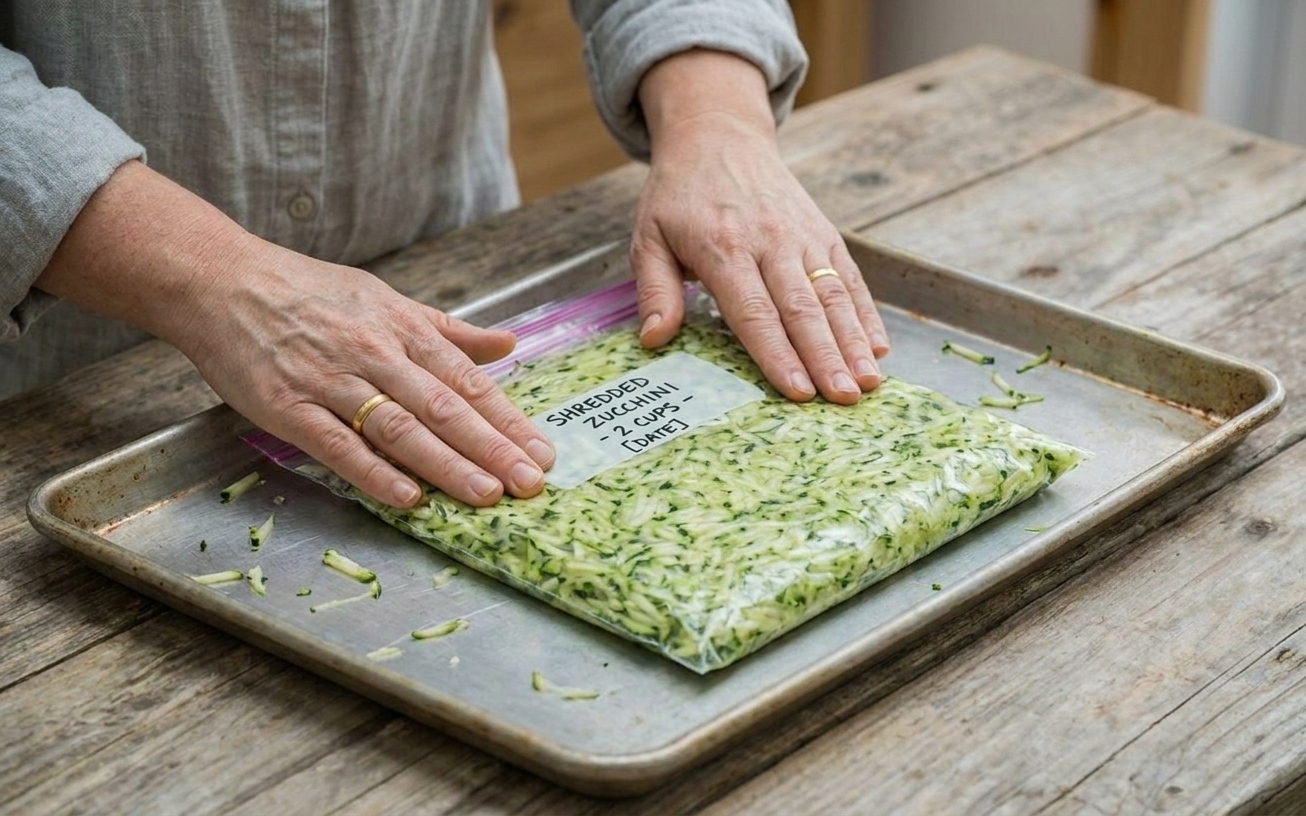
Label it like you will actually thank yourself for later: write the portion size, the date, and whether it was squeezed or unsqueezed.
How to freeze shredded zucchini (two methods)
Method 1: Freezer bags (best all-purpose option)
- Spoon zucchini into a freezer-safe zip-top bag in your chosen portion size.
- Press out as much air as you can.
- Flatten the bag into a thin layer so it freezes quickly and stacks neatly.
- Freeze flat on a baking sheet until firm (often about 1 hour), then stack.
Extra insurance against freezer burn: Double-bag if you tend to get freezer burn easily or your freezer air runs dry.
Method 2: Muffin tin portions (great for 1/2-cup pucks)
- Pack shredded zucchini into a muffin tin, about 1/2 cup per well.
- Freeze until solid.
- Pop out the frozen pucks and store them in a freezer bag.
This is especially handy if you bake muffins a lot and want smaller, consistent add-ins.
How long does frozen shredded zucchini last?
For best texture in baking, I try to use frozen shredded zucchini within 3 to 6 months. If it stays properly packaged and continuously frozen at 0°F, it will generally keep longer, but quality slowly slides. With zucchini, that usually shows up as softer texture and a flatter flavor.
Signs it is past its prime: lots of ice crystals inside the bag, grayish spots, or a strong freezer smell. That is your cue to compost it and start fresh.
How to thaw shredded zucchini without watery batter
When zucchini thaws, it releases liquid. That is normal. What matters is what you do with that liquid.
For zucchini bread: thaw, then drain well
- Thaw overnight in the fridge in a bowl or on a plate (still in the bag).
- Or thaw faster by placing the sealed bag in a bowl of cold water for 30 to 60 minutes.
- Do not thaw at room temperature on the counter.
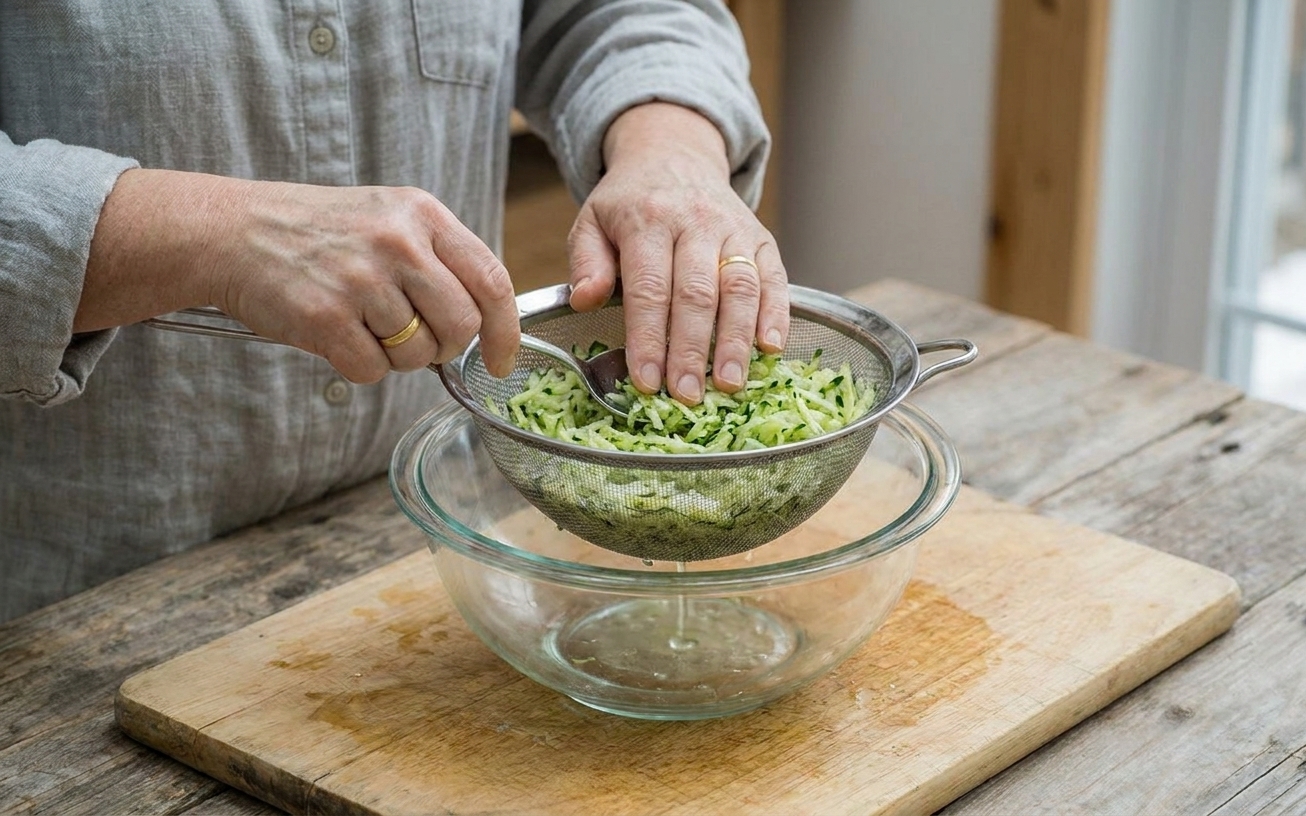
- Once thawed, dump zucchini into a fine-mesh strainer and let it drain for 5 to 10 minutes.
- Then give it a gentle squeeze with your hands or press with the back of a spoon.
The goal: You want it damp, not dripping. If you squeeze it bone-dry, you can end up with bread that bakes up a little more cakey and less tender.
Measuring tip (this saves a lot of recipe drama): For the most consistent results, thaw, drain, squeeze to damp, then measure the amount your recipe calls for. Frozen zucchini varies a lot in how much water it lets go, so measuring after draining keeps your batter more predictable.
Do you ever add the zucchini to batter still frozen?
You can, but I only recommend it if you are experienced with the recipe and you know it is forgiving. Frozen zucchini can clump, and the extra-cold ingredient can slow down mixing and make it harder to judge batter thickness.
If you are aiming for reliably moist zucchini bread, thawing and draining is the low-drama move.
Quick troubleshooting
Your thawed zucchini is swimming in liquid
Drain it longer, then squeeze gently. If it is still very wet, squeeze a bit more. You can also reduce other liquid ingredients slightly in your bread recipe, but do that only if you know the recipe well.
Your thawed zucchini seems dry and stringy
That usually happens when it was squeezed hard before freezing and then squeezed again after thawing. Next time, freeze it unsqueezed, or squeeze more gently after thawing.
Your bag is full of ice crystals
That is usually excess air or slow freezing. Next time, press out more air and freeze the bag flattened in a thin layer.
My favorite future loaf routine
If I am shredding zucchini anyway, I go all in:
- Freeze in 2-cup portions for easy zucchini bread days.
- Label with the portion size, date, and whether it is squeezed or unsqueezed.
- Thaw in the fridge the night before I bake, then drain, squeeze to damp, and measure for my recipe.
Then when you are ready, bake your zucchini bread using your go-to loaf recipe separately. This page is all about setting you up with bread-ready zucchini, not making the loaf itself. Save the baking for when you actually want the kitchen to smell like cinnamon and cozy carbs.
FAQ
Can you freeze shredded zucchini with the skin on?
Yes. The skin softens after freezing and baking, and it blends right into quick breads.
Do you need to blanch zucchini before freezing?
Not for zucchini you plan to bake into bread. Blanching is mainly used to slow enzyme activity, which helps preserve color and flavor during long freezer storage. For zucchini bread, raw shredded zucchini freezes well and bakes up just fine.
Should you remove zucchini seeds before shredding?
Small and medium zucchini are fine as-is. If you have a giant zucchini with large, watery seeds, scoop out the seedy center before shredding. That helps keep your frozen portions from turning into a puddle later.
What containers are best for freezing shredded zucchini?
Freezer bags are the easiest because you can flatten them for fast freezing and neat stacking. Freezer-safe containers work too, but leave a little headspace and expect a slower freeze.