Prime rib leftovers are a tiny kitchen miracle. But the moment you blast them in the microwave, that miracle can turn into a chewy, gray situation. The goal is simple: warm the meat without cooking it again. That means low heat, a little moisture, and stopping at the right temperature so the center stays rosy.
The key idea: warm, not done
Prime rib is already cooked to your preferred doneness. Reheating is just bringing it back to a cozy serving temperature. If you push it too far, you squeeze out moisture and the interior turns from pink to tan.
Best internal temps for reheated prime rib
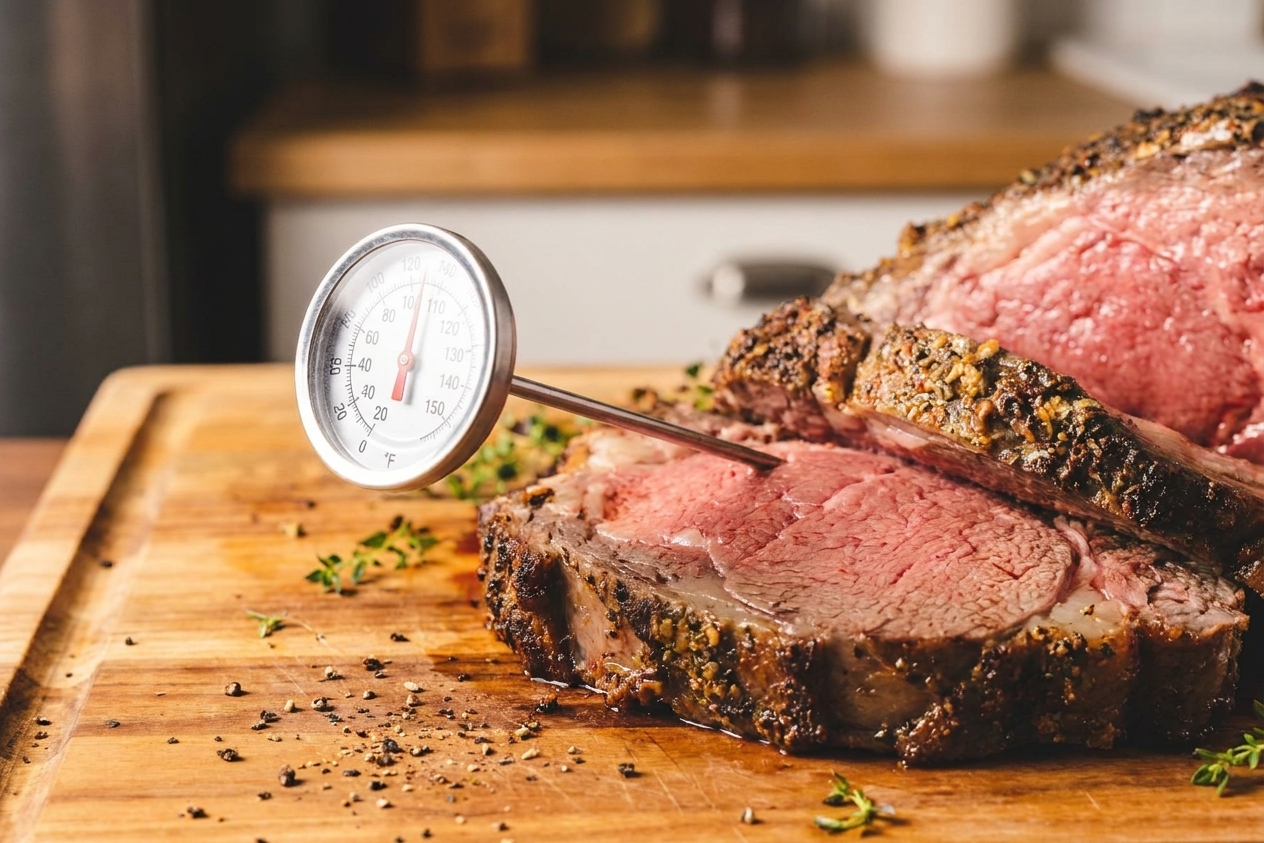
- Warm and rosy (ideal): 110 to 120°F in the center
- Still okay, but closer to medium: 125 to 130°F
- Avoid for texture: 135°F and up (you are recooking it)
Food safety note: Official leftover guidance commonly recommends reheating foods to 165°F. Prime rib is one of those leftovers people often rewarm gently for quality, but that is a personal risk call. The safest path is proper storage (see below) and reheating to higher temps if you are serving someone who is pregnant, immunocompromised, very young, or elderly, or if you are unsure how long it sat out.
If you have an instant-read thermometer, this is the time to use it. If you do not, aim for gentle heat and short time, and remember the meat will keep warming a bit after you pull it.
Before you start: set up for juicy leftovers
1) Take off the chill
Take prime rib out of the fridge and let it sit at room temperature for 20 to 30 minutes. Starting less-cold helps it heat more evenly, so the outside does not overcook while the center is still chilly. If your kitchen is very warm, keep this shorter and do not leave it out for long periods.
2) Slice thickness matters
- Best for reheating: 1/2 to 1 inch slices
- Very thin slices: warm fast and overcook fast, use the au jus dip method in the FAQ below
- Whole piece: best texture, takes longer but reheats more evenly
3) Add moisture on purpose
Use what you have: au jus, beef drippings, beef broth or stock, or even a little water plus a pinch of salt. You are not making soup, just creating a humid, gentle environment.
Best for slices: low oven with au jus
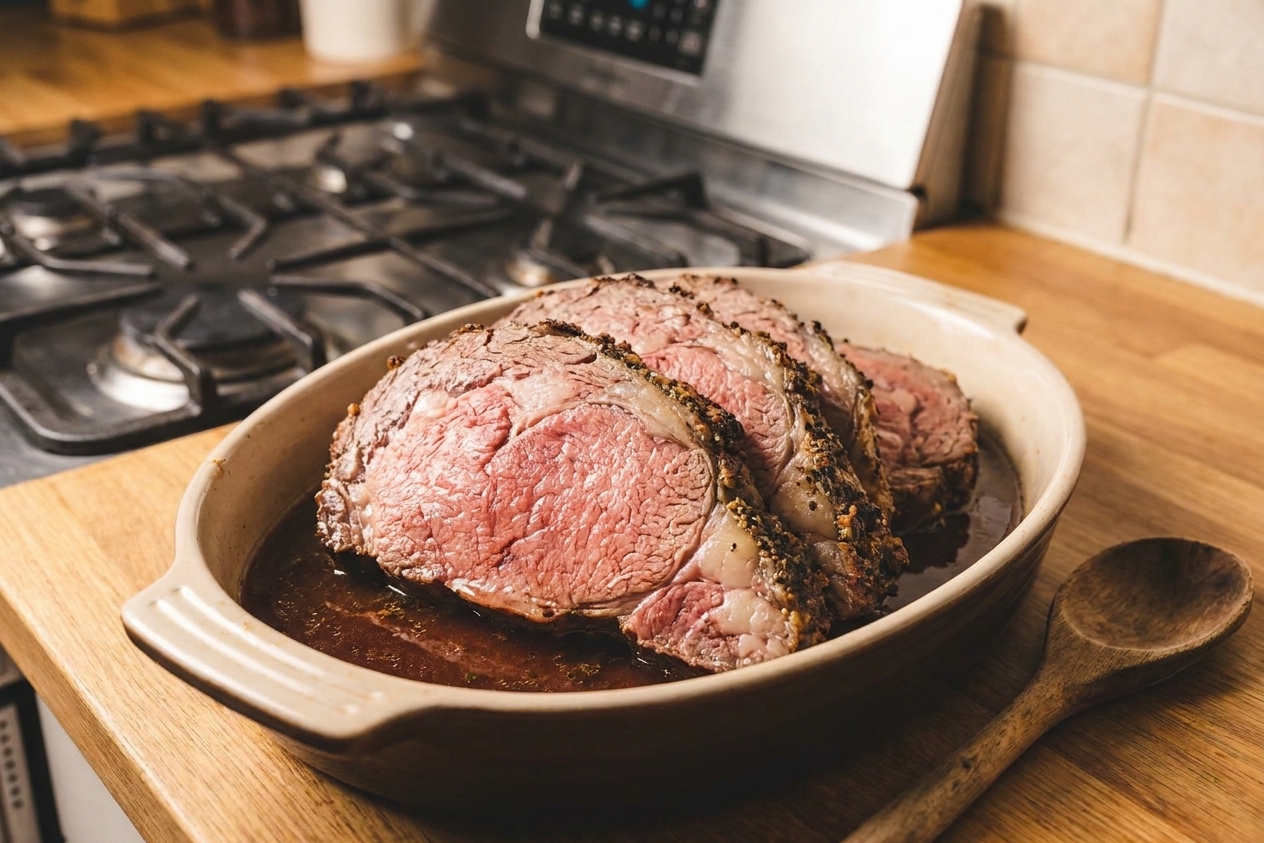
This is my favorite no-drama method for reheating sliced prime rib without drying it out.
What you need
- Leftover prime rib slices
- Au jus or beef broth (about 2 to 4 tablespoons per serving)
- Baking dish and foil
Steps
- Preheat oven to 250°F. Low and slow is the whole point.
- Pour au jus or broth into a baking dish. You want a thin layer, not enough to cover the meat.
- Lay slices in the dish. Overlap is fine, but keep it fairly even.
- Cover tightly with foil. This traps steam and keeps the surface from drying.
- Heat until warm in the center:
- 1/2-inch slices: 8 to 12 minutes
- 1-inch slices: 12 to 18 minutes
- Check temperature if you can. For best texture, pull around 110 to 120°F in the thickest slice.
- Rest 3 minutes, then serve with the warm juices from the dish spooned over the top.
Tip for a slightly roasty edge
If you miss that roast-y edge, uncover for the final 1 to 2 minutes only. Do not broil unless the slices are very thick and you are watching like a hawk.
Best for a whole piece: reheat, then slice
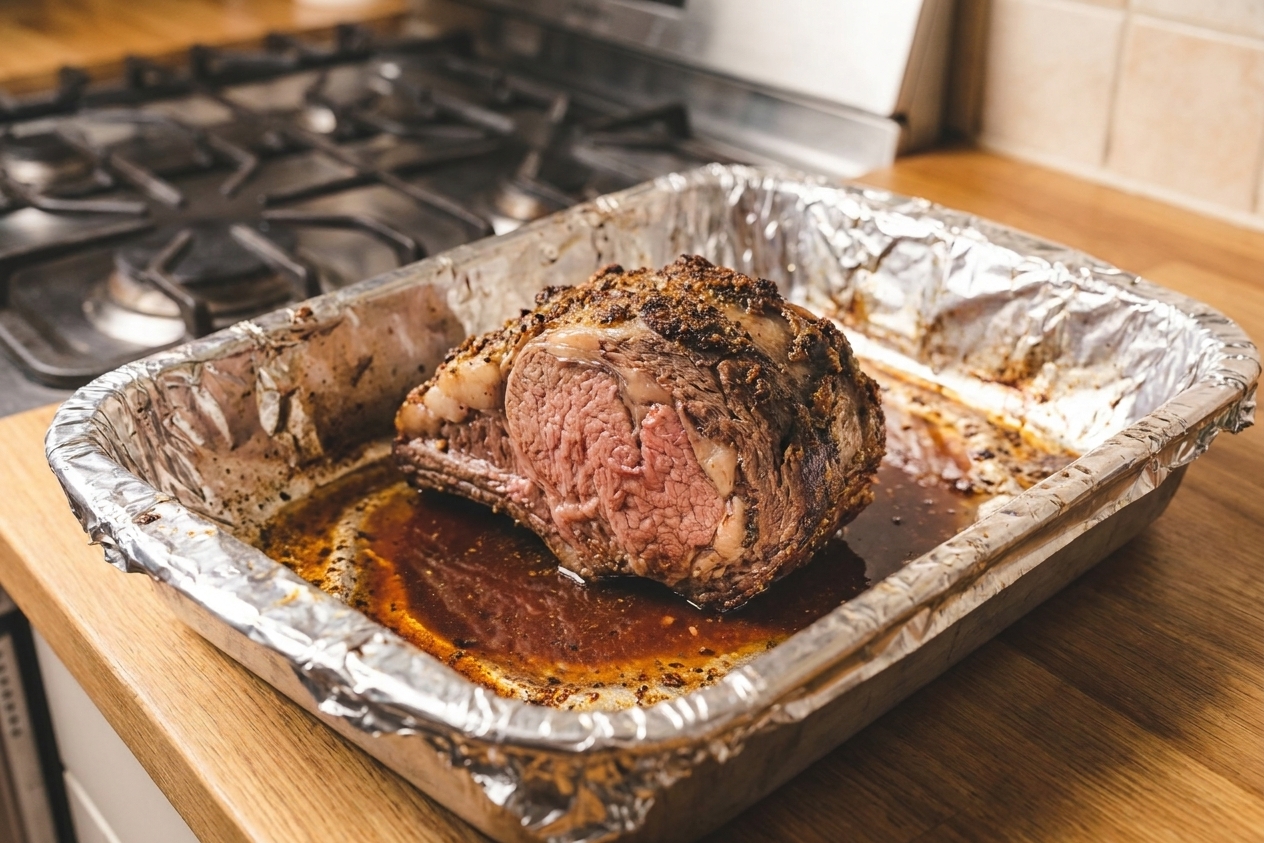
If you have a chunk of roast left, keep it whole until it is warmed. A larger piece reheats more gently, so it stays tender and pink.
Steps
- Preheat oven to 250°F.
- Set the prime rib in a small roasting pan or baking dish.
- Add 1/4 to 1/2 cup au jus or broth to the pan (more for bigger pieces). Keep the liquid in the pan, not poured over the top.
- Cover tightly with foil.
- Heat until the center reaches 110 to 120°F (for best texture):
- 2-pound piece: about 25 to 40 minutes
- 3 to 4-pound piece: about 40 to 60 minutes
- Larger pieces: plan on longer and rely on a thermometer
- Rest 10 minutes, then slice across the grain and serve with the warmed juices.
Quick note: If your leftover piece includes a fat cap, keep it on during reheating. It helps protect the meat and adds flavor.
Fast for slices: skillet with broth
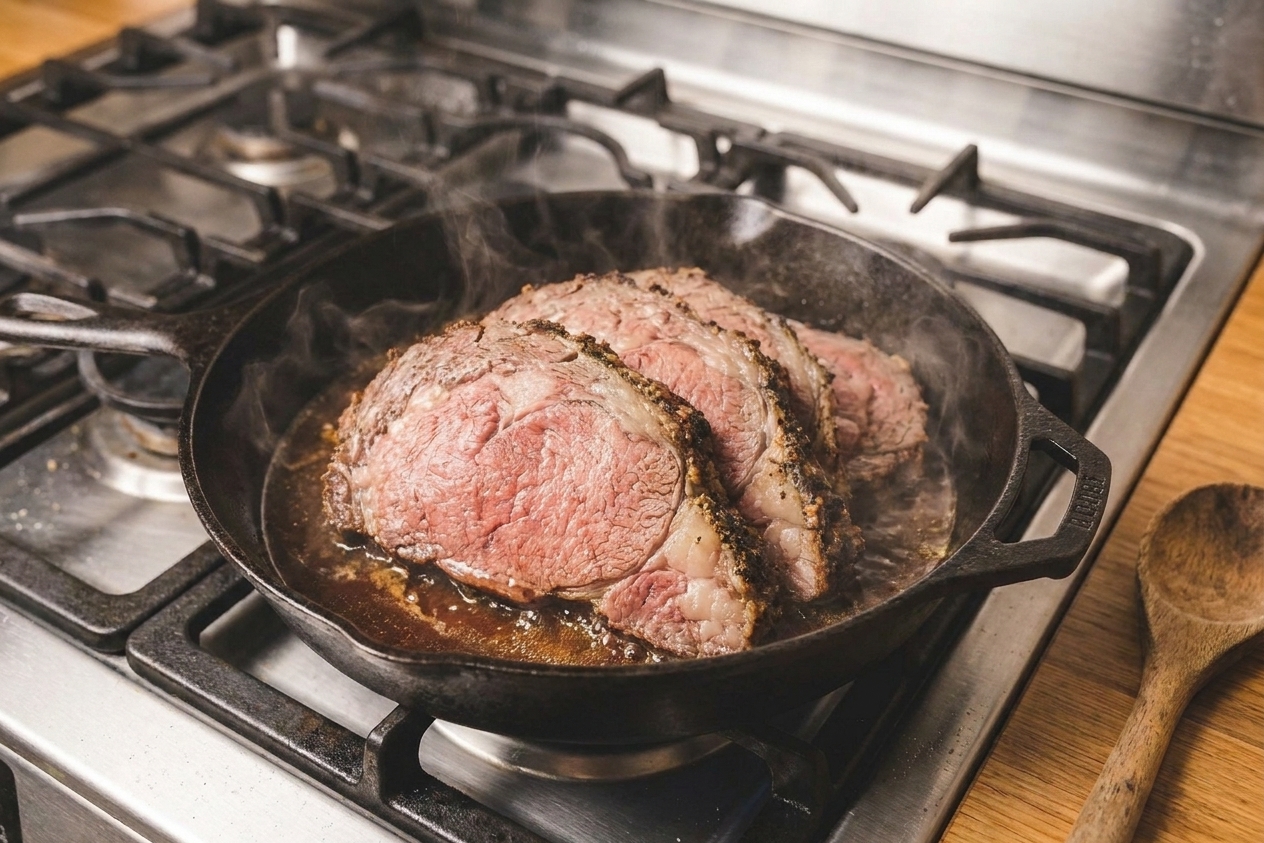
This method is quick, but you need gentle heat and a lid. Think warm through, not sear a steak.
Steps
- Warm a skillet over low heat.
- Add 1 to 2 teaspoons butter or a small drizzle of oil (optional, but helpful for texture).
- Add 2 to 4 tablespoons au jus or broth.
- Lay in the slices and cover with a lid.
- Heat 30 to 60 seconds per side for thinner slices, or up to 2 minutes per side for thick slices.
- Pull as soon as they are warmed. Spoon pan juices on top.
How to keep the center rosy
- Keep heat low and use the lid to warm with steam.
- Flip once, then stop fussing.
- If the pan starts sizzling hard, turn it down immediately.
Gentlest: warm in au jus
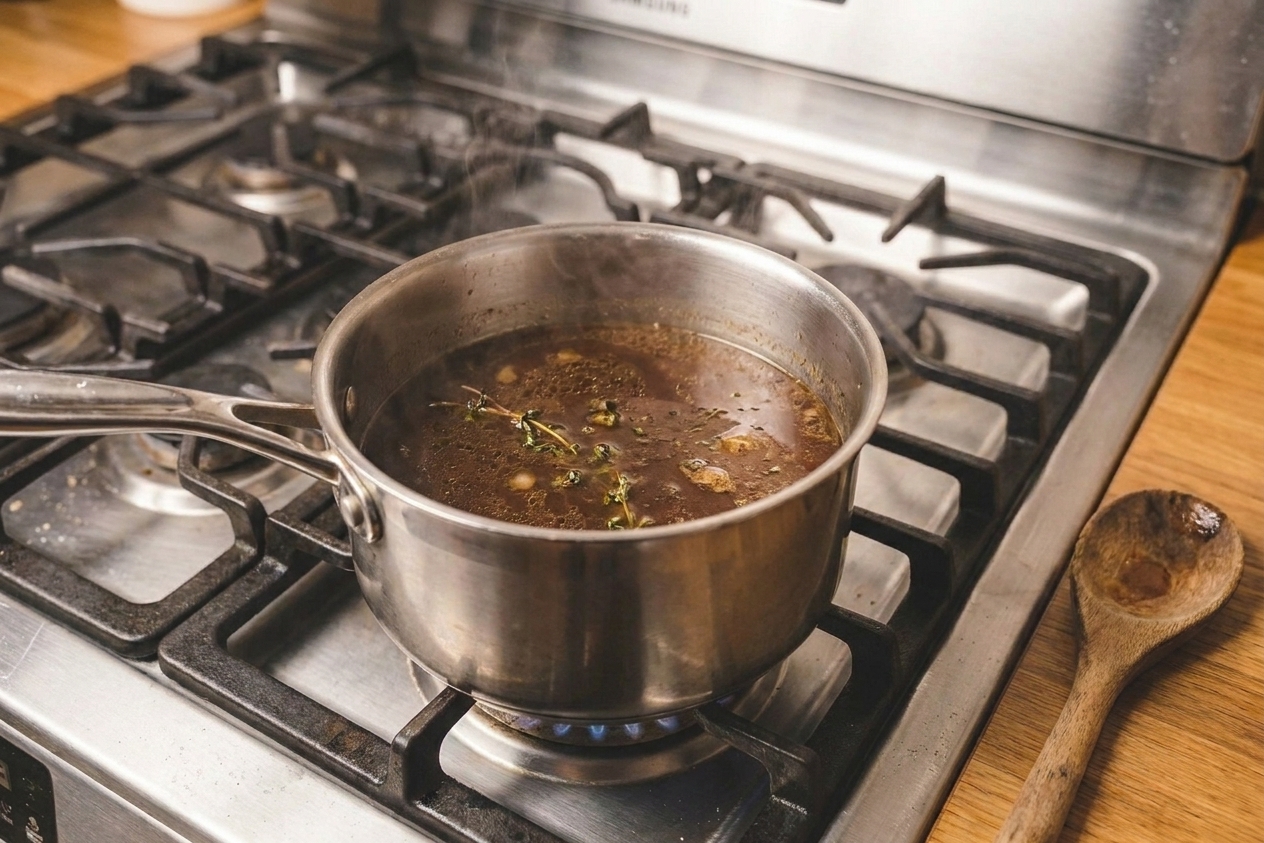
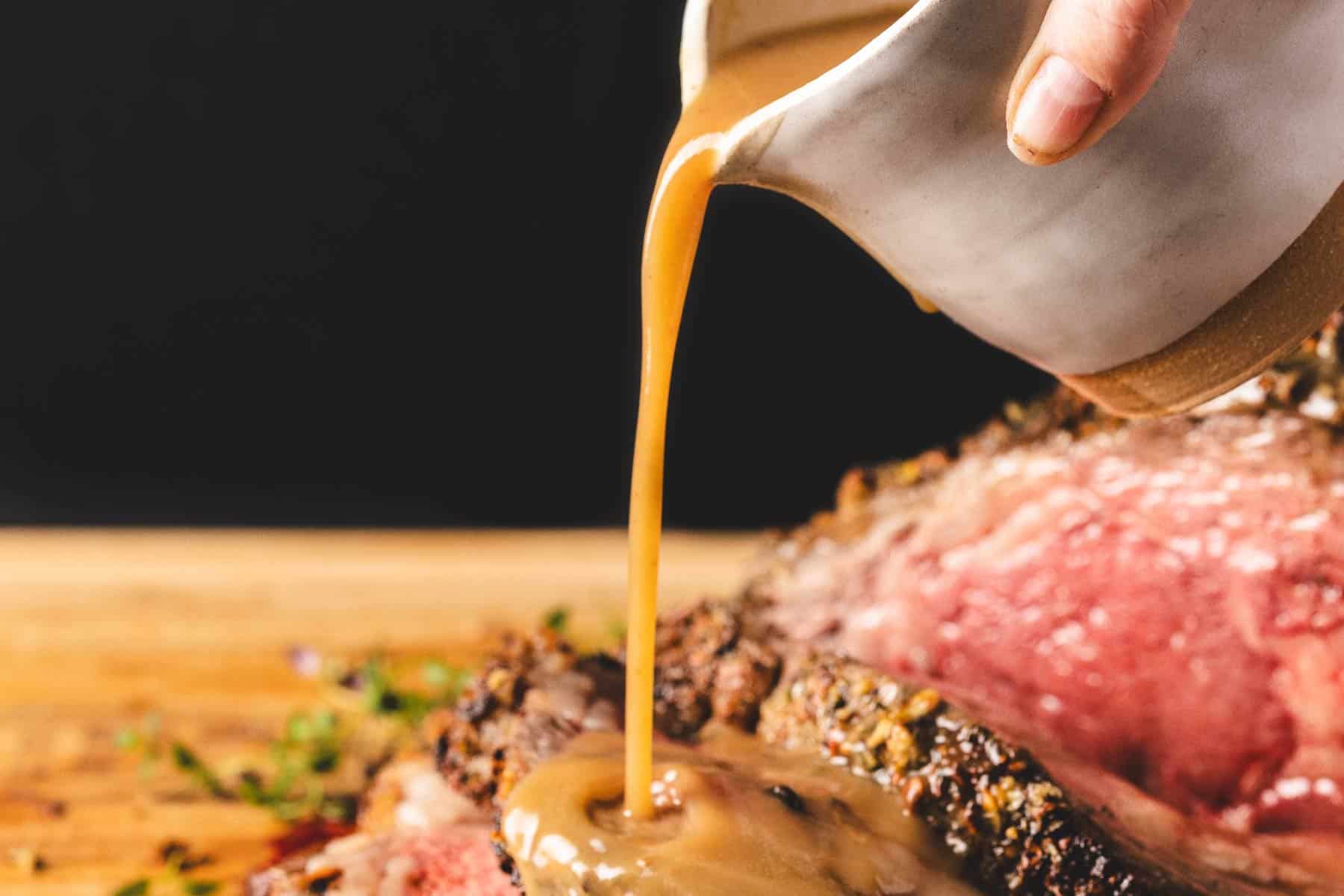
If you want prime rib that stays pink edge to edge, this is the sweetest trick: warm slices in hot au jus or broth that stays below a simmer.
Steps
- Pour au jus or beef broth into a small saucepan.
- Heat until it is hot and steamy but not bubbling, around 150°F (anything in the 140 to 160°F range is the right vibe).
- Dip slices into the hot liquid for 20 to 45 seconds, depending on thickness.
- Lift out, let excess drip back into the pan, then serve right away.
This is also a lifesaver for slices that are already a little thin or a little overdone. The warm au jus adds moisture and tenderness back into the bite.
Microwave? Be gentle
I get it. Sometimes you need lunch in two minutes. If the microwave is your only option, you can make it less risky.
Microwave method (least ideal, but workable)
- Place slices in a microwave-safe dish.
- Add 1 to 2 tablespoons au jus or broth.
- Cover loosely (a microwave-safe lid or damp paper towel).
- Use 50% power in 20 to 30 second bursts, flipping once.
- Stop while it is slightly cool in the center. Carryover heat finishes the job.
Quick timing guide
Every fridge, slice thickness, and starting temperature is a little different, so treat these as reliable ranges, not a stopwatch law. When in doubt, a thermometer beats a timer.
- Oven, slices, covered, 250°F: 8 to 18 minutes
- Oven, whole piece, covered, 250°F: 25 to 60 minutes (longer for larger pieces)
- Skillet, low heat with lid: 1 to 4 minutes total
- Dip in hot au jus (below a simmer): 20 to 45 seconds
Mistakes that dry out prime rib
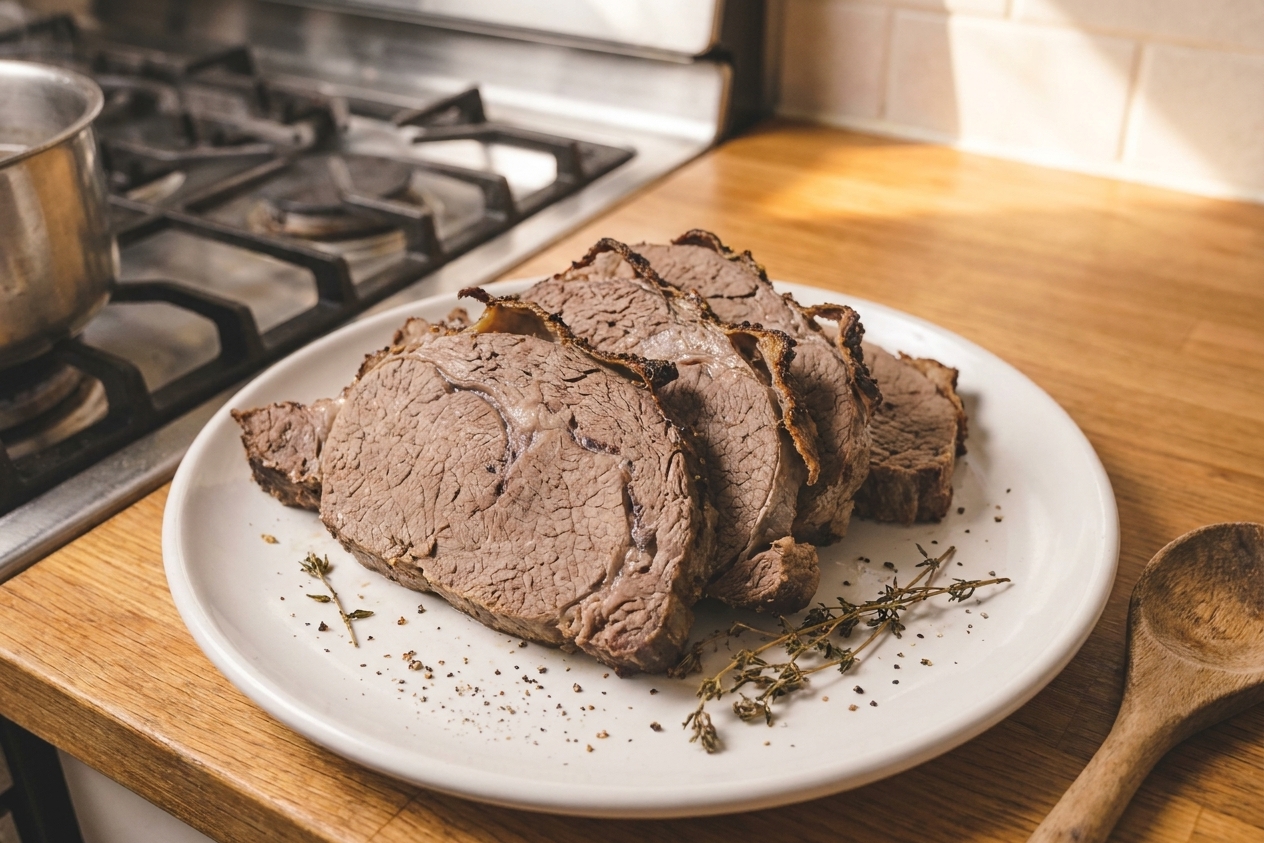
- High heat: 350°F and up dries slices quickly.
- No cover: uncovered reheating evaporates moisture fast.
- Skipping liquid: even a little broth makes a big difference.
- Overheating just to be safe: higher heat is official guidance for safety, but it is not better for texture. If you want it rosy, focus on proper storage and gentle reheating.
- Broiling thin slices: the outside overcooks before the center warms.
Store leftovers so they reheat well
Good reheating starts with good storage.
- Cool and refrigerate promptly: get leftovers into the fridge within about 2 hours (sooner in a hot kitchen).
- Store with juices: add any drippings or au jus to the container.
- Airtight container: prevents the surface from drying out.
- Use within 3 to 4 days for best quality.
- Freeze for longer: wrap well, then thaw overnight in the fridge before reheating gently.
FAQ
How do I reheat prime rib and keep it medium-rare?
Use low heat and stop early for texture. Aim to pull the meat when the center hits 110 to 120°F. Cover it, add a splash of au jus or broth, and let it rest a few minutes before serving.
Is 110 to 120°F safe?
It is a great target for keeping prime rib rosy, but it is not the official leftover reheating temperature. If you want the most conservative approach, follow standard guidance and reheat leftovers to 165°F, knowing the meat will be more done. When serving higher-risk guests, I always lean safer.
What if I only have very thin slices?
Skip the oven and do the hot au jus dip: keep au jus hot and steamy but below a simmer (around 150°F), then dip slices for 20 to 30 seconds. Thin slices go from perfect to overdone in a blink.
Can I reheat prime rib from frozen?
For the best texture, thaw overnight in the refrigerator first. Reheating from frozen usually overcooks the outside before the inside warms.
Should I sear reheated prime rib?
You can, but it is optional. If you want a browned edge, do it quickly: a very fast kiss in a hot skillet, then serve. For most leftovers, I prefer keeping it gentle and saucy.
What’s the best liquid if I don’t have au jus?
Beef broth or stock is the closest match. In a pinch, water plus a pinch of salt works. If you have a little butter, stirring in a small pat adds richness.
My coziest serving idea
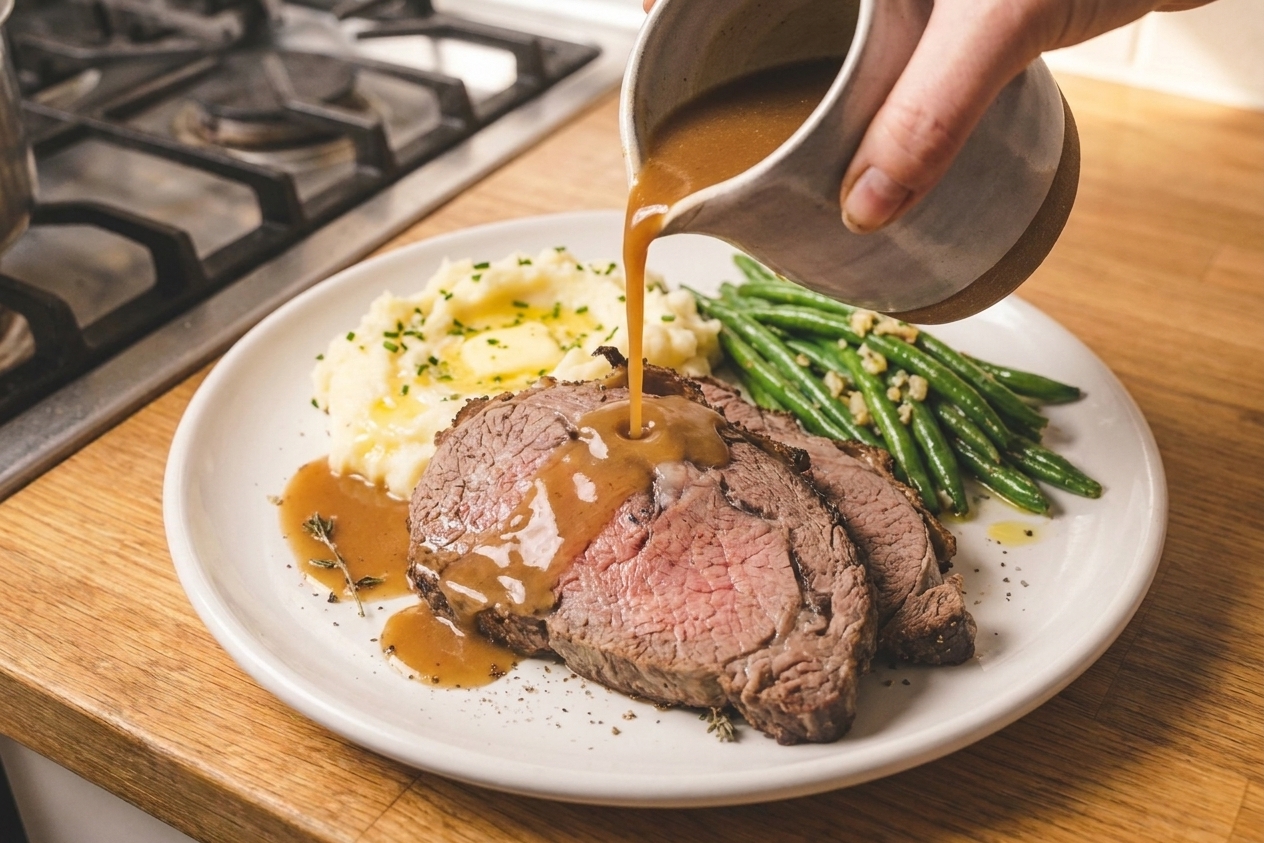
Warm slices, a spoonful of au jus over the top, and something comforting on the side. Mashed potatoes, roasted veggies, or a simple salad all play nicely. Leftovers should feel like a treat, not a compromise.