
There is nothing like the moment you are ready to bake and your bananas are sitting there like: bright yellow, proud, and absolutely not sweet enough. I have been there. The good news is you can speed things up with a paper bag, a warm spot, or the oven. The key is choosing the method that matches your timeline and the texture you need in your batter.
What “ripe enough” means for baking
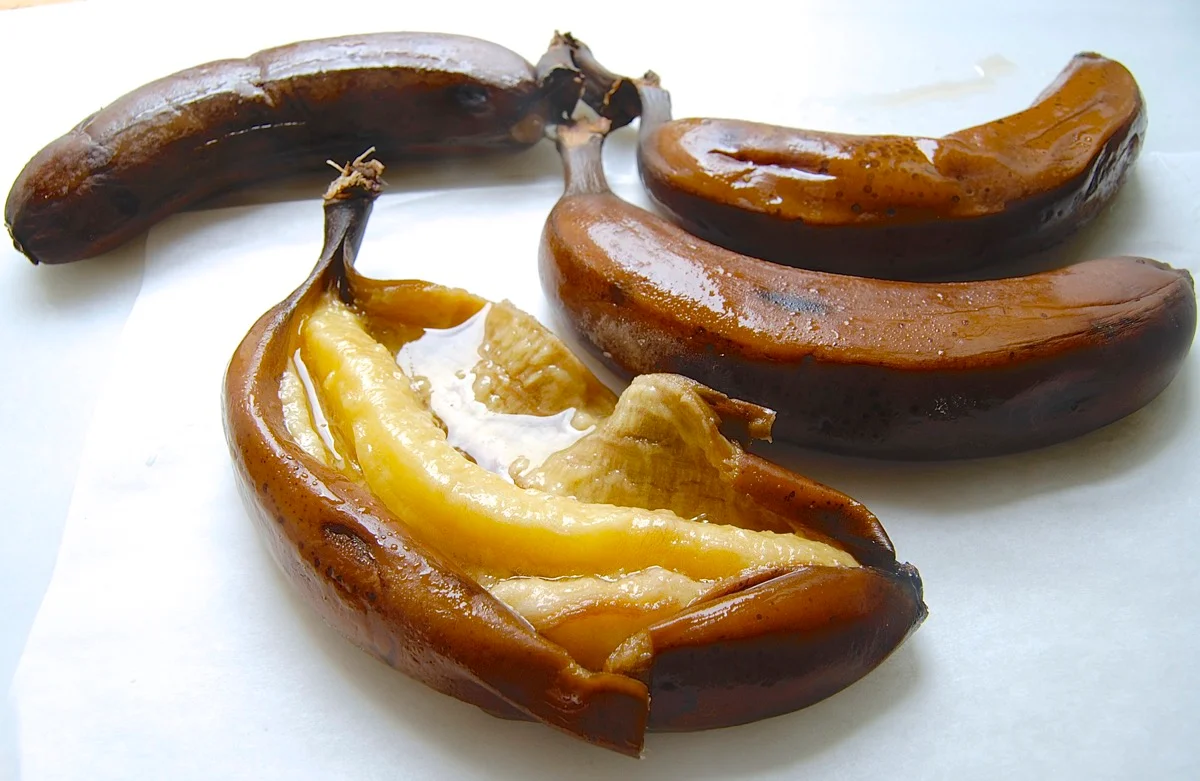
For most baking, you want bananas that are very fragrant with lots of brown spots or even mostly brown. At that stage, the starches have converted to sugars, the banana mashes easily, and you get sweeter flavor with less effort.
- Best for baking: heavily speckled to mostly brown peel, soft all the way through when you squeeze gently.
- Still not there: bright yellow peel, little to no spotting, firm feel, “snappy” slices.
Quick reality check: Peel color is helpful, but texture matters more. Some fast methods soften the outside faster than the center, which is fine if you are mixing it into batter immediately, but not ideal if you need bananas that mash silky-smooth for later.
Once you know what you are aiming for, pick the method that fits your clock. Here are the options I actually use.
Method 1: Paper bag ripening (my go-to)
If you have a little time, the paper bag method is the best balance of speed and results. Bananas naturally release ethylene gas as they ripen. A bag traps that gas around the fruit and speeds the process.
How to do it
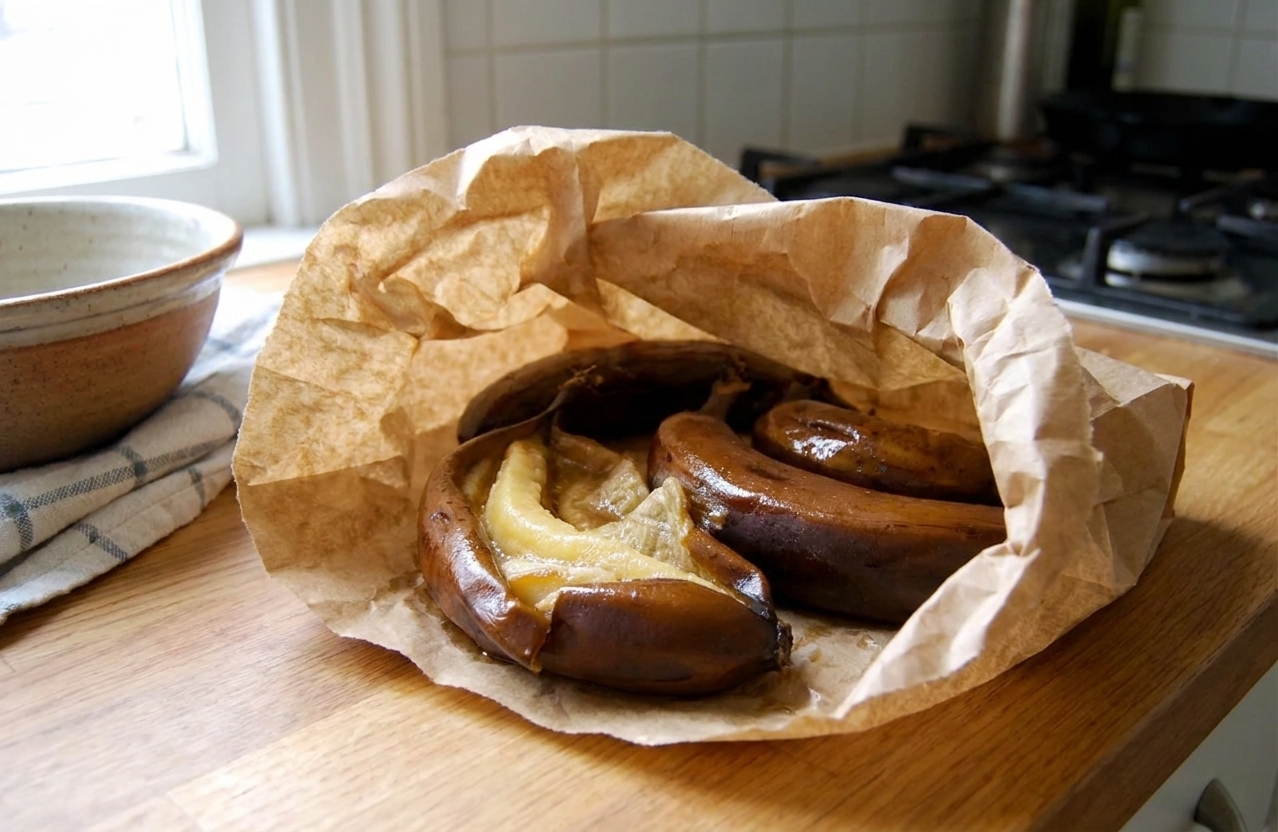
- Place bananas in a brown paper bag. Fold the top closed, but do not seal it airtight.
- Leave at room temperature, out of direct sun.
- Check after 12 to 24 hours if they are already mostly yellow. Depending on room temperature, it can take closer to 24 to 36 hours. If they are still greenish, plan on 24 to 48 hours (sometimes longer).
Make it faster
- Add one apple or one ripe banana to the bag to boost ethylene and speed ripening.
- Keep the bag in a slightly warm spot (more on that below), but avoid hot surfaces.
Timing and texture
Typical time: 1 to 2 days (longer if they started green).
Texture: Usually ripens fairly evenly, including the center, especially if you give it enough time. This method is great if you want bananas that mash smoothly.
Method 2: Warm spot ripening (slow and steady)
Warmth speeds ripening. If you do not want to mess with bags, a warm spot is the simplest hands-off option, but it is not the fastest.
How to do it
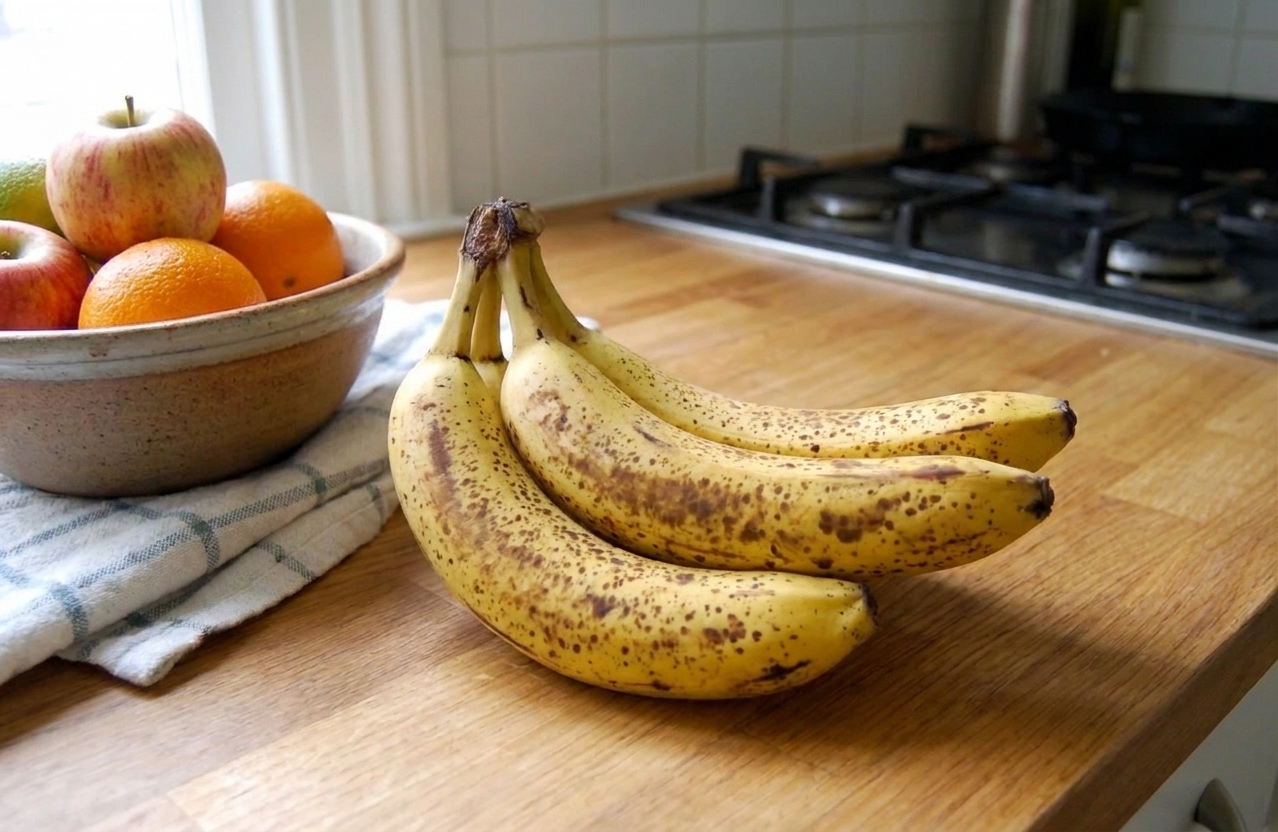
- Set bananas in a warm area of your kitchen, like near (not on) the stove, or on top of the fridge if it feels warm.
- Keep them out of direct sunlight to avoid odd soft spots.
- Flip the bunch once a day for more even ripening.
Timing and texture
Typical time: 2 to 4 days, depending on how green they started and how warm your kitchen is.
Texture: Generally even ripening, but slower. This is best when you are planning ahead and want the bananas to fully sweeten through the middle.
Method 3: Oven softening (fast, bake today)
If you need banana bread today, the oven method gets you soft, mashable bananas in under an hour. It does not truly ripen the fruit in the same way time does, but it softens the flesh and makes it mash easier and taste sweeter quickly.
Important: Oven-softened bananas can look perfect on the outside and still be a bit firm or pale in the very center. That is not a dealbreaker for baking, but it does mean they are best used in batter right away, not saved for later expecting them to continue ripening normally.
How to do it
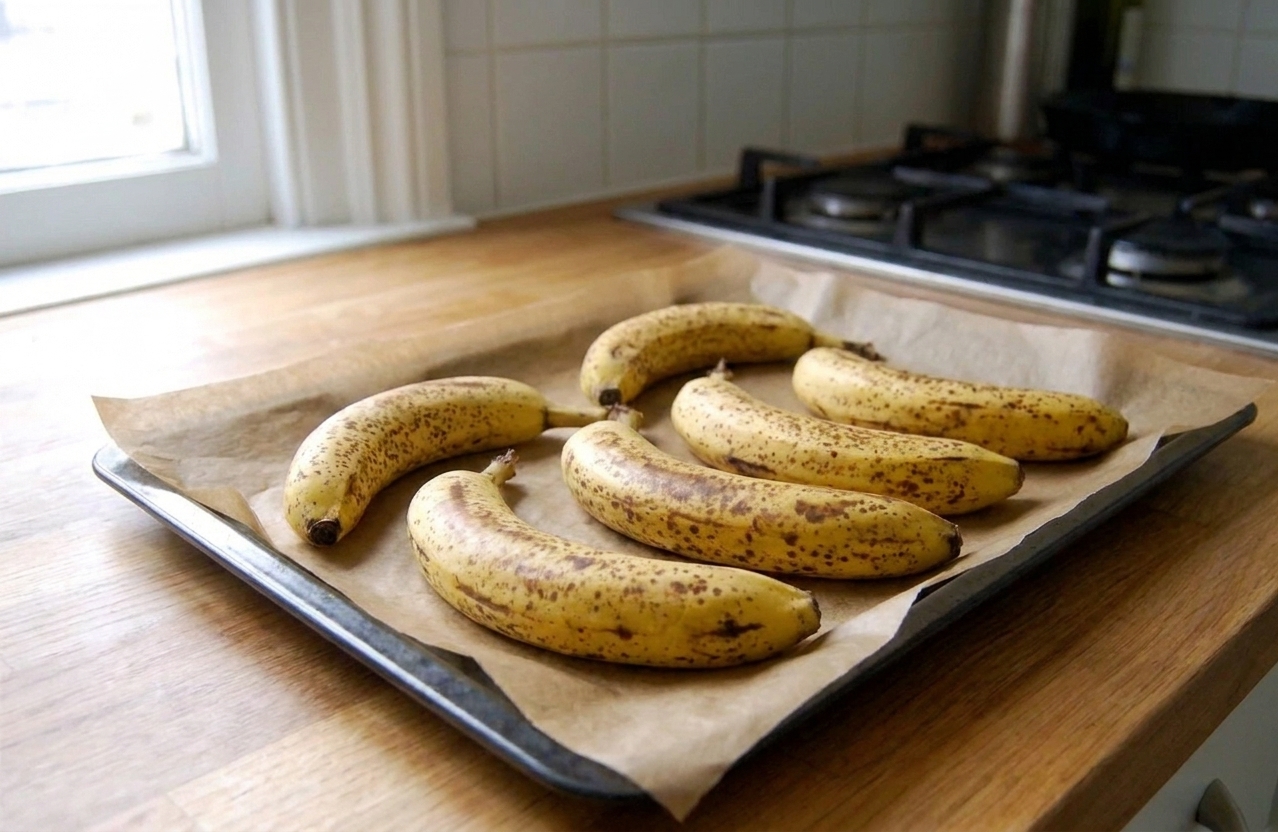
- Heat oven to 300°F.
- Place unpeeled bananas on a foil-lined or parchment-lined baking sheet (they can leak).
- Bake 15 to 30 minutes until the peels are dark brown or black and the bananas feel soft. Time depends on size and how unripe they started.
- Cool 5 to 10 minutes, then split the peels and scoop the flesh into a bowl.
Optional speed-up: If you want them to heat through faster, you can split the peels lengthwise before baking. It works, but expect more sticky leaking on the pan.
Timing and texture
Typical time: 20 to 40 minutes including cooling.
Texture: Soft on the outside, sometimes slightly firm in the center, especially with thicker, less-ripe bananas. These are a great choice when you are mixing and baking right away.
Method 4: Microwave softening (fastest)
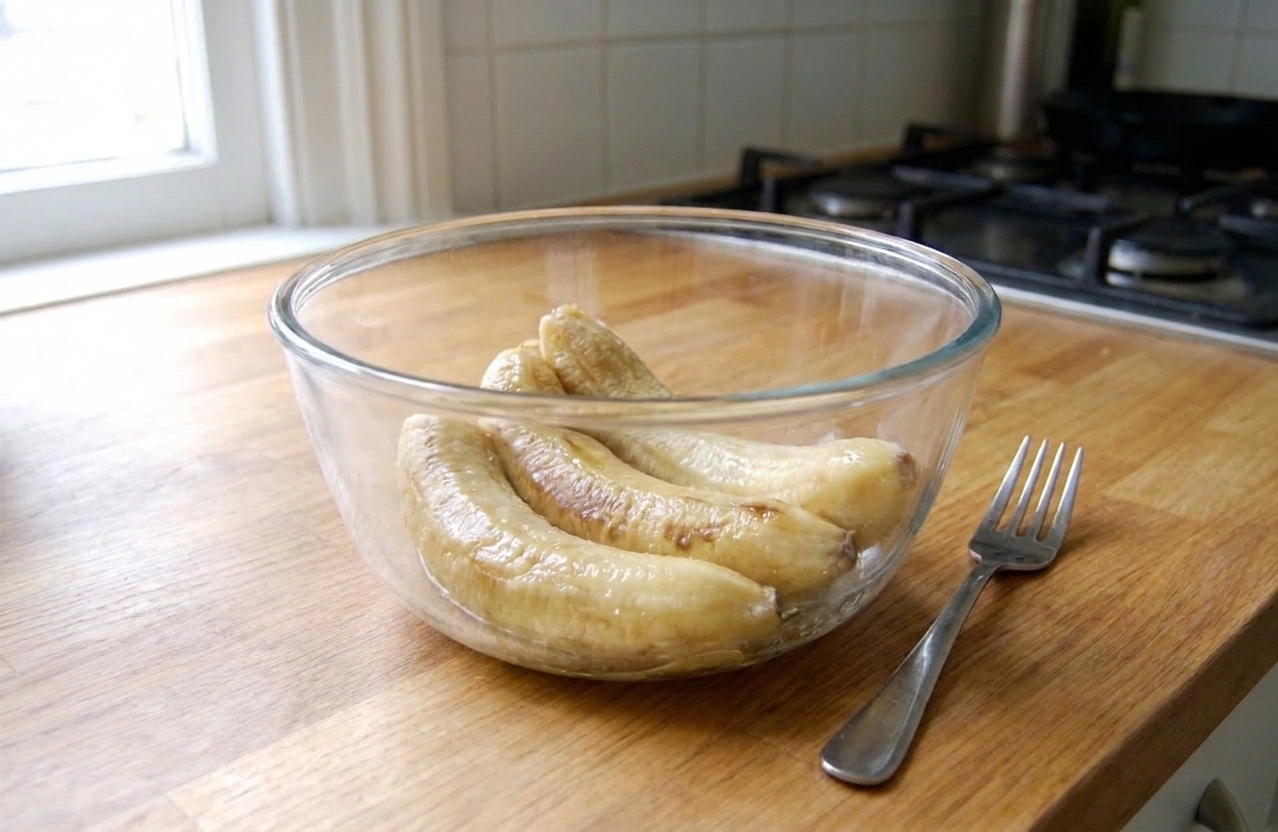
If you are truly down to the wire, the microwave is the fastest way to get bananas mashable. Like the oven method, this is more “softening” than true ripening, so plan to use them right away.
How to do it
- Peel bananas and place them in a microwave-safe bowl.
- Microwave on high in 20- to 30-second bursts until soft (usually 40 to 90 seconds total).
- Mash well. If there is a lot of liquid, stir it in for banana bread. Drain only if your batter seems overly loose.
Timing and texture
Typical time: 2 to 5 minutes.
Texture: Very soft, sometimes a little wet. Great for quick breads and muffins when you are baking immediately.
Which methods leave the centers firm?
Here is the quick, honest breakdown:
- Most likely to leave a firm center: Oven method. It softens fast, but the middle can lag behind.
- Sometimes leaves a firm center: Warm spot, if the bananas started very green and you rush it. Give it time and it evens out.
- Least likely to leave a firm center: Paper bag, especially if you let it go 24 to 48 hours.
If you use a method that leaves the center a little firm, it is not ruined. It just means you should mash thoroughly and plan on baking right away rather than expecting super silky banana mash for something like no-bake desserts.
Quick measuring help
If your recipe lists mashed banana instead of “2 bananas,” this is the conversion I reach for most often: 1 medium banana ≈ 1/2 cup mashed (give or take a little).
My pick: fast and still tasty
If I have at least overnight, I choose the paper bag method because it gets you bananas that are sweet, fragrant, and soft all the way through. If I have less than an hour, I go oven (or microwave) and commit to baking the same day.
Troubleshooting
The peel is dark but the banana is still firm inside
This happens most with the oven method. Let the bananas cool, then mash aggressively with a fork. If you are still getting firm chunks, microwave the peeled bananas in a bowl for 20 to 30 seconds, then mash again.
My bananas are green. Can I still speed them up?
Yes, but green bananas have a lot of starch to convert. For best flavor, use the paper bag method with an apple and give it a full day, sometimes two (or a bit more).
Should I refrigerate bananas to ripen them?
No. Refrigeration slows ripening. Once bananas are ripe, the fridge is fine to hold them for a few extra days. The peel will darken, but the inside stays usable.
Can I freeze bananas instead?
Freezing does not ripen bananas, but it does make them very soft once thawed. Freeze peeled bananas in a bag, thaw at room temp or in the fridge, then mash and bake. Thawed bananas can be watery, so if your batter is already on the thin side, drain off a little liquid or measure by weight if you can.
How ripe is too ripe?
For banana bread, a black peel is usually fine, and the inside can be downright perfect. But if you see mold, smell anything sour or off, or the fruit is leaking and attracting fruit flies, toss it.
Quick safety and mess notes
- Oven bananas can leak sticky juice. Line your pan.
- Hot bananas steam when opened. Let them cool briefly so you do not burn your fingers.
- Avoid sealing fruit in plastic on the counter. Trapped moisture can encourage mold. Paper bags breathe, which is why they work so well.