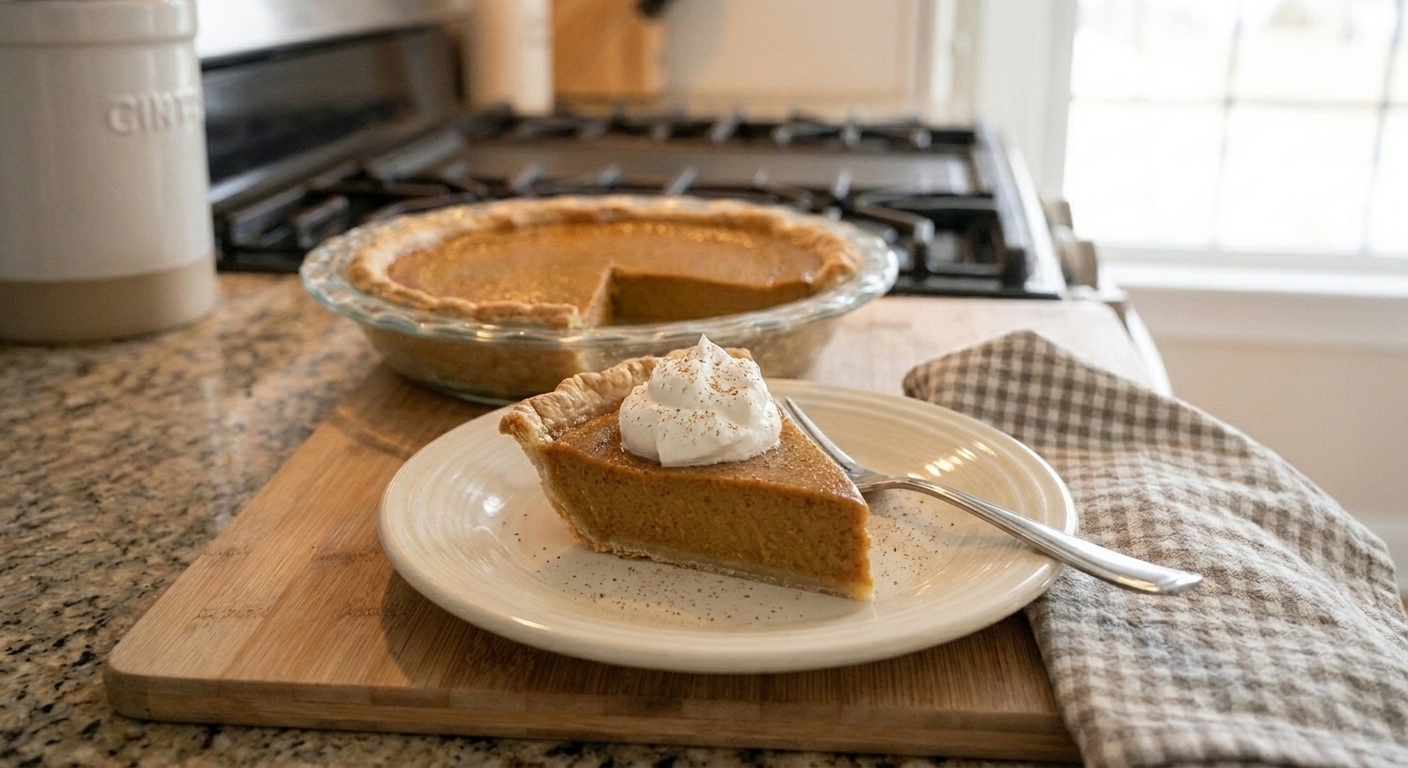
Pumpkin pie is a custard, which means it can be a little sneaky. The edges firm up first, the center plays hard to get, and the whole thing keeps cooking even after you pull it from the oven. The good news: you do not need magical pie powers. You just need a couple of reliable cues and a little patience.
The best cue: a gentle jiggle
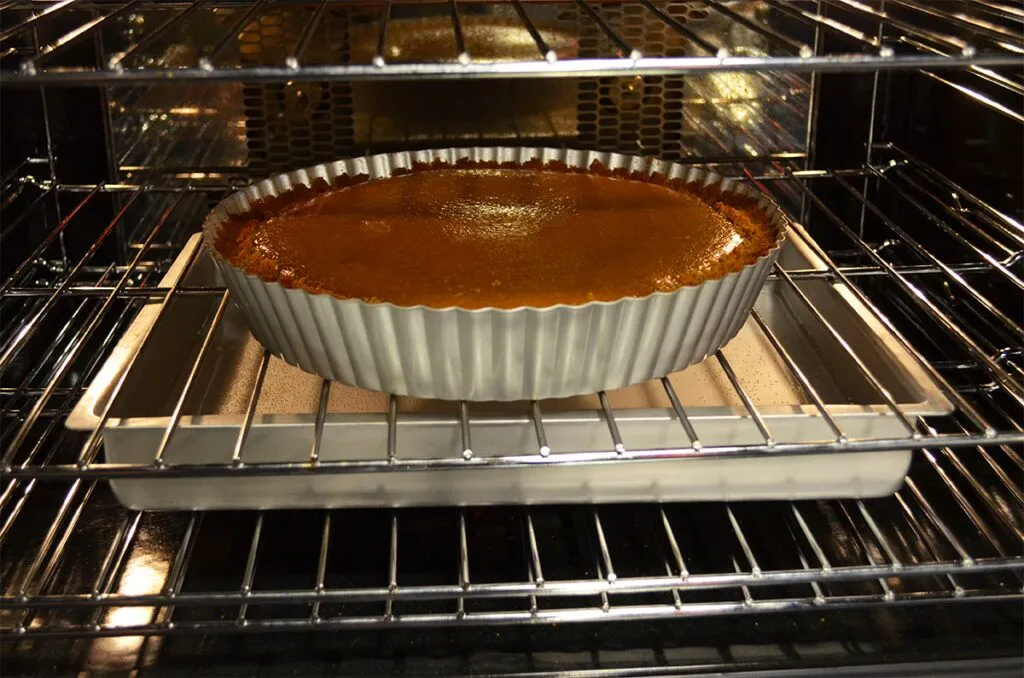
If you learn one thing, make it this: pumpkin pie is done when the edges are set and the very center still jiggles slightly.
What the jiggle should look like
- Edges (outer 1 to 2 inches): puffed or slightly raised and set, not liquidy.
- Center (about a 2 to 3 inch circle): a soft wobble, like gelatin, not like sloshing soup.
- Surface: looks more matte than shiny, with tiny bubbles possibly near the edges.
To test it, keep the pie in the oven, pull the rack out a few inches, and give the pan a small nudge. If the whole pie ripples like a wave, it needs more time. If just the middle quivers, you are right where you want to be.
One quick note: doneness can show up a little differently depending on your setup. Glass pie plates tend to brown and set differently than metal, and a deeper dish pie will almost always need more time than a standard one, even at the same temperature.
The knife test (backup)
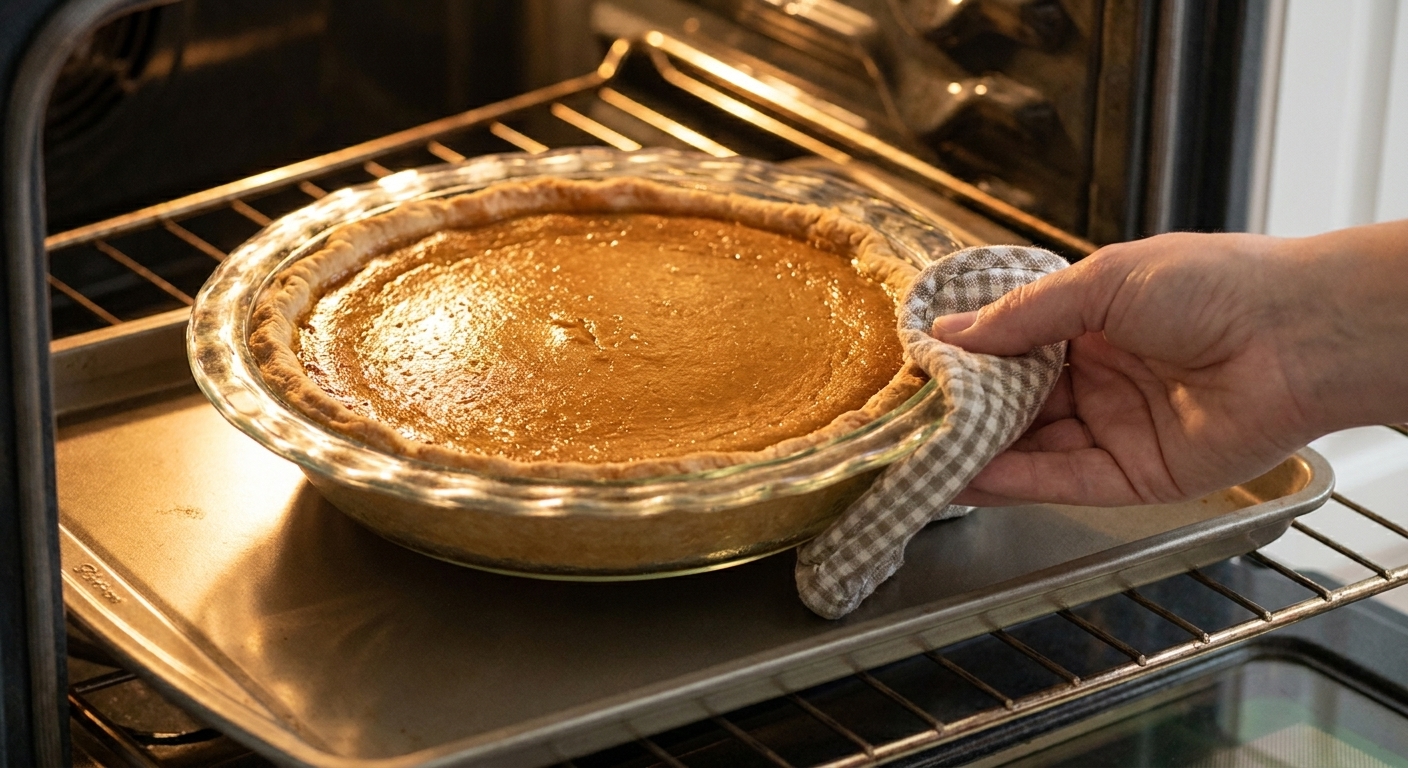
The classic “knife test” can work for pumpkin pie, but think of it as a secondary cue. Custards can fool a knife, especially if you test too close to the edge where it sets first.
How to use the knife test correctly
- Use a thin paring knife.
- Insert it about 1 inch from the very center point, not dead-center.
- Pull it out and look for a mostly clean blade with maybe a little moist custard clinging to it.
If the knife comes out with liquid filling coating it, the pie is underbaked. If it comes out totally dry and the pie looks puffed and cracking, it may be heading toward overbaked.
Most accurate: internal temp
If you like a clear yes or no, temperature is your friend. Custard pies are considered done when the filling reaches a set range where it will slice cleanly once cooled.
Target temperature for pumpkin pie
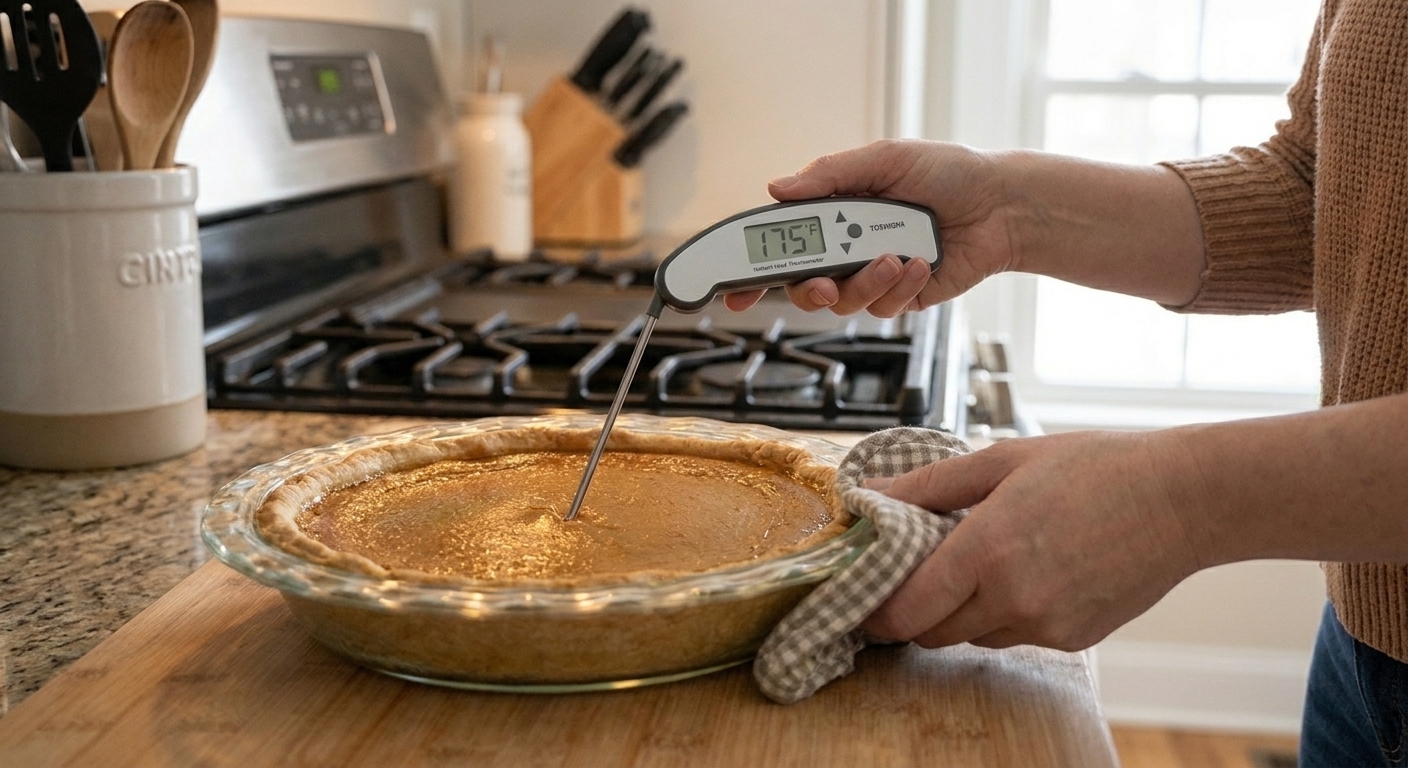
Aim for around 175°F to 180°F (79°C to 82°C) in the center. Some recipes, depending on ingredients and thickness, can go a bit higher (up to about 185°F) and still be fine, but higher temperatures increase the risk of cracks and a grainier texture.
- Below that range, the center is more likely to be loose or watery.
- Much above 180°F, the custard can tighten too much, leading to curdling, a grainy texture, or cracks.
How to temp it
- Use an instant-read thermometer.
- Insert the probe into the center of the pie.
- Try not to hit the bottom crust, which can give you a falsely high reading.
Why the center looks underdone
Pumpkin pie bakes from the outside in. The edge custard is closer to the hot dish and hot air, so it sets first. The center is insulated by the surrounding filling, so it lags behind.
That is why an ideal pumpkin pie often looks like this when it comes out:
- Set, slightly puffed edges
- A center that still moves a bit
- No wet shine across the whole surface
If you wait for the center to look fully firm in the oven, you usually overshoot, and that is when cracks like to move in uninvited.
Carryover cooking is real
Custards keep cooking for a while after leaving the oven because the pie plate and filling hold heat. This is called carryover cooking.
So if your pie is close to done, it is smart to pull it when the center still has that gentle wobble. Over the next 10 to 20 minutes, it will continue to set.
Quick tip
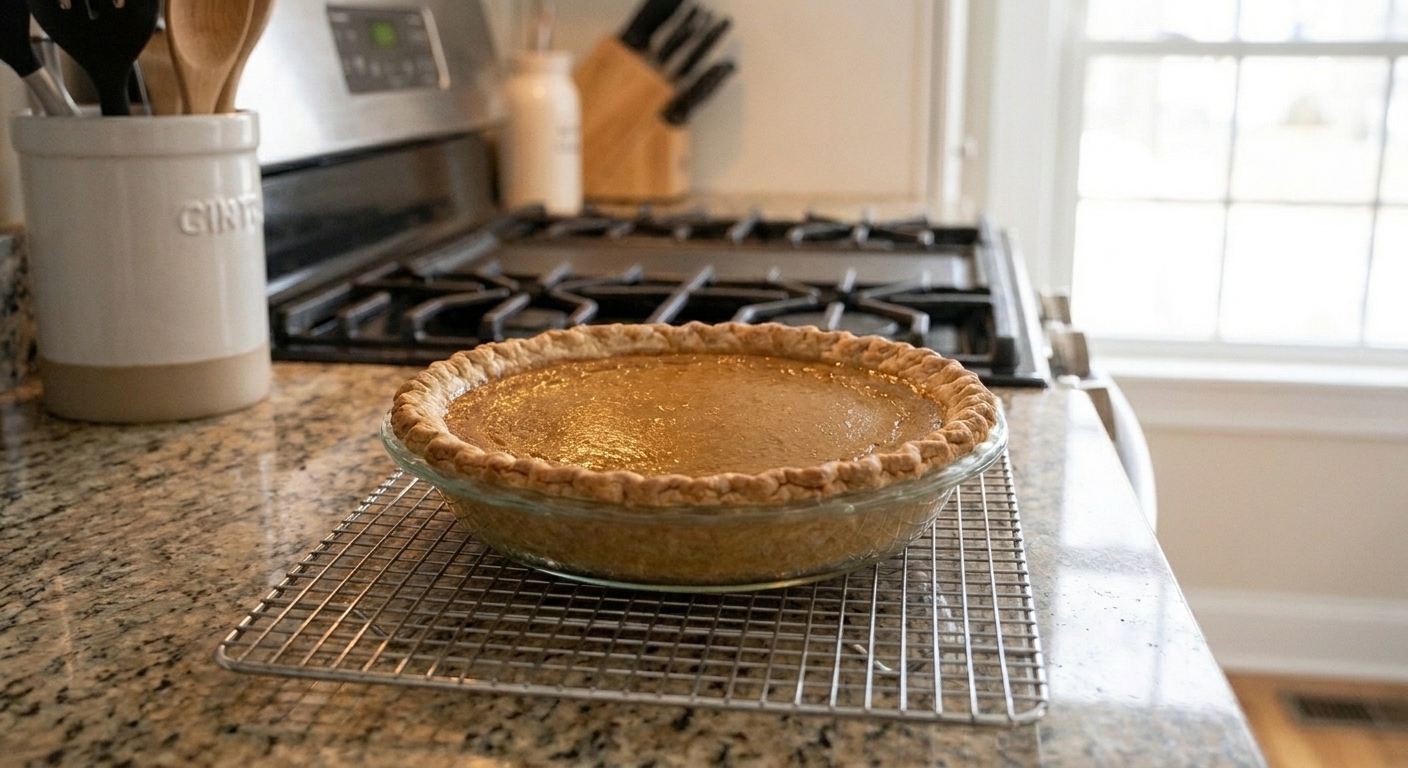
Put the pie on a wire rack right away so heat can escape from the bottom. Setting it directly on the counter traps heat underneath and can encourage extra cooking near the crust.
If your crust is browning faster than the filling sets, loosely cover the edges with foil or use a pie shield for the last part of baking.
Cooling time: when to slice
This is the part that tries everyone’s patience. Pumpkin pie needs time to fully set.
- Cool at room temperature for at least 2 hours before slicing.
- For the cleanest slices, chill it after cooling and slice when cold.
If you cut too soon, the center may look runny even if the pie was baked correctly. It is not always underbaked. It is often just still settling.
Signs it is not done
- Big, watery waves when you jiggle the pan.
- Wet, shiny center that looks like it never started to set.
- Knife comes out coated with liquid filling.
- Temperature below 175°F in the center.
Signs it is overbaked
- Cracks forming across the surface (especially through the center).
- Puffed filling that looks soufflé-like and tall.
- Dry, spongy texture instead of silky custard.
- Temperature well above 180°F in the center.
If your pie cracks, do not panic. It is still very edible. A little whipped cream is basically crack camouflage, and I fully support that plan.
How to rescue an underbaked pie
You sliced in and it is looser than expected. Deep breaths. You can usually fix it.
Option 1: Put it back in the oven
- Preheat the oven to 325°F.
- If the crust is already quite brown, loosely cover the edges with foil.
- Place the pie back on the middle rack and bake in 10 to 15 minute increments.
- Check for the gentle center jiggle or around 175°F to 180°F in the center.
Important: Re-baking works best when the pie is still warm or only slightly cooled. If the pie has already been chilled overnight, you can still try, but expect the texture to be a little less silky.
Also: If you already cut slices, you can still re-bake the remaining pie. The cut area may dry a little, but the center can finish setting.
Option 2: Warm slices gently (for serving)
If you are past the point of no return and just want to serve it warm, gently warm slices in the oven at a low temperature. This will not truly “re-bake” the custard in the same way, but it can help the texture feel less loose and more cozy.
FAQ
Should pumpkin pie be jiggly in the middle?
Yes, slightly. The edges should be set, and the center should have a small wobble, not a liquid slosh. It will finish setting as it cools.
Can I rely on bake time alone?
Time is a rough guide, but ovens, pie plates (glass vs metal vs ceramic), and filling depth vary. The jiggle test and temperature check are much more reliable than watching the clock.
Why did my pie crack even though it tasted fine?
Cracks usually mean the custard got a bit too hot and tightened. Next time, pull it earlier (gentle center jiggle) or use the thermometer target around 175°F to 180°F.
Does pumpkin pie need to be refrigerated?
Most pumpkin pies are egg and dairy based, so refrigerate within about 2 hours, then cover and chill.
My cozy checklist
- Edges set, center gently wobbly
- Knife test about 1 inch from the very center point comes out mostly clean
- Center temp around 175°F to 180°F
- Cool at least 2 hours before slicing
And if you want my tiny-hedgehog reassurance: a pumpkin pie that is slightly under is easier to fix than a pumpkin pie that is over. Aim for that soft wobble, let carryover cooking do its thing, and you will land in the silky, sliceable sweet spot.