Mom's Best Recipes
Recipe

Hummingbird Food

A simple, safe sugar-water recipe (no red dye) plus storage tips and troubleshooting so your feeder stays fresh and your backyard regulars keep coming back.

Author By Matt Campbell
4.9
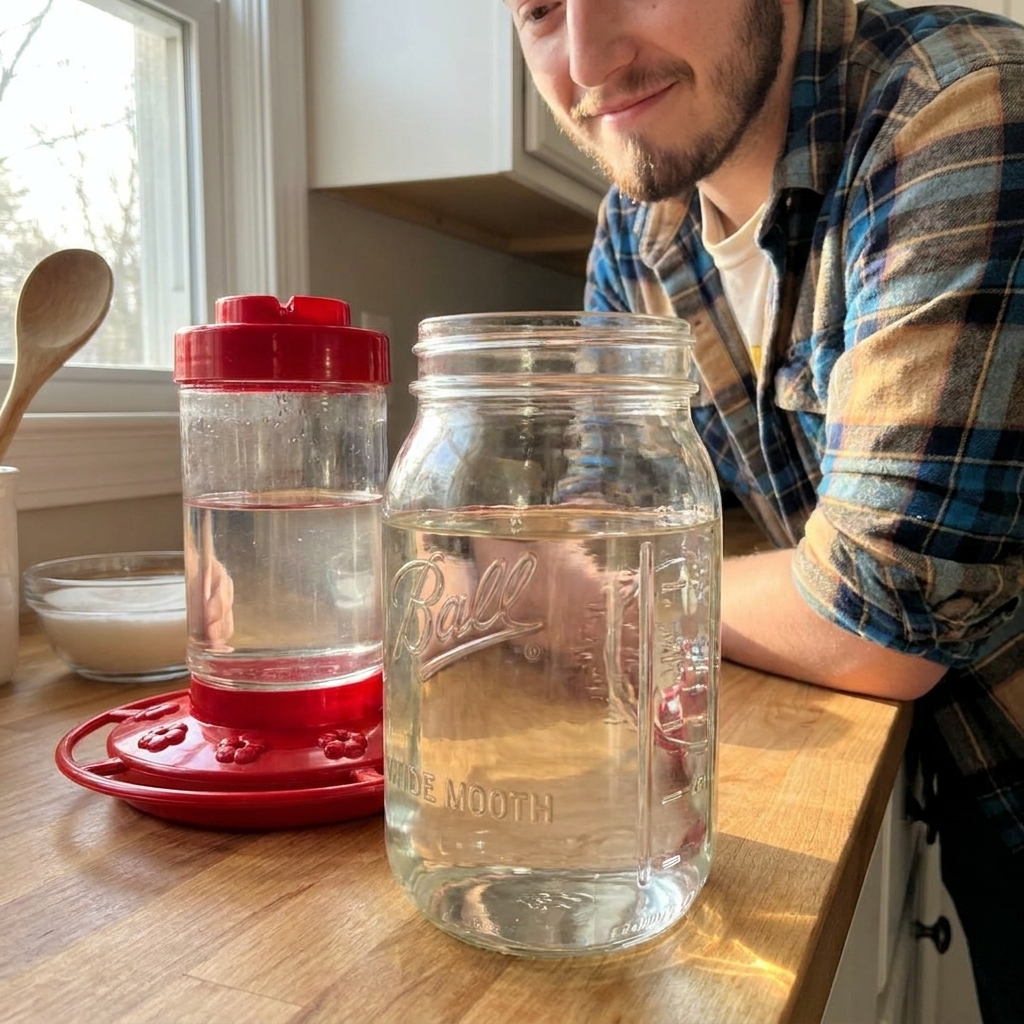
A clear glass jar of homemade hummingbird sugar water on a bright kitchen counter beside a red hummingbird feeder, natural morning light, realistic food photography
Jump to Recipe

If you have ever watched a hummingbird hover like a tiny helicopter and thought, how is that real, welcome. This is the easiest kitchen project that feels like you are doing something magical outside. Hummingbird food is just sugar and water, but the details matter: the right ratio, clean equipment, and a little common sense about heat and storage.

My vibe here is low drama and high payoff. We are making nectar that is safe, budget-friendly, and fast enough to pull off while someone is asking for a snack and the dog is barking at a leaf. No red dye. No fancy add-ins. Just a simple mix that keeps your feeder humming.

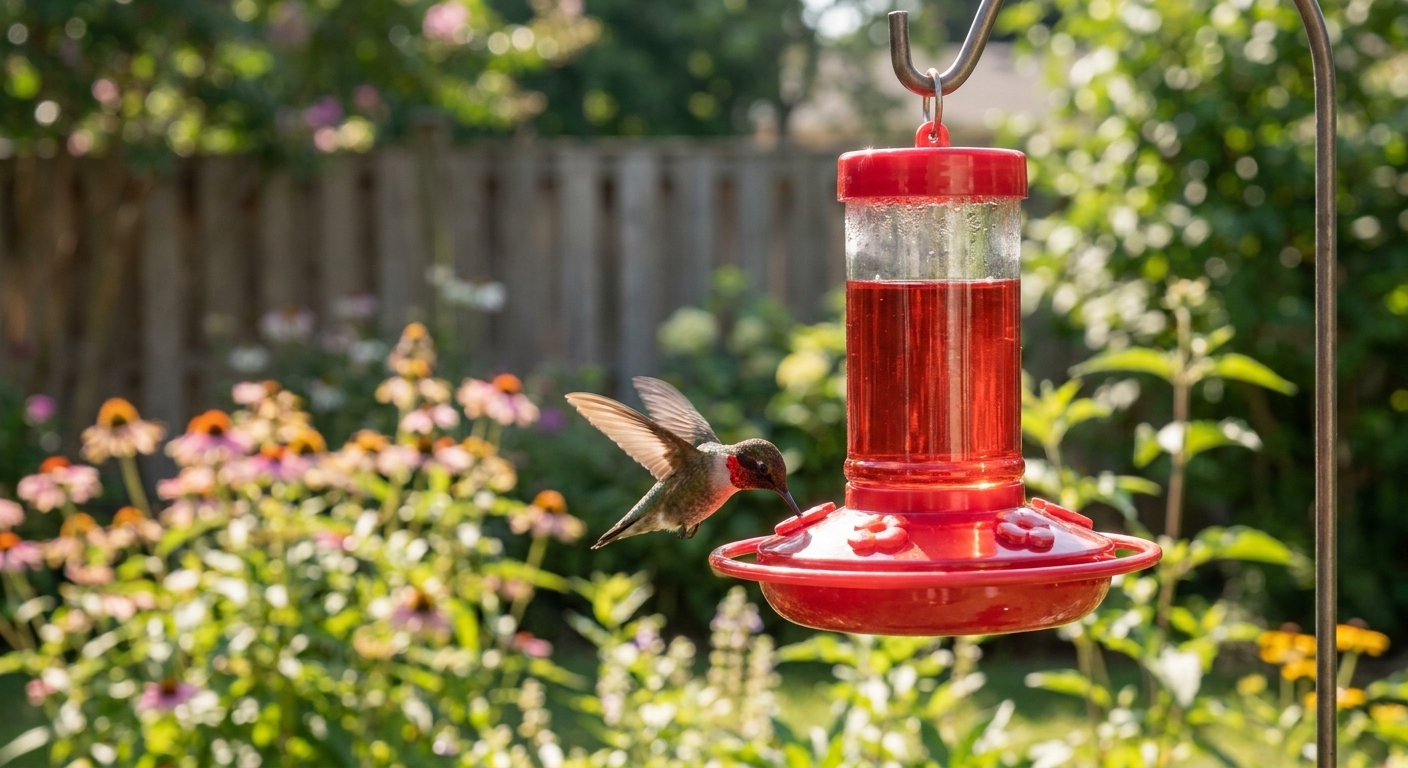
A ruby-throated hummingbird hovering and drinking from a backyard feeder on a sunny day, wings slightly blurred from motion, realistic wildlife photography style

Why It Works

  • Correct ratio: A 4:1 water-to-sugar mix matches what most backyard hummingbirds thrive on and is the standard recommendation for feeders.
  • Dissolves cleanly: Warming the water helps the sugar dissolve faster without turning it into syrup.
  • No dye needed: The feeder itself provides the color cue. Dye adds no nutritional benefit and can create avoidable risk.
  • Easy to scale: Make a small batch for hot weather, or double it for peak season without changing the ratio.

Pairs Well With

Storage Tips

Storage Tips That Actually Work

Refrigerate extra nectar. Pour leftover hummingbird food into a clean jar with a lid and refrigerate for up to 5 to 7 days. If it looks cloudy or smells off, toss it.

Do not top off old nectar. It is tempting, but it speeds up spoilage. Dump, rinse, refill with fresh.

How often to change the feeder:

  • Hot weather (90°F and up): aim for every 1 to 2 days
  • Warm weather (80 to 89°F): aim for every 2 to 3 days
  • Mild weather (60 to 79°F): aim for every 3 to 5 days
  • Cool weather (below 60°F): about once a week, but still check for cloudiness

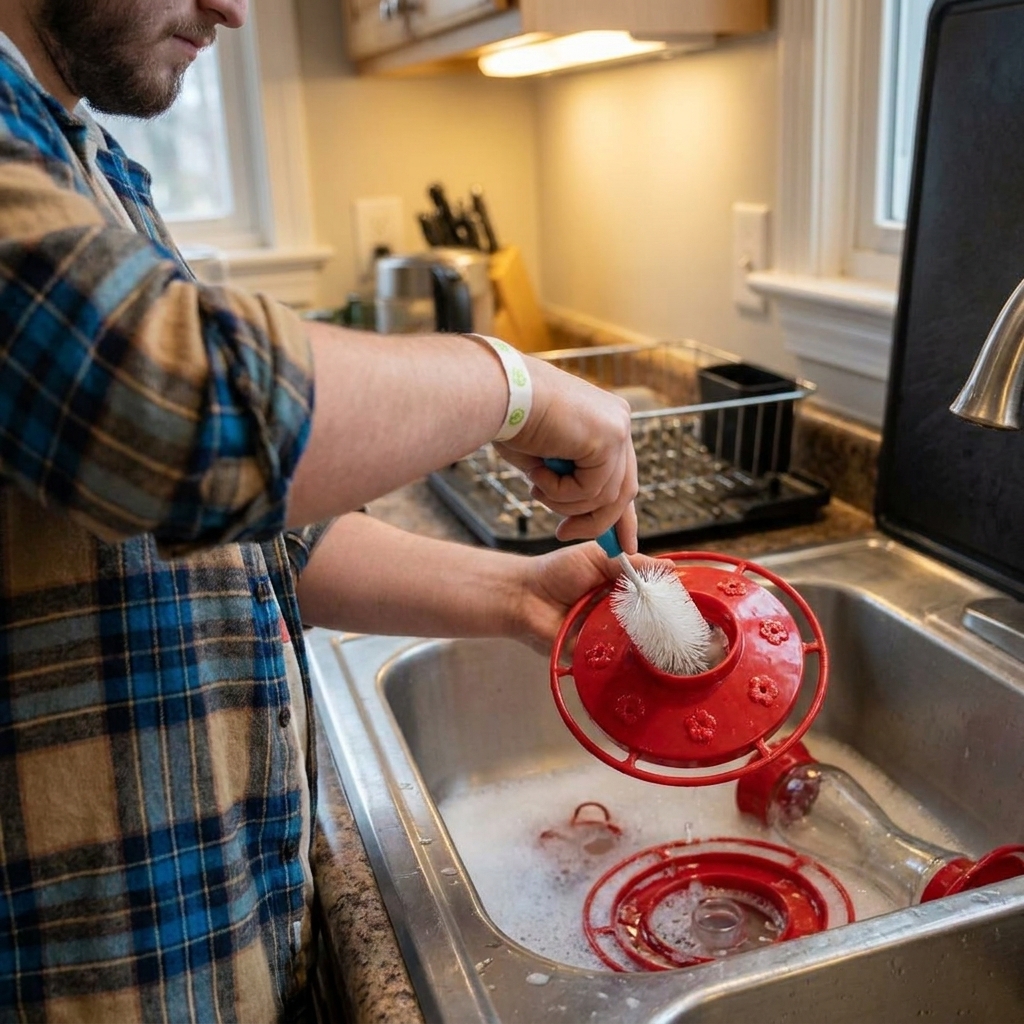
Cleaning basics: Rinse with hot water every refill. A bottle brush helps. Avoid leaving strong soap residue. If you do use dish soap, rinse extremely well so there is no scent or film left behind.

If you see slime or mold: Soak the feeder in a mix of 1 part white vinegar to 4 parts water, scrub, then rinse very well and air-dry. For stubborn mold, some people use a very dilute bleach solution as a stronger sanitizer, followed by thorough rinsing until you cannot smell anything and the feeder is fully air-dried.

Hands scrubbing a hummingbird feeder with a bottle brush in a stainless steel kitchen sink, warm lighting, realistic household photo

Common Questions

Common Questions

What is the best sugar-to-water ratio for hummingbird food?

The standard recipe is 1 part white granulated sugar to 4 parts water. For example, 1 cup sugar plus 4 cups water. Keep that ratio the same no matter how much you make.

Do I need to boil the water?

You do not have to boil it if your tap water is safe to drink. Boiling can help the sugar dissolve faster and may slow fermentation slightly, but the biggest freshness factor is how often you change and clean the feeder. If you do boil, let the nectar cool completely before filling.

Can I use brown sugar, honey, coconut sugar, or artificial sweeteners?

Skip them. Use plain white sugar only. Honey can ferment quickly and can grow harmful microbes. Brown sugar and raw sugars have minerals that are not a good fit for feeders. Artificial sweeteners do not provide the calories hummingbirds need.

Can I use powdered sugar?

Best not. Powdered (icing) sugar often contains anti-caking agents like cornstarch. Stick with plain white granulated sugar.

Should I add red food coloring?

No. Red dye is unnecessary. Most feeders already have red parts that attract hummingbirds. Keep the nectar clear.

How do I know if hummingbird nectar has gone bad?

Cloudiness, stringy bits, visible mold, or a sour smell are your signs to dump it immediately. When in doubt, pour it out, rinse, and refill fresh.

Why are ants and bees taking over my feeder?

Try an ant moat above the feeder (filled with plain water) and place the feeder in partial shade. Also wipe drips from ports and avoid overfilling.

Where should I hang a hummingbird feeder?

Pick a spot with morning sun and afternoon shade if possible. Shade keeps nectar cooler and fresher. Keep it near flowers or shrubs, and a few feet away from windows to reduce collisions.

Do I ever need a stronger mix than 4:1?

The standard is 4:1, and it is what most backyard feeder guidance recommends. You may hear cold-weather myths about going stronger (like 3:1). If you choose to change the ratio, keep it temporary and cautious. For everyday feeding, stick with 4:1.

The first time I made hummingbird food, I treated it like a science experiment and a brunch recipe at the same time. I was standing there stirring sugar into warm water thinking, this is either going to summon magical birds or attract every ant in the neighborhood. Plot twist, it did both. Now I keep the method simple, the feeder cleaner than I think it needs to be, and the batch size small in hot weather. Fresh nectar and a quick rinse is the whole secret. The hummingbirds do the rest.