Do I have to use self-rising flour?
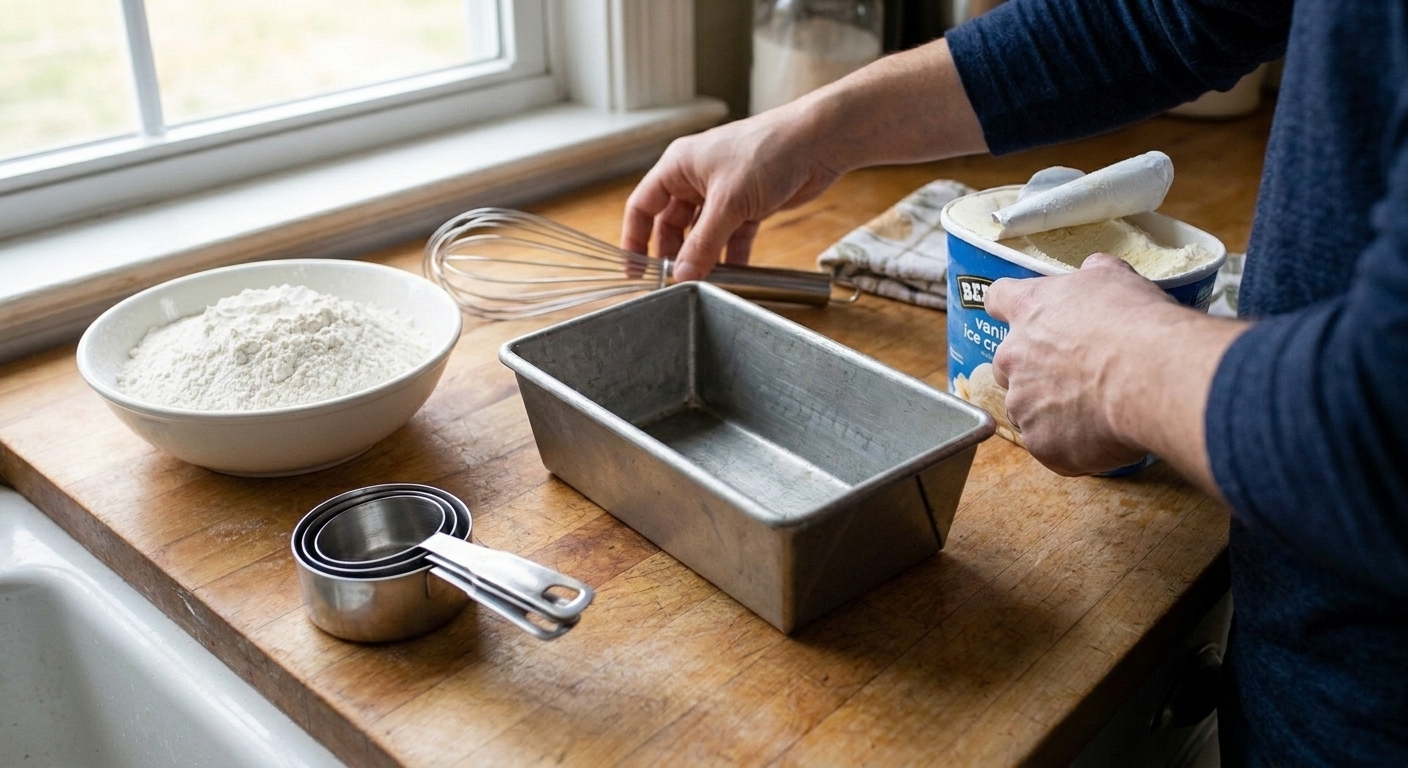
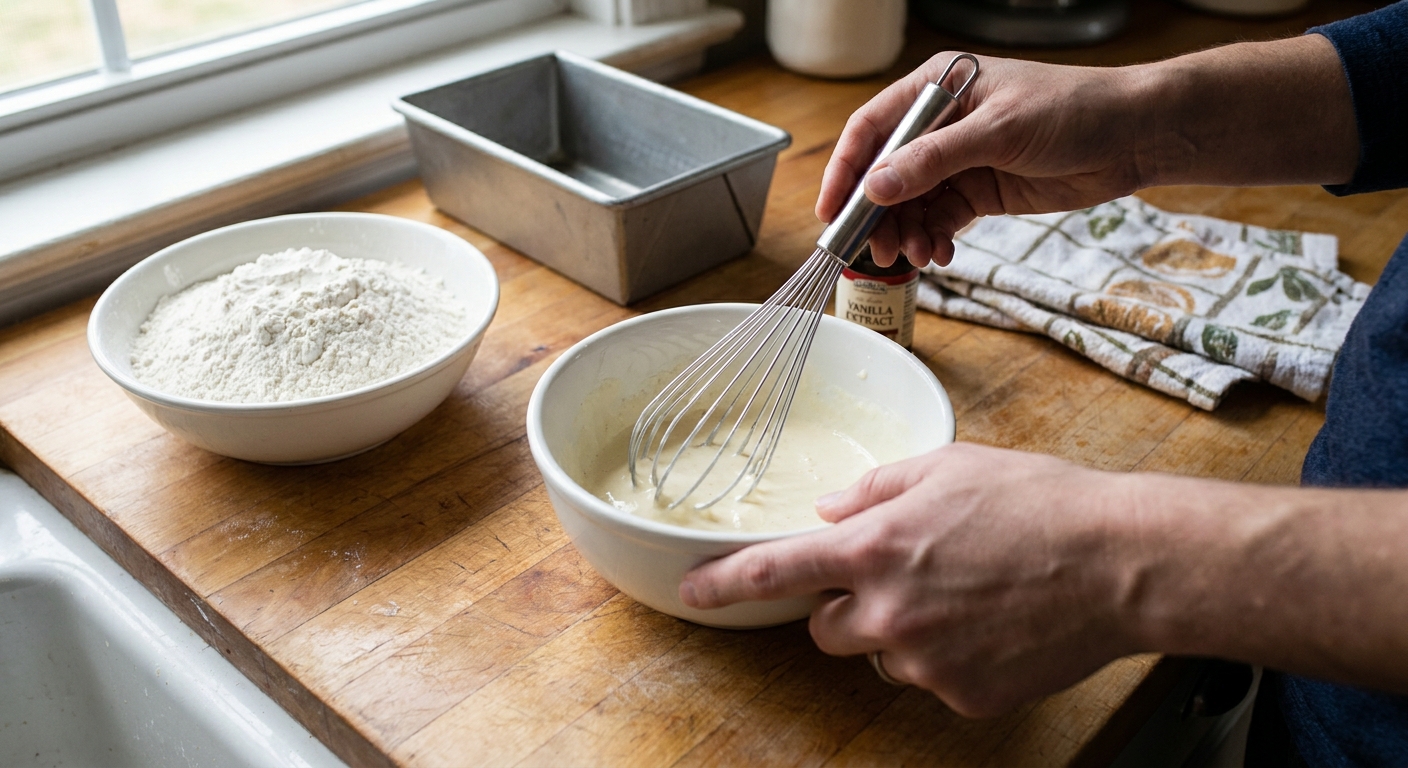
For the simplest, most reliable version, yes. Self-rising flour already contains baking powder and salt, which is what helps this loaf rise. If you only have all-purpose flour, you can make a DIY version: for every 1 cup all-purpose flour, whisk in 1 1/2 teaspoons baking powder and 1/4 teaspoon fine salt. Then measure out what you need.
What kind of ice cream works best?
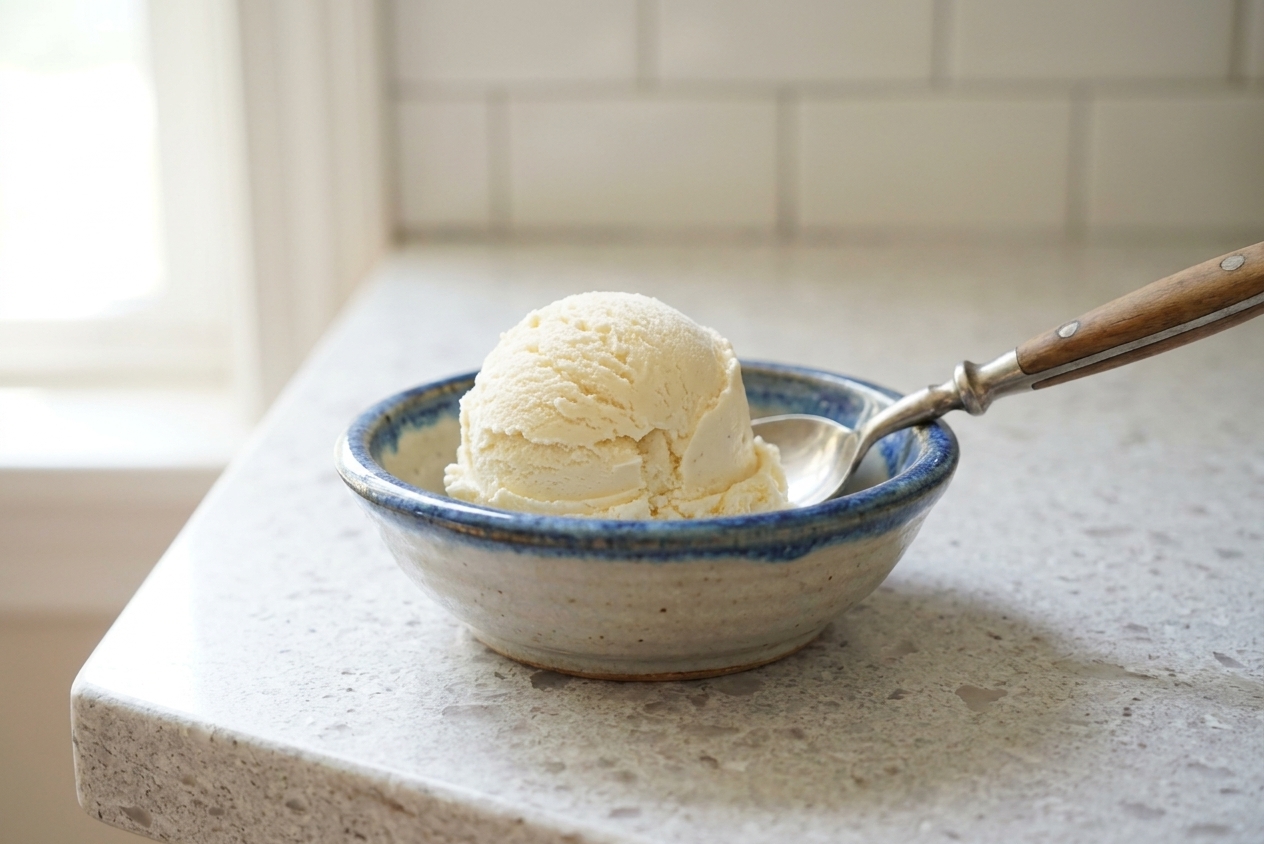
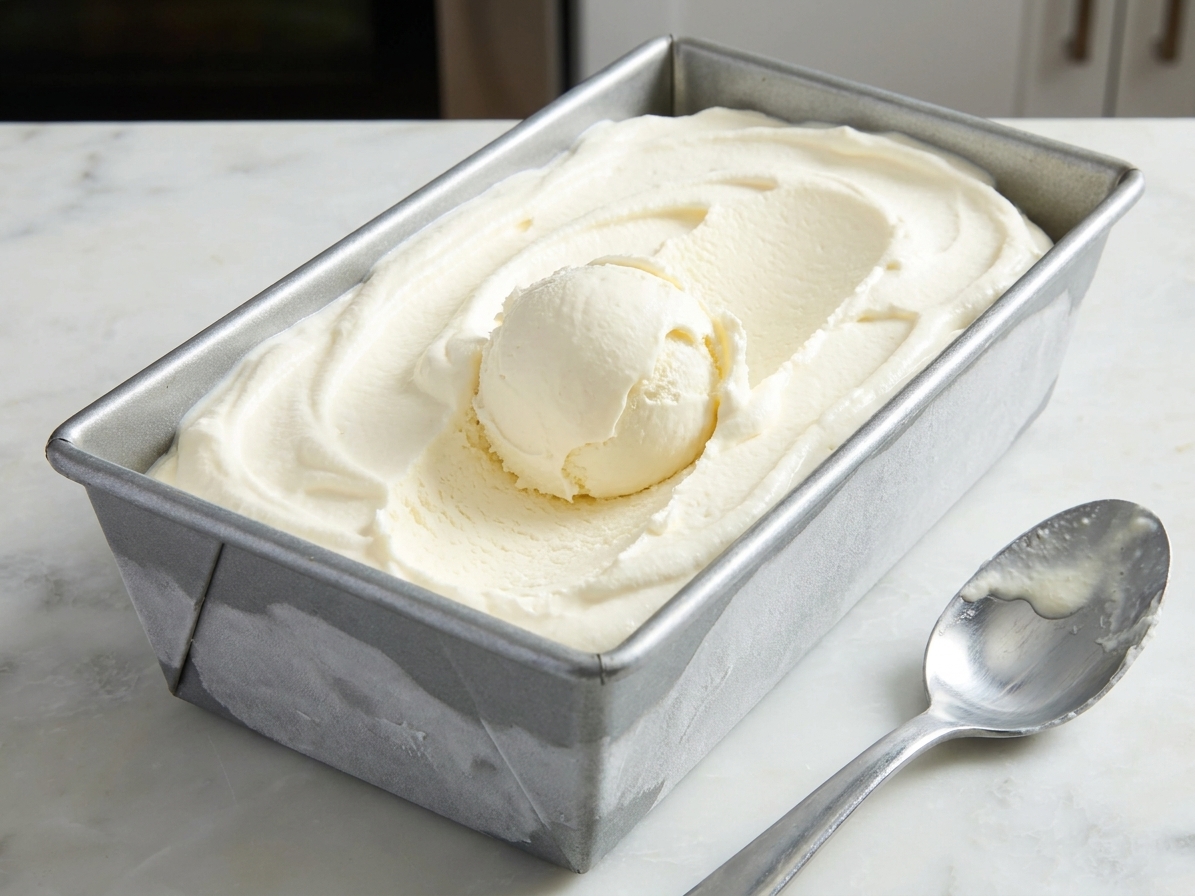
Full-fat ice cream gives the best texture and flavor. Light ice cream and low-sugar options can work, but the loaf may bake up drier or a little rubbery depending on the sweeteners and stabilizers. Also, note that some “frozen dessert” products are icier than true ice cream, and the loaf can turn out a bit more dense.
Why did my bread turn out gummy or dense?
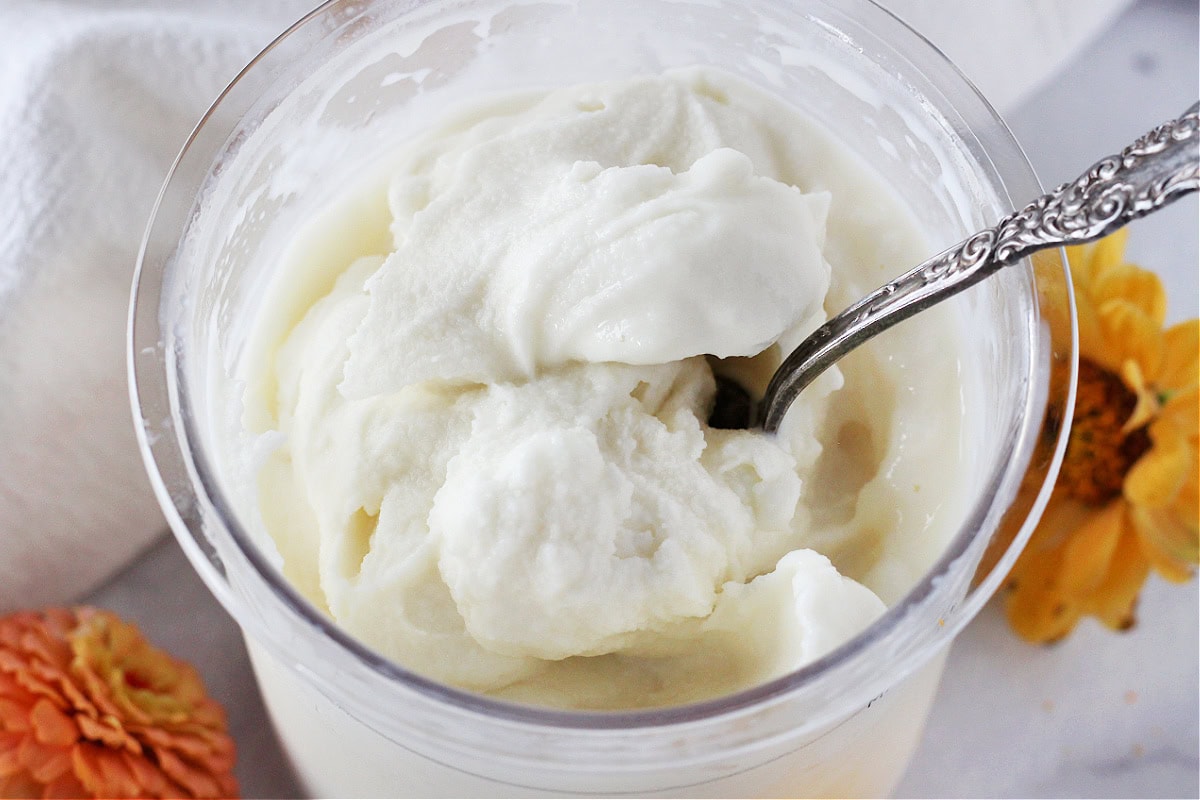
The two big culprits are overmixing and too much liquid. Stir just until the flour disappears. Also, measure flour by spooning into the cup and leveling. If your melted ice cream seems extra thin and watery, add 1 to 2 tablespoons of flour.
Can I add mix-ins?
Absolutely. Fold in up to 1/2 cup chocolate chips, chopped nuts, crushed cookies, or berries (toss berries in a teaspoon of flour first to reduce sinking). Fresh berries add moisture, so keep the amount modest and expect a slightly softer crumb.
What pans work?
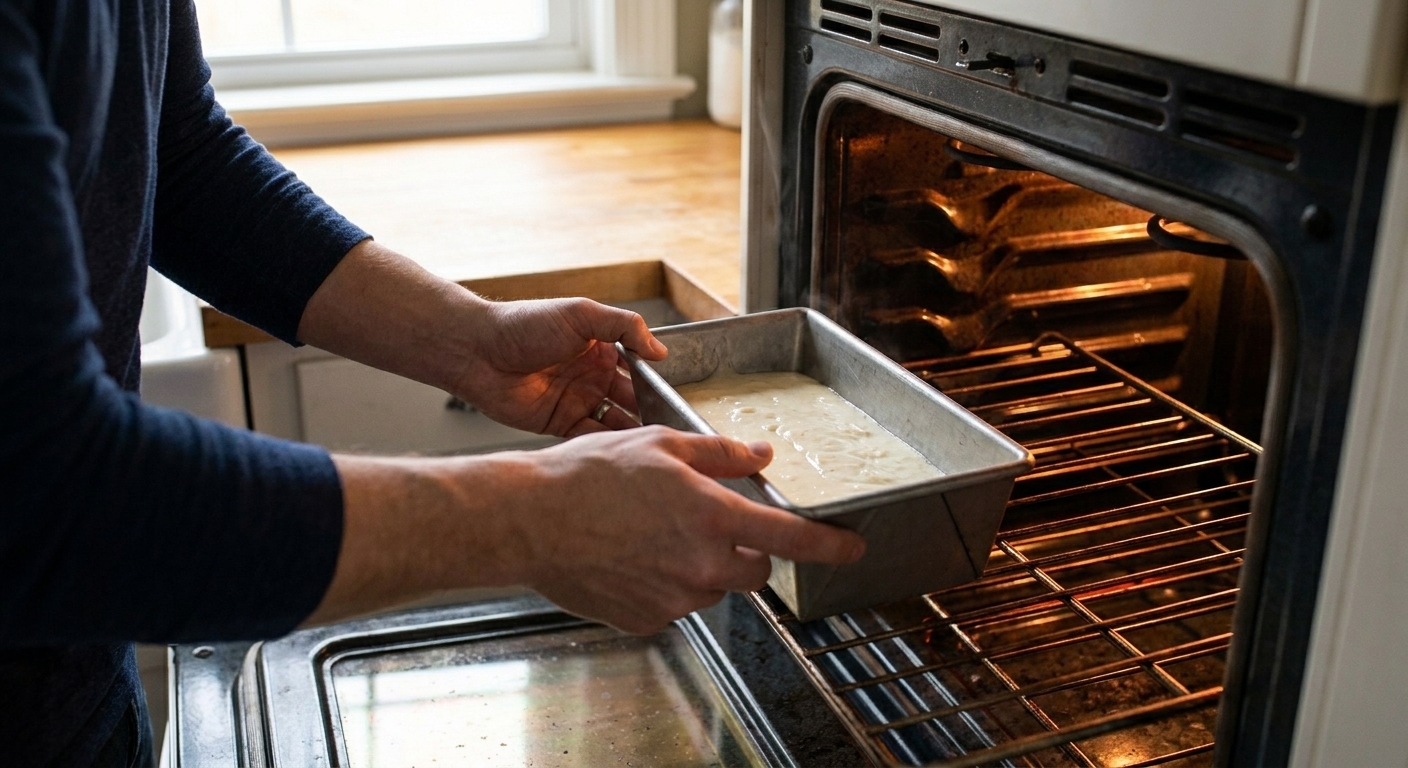
A 9x5-inch loaf pan is the easiest fit. An 8x4-inch pan also works, but the loaf will be taller and may need a few extra minutes. You can also bake this as muffins: fill lined cups about 2/3 full and start checking around 15 to 20 minutes.
How do I know it’s done?
The top should be set and golden, and a toothpick inserted in the center should come out clean or with a few moist crumbs. If it is browning too quickly, tent loosely with foil for the last 10 minutes. If you like a more precise cue, the center is usually done around 200 to 205°F.