Mom's Best Recipes
Recipe

Japanese Katsudon (Crispy Cutlet Rice Bowl With Egg)

Crispy pork or chicken katsu simmered quickly in a savory dashi onion broth, topped with soft-set egg and served over rice. Includes fixes for soggy cutlet and a broth that tastes too salty or too sweet.

Author By Matt Campbell
4.8
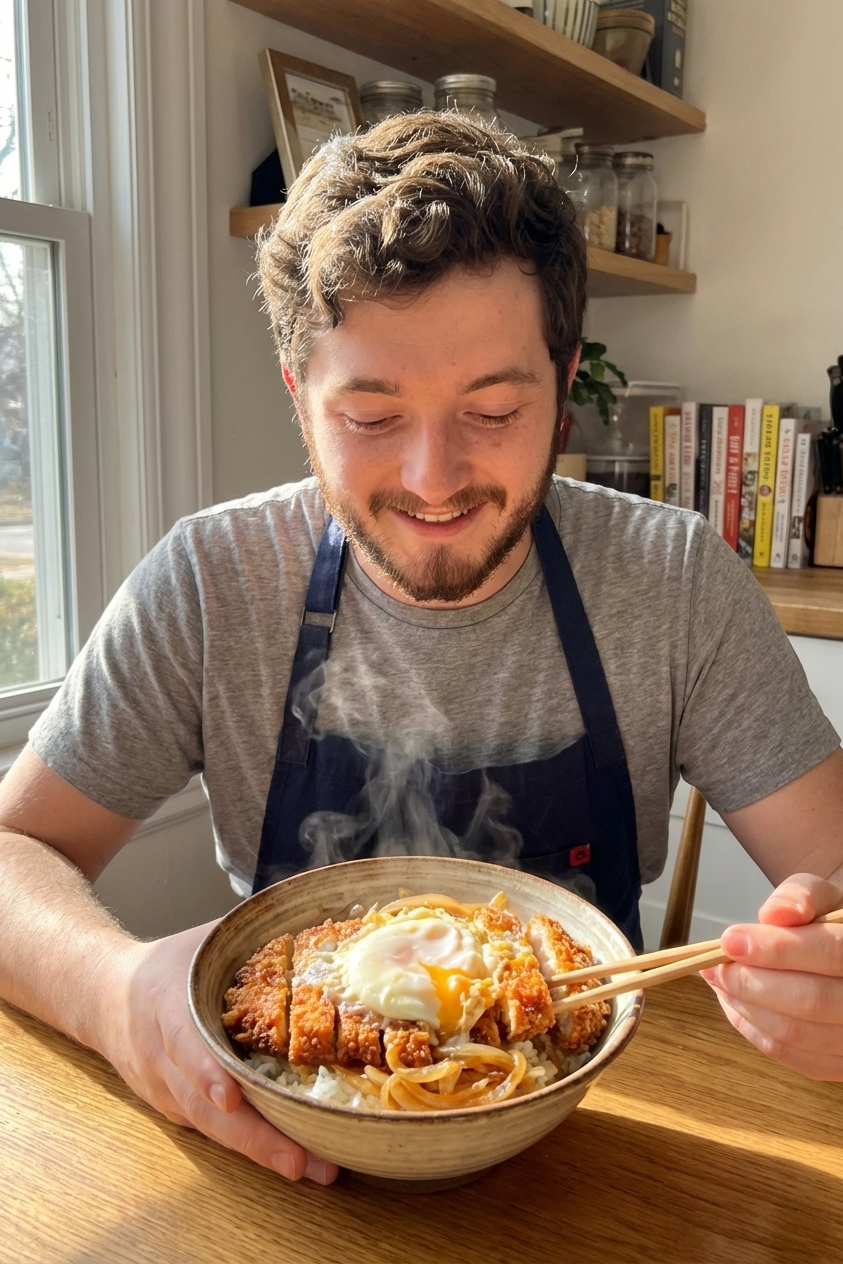
A steaming bowl of Japanese katsudon with sliced crispy pork cutlet, softly set egg, and caramelized onions over white rice in a cozy home kitchen, natural window light

Katsudon is what happens when crispy cutlet meets cozy rice bowl energy and decides to bring a soft, silky egg blanket to the party. You get crunchy edges, savory-sweet onions, a dashi broth that tastes like you meant it, and that classic Japanese comfort-food vibe that makes you eat faster than you planned.

The trick is keeping the cutlet crispy enough while still letting it soak up just a little of the broth. We are not making cutlet soup here. I will walk you through the timing, the egg technique, and the little flavor knobs you can turn so the broth lands exactly where you want it.

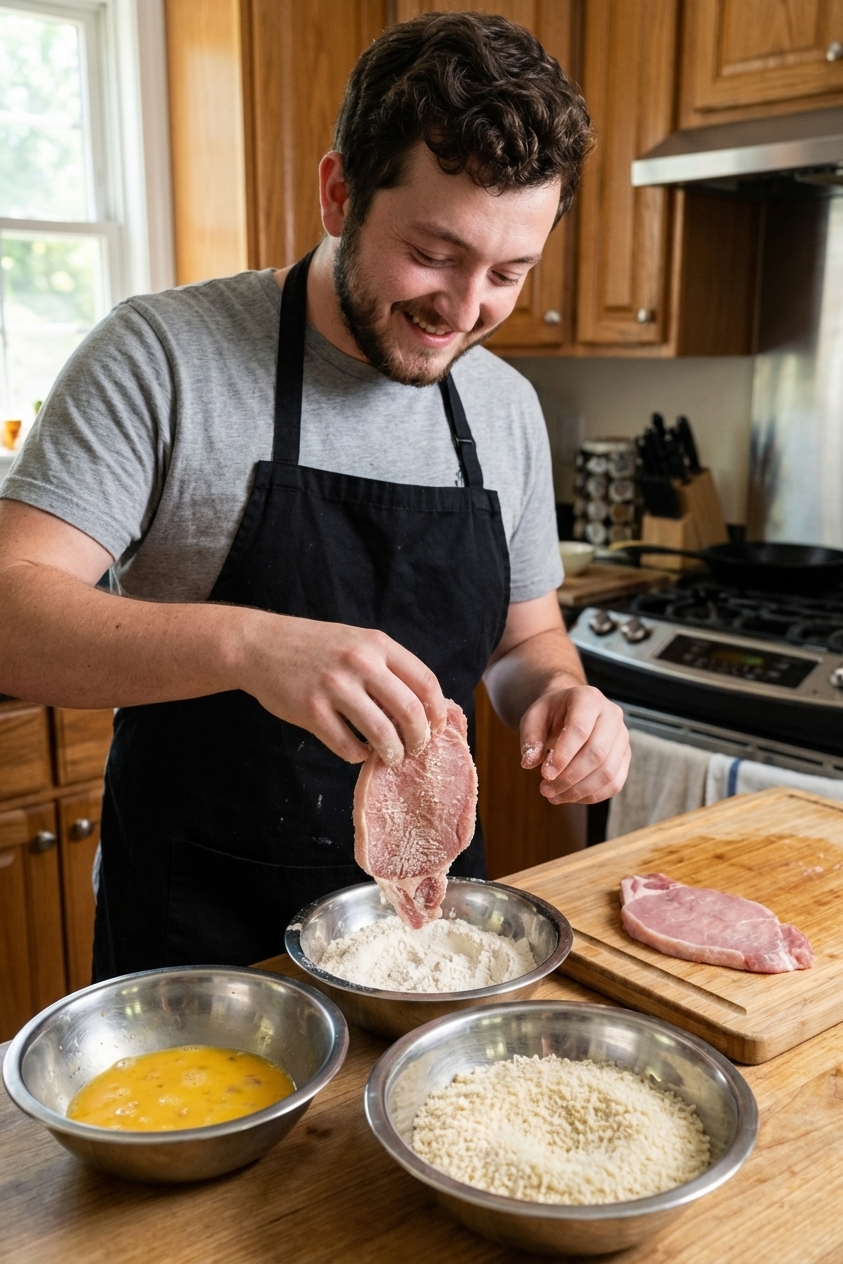
A breading station for katsu with flour, beaten egg, and panko next to a pounded pork cutlet on a cutting board, photographed on a kitchen counter

Why It Works

  • Crisp cutlet, not soggy. We fry the katsu until truly crisp, then simmer it briefly, and serve immediately. The cutlet soaks flavor without losing its personality.
  • Broth with balance. Dashi brings depth, soy sauce brings salt, mirin brings gloss and sweetness, and a small hit of sugar is optional. You can adjust fast if it tastes too strong.
  • Soft-set egg every time. Lower heat, lid on, and a gentle pour gives you custardy egg curds instead of dry scrambled egg.
  • Weeknight-friendly workflow. Cook rice while you fry, then the simmer step takes just a couple minutes.

Pairs Well With

Storage Tips

Katsudon is at its absolute best right after you make it, when the cutlet is still holding onto crisp edges. That said, leftovers can still be really good if you store them smart.

Best way to store

  • Store components separately when possible: rice in one container, cutlet in another, and the onion and broth with egg in a third. This keeps the cutlet from going fully soft.
  • If it is already assembled: store in an airtight container and accept that it becomes a soft, cozy bowl the next day. Still tasty, just less crunchy.

Fridge and freezer

  • Refrigerate: up to 3 days.
  • Freeze: freeze the fried cutlet (unsauced) for up to 2 months. Wrap tightly, then re-crisp in the oven or air fryer. I do not recommend freezing the egg and onion mixture because the texture gets weird.

Reheating

  • Cutlet: oven at 400°F for 8 to 12 minutes or air fryer at 375°F for 5 to 8 minutes until hot and crisp.
  • Onion and broth: rewarm gently in a small pan. If you have egg in it, keep heat low so it does not turn rubbery.
  • Rice: sprinkle with a teaspoon of water, cover, microwave until steamy.

Pro move: Re-crisp the cutlet first, then do a super quick 45 to 90 second simmer in the broth right before eating. That gets you closer to the original vibe.

Common Questions

Why did my cutlet get soggy?

The two biggest causes are (1) the cutlet was not fried long enough to really crisp, or (2) it simmered too long in the broth. Fry until deep golden and crunchy, then simmer briefly after slicing. Aim for 45 to 90 seconds for maximum crunch, or up to 2 minutes if you want it more soaked. Also, serve immediately. Katsudon waits for no one.

Can I use chicken instead of pork?

Yes. Chicken thighs stay extra juicy, chicken breast works too. Pound to an even thickness so it cooks evenly. Chicken can take a touch longer than pork depending on thickness, so use a thermometer to confirm doneness.

Do I need dashi?

Dashi is the flavor backbone, but you have options. Use instant dashi granules, a dashi packet, or make quick dashi from kombu and katsuobushi. In a pinch, use low-sodium chicken stock and add a small piece of kombu if you have it. It will not be identical, but it will still be delicious.

My broth tastes too salty. How do I fix it?

Add a splash of water or more dashi, then taste again. Rice also “dilutes” the perception of saltiness, but you still want the broth pleasant on its own. If you accidentally went heavy on soy sauce, a little extra mirin can round it out, but do not use sweetness as the only fix. Also note: soy sauce salt levels vary a lot by brand, so adjust to taste.

My broth tastes too sweet. How do I fix it?

Add a little more soy sauce or a small splash of dashi. If it is still too sweet, add a tiny splash of rice vinegar to brighten it. Go drop by drop. Vinegar is powerful. Also note: mirin and aji-mirin (mirin-style seasoning) can vary in sweetness, so taste as you go.

How do I get the egg soft, not scrambled?

Lower the heat before adding the egg, pour it in a thin stream, and cover. Cook just until the egg is barely set, about 45 to 90 seconds depending on your pan and burner. Residual heat finishes the job.

Is katsudon safe with slightly runny egg?

Soft-set egg is traditional, but undercooked eggs can pose a higher risk for some people. If you are pregnant, immunocompromised, very young, or older, consider using pasteurized eggs or cooking the egg fully. If you prefer fully cooked egg, extend the covered cook time by 30 to 60 seconds.
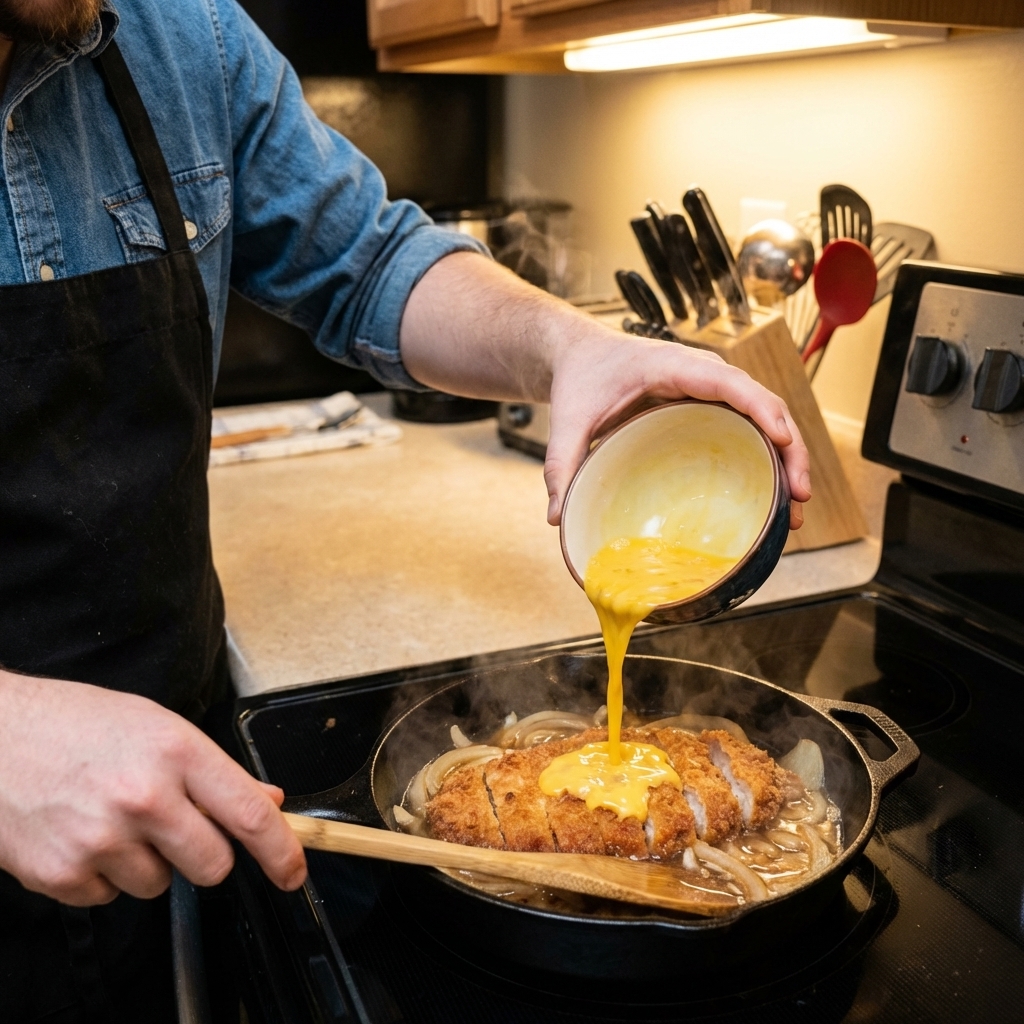

A small skillet with sliced fried cutlet and onions in simmering dashi broth as beaten egg is poured in, close-up cooking action photo

The first time I made katsudon at home, I treated it like a victory lap for my fried cutlet. I got cocky, simmered it too long, and basically invented “katsu oatmeal.” The flavor was there, but the crunch had left the building.

Now I make it like a friend who wants you to win. Fry until crisp, simmer fast, and eat while it is still singing. It is one of those dishes that feels like takeout, but you get to control the salt, the sweetness, and how runny the egg is. Also, you get to taste as you go, which is the whole point.