Mom's Best Recipes
Recipe

Juicy Burger Patties

Tender inside, crisp-edged outside, seasoned like you mean it.

Author By Matt Campbell
4.8
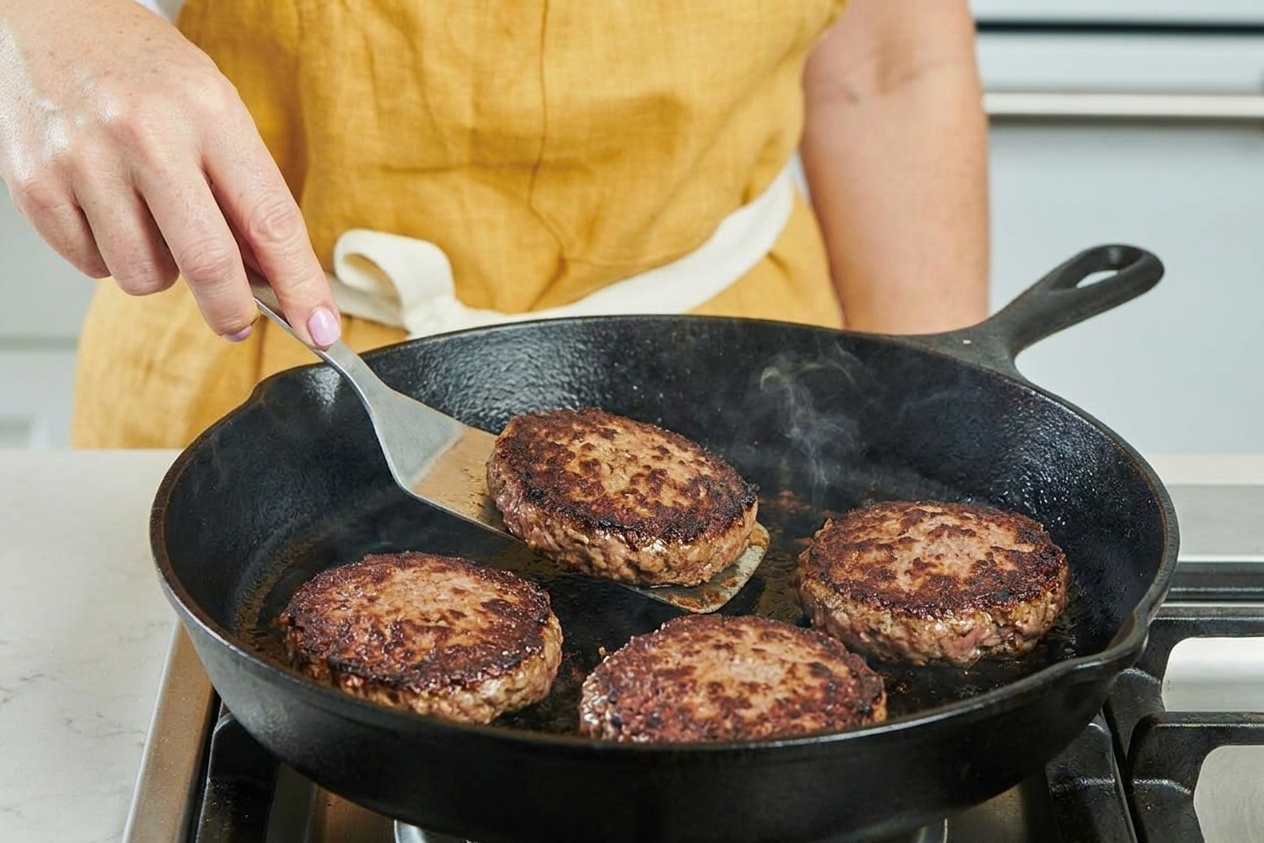
Two beef burger patties searing in a cast iron skillet with browned crust, faint wisps of steam, and a spatula resting on the pan edge in a warm home kitchen

There are two kinds of homemade burgers: the kind that tastes like a meatball on a bun, and the kind that makes you pause mid-bite because the edges are crisp, the center is juicy, and the seasoning hits like you actually meant it.

This is the second kind. We keep the ingredients simple (no egg, no breadcrumbs, no weird “binder” situation), and we focus on the stuff that matters: the right fat level, gentle handling, a little thumbprint dimple, and a hot pan or grill.

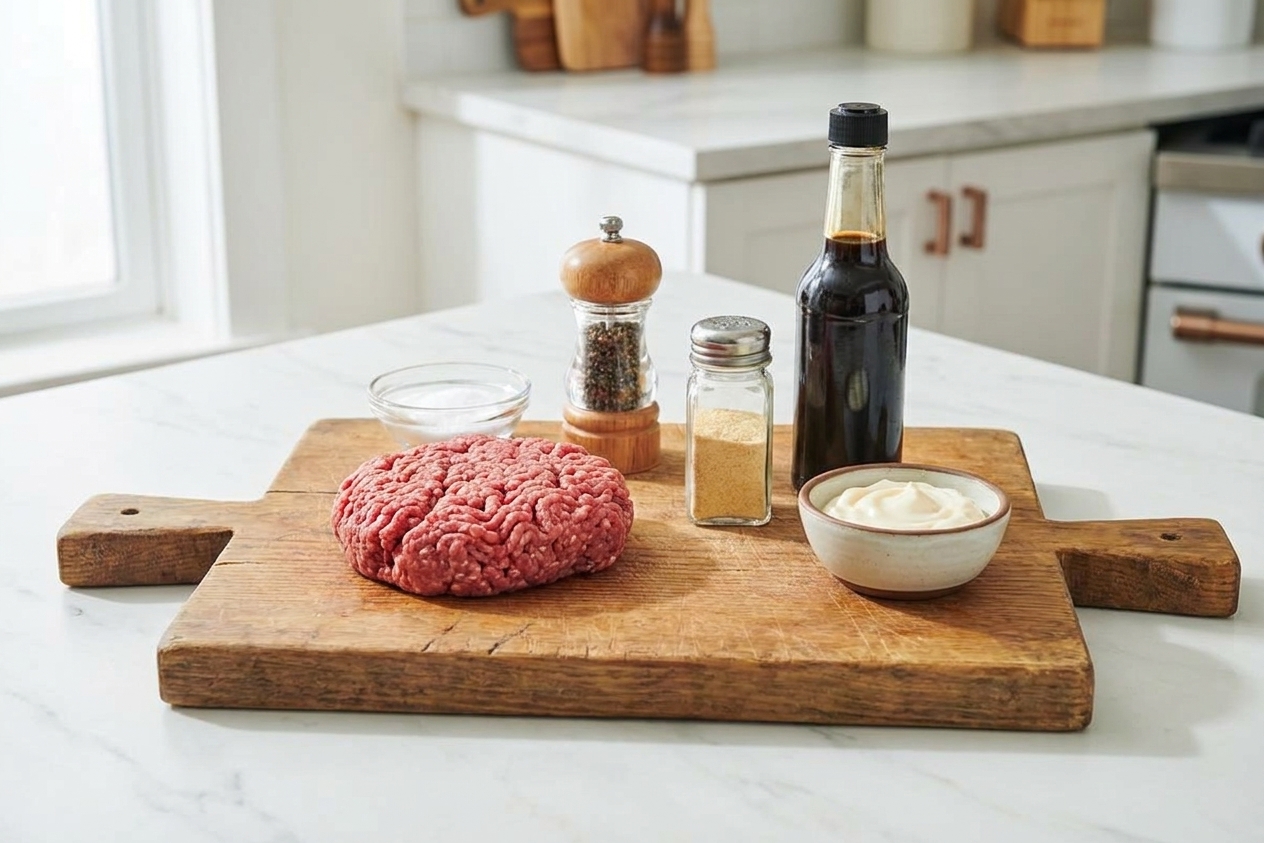
Ground beef, salt, black pepper, garlic powder, Worcestershire sauce, and a small bowl of mayonnaise arranged on a wooden cutting board on a kitchen counter

Why It Works

You will end up with burger patties that:

  • Stay juicy thanks to 80/20 beef and minimal handling
  • Sear hard for those crisp, browned edges that taste like a diner smash burger, but thicker and easier
  • Season evenly without turning the meat dense
  • Cook predictably whether you use a skillet, griddle, or grill

Bonus: these hold up great for meal prep. Cook them once, then reheat without turning them into hockey pucks.

Pairs Well With

Storage Tips

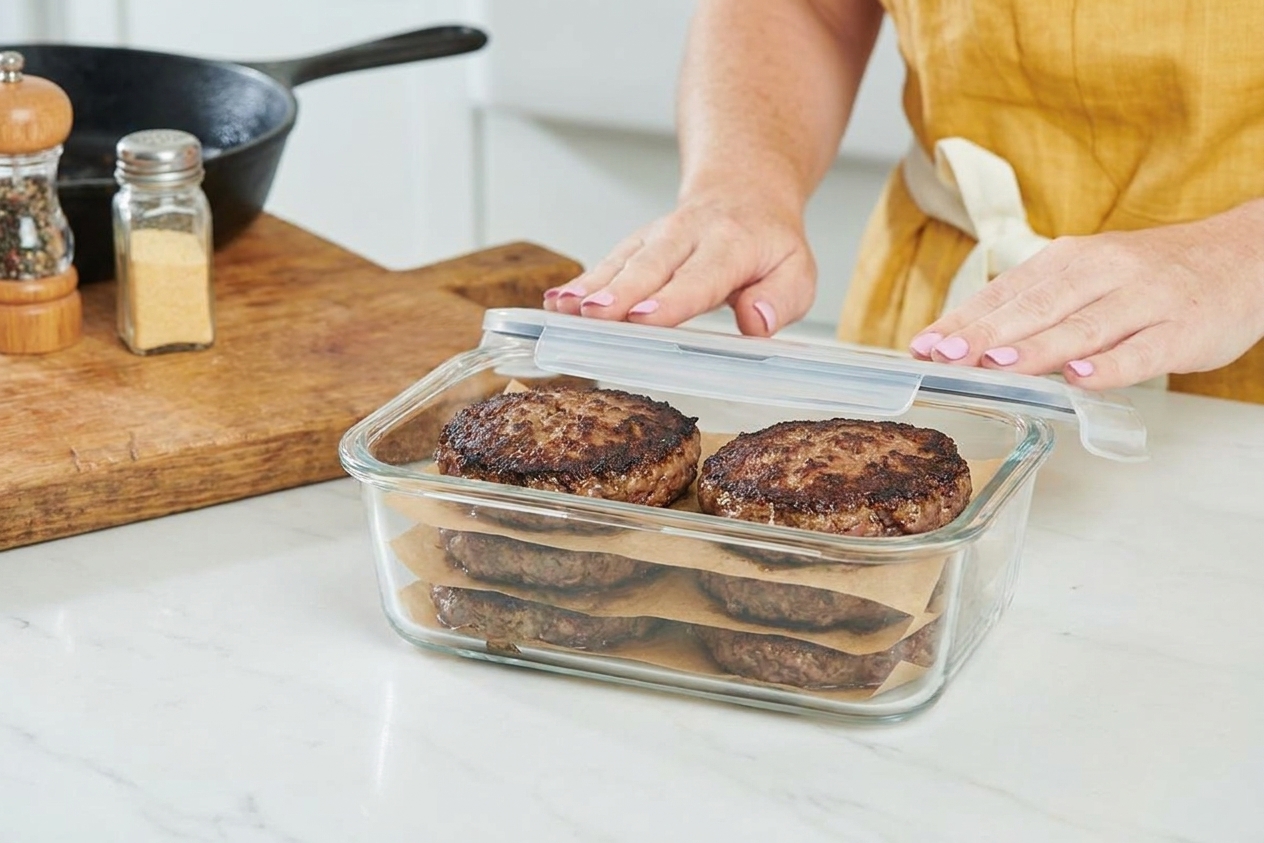
Fridge: Store cooked patties in an airtight container for up to 4 days. Keep buns and toppings separate so everything stays crisp and fresh.

Freezer: Freeze cooked patties (or raw patties) for up to 3 months. Wrap each patty tightly in plastic wrap, then place in a freezer bag.

Reheat:

  • Skillet: Medium-low heat with a splash of water, cover 2 to 3 minutes to warm through.
  • Microwave: Works in a pinch. Cover and use 50 to 70 percent power so it reheats gently.
  • From frozen (cooked): Thaw overnight in the fridge for best texture, then reheat in a covered skillet.

Cooked burger patties stacked in a glass meal prep container with parchment between layers on a kitchen counter

Common Questions

What ground beef is best for burger patties?

80/20 is the sweet spot. Leaner beef (like 90/10) can work, but it dries out faster and needs extra care. If you only have lean beef, adding about 1 tablespoon mayonnaise per pound can help it eat juicier (it adds a little fat and helps it stay tender). Just keep mixing to a minimum.

Should I mix seasonings into the meat?

For this recipe, yes, lightly. Mix the garlic powder and Worcestershire in gently before shaping so the flavor is even and you do not get Worcestershire splatter or scorching in a ripping-hot pan. Then keep the outside seasoning simple: salt and pepper right before cooking.

Key rule: mix as little as possible. Overmixing is how burgers turn bouncy and dense.

When do I salt burgers?

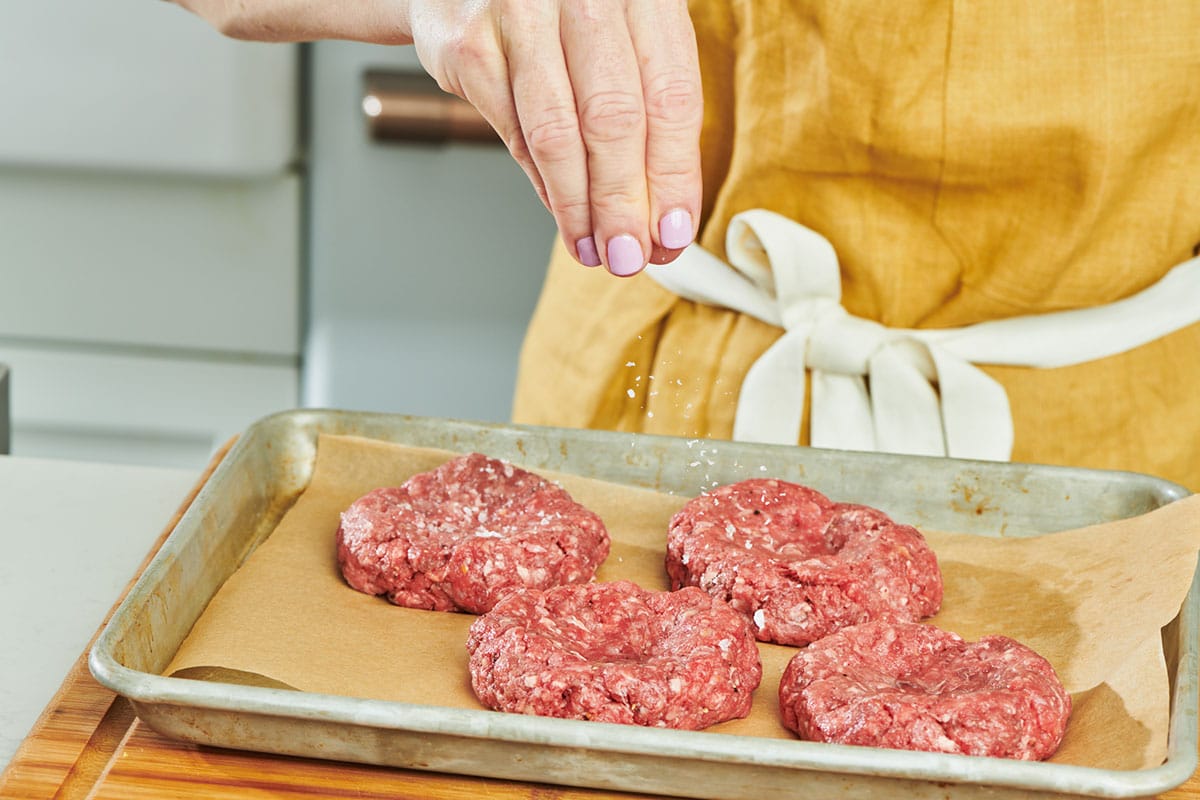
Salt the outside right before cooking. Salting too early can pull moisture to the surface and tighten the texture.

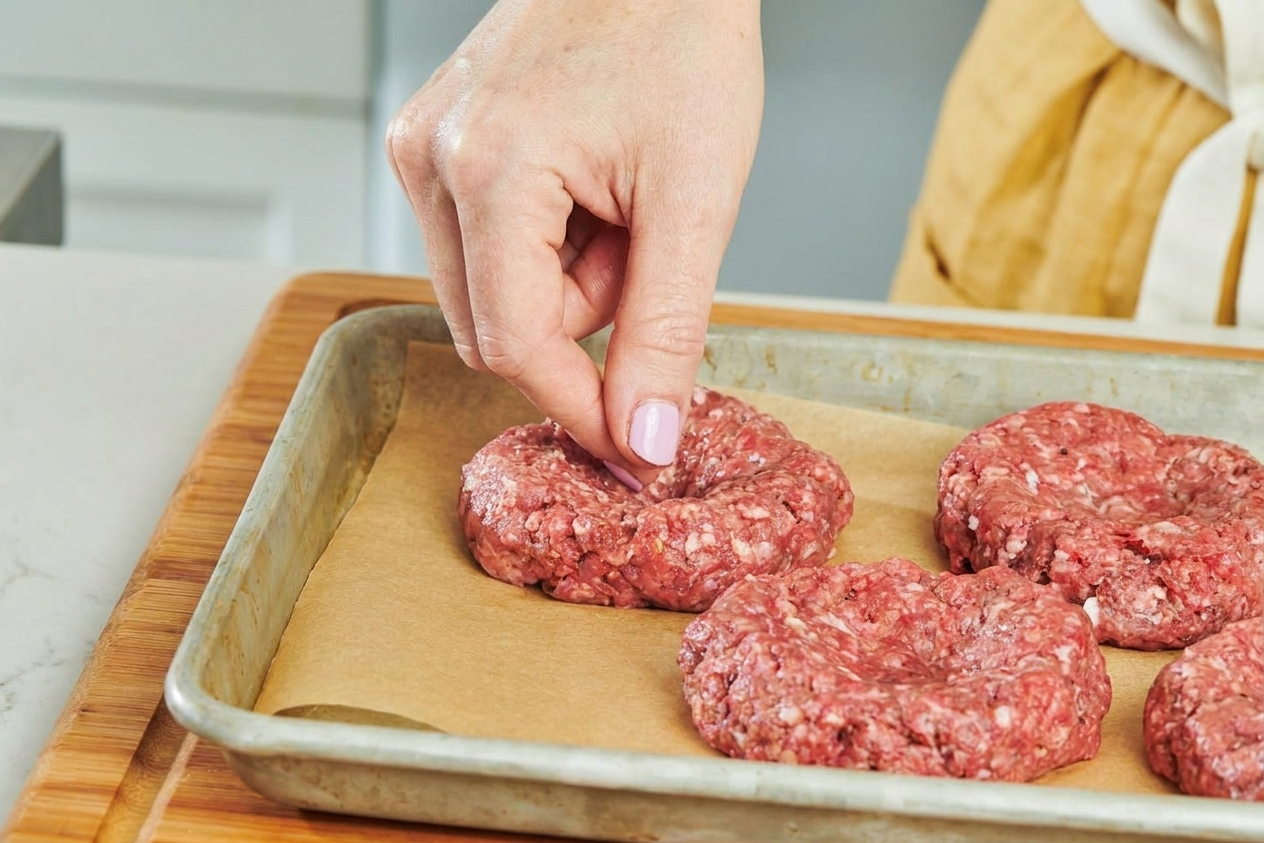
Why the dimple in the center?

It helps prevent the patty from puffing up like a domed meatball. You get a flatter burger that stacks nicely on a bun.

Can I make these on the grill?

Yes. Use medium-high heat, clean grates, and do not smash the patty on the grill. Flip once if you can.

How do I know when burgers are done?

The most reliable move is an instant-read thermometer. These are final temps. Pull the burgers a few degrees early because they typically rise about 2 to 5°F as they rest.

  • Medium-rare: 130 to 135°F (higher food safety risk with ground beef)
  • Medium: 140 to 145°F (higher food safety risk with ground beef)
  • Medium-well: 150 to 155°F
  • Well-done: 160°F

Food safety note: US guidance commonly recommends cooking ground beef to 160°F. If you choose a lower temperature, you are accepting more risk. It is not recommended for kids, pregnant people, older adults, or anyone immunocompromised.

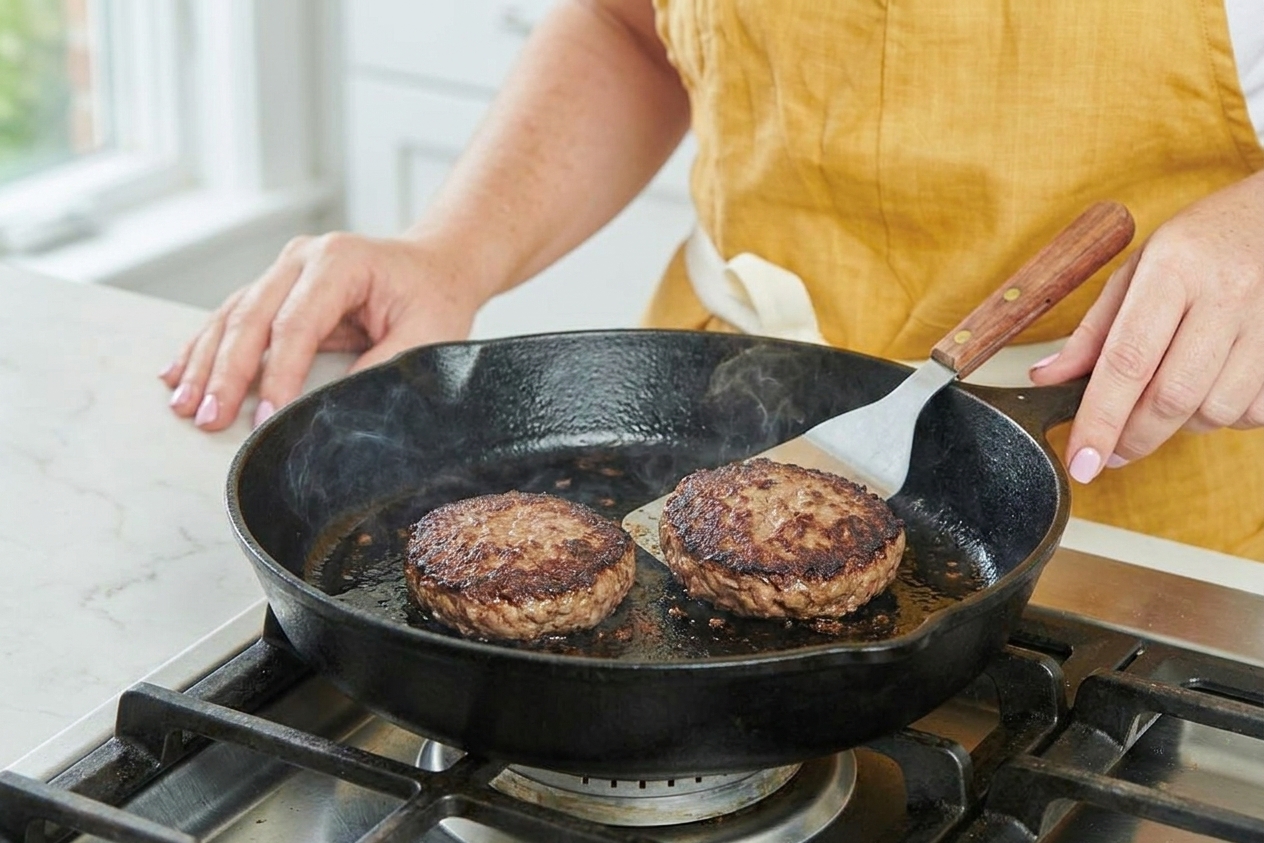
I used to treat burger night like a test. I would add extra stuff to the meat, mix too much, press too hard, and then wonder why my “juicy” burger had the vibe of a dry meatball.

What finally fixed it was getting a little lazier in the best way. Buy beef with enough fat, handle it gently, salt at the last second, and let a hot pan do the heavy lifting. The result tastes like you tried harder than you did, which is basically my favorite kind of cooking.