Mom's Best Recipes
Recipe

Simple Boneless Skinless Chicken Breast

A no-fuss skillet method that gives you golden, crisp edges and a juicy center every time, plus a quick pan sauce that tastes like you tried harder than you did.

Author By Matt Campbell
4.8
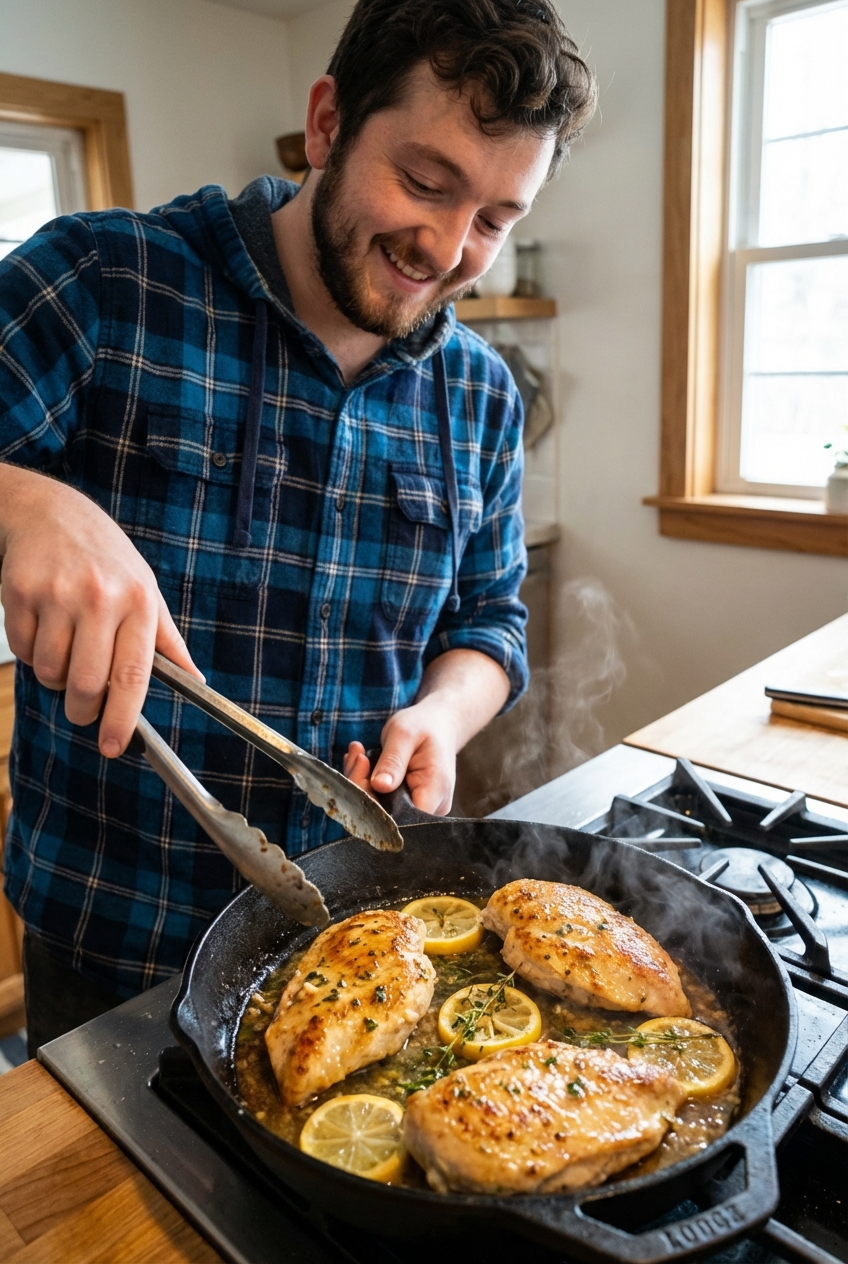
Juicy pan-seared boneless skinless chicken breasts in a cast iron skillet with a glossy garlic lemon pan sauce

Chicken breast gets a bad rap because it is often cooked like it owes someone money. Too hot, too long, and suddenly you are chewing on a protein coaster. This recipe is the weeknight reset: quick, simple, and built around one goal, juicy and tender, with crisp golden edges for a little excitement.

We are doing three small things that make a huge difference: lightly pounding for even thickness, a quick dry brine for better seasoning and moisture, and a short rest at the end so the juices stay where they belong. Bonus: we finish with a fast lemon garlic pan sauce that turns plain chicken into “wait, what did you put in this?” chicken.
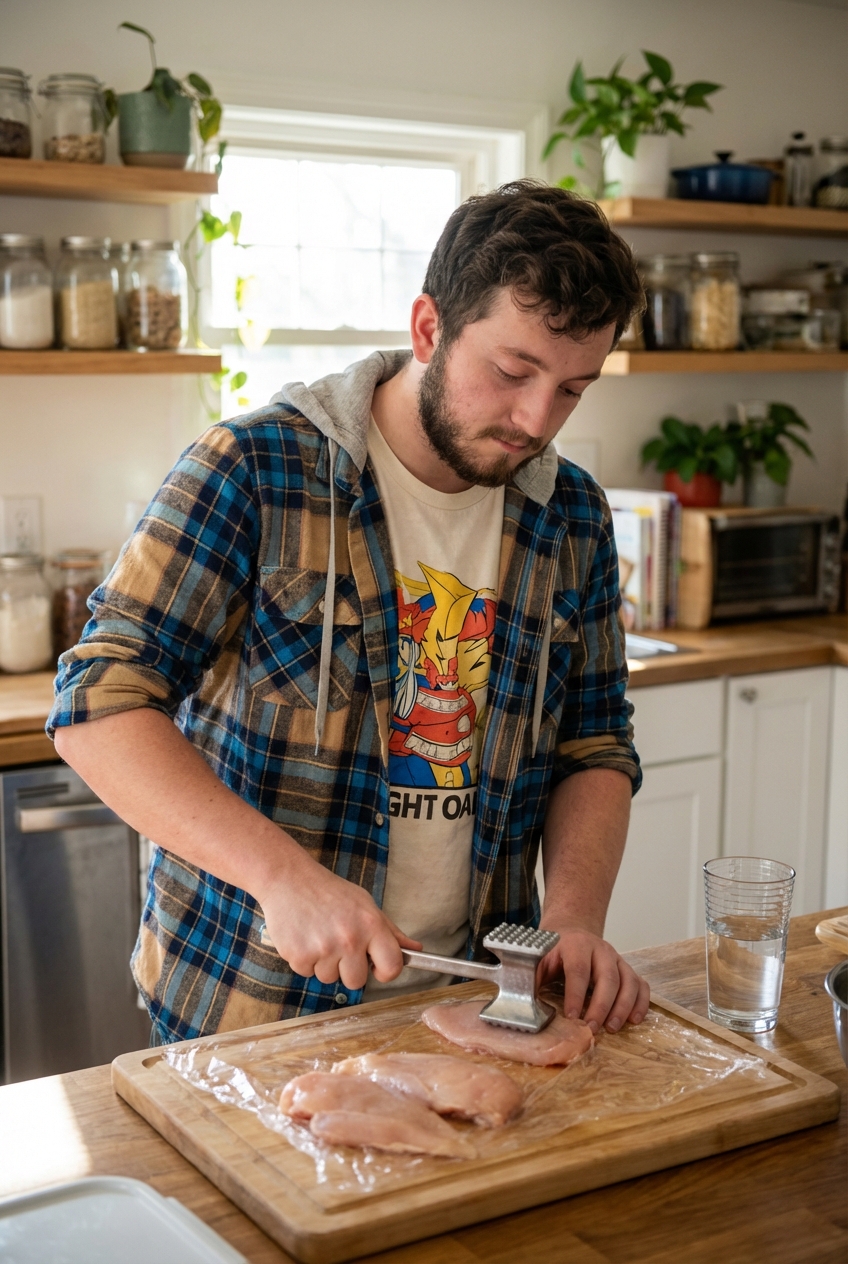
Boneless skinless chicken breasts on a cutting board being lightly pounded to even thickness

Why It Works

  • Even cooking from gently pounding the thick end so nothing dries out while the center catches up.
  • Better flavor all the way through thanks to a quick salt rest that seasons the meat, not just the outside.
  • Juicier chicken because we cook to temperature, then rest. No guesswork, no overcooking spiral.
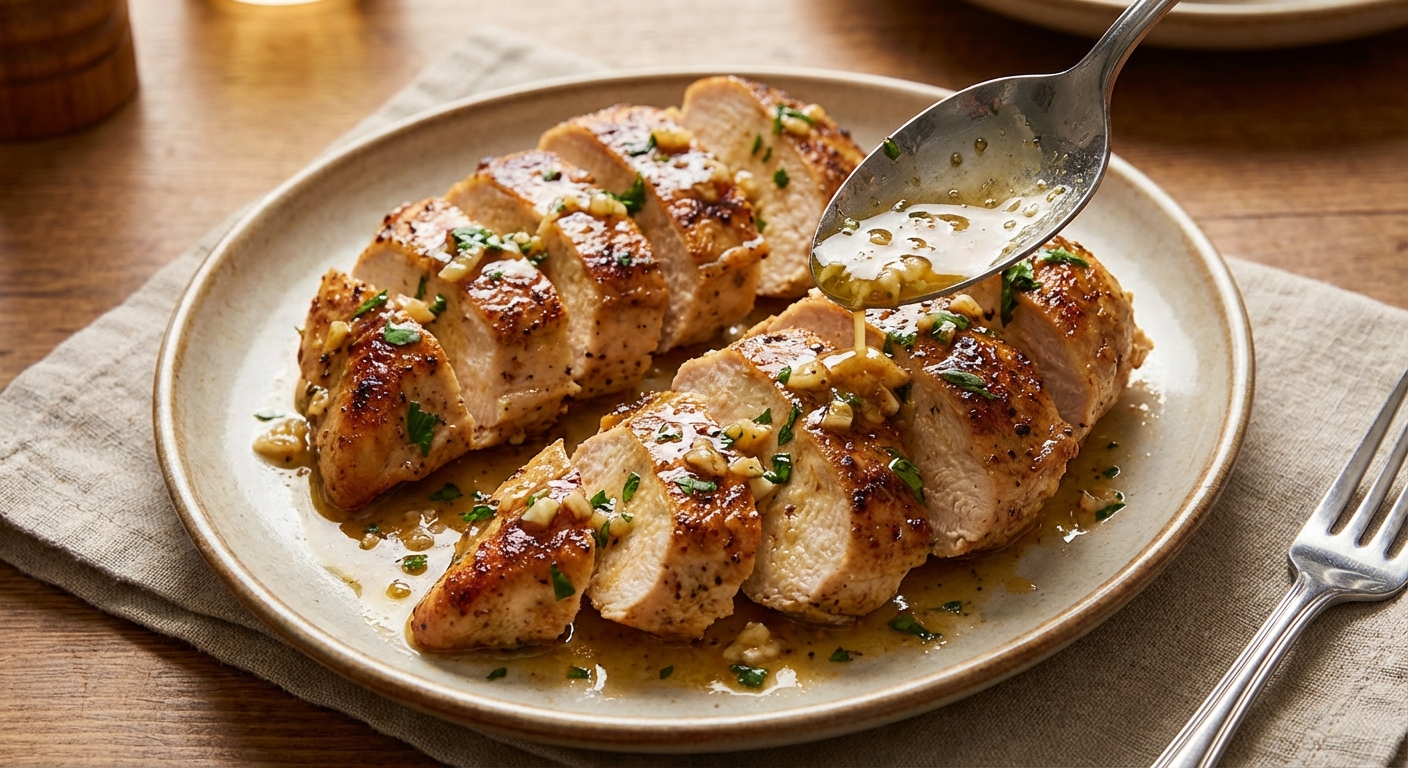
  • One-pan payoff with a bright, buttery pan sauce made from the browned bits in your skillet.

Pairs Well With

Storage Tips

Refrigerate: Store cooled chicken in an airtight container for up to 4 days. Keep any pan sauce separate if you can, or spoon it over the chicken to help prevent drying out.

Freeze: Freeze sliced or whole breasts in a freezer bag with as much air removed as possible for up to 3 months. A little sauce in the bag is not a bad idea.

Reheat without wrecking it:

  • Skillet: Add a splash of water or broth, cover, and warm on low until heated through.
  • Microwave: Slice first, cover, and heat in short bursts with a spoonful of water or sauce.
  • Oven: Wrap in foil with a tablespoon of broth, warm at 325°F until hot.

Leftover move: Slice it cold and toss into salads, wraps, quesadillas, or stir-fry at the very end so it does not overcook again.

Common Questions

How do I keep chicken breast from drying out?

Cook to temperature, not vibes. Pull the chicken at 160°F and let it rest 5 minutes. It will carry over to 165°F and stay juicy.

Do I really need to pound it?

You do not have to, but it makes everything easier. Even thickness means the thin end does not turn dry while the thick end is still undercooked.

What if I do not have a meat thermometer?

You can still do it, but it is trickier. Look for firm but springy chicken, clear juices, and no translucent center when you slice the thickest part. If you cook chicken breast often, a thermometer is the cheapest kitchen confidence boost you can buy.

Can I bake this instead?

Yes. Sear first for color, then bake at 425°F until it hits 160°F, usually 8 to 14 minutes depending on thickness. Rest before slicing.

Can I use chicken thighs?

Absolutely, but thighs like a higher finished temp. Cook to 175°F to 195°F for best texture, and expect a little longer cook time.

Is the pan sauce optional?

Totally. The chicken is great on its own, but the sauce is the easiest way to make it feel restaurant-y with basically no extra work.

I used to treat chicken breast like a speed run: crank the heat, flip a few times, hope for the best, and wonder why it tasted like dry regret. The first time I actually slowed down enough to pound it evenly and cook to temperature, it felt almost unfair how much better it was. Now this is my default “I need dinner to behave” recipe. It is calm, reliable, and still gives you that little thrill when you cut in and the juices are right there, doing what they are supposed to do.