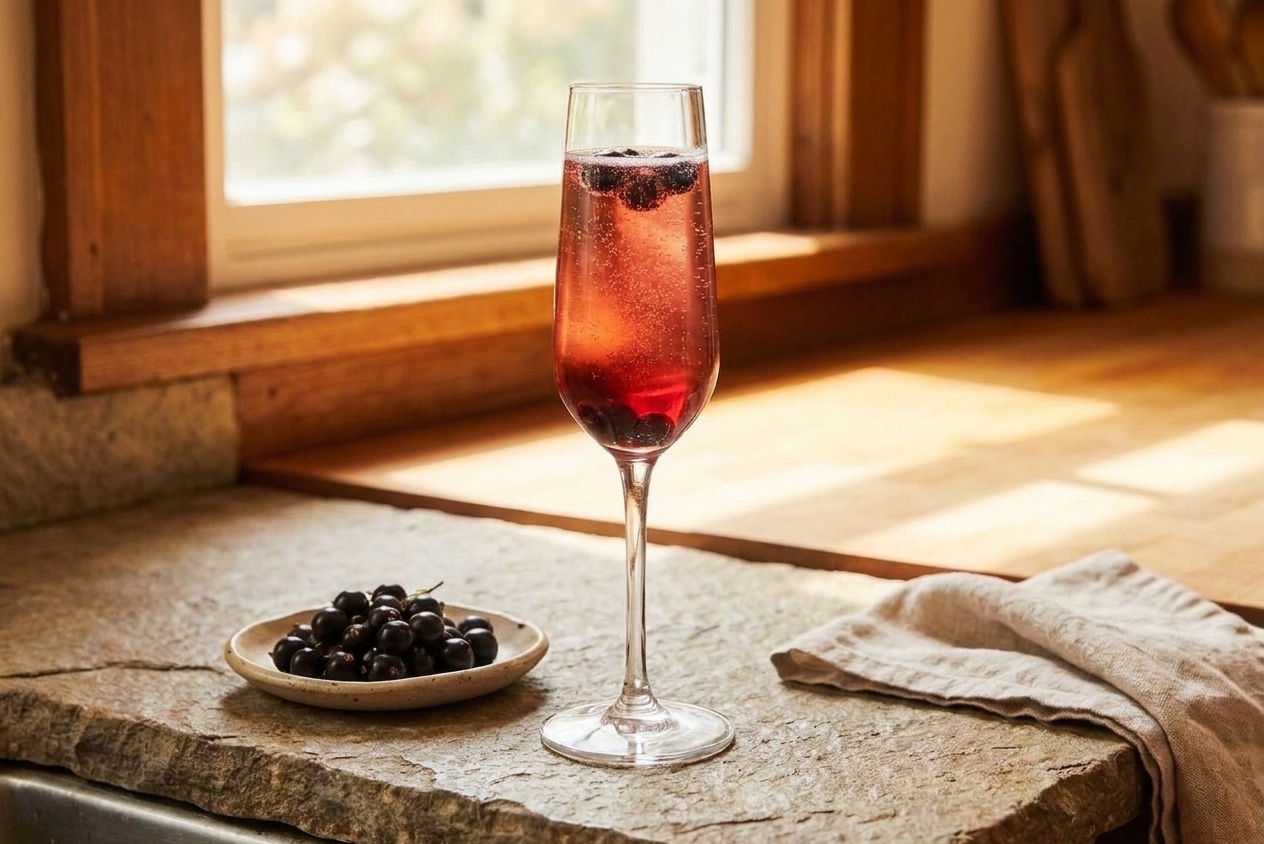
What is the difference between Kir and Kir Royale?
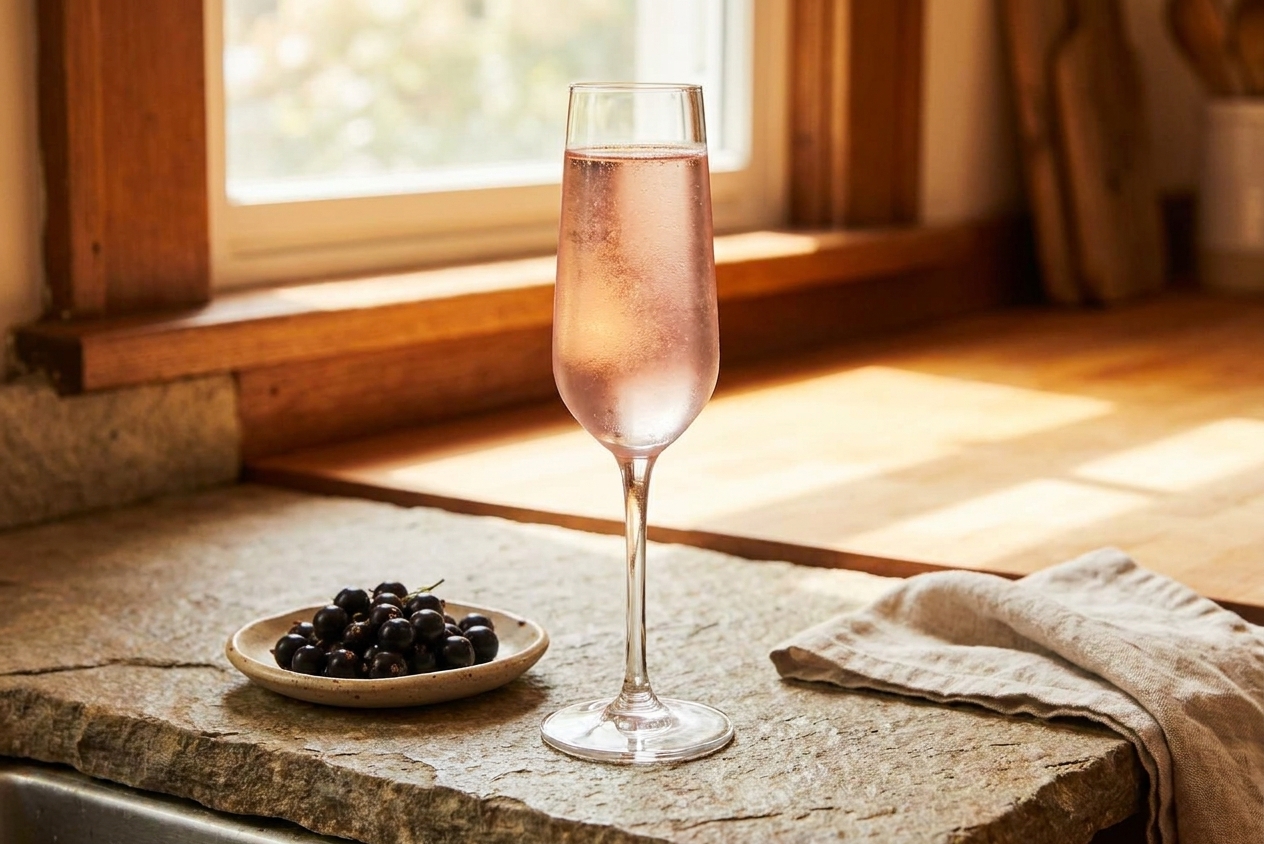
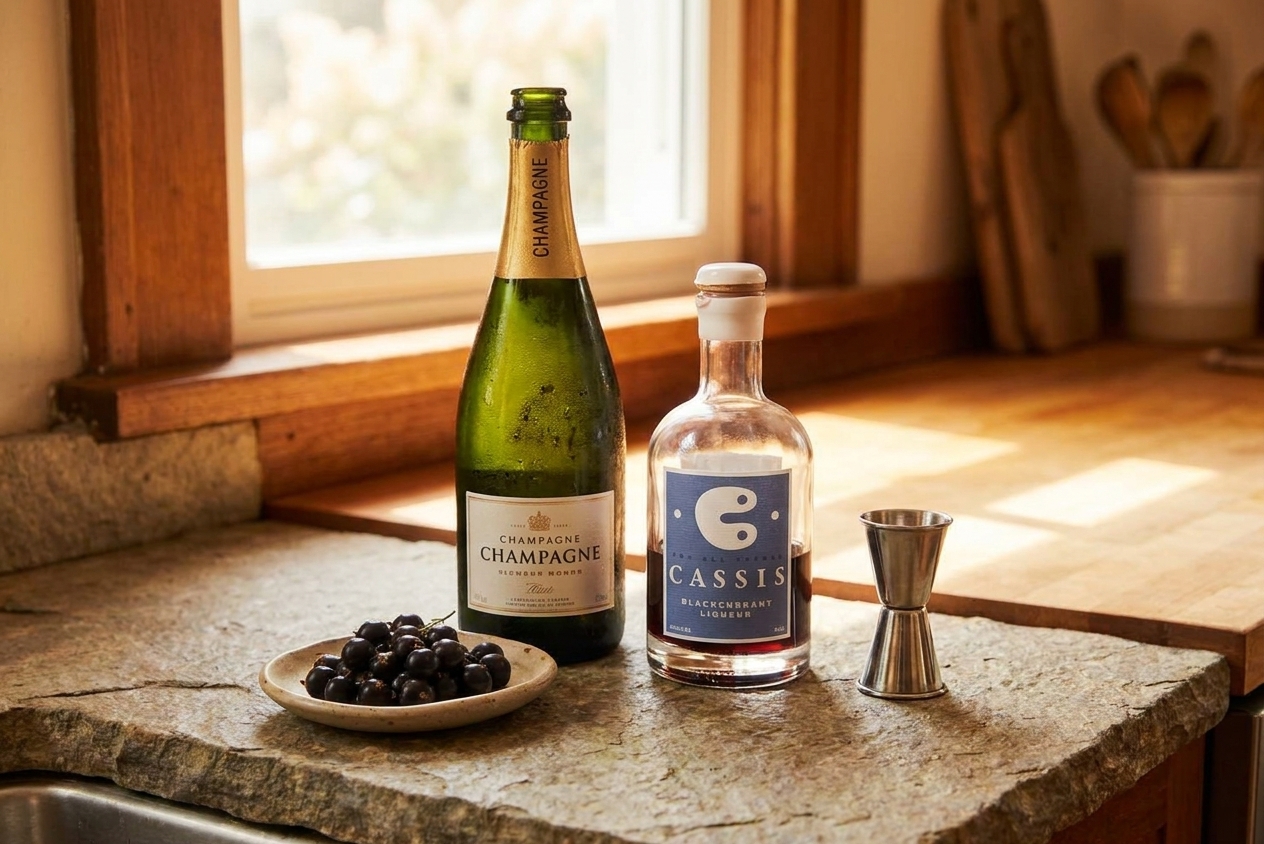
Kir is crème de cassis topped with dry white wine (often Bourgogne Aligoté, or another crisp Burgundian-style white). Kir Royale swaps the still wine for Champagne or another dry sparkling wine, which makes it more festive and more bubbly.
What is the best ratio for a Kir Royale?
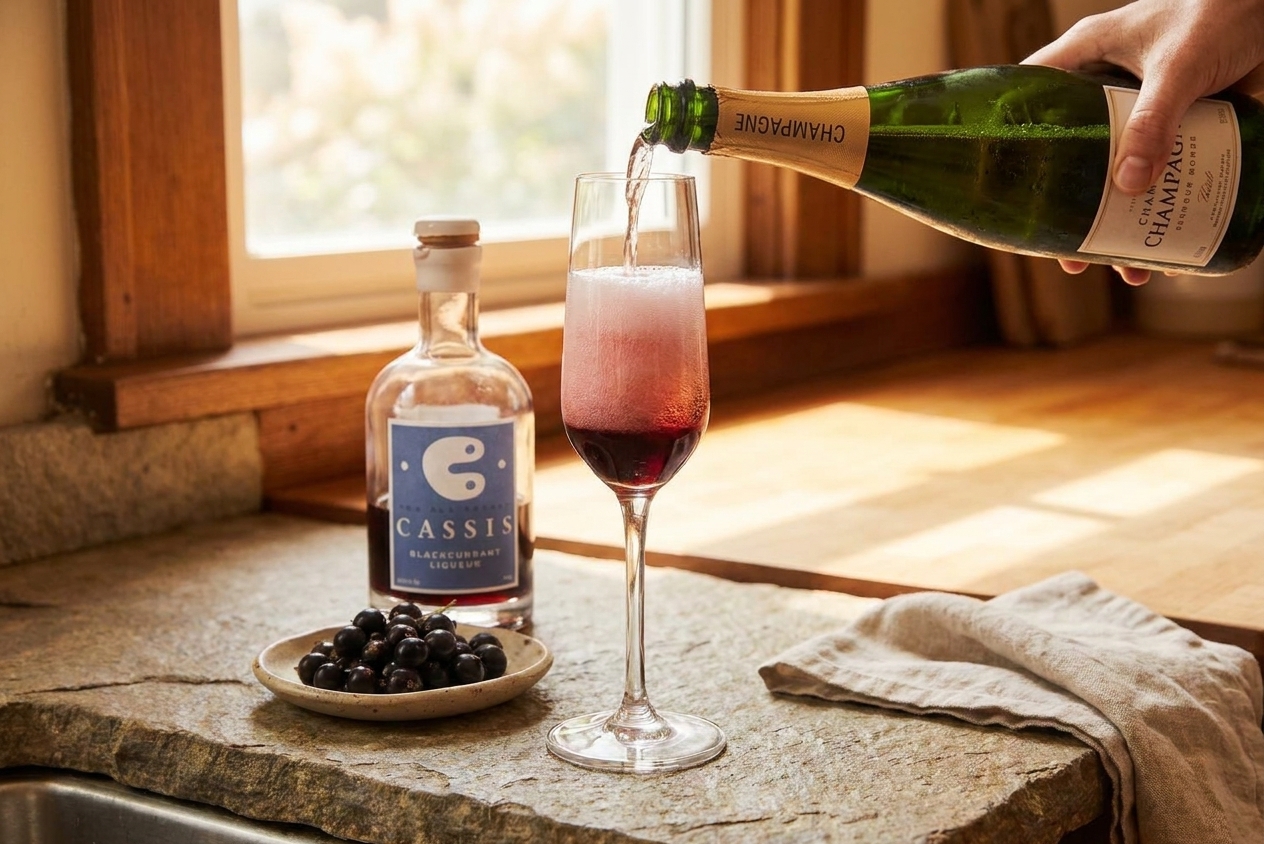
Think of this as a great starting point, not a single sacred rule. I like 1/2 ounce cassis topped with 4 to 5 ounces Champagne in a flute. If you want it sweeter or more berry-forward, go up to 1 ounce cassis. Past that, it starts to taste like adult fruit punch.
Do you put cassis in first or Champagne first?
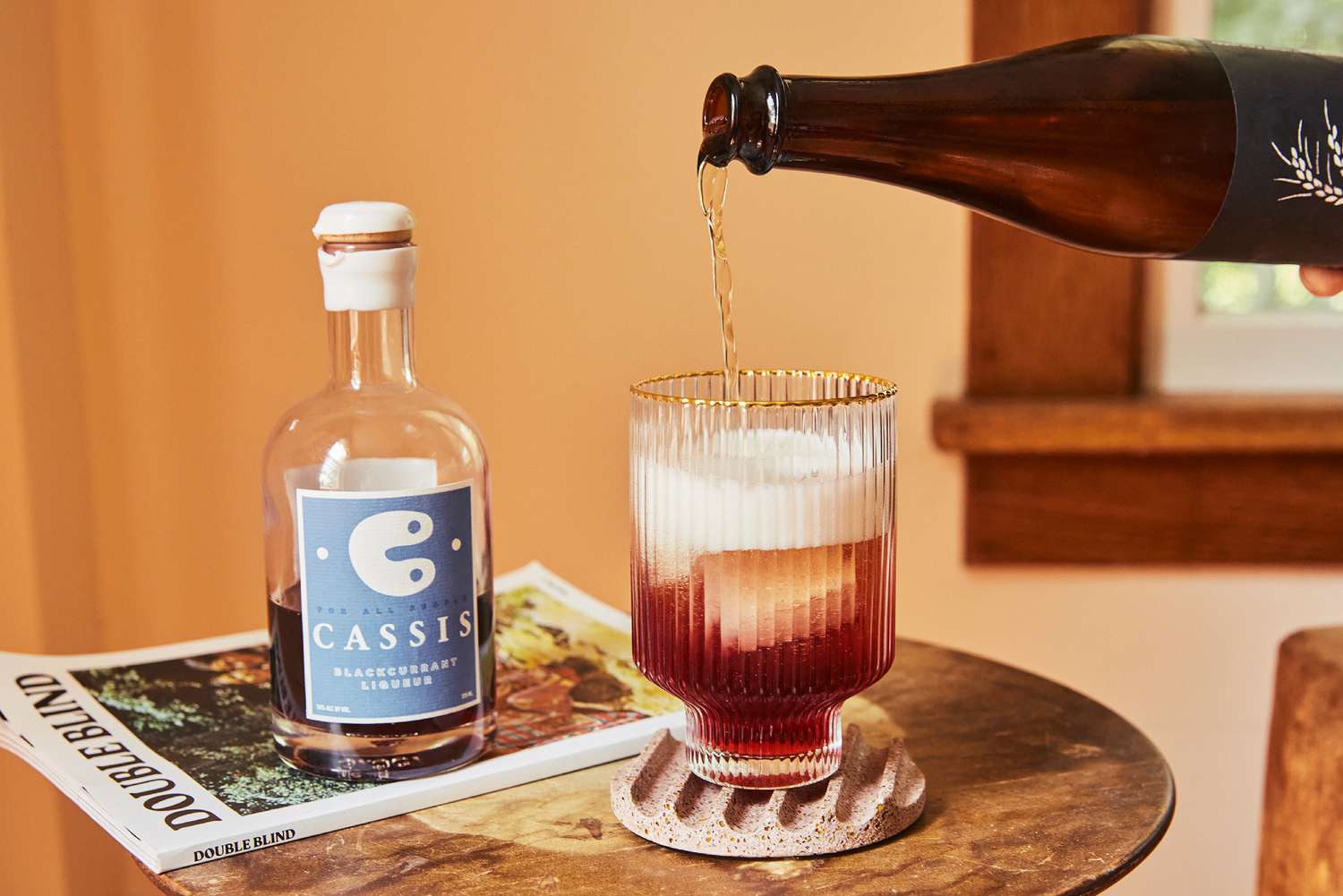
You will see it done both ways. I usually do cassis first, then gently top with Champagne. It mixes naturally without much fuss, and you do not have to aim a tiny stream of cassis into a full glass. If you are very bubble-protective, you can pour Champagne first and then add cassis slowly down the side of the glass. Either way, go gentle and skip aggressive stirring.
Can I use Prosecco or Cava instead of Champagne?
Absolutely. Champagne is traditional, but any brut (dry) sparkling wine works well. A brut Prosecco makes a softer, fruitier Kir Royale. Cava is crisp and often a great value. Avoid demi-sec unless you reduce the cassis, because sweet plus sweet gets cloying fast.
What can I use instead of crème de cassis?
If cassis is hard to find, try crème de framboise (raspberry) or crème de mûre (blackberry). In a pinch, a small spoon of blackcurrant jam thinned with a splash of warm water can work, but it will be cloudier and less seamless than liqueur.
Should I stir a Kir Royale?
Usually no. Build it gently and let it mingle. If the cassis is stubbornly sitting at the bottom, do one small swirl of the glass, not a full stir.