Mom's Best Recipes
Recipe

Koshari

A wildly comforting Egyptian bowl of rice, lentils, and pasta topped with chickpeas, crispy onions, and two bold sauces.

Author By Matt Campbell
4.8
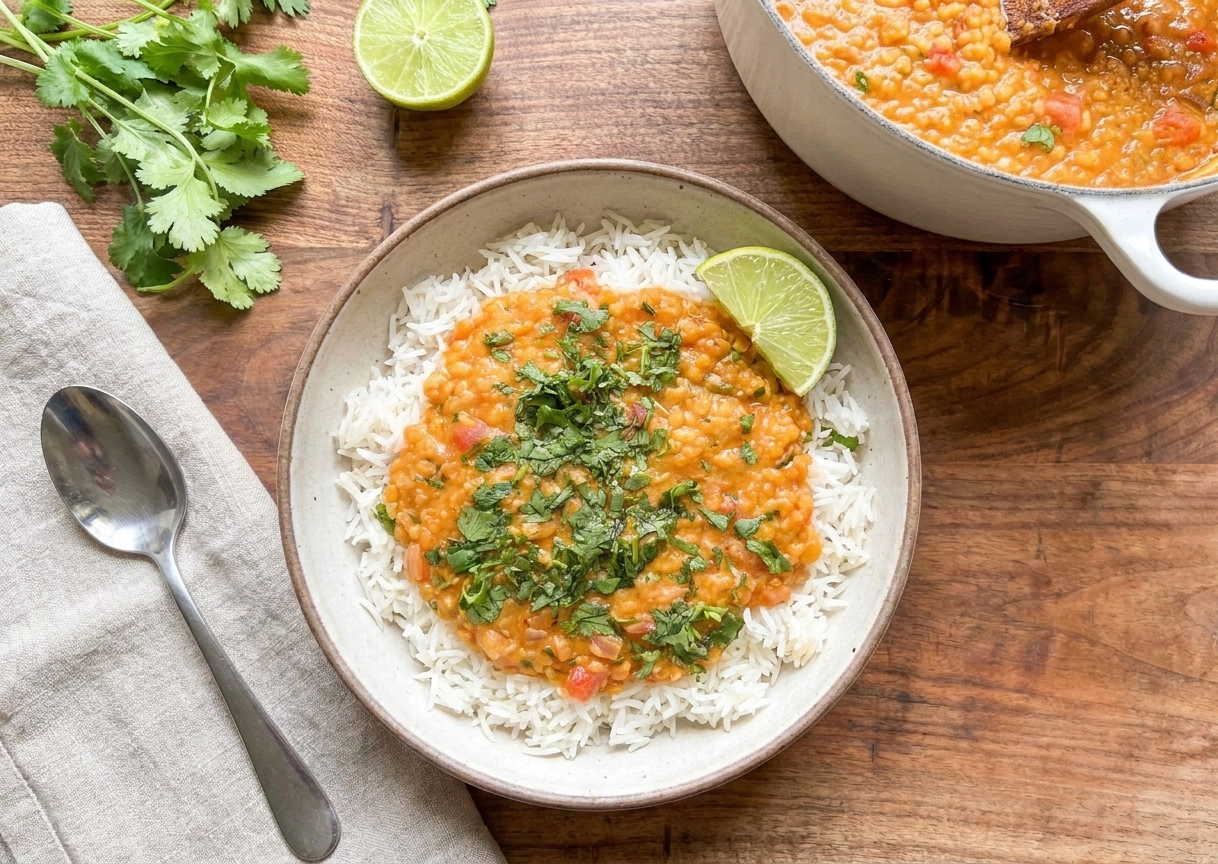
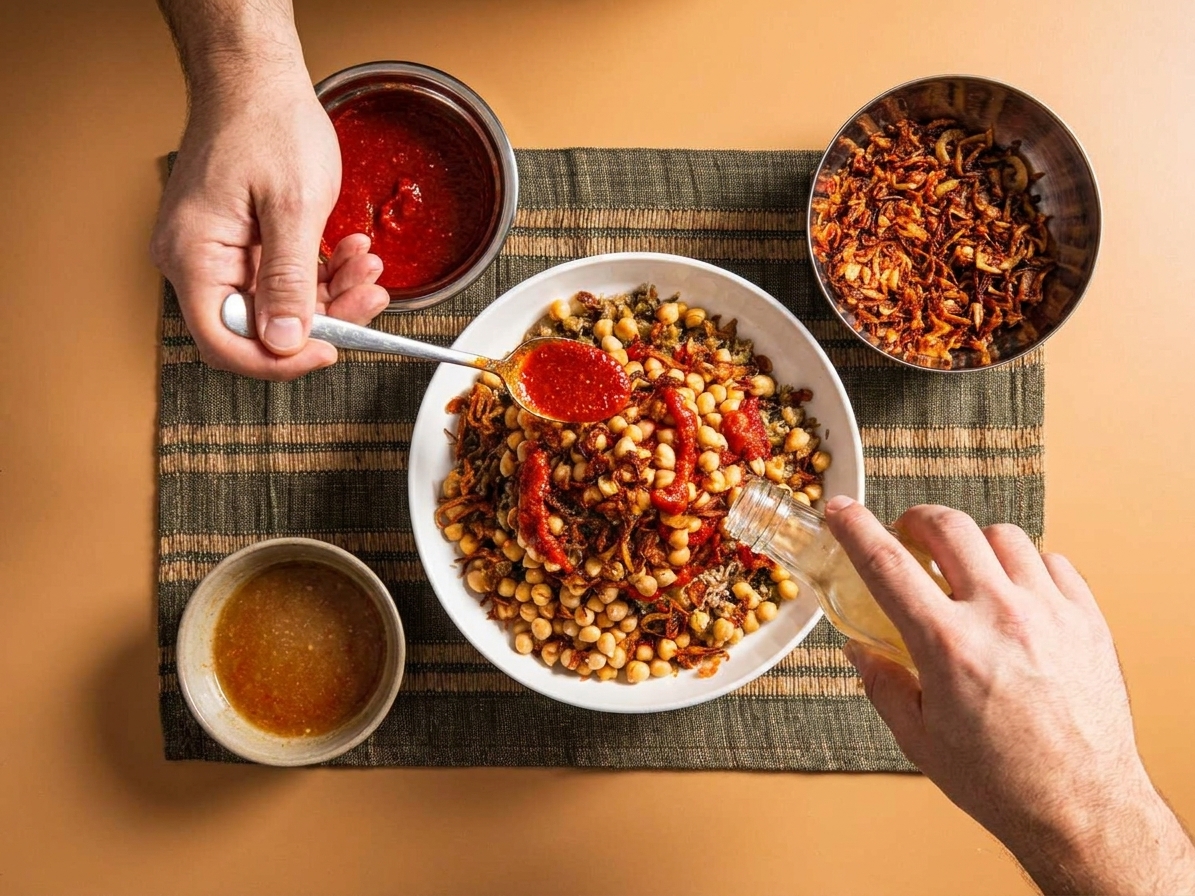
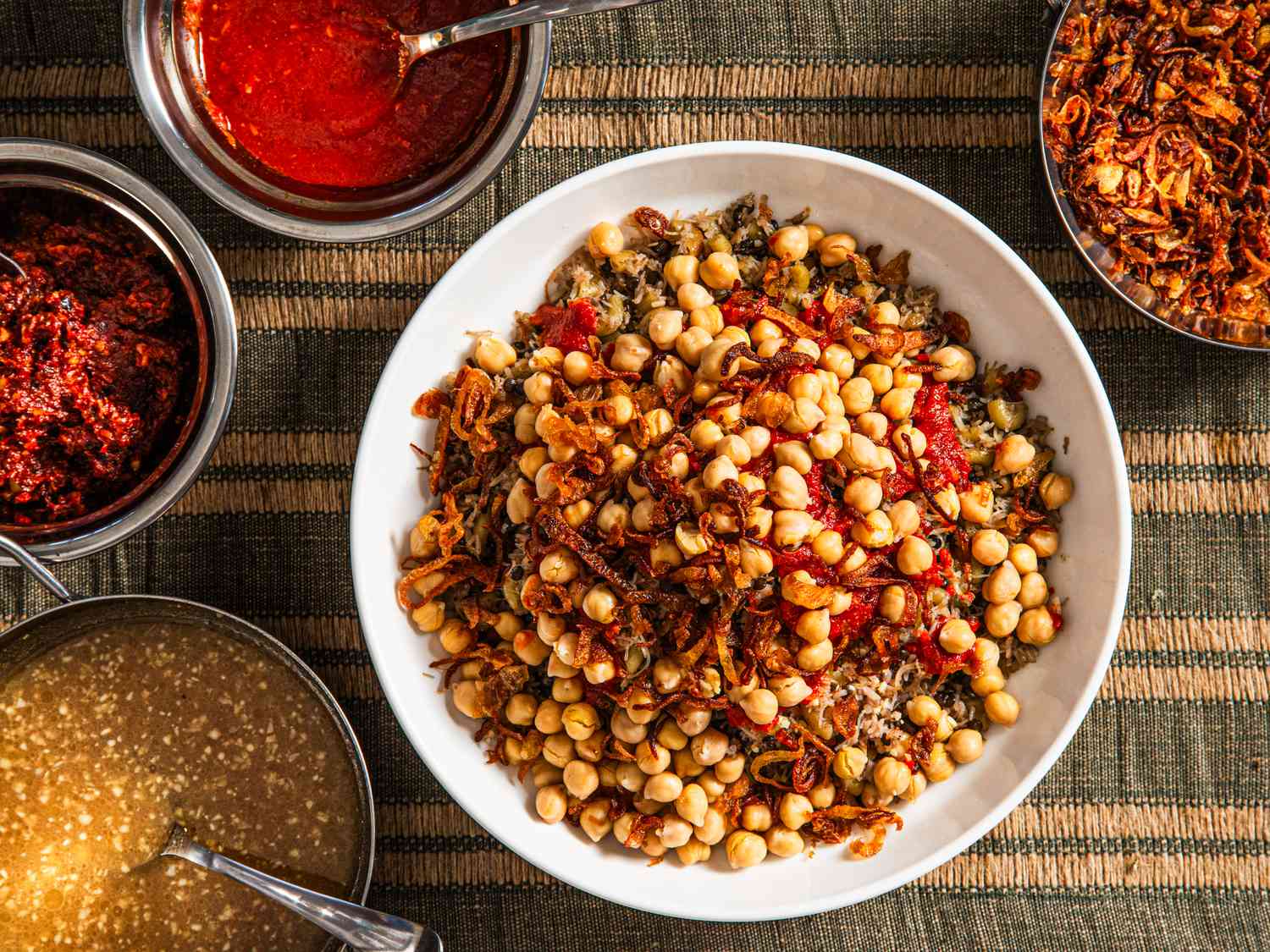
A plated bowl of Egyptian koshari with layers of rice, lentils, and pasta, topped with chickpeas and a generous pile of crispy fried onions, with small bowls of red tomato sauce and garlic vinegar on a neutral kitchen table

Koshari is the kind of meal that looks like you cleaned out the pantry on purpose. Rice. Lentils. Pasta. Chickpeas. A mountain of crispy onions. Then you hit it with a bright, spiced tomato sauce and a sharp little garlic vinegar drizzle and suddenly it makes perfect sense.

This is beloved Egyptian comfort food and classic street food for a reason. It is filling, budget-friendly, and built for people who want big flavor without a pile of fancy ingredients. My version keeps the steps clear and the payoff high: cozy carbs, crisp edges, and that moment where the tangy sauce cuts through everything and you go back in for “just one more bite.”
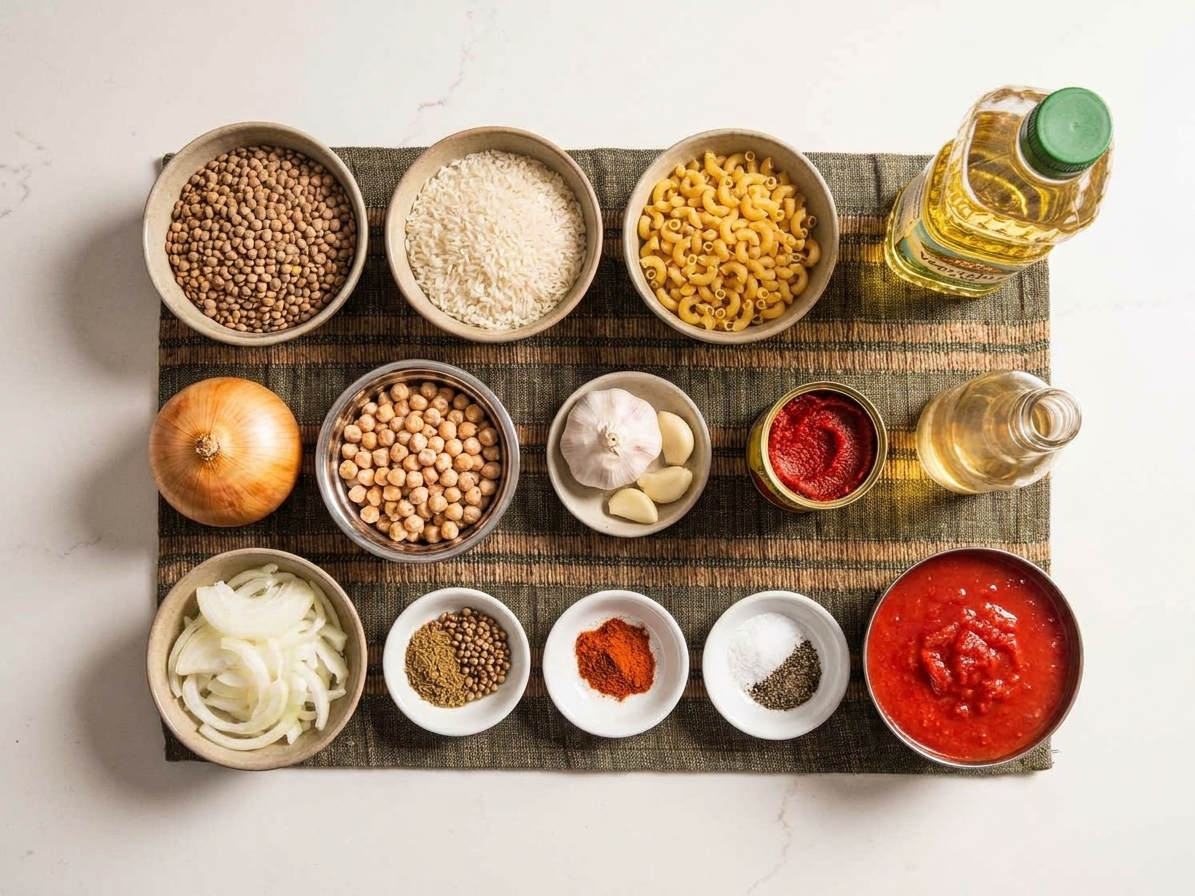
Ingredients for koshari arranged on a kitchen counter, including dried lentils, rice, small pasta, chickpeas, onions, garlic, tomato sauce ingredients, and spices in small bowls

Why It Works

  • Layered texture that stays exciting: tender lentils and rice, bouncy pasta, creamy chickpeas, and crispy onions in every scoop.
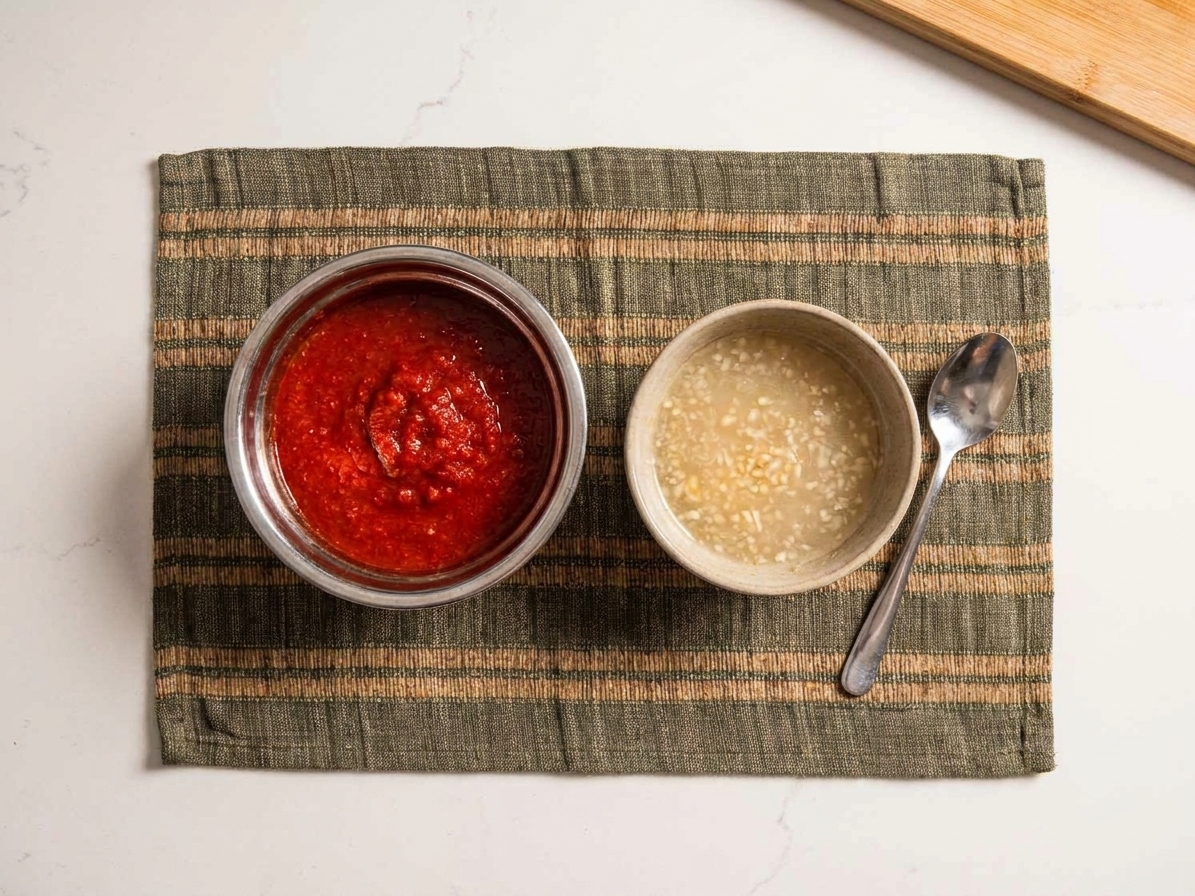
  • Two-sauce magic: a warm spiced tomato sauce for comfort and a garlic vinegar drizzle for brightness and snap.
  • Accessible pantry ingredients: nothing weird to source, but it still tastes like a destination meal.
  • Make-ahead friendly: cook the components once, then build bowls all week without sad leftovers.

Allergen note: Contains gluten (pasta, and flour if used for onions). Contains dairy if you use butter.

Pairs Well With

Storage Tips

Best move: store components separately so the onions stay crispy and the pasta does not soak up all the sauce.

  • Rice and lentils: cool completely, then refrigerate in an airtight container for up to 4 days.
  • Pasta: refrigerate up to 4 days. Toss with a tiny splash of oil to prevent sticking.
  • Tomato sauce: refrigerate up to 5 days. It also freezes well for up to 3 months.
  • Garlic vinegar: refrigerate up to 7 days. The flavor gets bolder over time.
  • Crispy onions: cool completely, then store in an airtight container lined with a paper towel for the best crunch. They are best the day they are made, but you can keep them 2 to 3 days at room temperature if your kitchen is cool and dry. If they soften, re-crisp in a dry skillet for 2 to 3 minutes.

Reheat tip: warm rice, lentils, and pasta separately with a splash of water, then assemble and sauce. Add onions last, always.

Common Questions

What is koshari made of?

Koshari is typically made with lentils, rice, pasta, chickpeas, and crispy fried onions, served with a spiced tomato sauce and a tangy garlic vinegar sauce. Think of it as a choose-your-own adventure bowl, but the correct choice is “add more onions.”

Do I have to use chickpeas?

No, but they add a nice creamy bite and extra protein. If you skip them, you can add more lentils or top with extra onions and sauce to keep it feeling complete.

What kind of lentils work best?

Brown or green lentils are the most reliable here because they hold their shape. Red lentils get too soft and turn the bowl a little mushy.

Can I make koshari gluten-free?

Yes, with a couple swaps. Use gluten-free pasta and skip the flour (or use a gluten-free flour) for the onions. Also keep an eye on cross-contamination if you are cooking for someone who is very sensitive, and double-check any vinegar or spice blends if you are unsure.

How do I keep the onions crispy?

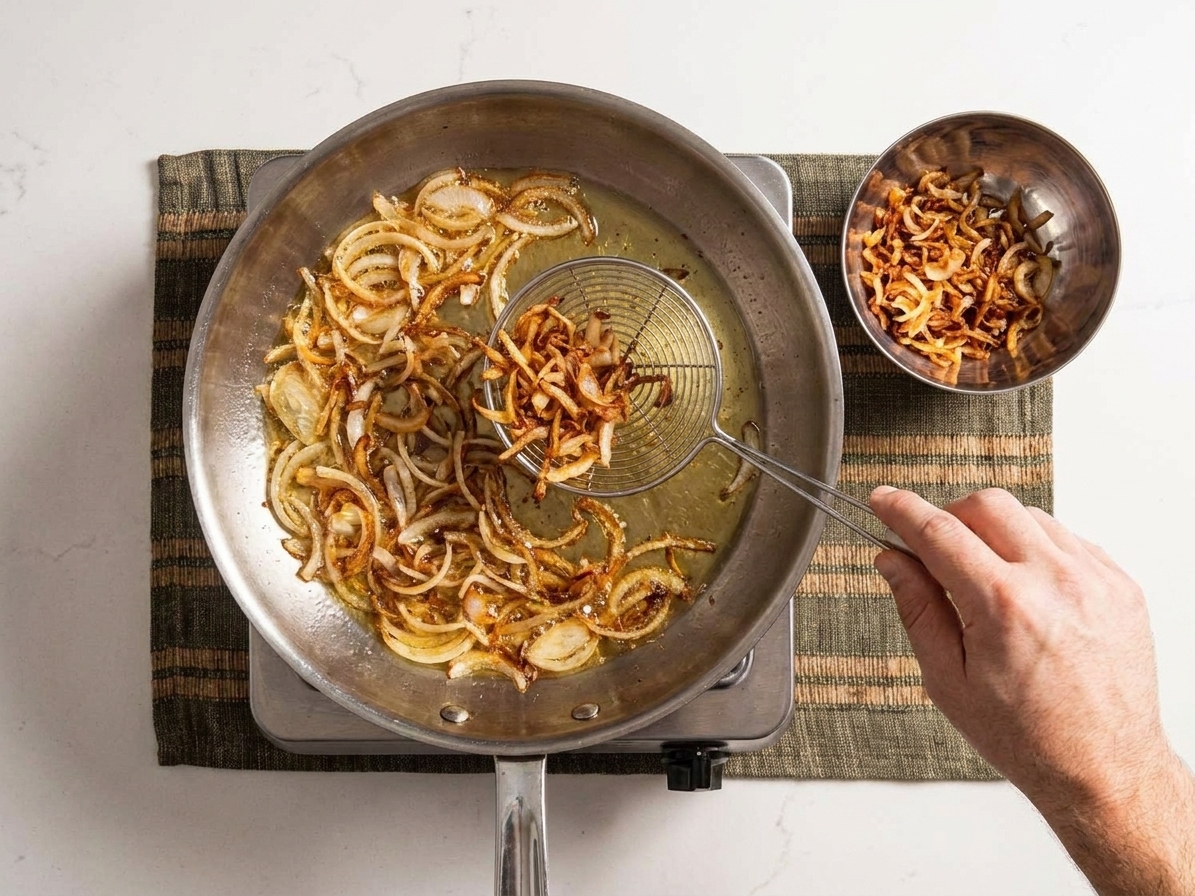
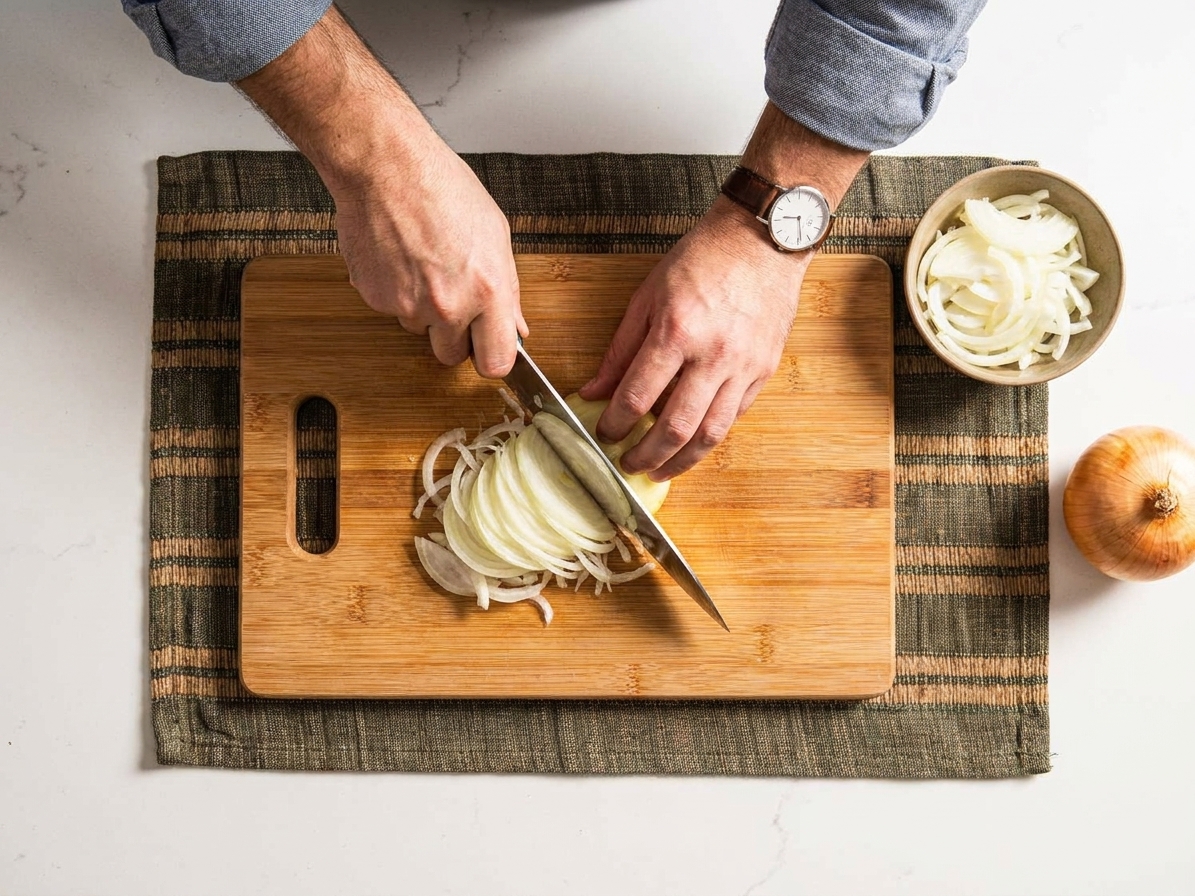
Two rules: slice them evenly and fry in batches so the oil temperature stays steady. Then drain on a paper towel and salt immediately. Do not put them on the bowl until you are ready to eat.

Thinly sliced onions frying in a shallow pan of oil on a stovetop, turning golden brown with a spider strainer nearby

The first time I made koshari, I thought, “There is no way rice and pasta in the same bowl is going to feel intentional.” Then I tasted it with that punchy tomato sauce and the sharp garlic vinegar, and I got it. Koshari is controlled chaos in the best way. It is pantry cooking with a plan, like a friend showing up with a great playlist and somehow dinner is better for it.