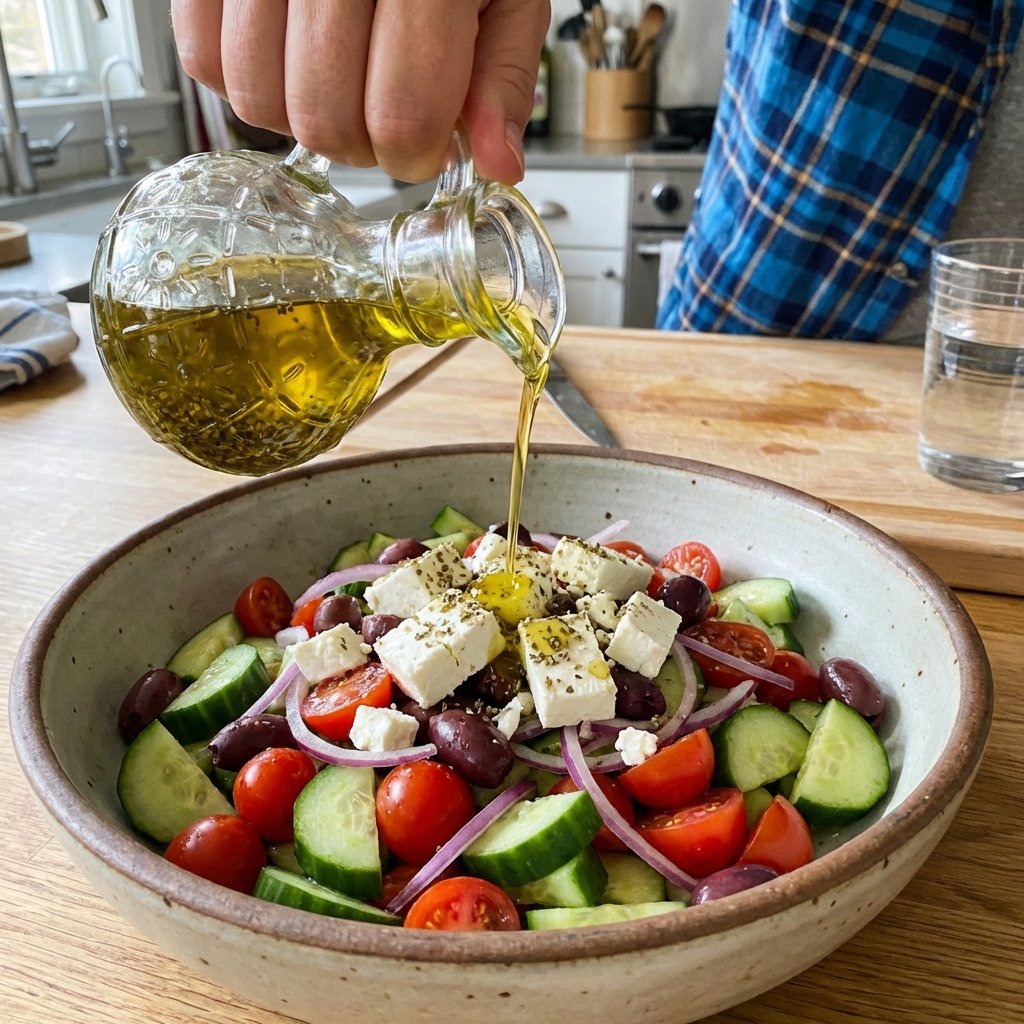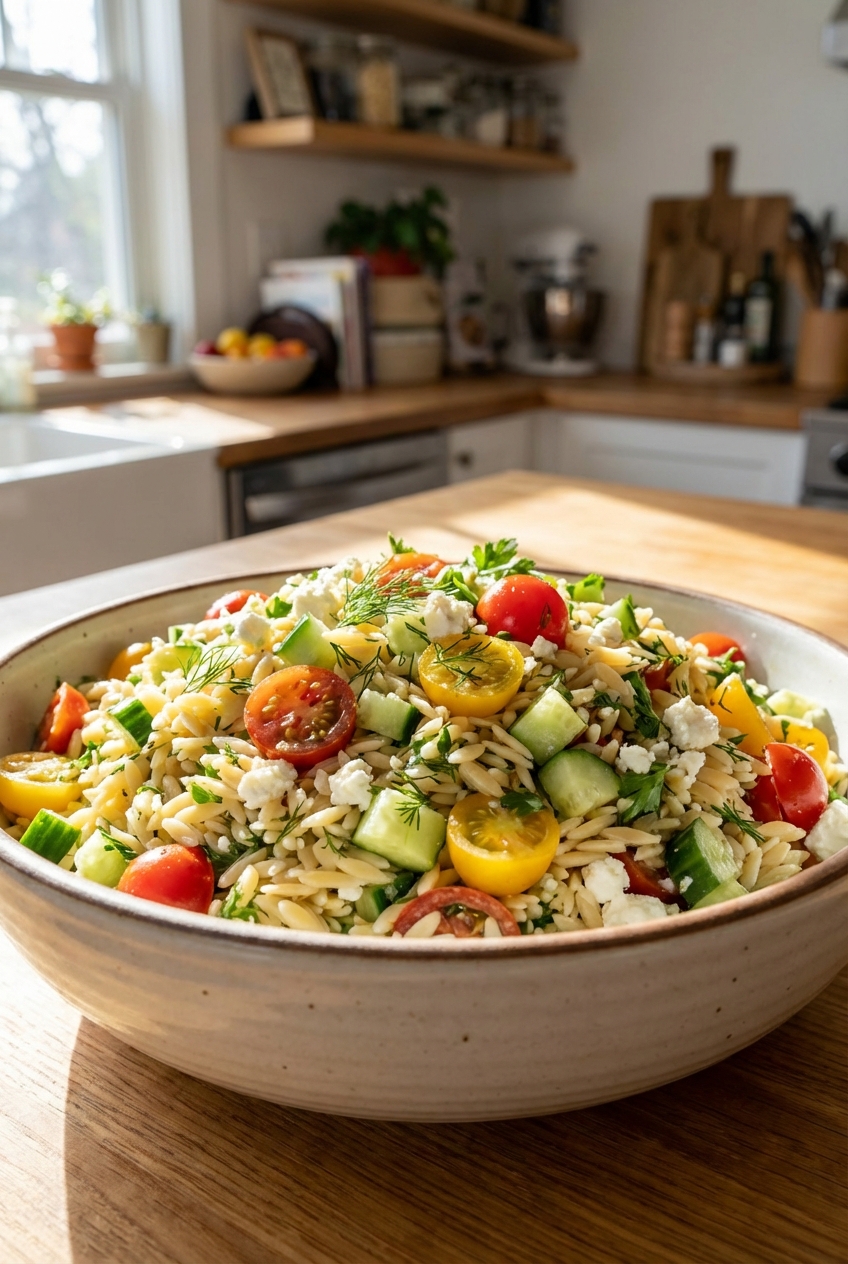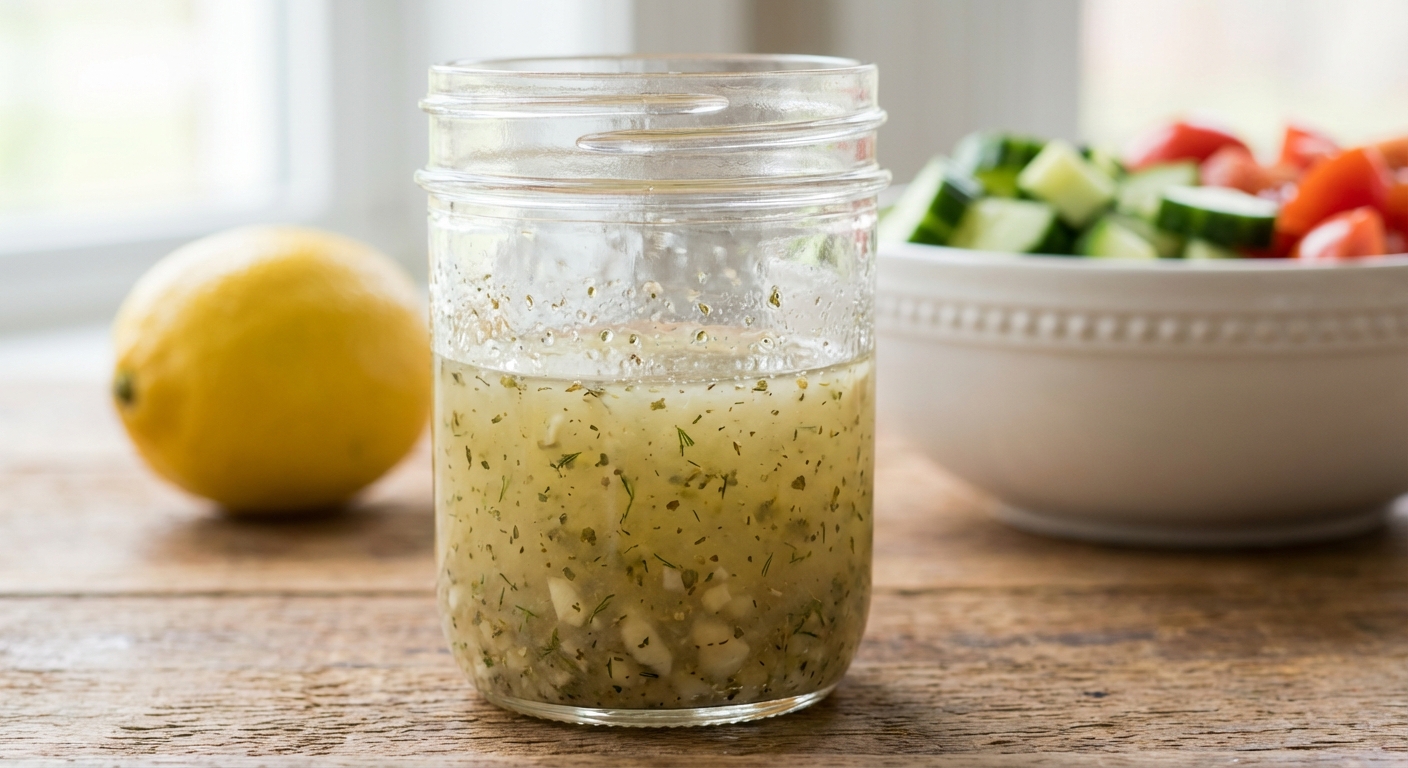
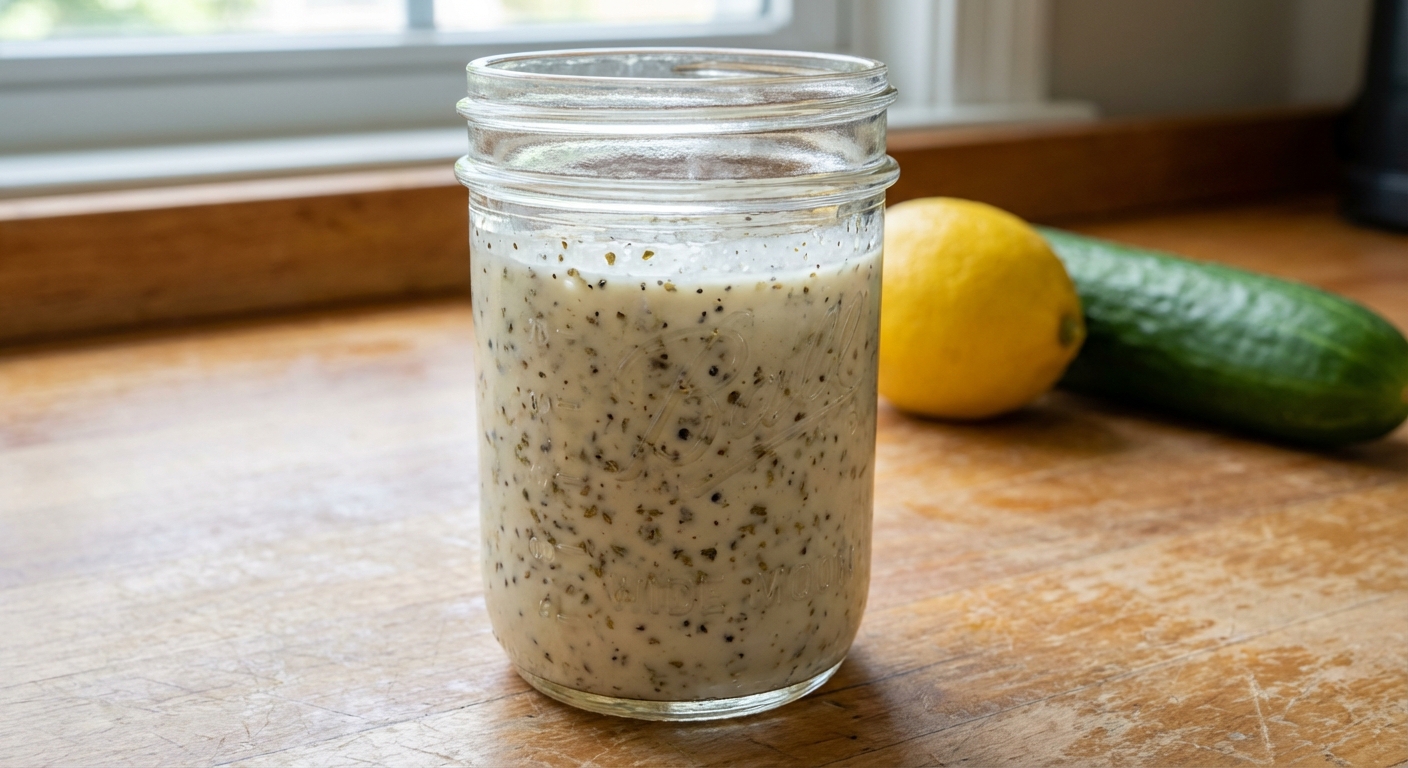
Whip up a bold Greek dressing that’s tangy, creamy, and loaded with herbs. Delicious on salads, grain bowls, and as a quick marinade—ready in minutes.
If you love a classic Greek salad but sometimes want the dressing to feel a little less heavy, this one is your new weeknight move. It is tangy from lemon and red wine vinegar, savory from garlic and Dijon, and unmistakably Greek thanks to dried oregano and a pinch of dill. The best part is it tastes like you did something fancy, even though you basically just shook a jar like it owed you money.
This is a light Greek salad dressing in the sense that it uses less oil than a common vinaigrette ratio (think 3 parts oil to 1 part acid). Here, we keep the oil a little more restrained so it stays bright, punchy, and not greasy. It still clings, though, thanks to Dijon, and it lands herb-forward with a lightly creamy texture and that briny-adjacent Greek salad vibe.