Common Gumbo Questions
What makes gumbo “Louisiana gumbo”?
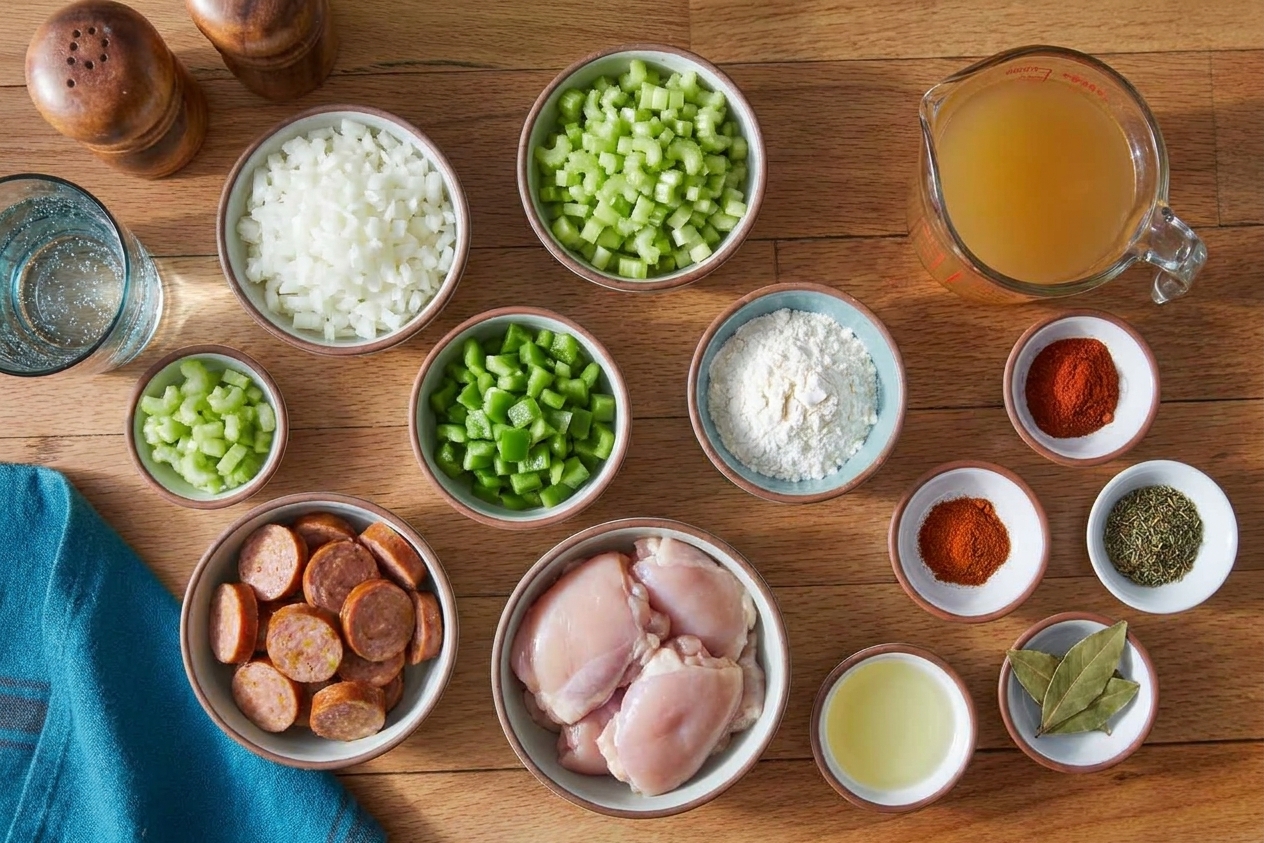
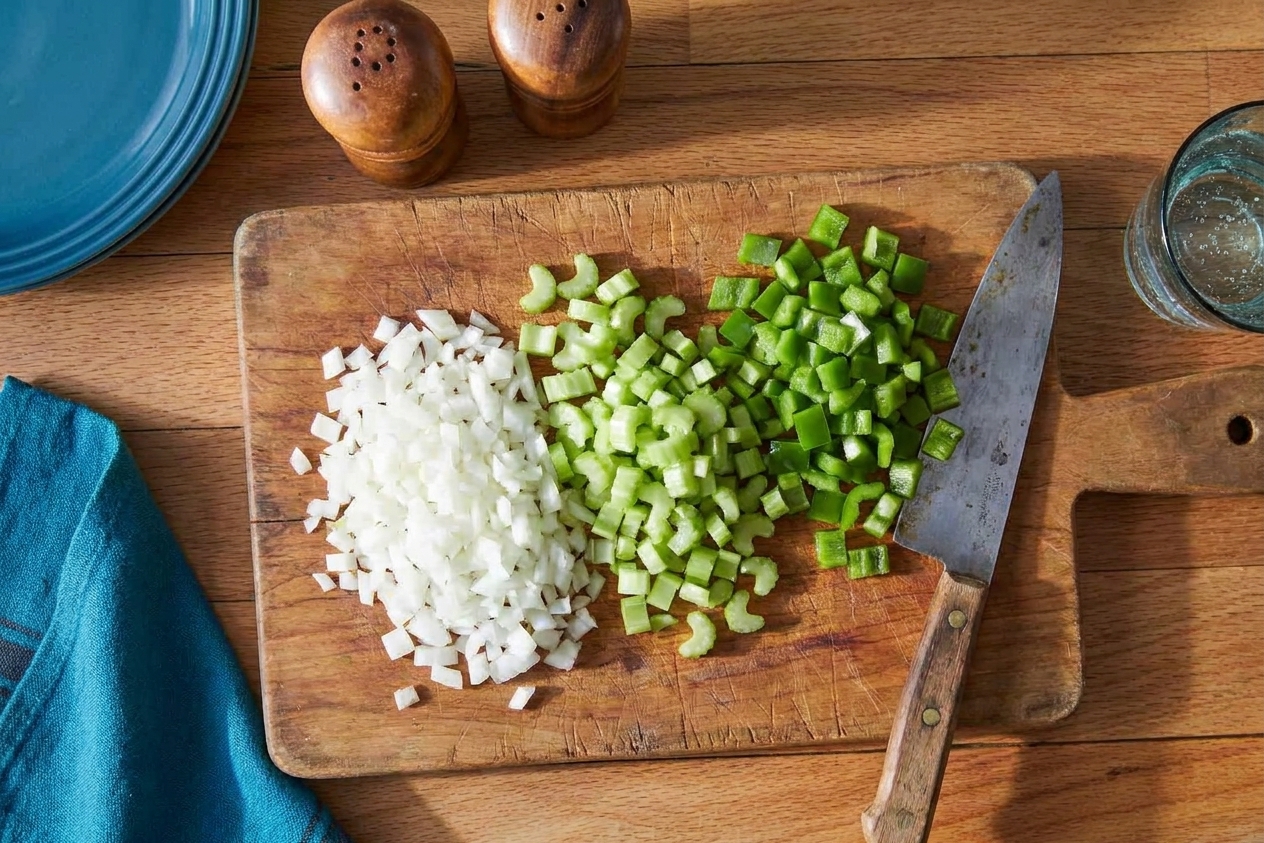
Louisiana gumbo is usually built on a roux plus the holy trinity (onion, celery, bell pepper). From there it branches into styles. Cajun-leaning gumbos are often tomato-free, and some Creole-leaning versions may include tomatoes, different seasonings, or seafood depending on the cook. This recipe keeps it classic and tomato-free, with a dark roux and a long simmer.
Do I have to use okra or filé powder?
Nope. They are both traditional thickeners and flavor boosters, but they are not mandatory. This gumbo gets body from the roux. If you love okra, add it. If you want that subtle earthy finish, stir in a little filé powder off the heat.
How dark should the roux be?
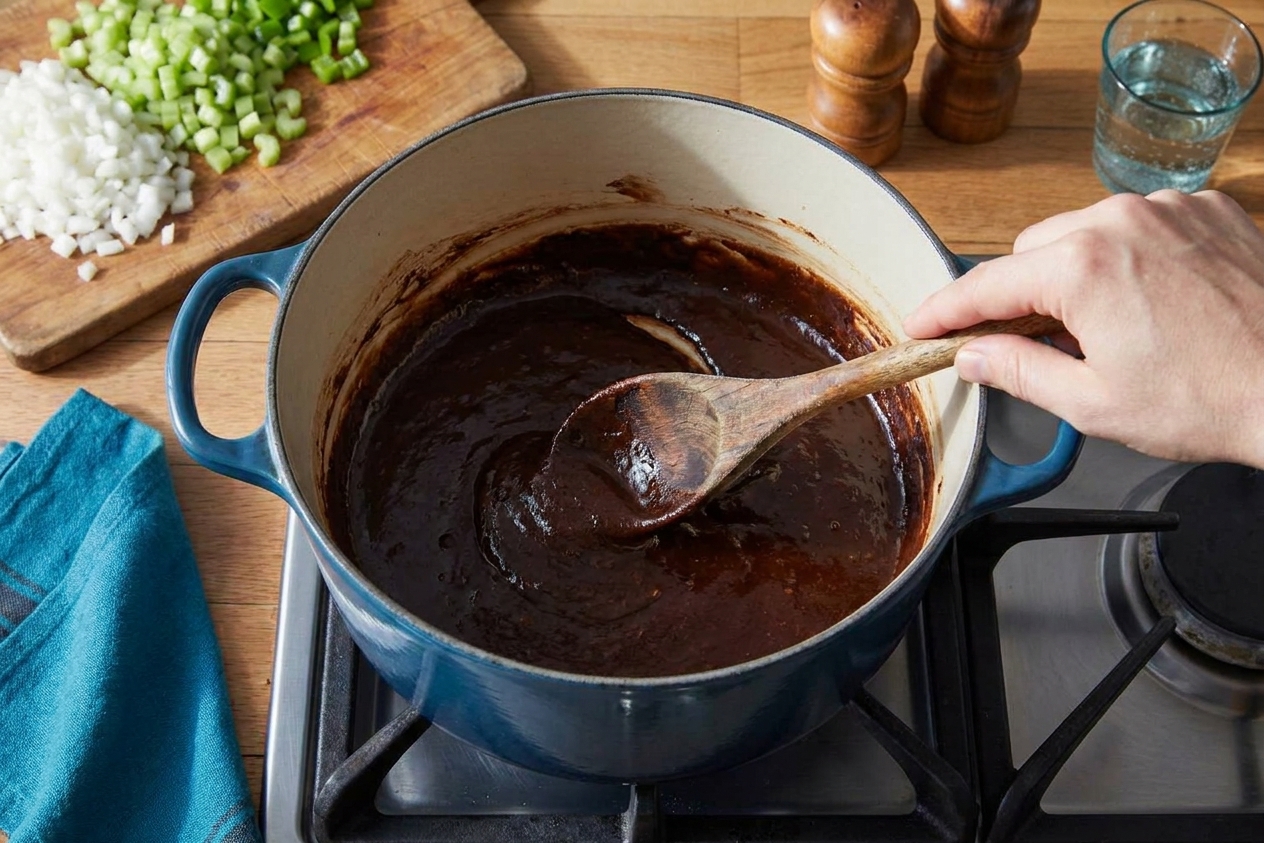
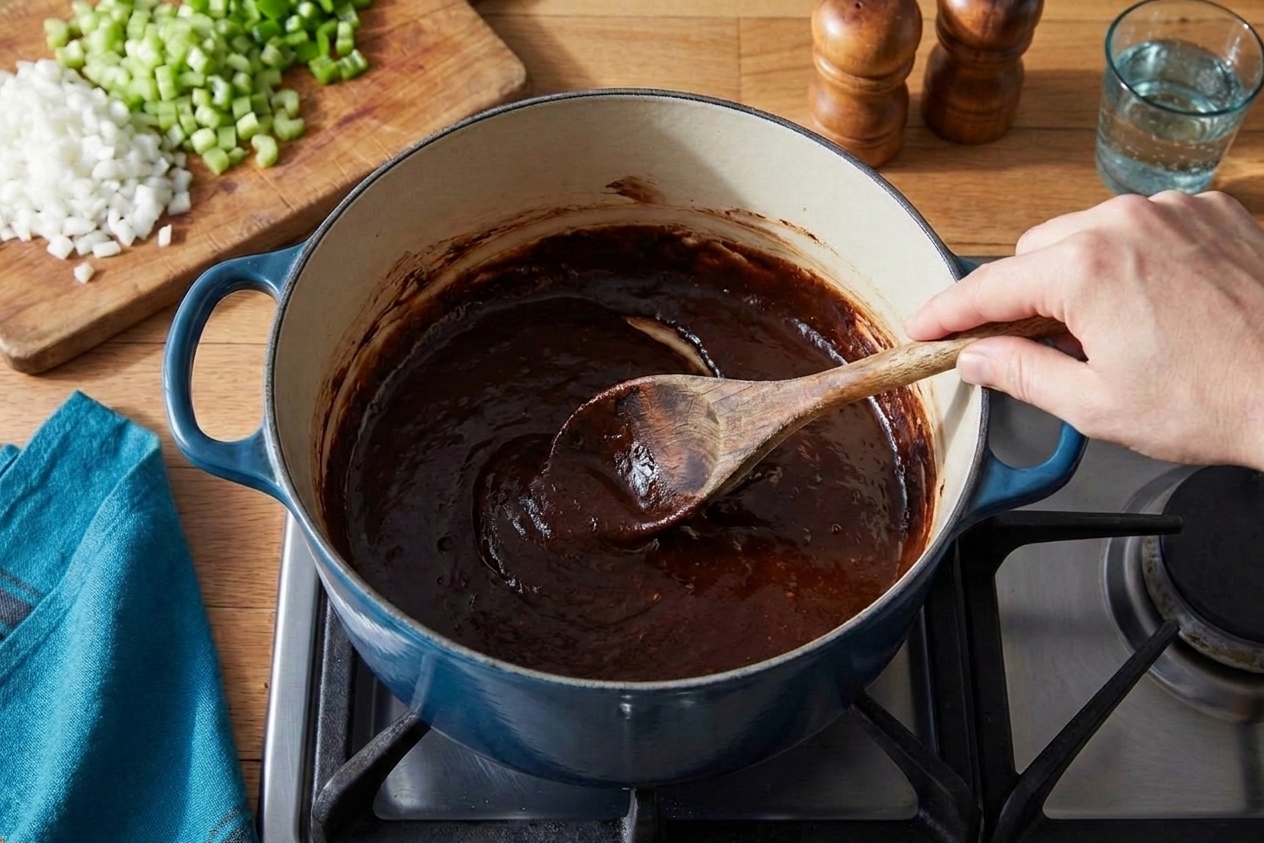
For this recipe, aim for milk chocolate to dark chocolate, like the color of a copper penny headed toward dark caramel. Lighter roux thickens more, darker roux brings more flavor. Dark is the move for gumbo, just keep stirring so it does not burn.
My roux looks lumpy. Did I ruin it?
Usually, no. Once you add the trinity and it sweats down, lumps often smooth out. If you still see stubborn bits, whisk when you start adding stock and it will come together.
Can I make it less spicy for kids?
Yes. Use a mild andouille (or smoked sausage), pick a lower-heat Creole seasoning, and keep cayenne out until the end. You can always add heat to your own bowl.
What rice is best with gumbo?
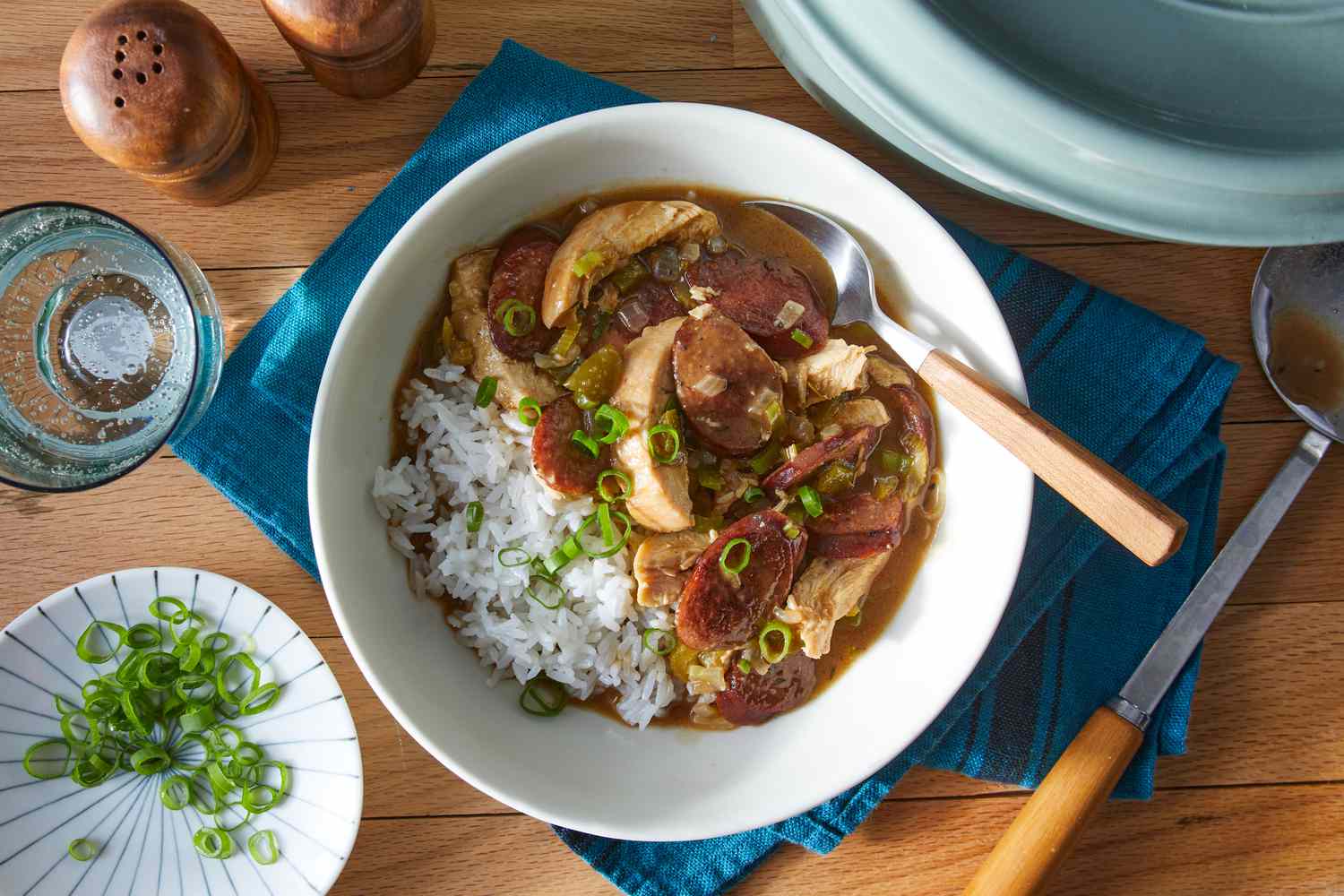
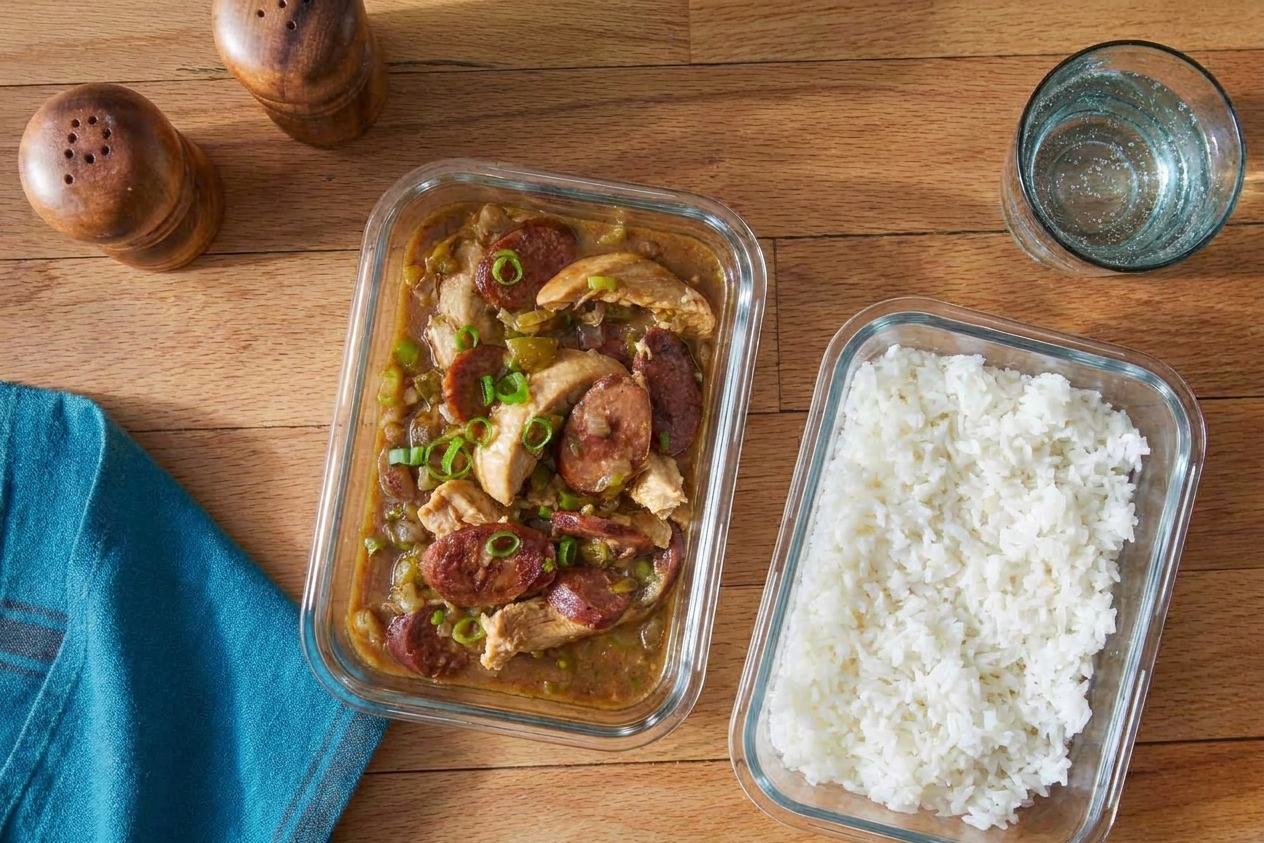
Plain white long-grain rice is the classic. Jasmine works too. Cook it separately and spoon gumbo over the top.
What should I know about filé powder?
Add filé off the heat and do not boil after adding it, or it can turn stringy. Also, it thickens as it stands, so start small and let it sit for a minute before adding more.