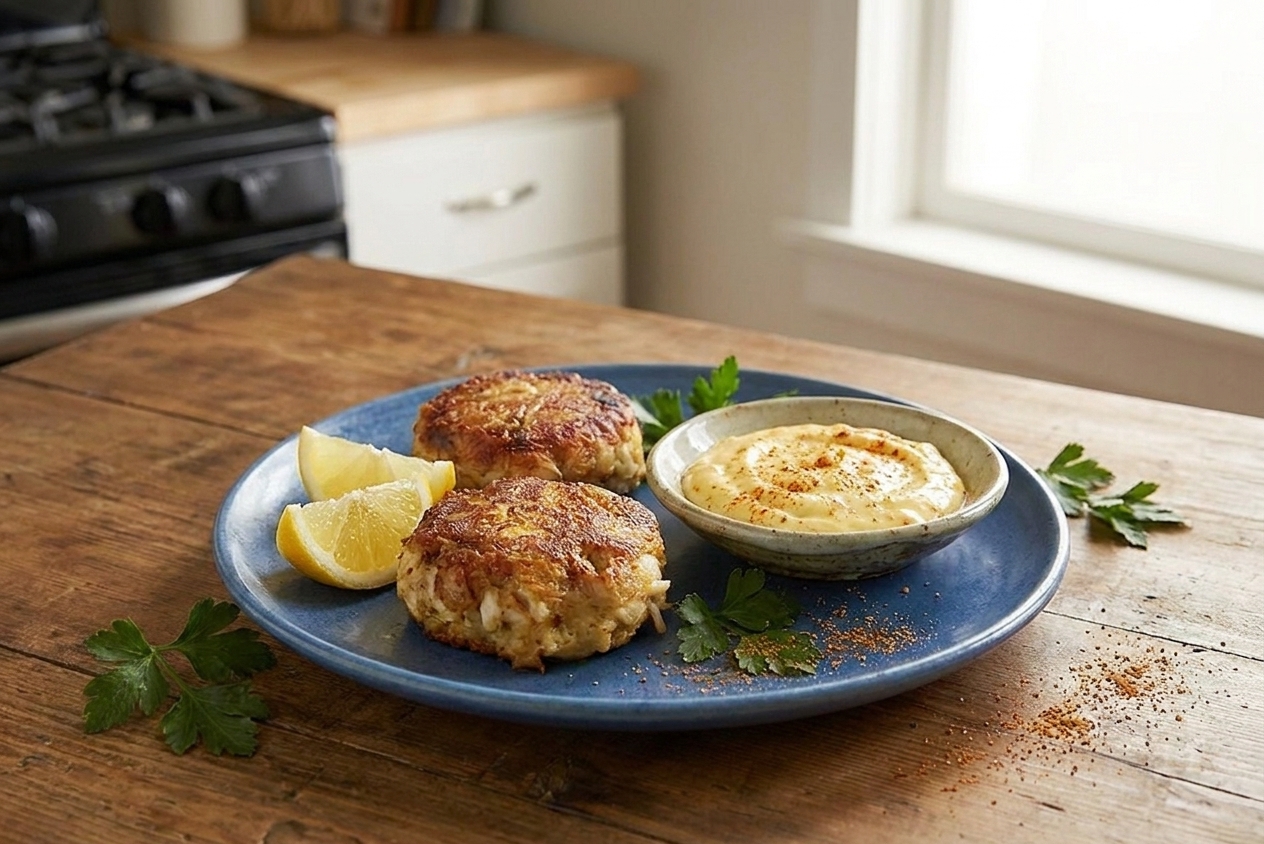
What is the best crab meat for Maryland crab cakes?
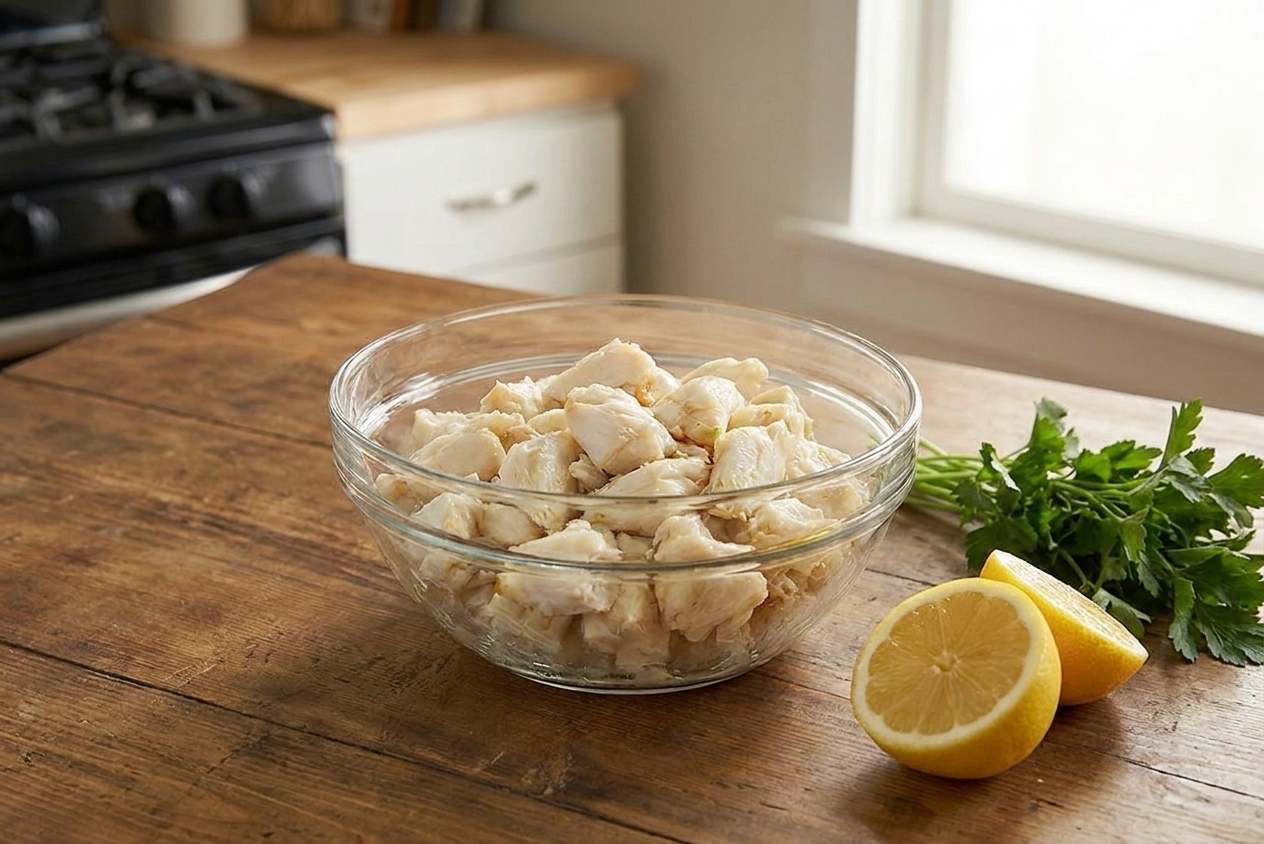
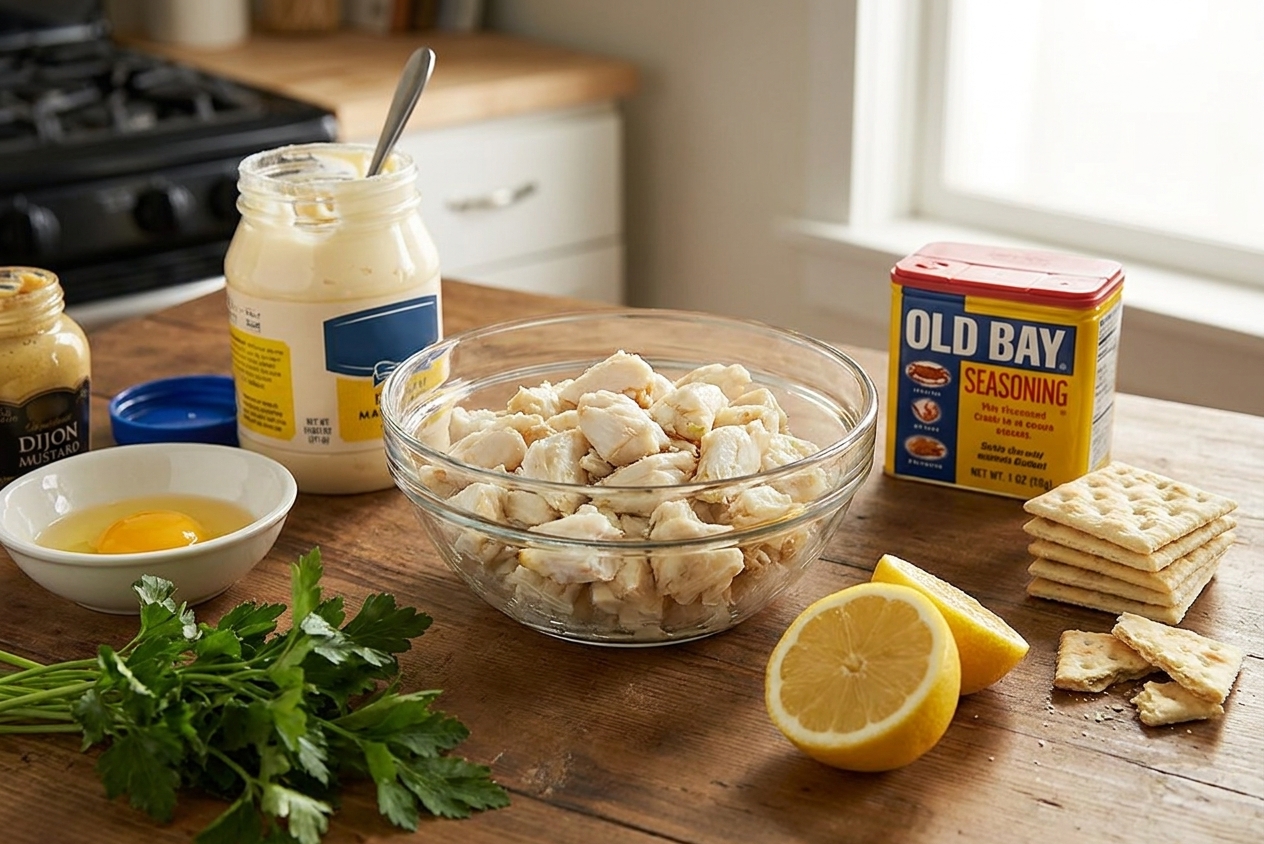
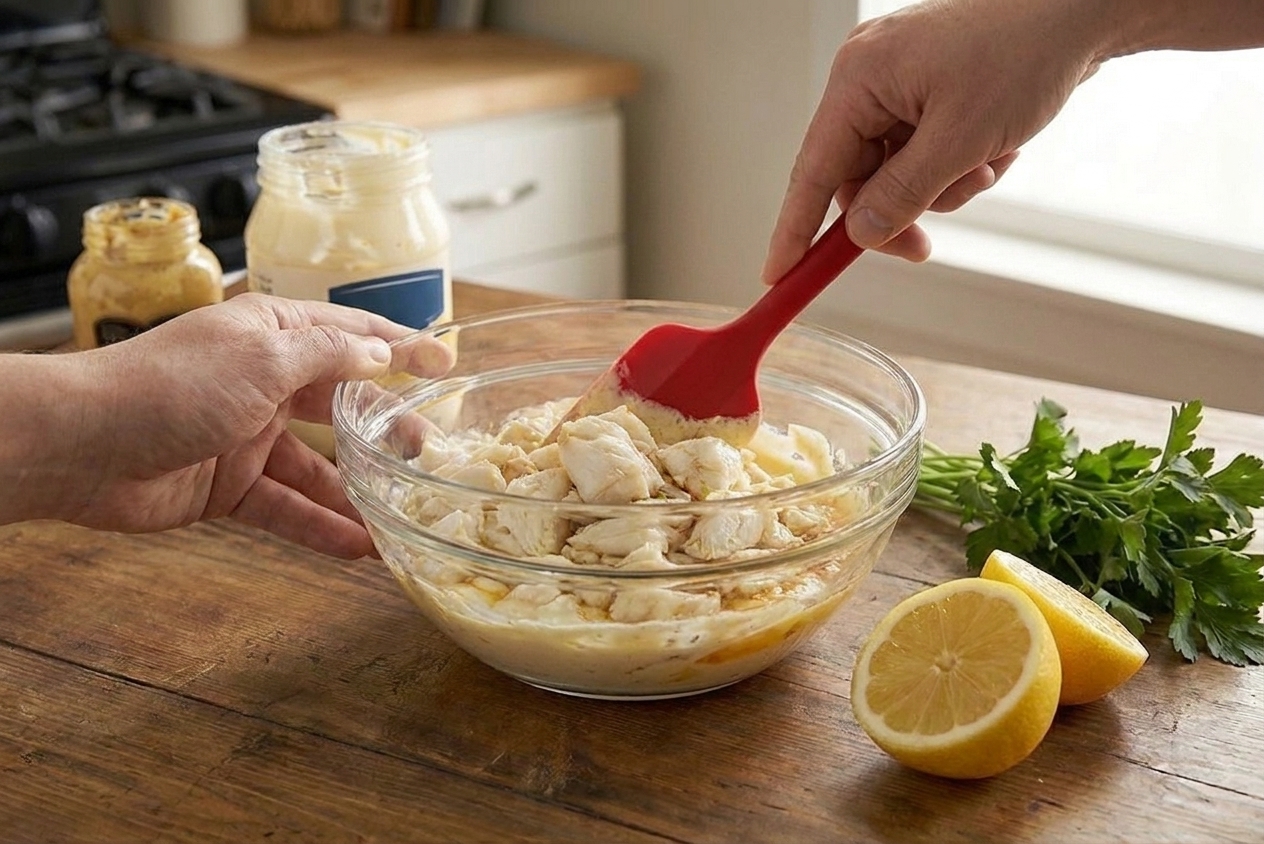
Jumbo lump is the classic move for big chunks and a clean, sweet bite. Lump is also great and usually a bit cheaper. If you use backfin, the cakes can be slightly more shredded but still delicious. Avoid the super finely shredded stuff if your goal is that signature chunky texture. If your crab is pasteurized or packed in liquid, drain it well and gently pat it dry so your mixture does not turn watery.
Do Maryland crab cakes have Old Bay?
Often, yes, or at least a similar warm, celery-salt-forward seafood seasoning. In plenty of Maryland kitchens it is basically assumed, but it is not the only way. If you do not have Old Bay, use a mix of celery salt, paprika, black pepper, and a tiny pinch of cayenne.
Why did my crab cakes fall apart?
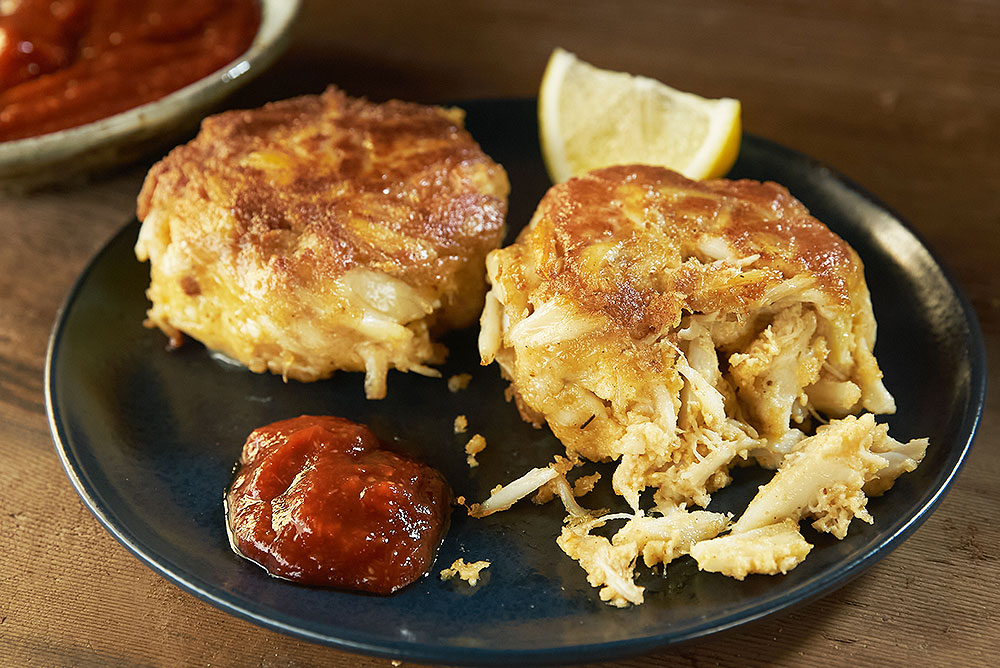
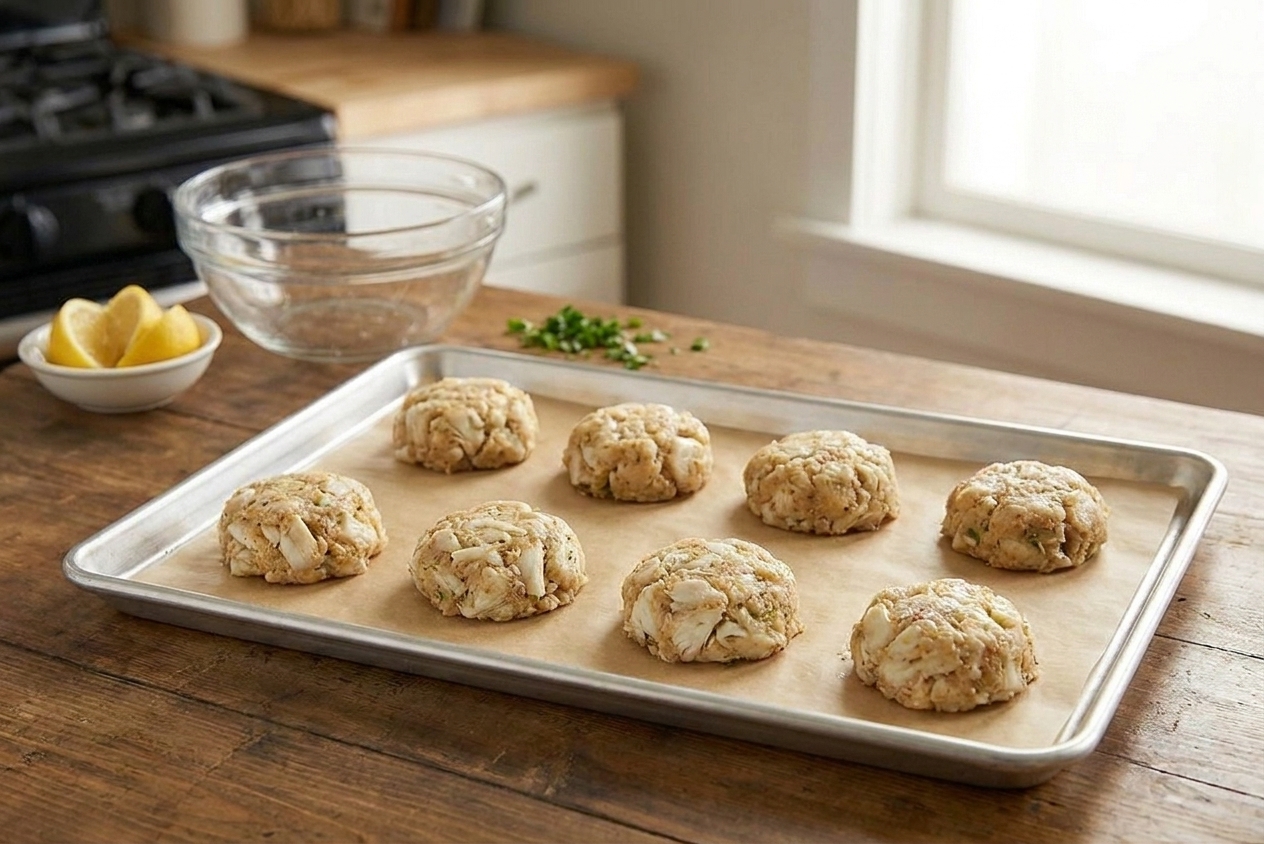
Usually one of three things: not enough binder, the mixture was too wet, or you skipped chilling. Make sure you gently fold (do not shred the crab), then chill the formed cakes at least 30 minutes. If the mix feels loose, add 1 to 2 more tablespoons of crushed crackers.
Can I bake crab cakes instead of frying?
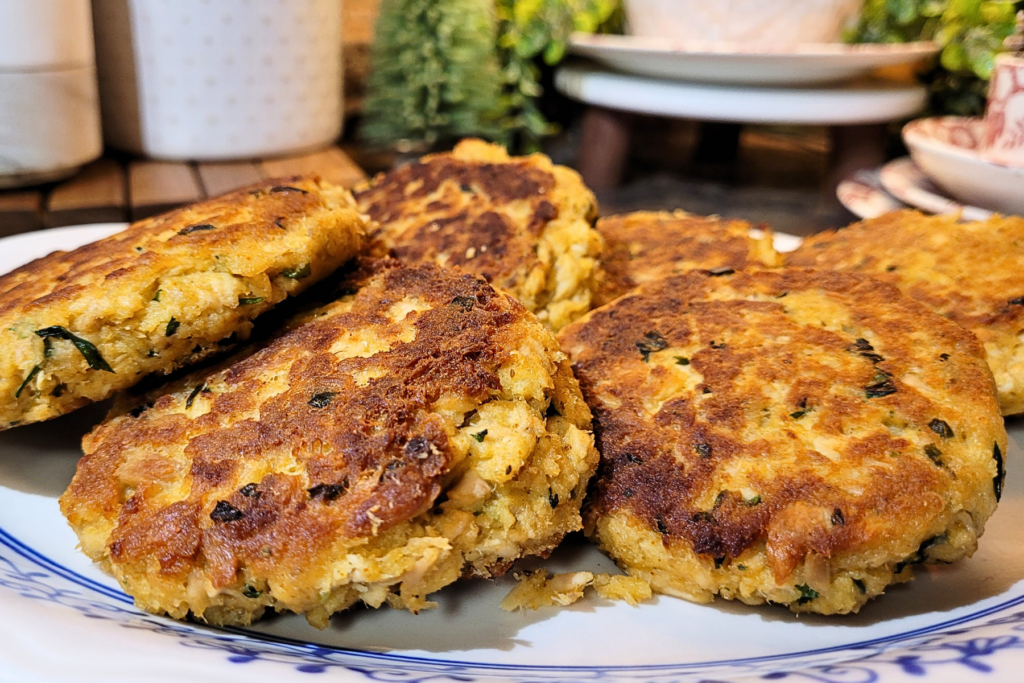
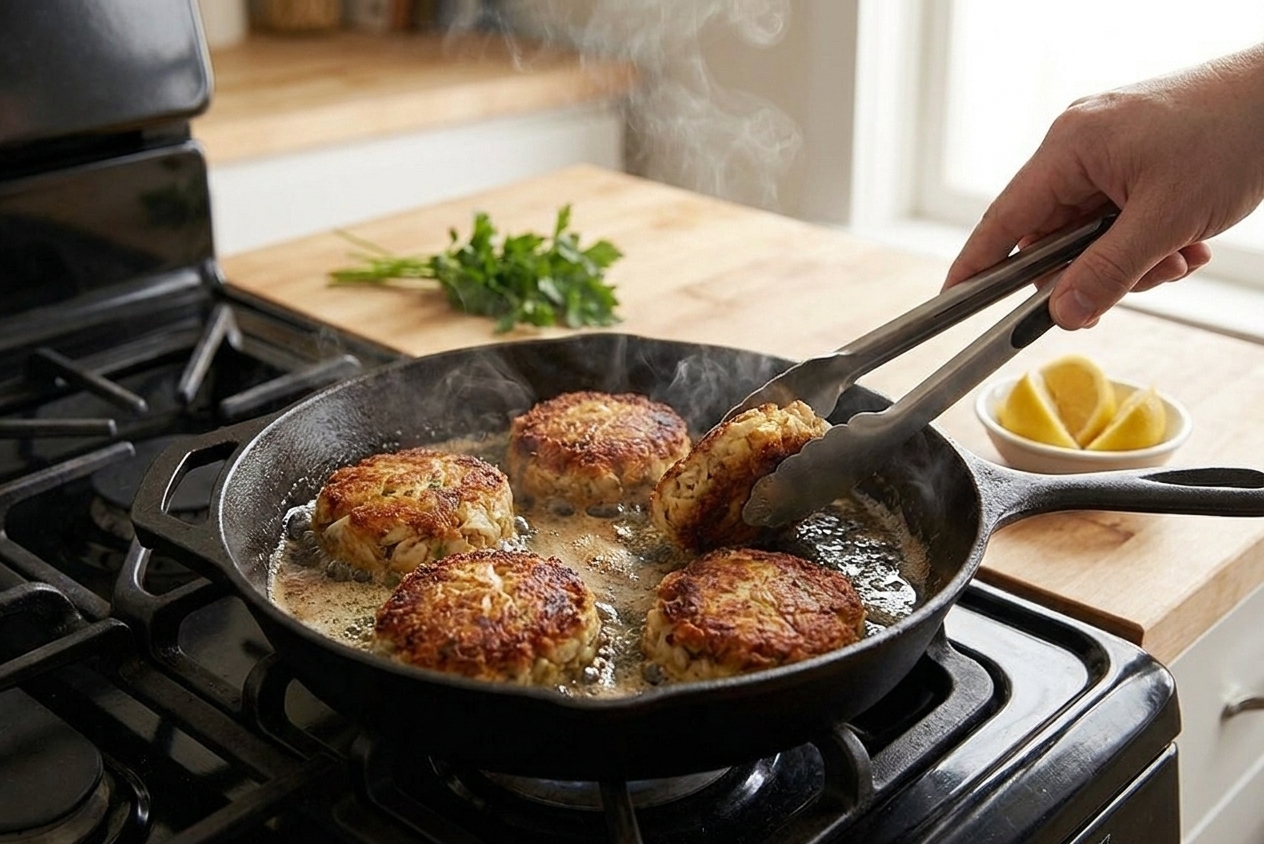
Yes. Baking is cleaner and still tasty. You will get less overall crust than pan-searing, so I recommend brushing the tops with a little melted butter or oil and baking on a preheated sheet pan. Use doneness cues: the tops should look set, the edges lightly golden, and the centers hot.
How do I keep crab cakes from getting too bready?
Measure the filler, then stop. The crackers are there to hold the party together, not become the main character.
Can I make crab cakes ahead?
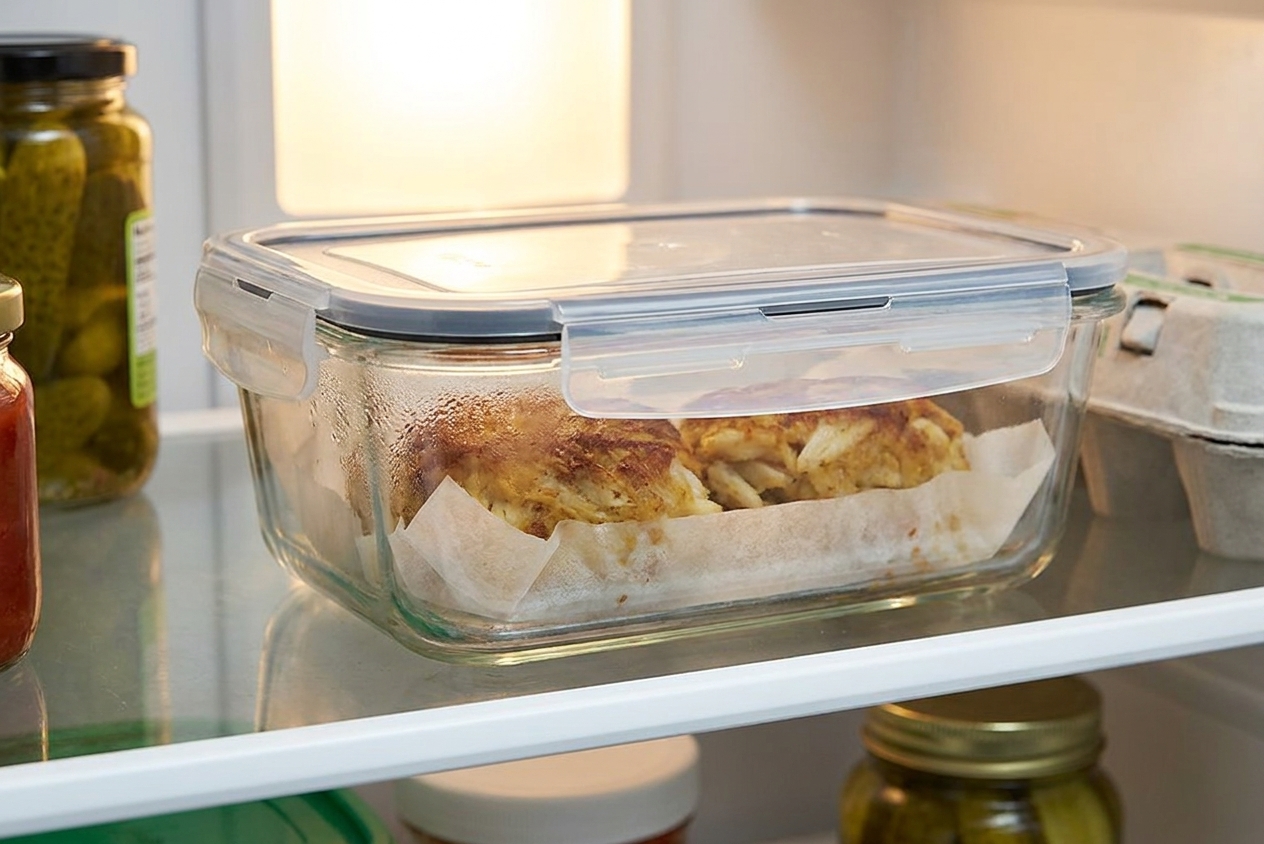
Yes. You can form the cakes, cover, and refrigerate up to overnight. They are actually easier to cook when they are well chilled. If they seem a little wet the next day, sprinkle on 1 tablespoon of crushed crackers and gently press it in before cooking.