Mom's Best Recipes
Recipe

Miso-Gochujang Eggplant Noodles

Silky eggplant, chewy noodles, and a bold miso-gochujang sauce that hits sweet, savory, and spicy in one glossy bite.

Author By Matt Campbell
4.8
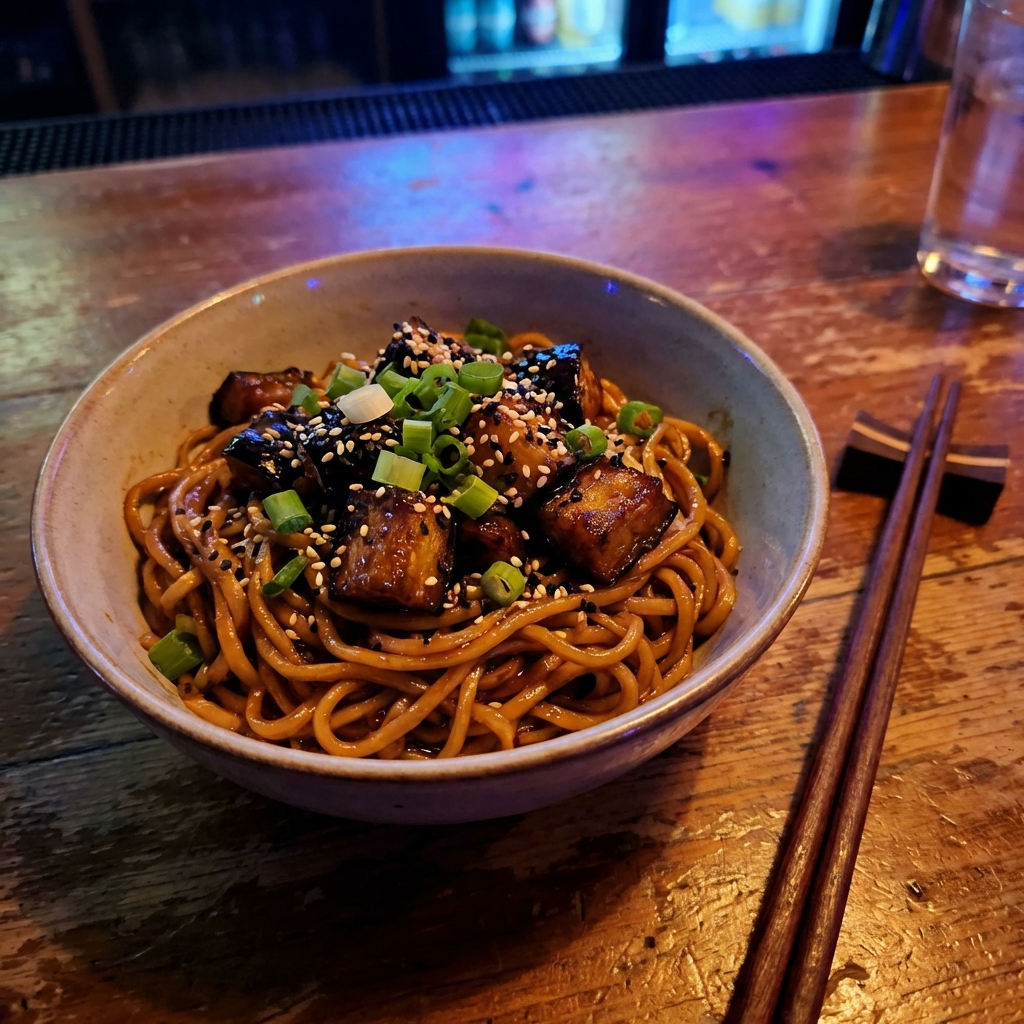
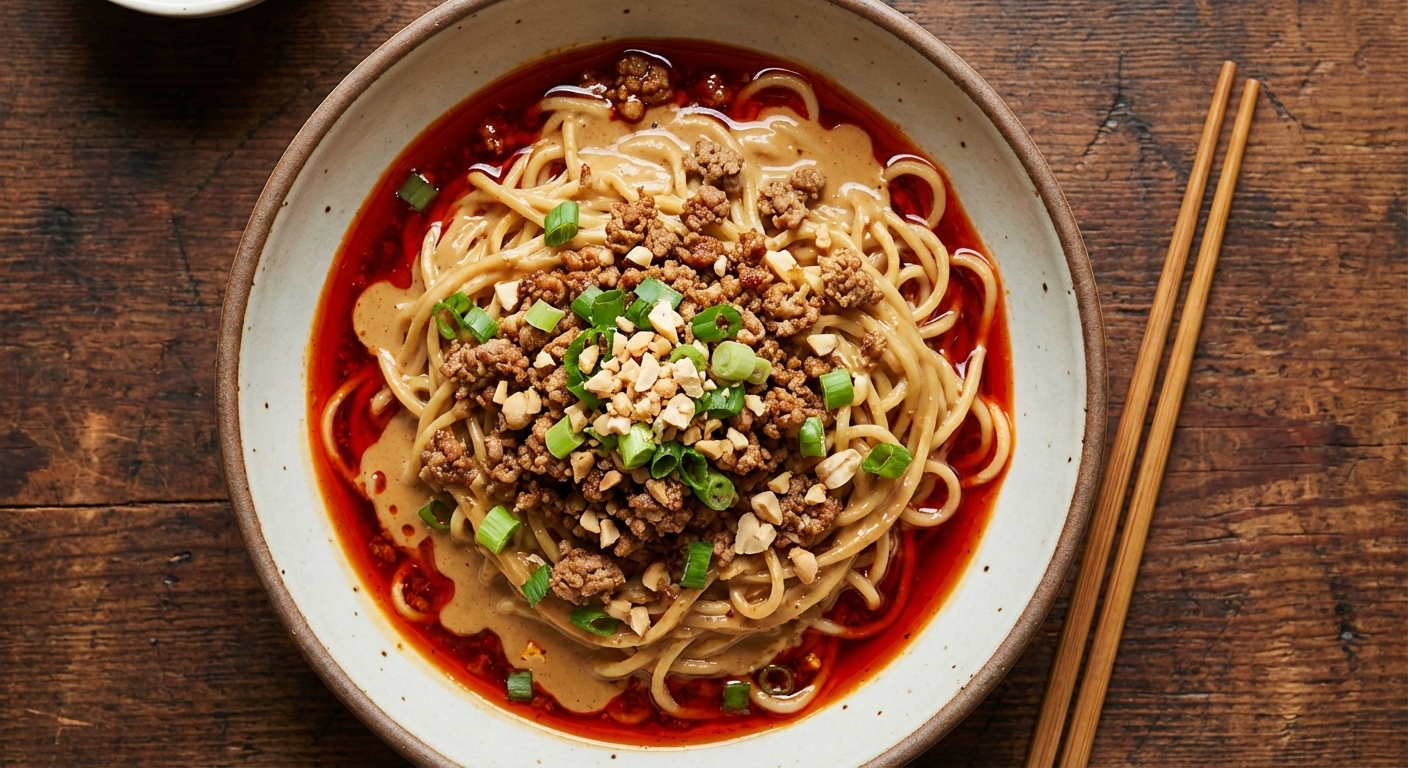
A bowl of glossy noodles topped with caramelized eggplant, scallions, and sesame seeds on a wooden table with chopsticks nearby

If eggplant has ever disappointed you, it probably needed two things: high heat and a sauce with opinions. This fusion noodle bowl brings both. We roast eggplant until it goes bronzed and jammy, then toss it with noodles in a miso-gochujang glaze that tastes like your favorite takeout decided to level up.

This is the kind of dinner that feels a little restaurant-y without turning your kitchen into a crime scene. The ingredient list is friendly, the method is simple, and the payoff is huge: crisp edges on the eggplant, bouncy noodles, and a sauce that makes you keep “testing” bites straight from the pan.
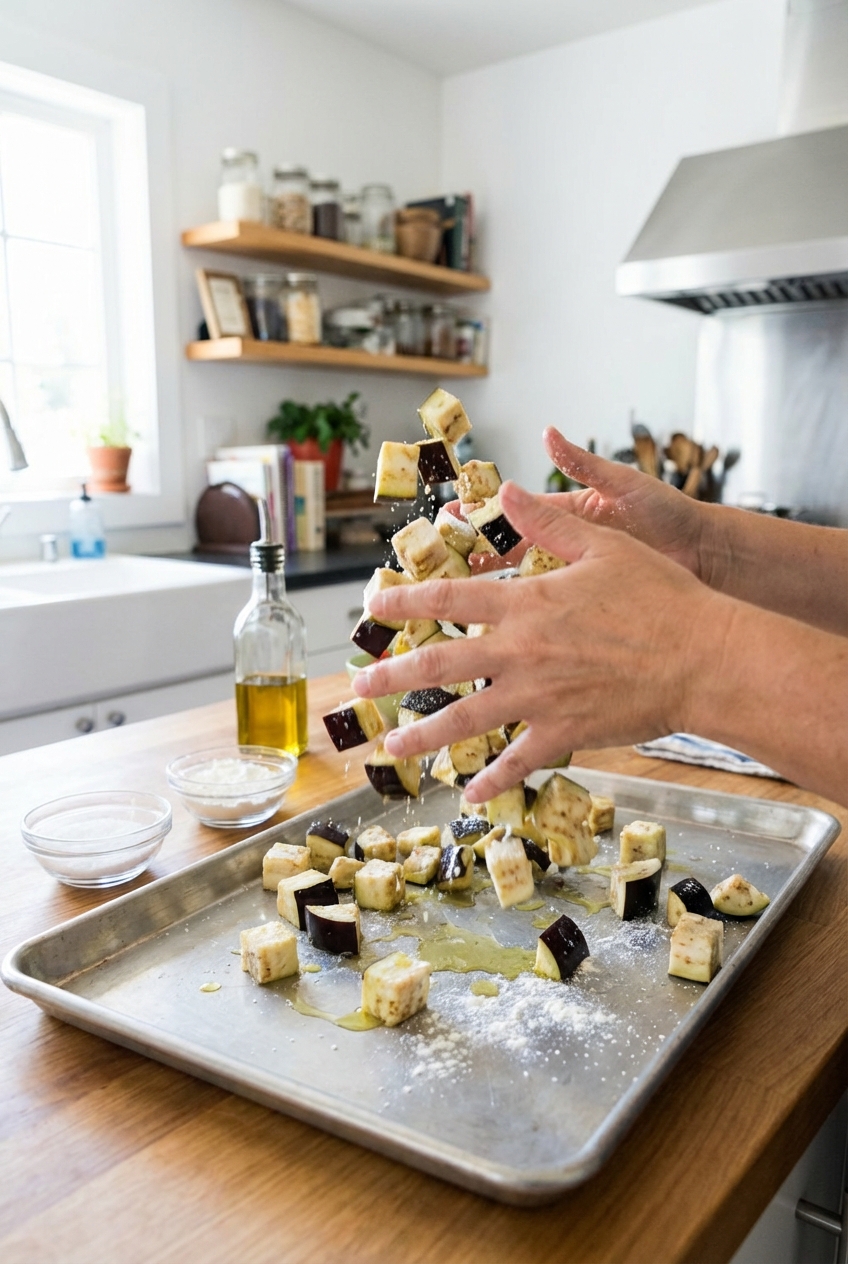
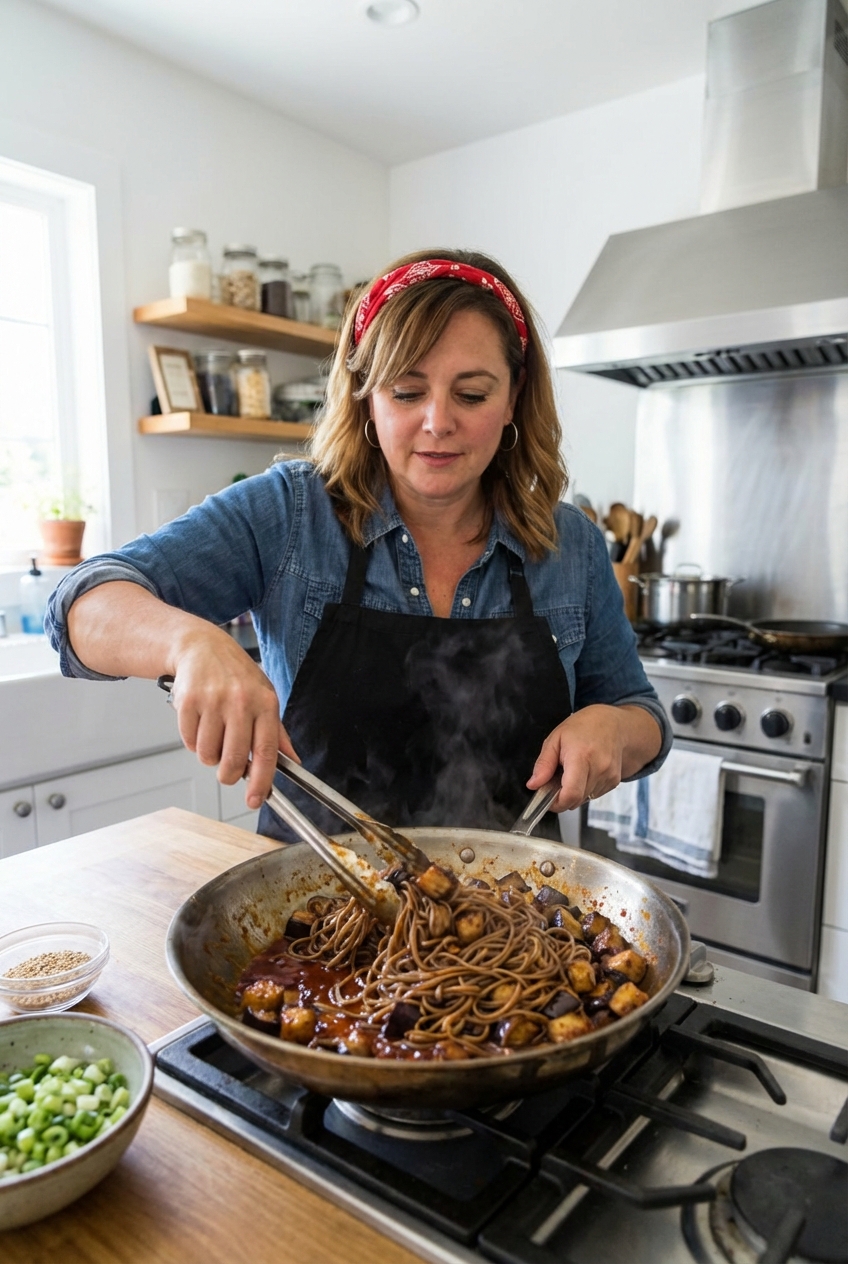
Cubed eggplant on a sheet pan being tossed with oil, salt, and cornstarch in a bright kitchen

Why It Works

  • Eggplant that seriously delivers: Roasting plus a light cornstarch coat gives you caramelized edges and a creamy center.
  • Big flavor fast: Miso brings depth, gochujang brings heat and sweetness, and rice vinegar keeps everything bright.
  • Sauce that clings: A quick simmer turns it glossy so it coats noodles instead of pooling at the bottom.
  • Weeknight flexible: Use whatever noodles you have, swap proteins, or add extra veggies without breaking the vibe.

Pairs Well With

Storage Tips

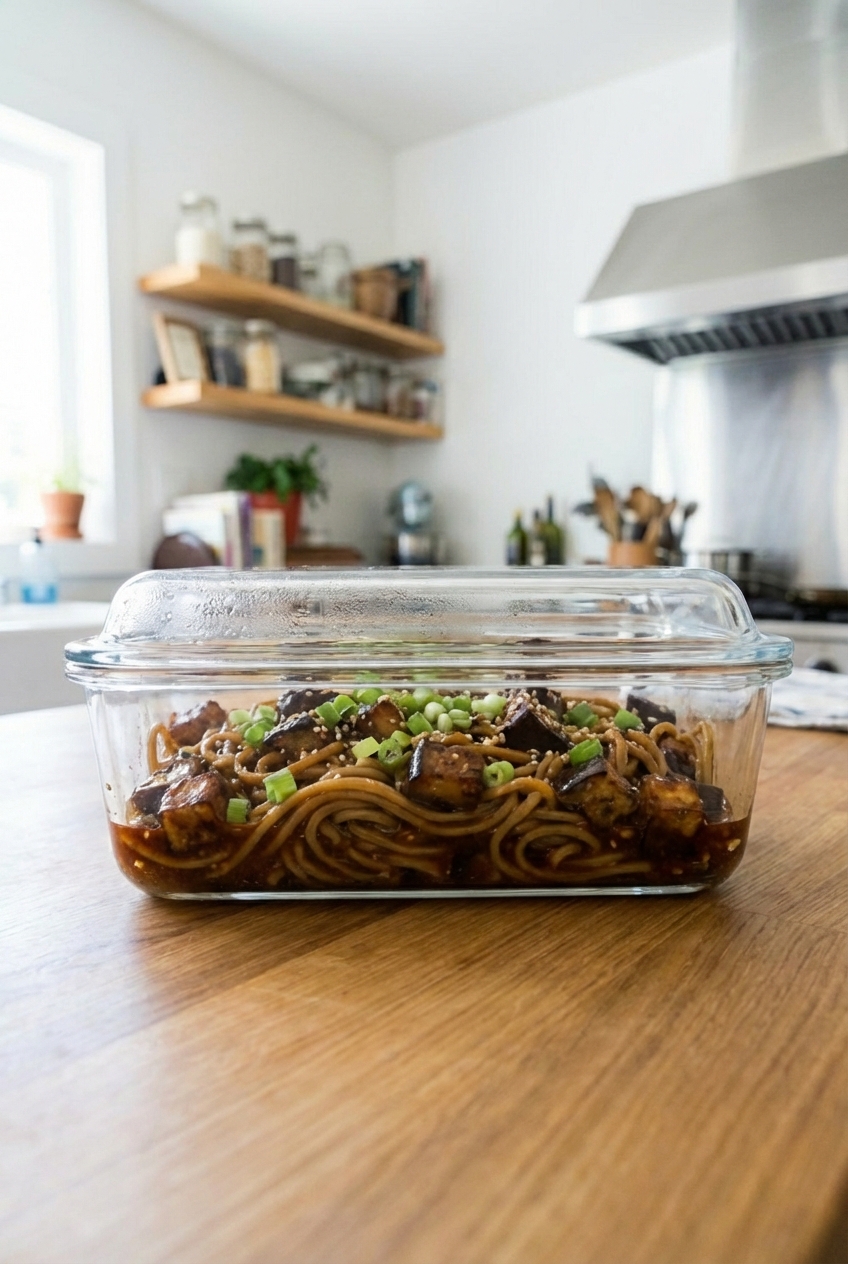
Fridge: Store noodles and eggplant in an airtight container for up to 3 to 4 days.

Reheat: Best move is a skillet over medium heat with a splash of water. If you want a little extra punch, add a small splash of soy sauce or a tiny drizzle of sesame oil at the end. Microwave works too, but do it in 30 second bursts and stir so the sauce stays smooth.

Freezer: I do not love freezing this. Eggplant can get watery and the noodles can turn soft. If you want to prep ahead, roast the eggplant and freeze it separately, then make fresh noodles later.

A glass meal prep container filled with leftover noodles and eggplant with a tight-fitting lid on a countertop

Common Questions

Do I need to salt eggplant first?

Usually, no. Most eggplant today is not very bitter, and high-heat roasting helps with browning and can mellow any lingering bite. If your eggplant is extra large or older, you can salt it for 20 minutes, then pat dry.

What kind of eggplant works best?

Globe eggplant is easiest to find and works great. Japanese or Chinese eggplant also work, and they roast a little faster because they are thinner.

Is gochujang very spicy?

It is more warm than fiery for most people. Start with 1 tablespoon if you are sensitive, then add more at the end. The honey and miso balance the heat.

Can I make it gluten-free?

Yes. Use rice noodles or gluten-free ramen, and make sure your gochujang and miso are labeled gluten-free. Swap soy sauce for tamari.

How do I add protein?

Pan-seared tofu, rotisserie chicken, or a fried egg are all excellent. Shrimp is also great, just cook it separately and toss it in at the end.

I started making versions of this on nights when I wanted comfort food but also wanted my dinner to have some energy. Eggplant is perfect for that. It goes cozy and creamy, but it also loves bold flavors that wake it up. The first time I tried miso and gochujang together, I basically stood at the stove tasting the sauce like it was a hobby. Now it is my go-to move when I need a meal that feels fun, forgiving, and just bold enough to be interesting.