Mom's Best Recipes
Recipe

Modern Dumpling Sauce

A warm, spiced dipping sauce with ginger, garlic, soy, and a quick chili oil bloom. Cozy, bold, and made for dumplings, noodles, and crisp-edged everything.

Author By Matt Campbell
4.9
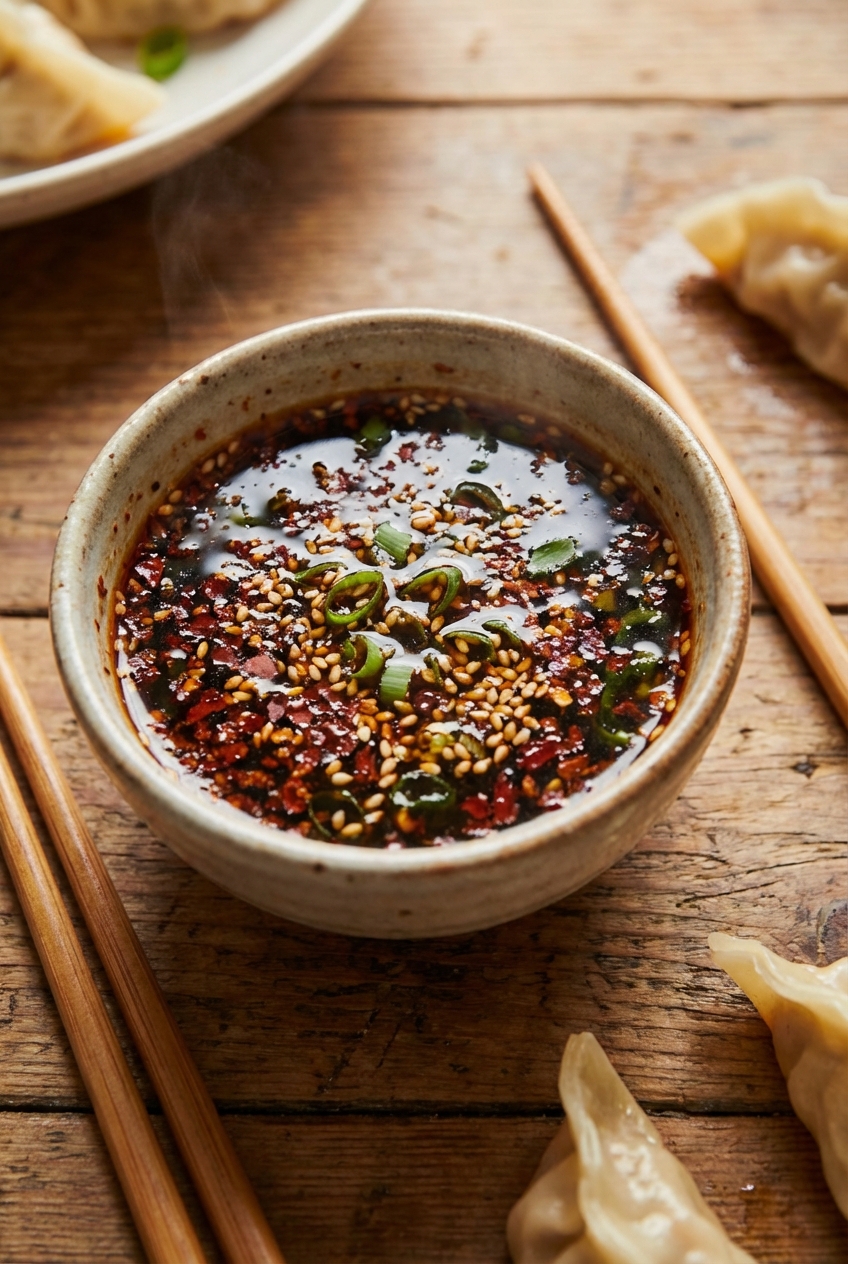
A small ceramic bowl of warm, glossy dumpling dipping sauce with chili flakes, sesame seeds, and sliced scallions on a wooden table

If you have ever dunked a dumpling and thought, this needs a little more drama, welcome. This modern dumpling sauce is warm and spiced, meaning we bloom aromatics in hot oil so the ginger and chili wake up right away, then round it out with soy, vinegar, and a whisper of sweetness. It tastes like your favorite takeout dipping sauce grew up, got cozy, and started keeping better pantry staples.

It is also wildly flexible. Make it punchier with more vinegar, deeper with a touch of black vinegar, or extra cozy with five-spice. The point is not perfection. The point is getting to that mid-bite pause where you look at the dumpling like it just told you a secret.
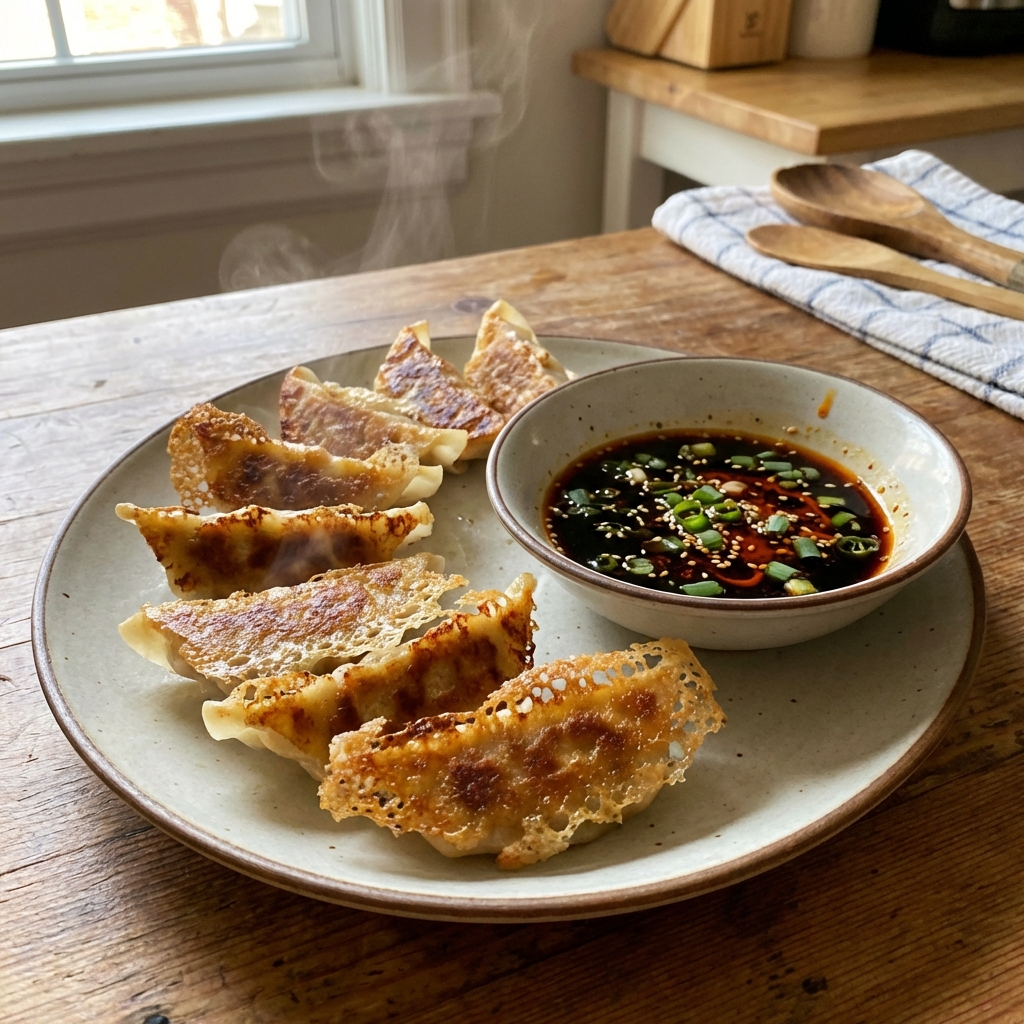
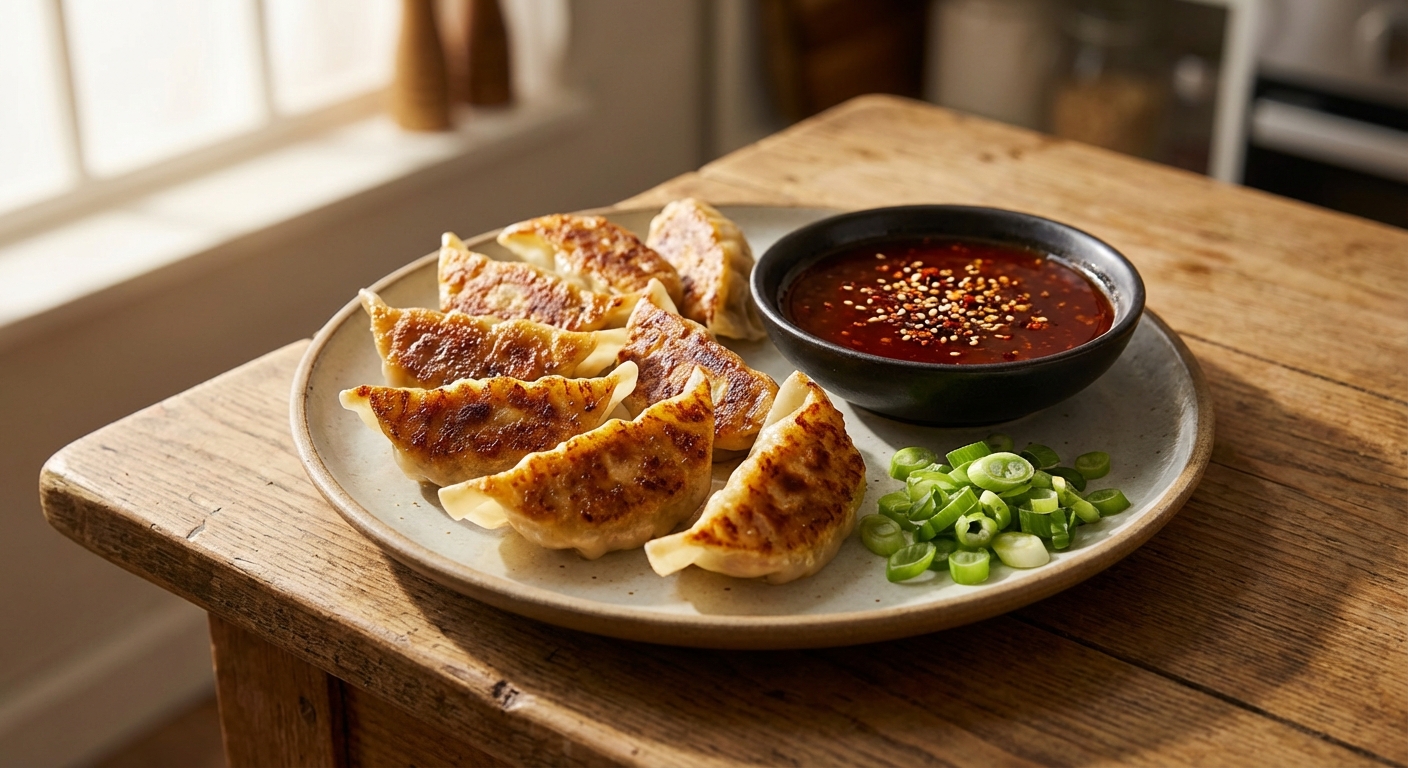
A plate of pan-fried dumplings with crisp bottoms next to a bowl of dipping sauce

Why It Works

  • Warm, fast flavor: blooming ginger, garlic, and chili in hot oil makes the sauce taste like it took effort, even when it took 10 minutes.
  • Balanced on purpose: salty (soy), tangy (vinegar), warm spice (five-spice optional), and just enough sweet to keep it addictive.
  • Clings and coats: a little sesame oil and the aromatic oil give it body, so it actually sticks to dumplings instead of sliding off.
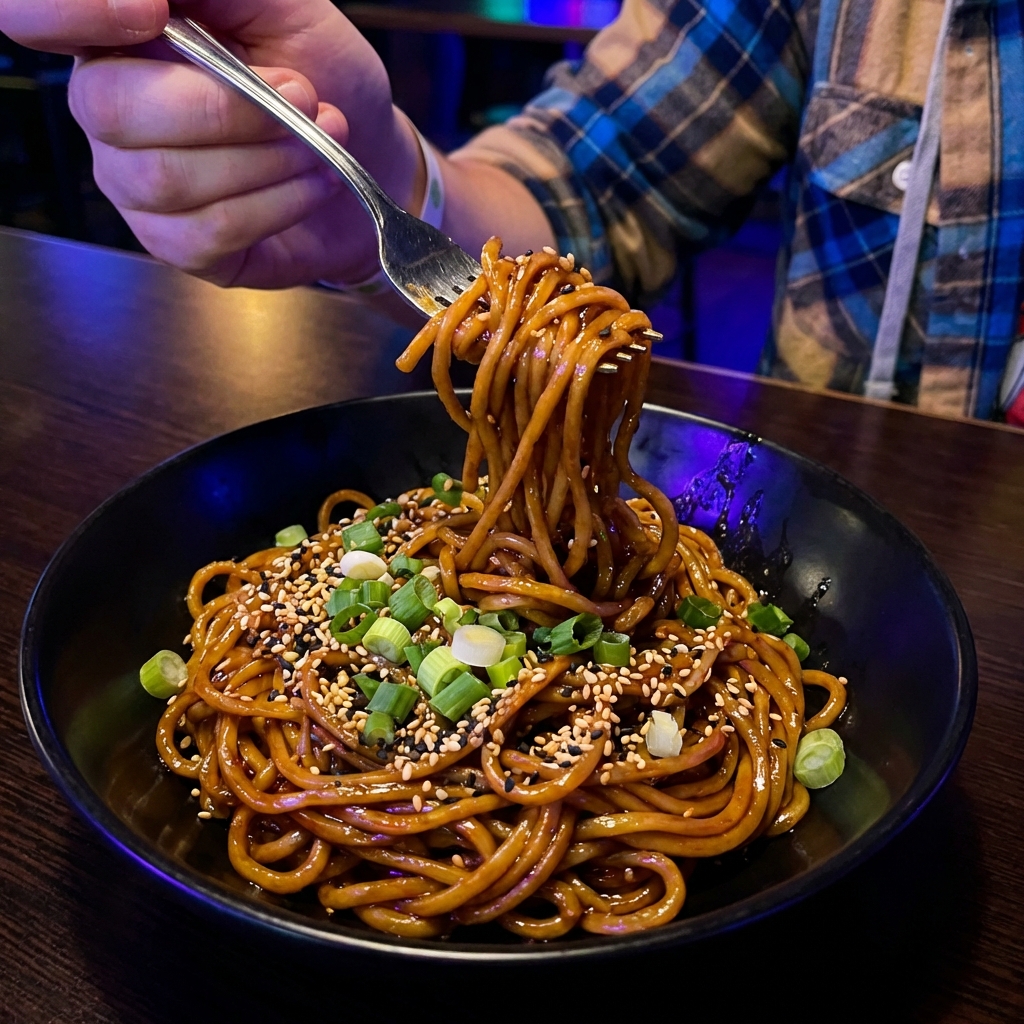
  • Works beyond dumplings: drizzle on noodles, spoon over rice bowls, or use as a quick sauce for sautéed greens.

Pairs Well With

Storage Tips

Refrigerate: Store in a jar or airtight container for 5 to 7 days. Keep it cold, use clean utensils, and discard if anything smells off or you see mold.

Reheat: This sauce is great warm. Microwave in a small bowl in 10 to 15 second bursts, or warm gently in a small pan. If it tastes extra sharp right out of the fridge, warming it for 30 seconds helps mellow the vinegar.

Oil separation is normal: Stir before serving. If the aromatics settle, that is not a problem, that is a feature.

Freezing: Not ideal because the aromatics lose some snap, but you can freeze it in an ice cube tray for quick noodle nights in a pinch.

Common Questions

Is this sauce spicy?

Medium by default. Use 1 teaspoon chili flakes for mild, 2 teaspoons for medium, and 1 tablespoon for very spicy. Note: at 1 tablespoon, the sauce gets thicker and more chili-forward (almost paste-like) because the flakes soak up oil. Chili flake heat varies a lot by brand, so trust your taste buds.

What is the best vinegar for dumpling sauce?

Rice vinegar gives a clean tang. If you have Chinese black vinegar (Chinkiang), swap in 1 tablespoon for deeper, slightly sweet, almost malty vibes.

Can I make it gluten-free?

Yes. Use tamari or certified gluten-free soy sauce. The rest is typically gluten-free, but check labels on vinegar, chili flakes, and spice blends (five-spice) if cross-contamination is a concern.

How do I make it less salty?

Use low-sodium soy sauce and add 1 to 2 teaspoons water. Another trick is adding a little more vinegar and a touch of honey to keep it balanced without tasting watered down.

Can I use fresh chili instead of flakes?

Absolutely. Finely mince 1 small red chili and add it with the ginger and garlic. The heat will be brighter and less toasty than flakes.

I started making versions of dumpling sauce the way a lot of us do. A splash of soy, a splash of vinegar, call it a day. Then one night I got impatient and warmed some oil with ginger and chili first, mostly because I wanted the kitchen to smell like something was happening. The difference was immediate. The sauce tasted rounder, toastier, more like the dipping bowls you secretly want to drink. Now I keep this in my back pocket for frozen dumpling nights, because it turns quick dinner into why is this so good with basically zero extra work.