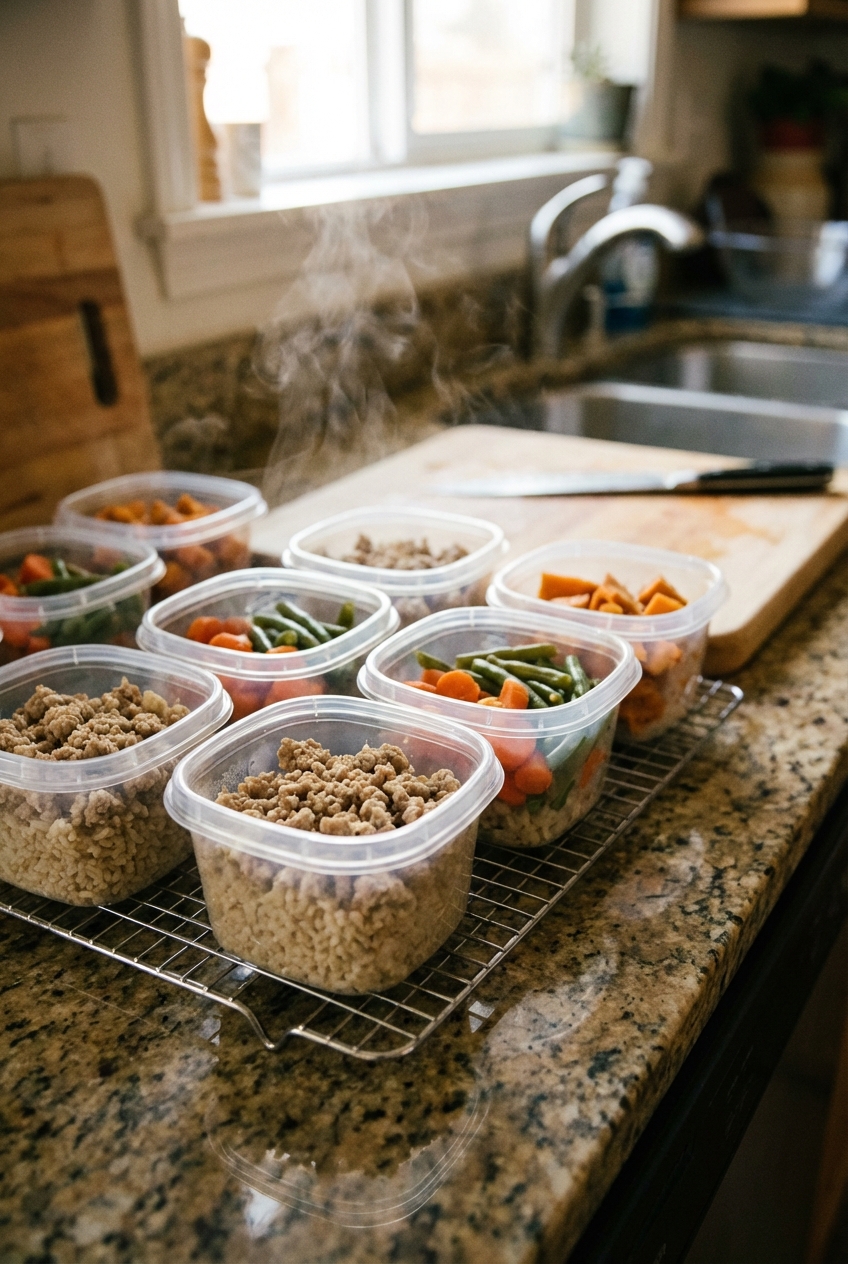
Is homemade dog food healthier than kibble?
It can be, but it depends on balance. Kibble is typically formulated to meet nutrition standards. Homemade can be great for ingredient control and picky eaters, but long-term feeding should be balanced with your veterinarian’s help.
Is this recipe complete and balanced?
No, not on its own. This is a great occasional meal, topper, or short-term homemade option, but it is not complete and balanced unless it is properly formulated to meet AAFCO or FEDIAF nutrient targets (usually with a veterinary nutritionist or a veterinary-approved supplement plan).
“Balanced” typically means getting the calcium-to-phosphorus ratio right and covering essentials like vitamin D, vitamin E, iodine, zinc, and omega-3 fats. Those are easy to miss with well-intentioned home cooking.
Do I need to add a supplement?
If you plan to feed this as your dog’s main diet long-term, yes, you usually need a veterinary-approved vitamin-mineral blend and a reliable calcium source. If you use this as an occasional meal or topper, supplements are less critical, but still ask your vet if your dog has health conditions.
What about eggshell powder for calcium?
Eggshell powder can help, but it is tricky to dose correctly because calcium needs depend on calories, total recipe yield, and your dog’s life stage, and eggshell powders vary in strength and grind size. For that reason, this recipe lists eggshell powder as optional and best used only with vet guidance (or a nutritionist-formulated recipe). If you want a simple rule, your vet can give you a target amount per day based on your dog’s calorie needs.
Can I use brown rice instead of white rice?
Yes. Brown rice has more fiber, but it can be harder on some dogs’ stomachs. Start small and see how your dog does.
What vegetables are safest?
Carrots, peas, green beans, spinach in small amounts, pumpkin, and sweet potato are common picks. Avoid onion, garlic, leeks, and chives. Skip grapes and raisins entirely. If your dog has a history of certain urinary stones, ask your vet about higher-oxalate greens (like spinach).
Is bone broth okay?
It can be, but read labels like a detective. Many store-bought broths (even low-sodium ones) contain onion or garlic. Use homemade or a product that is clearly labeled onion and garlic free.
Does pumpkin help with poop?
It may help some dogs with stool consistency, but it is not universal. Start with a small amount and stop if it does not agree with your dog.
How much should I feed?
Portion needs vary by size, age, activity level, and whether this is a topper or a full meal. Because calorie density can vary with turkey leanness, rice amount, and add-ins, the safest guidance is to use this food as 25 to 50 percent of the meal with your dog’s usual balanced food, then adjust based on body condition and your vet’s guidance. If you are switching to homemade full-time, work with your vet to set a calorie target and portion by calories, not vibes.