Mom's Best Recipes
Recipe

Modern Marinara Sauce

A quick, bright marinara with garlic, basil, and a buttery finish. Weeknight-fast, freezer-friendly, and, in my opinion, better than most jarred sauces.

Author By Matt Campbell
4.8
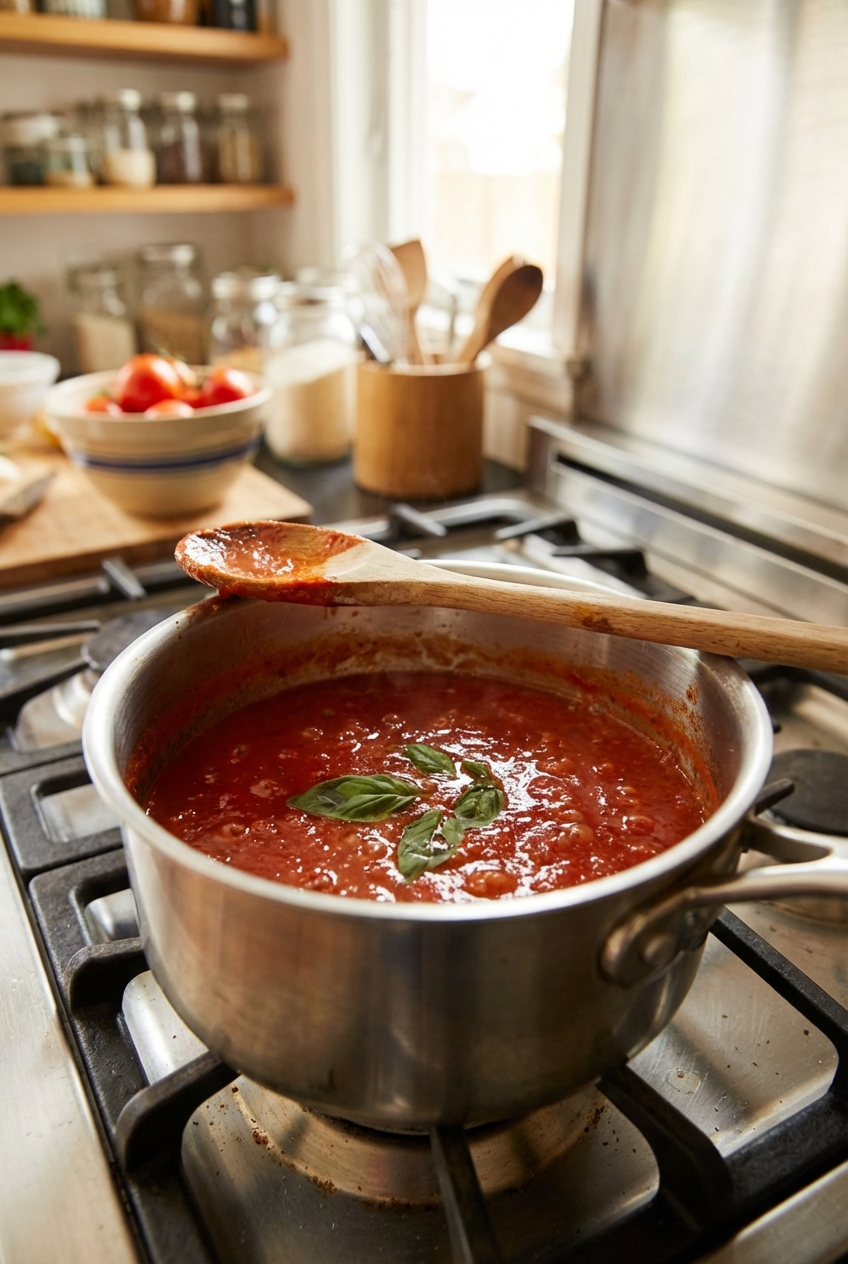
A saucepan of glossy marinara sauce simmering on a stovetop with fresh basil and a wooden spoon resting on the rim

Marinara is supposed to be simple. But simple does not mean flat. This modern marinara keeps the classic soul intact, then sneaks in a few smart moves that make it taste like you paid attention: tomato paste for depth, a quick simmer for freshness, and an optional butter swirl that turns the whole thing velvety.

This is the kind of sauce you can throw together while the pasta water heats up. It tastes bright and tomato-forward, with that garlic-and-basil perfume that makes your kitchen smell like you have your life together, even if you are cooking in sweatpants.
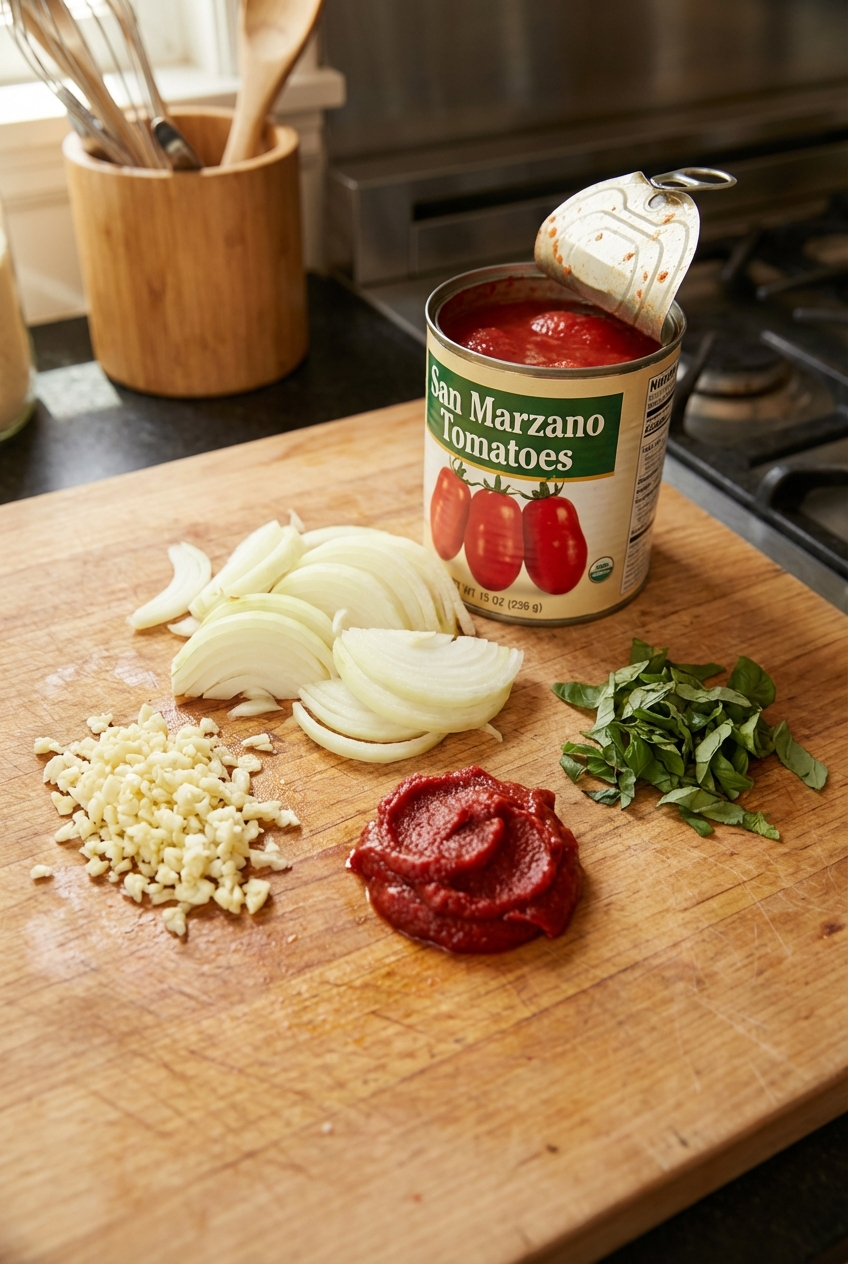
A cutting board with minced garlic, sliced onion, tomato paste, and a small pile of torn basil next to an opened can of San Marzano tomatoes

Why It Works

  • Fast flavor: Tomato paste gets toasted in olive oil for a deeper, more restaurant-y base in minutes.
  • Fresh, not raw: A short simmer smooths the acidity and pulls everything together without turning it into an all-day sauce.
  • Bright finish: Basil goes in at the end so it stays aromatic, not dull.
  • Flexible texture: Chunky, lightly crushed, or blended smooth. Your call.
  • Freezer hero: Make a double batch and future-you wins.

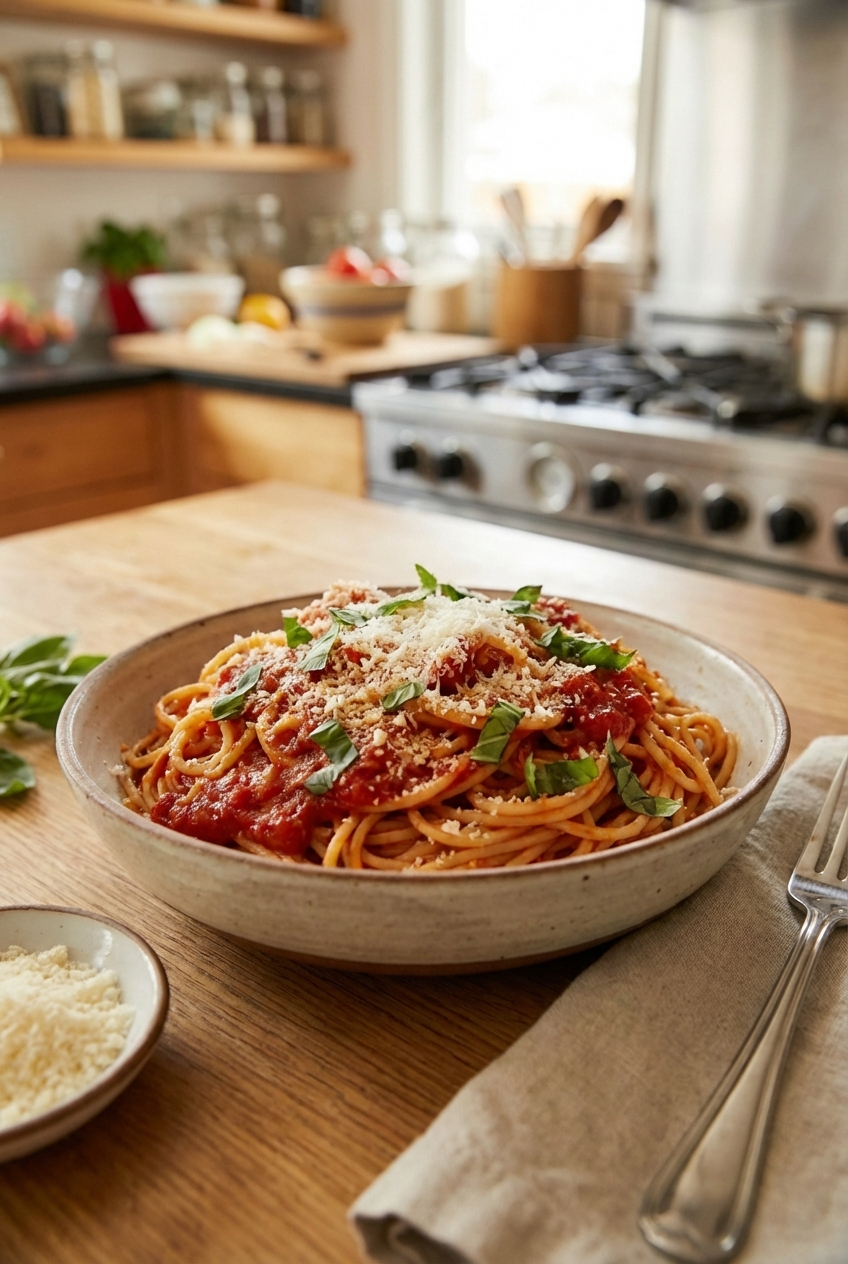
Pairs Well With

Storage Tips

Refrigerator: Cool sauce completely, then store in an airtight container for about 4 to 5 days.

Freezer: Freeze in portioned containers or zip-top bags laid flat for up to 3 months for best quality. Thaw overnight in the fridge or reheat from frozen gently on the stove with a splash of water.

Reheating tip: Warm over medium-low heat, stirring occasionally. If it thickens too much, add pasta water, water, or broth one tablespoon at a time until it loosens up and looks glossy again. For food safety, reheat until steaming hot and simmering (about 165°F).

Food safety note: If you used butter to finish, it still stores and freezes well. Just reheat gently so it does not separate.

Common Questions

Can I use crushed tomatoes instead of whole?

Yes. Whole peeled tomatoes give you the most control over texture, but crushed tomatoes work great. If you use crushed, keep the simmer closer to 10 to 12 minutes so it stays bright.

How do I make it less acidic?

First, simmer it for the full time. If it still tastes sharp, add 1 to 2 teaspoons butter or a small pinch of sugar. Start small and taste. You can also add a little extra olive oil for roundness.

Do I need onion?

Not strictly, but it adds a gentle sweetness that makes the sauce taste more complete. If you skip it, keep the heat a touch lower when you add the garlic so it does not scorch. You can also toast the tomato paste a little longer for extra depth.

Is this a good pizza sauce?

Yes, with a tweak. Simmer it a few minutes longer to thicken, and go lighter on the butter. You want it spoonable, not watery.

Can I add meat?

Absolutely. Brown Italian sausage or ground beef first, remove excess fat, then build the sauce in the same pot. It becomes more of a meat sauce, but marinara will not be mad about it.

What if I do not have fresh basil?

Use 1 teaspoon dried basil or 1 to 2 teaspoons Italian seasoning, added with the tomatoes. Finish with parsley if you have it.

Balsamic or lemon?

Lemon keeps things bright and clean. Balsamic leans a little sweeter and deeper. Both are optional, and both work, so pick the vibe.

I started making marinara as a “learn the basics” move, then realized it is basically the weeknight cheat code. When you can turn a can of tomatoes into something that tastes bright, savory, and intentional in under 30 minutes, everything else gets easier. This version is the one I make when I want cozy carbs now, not later. It is relaxed, it forgives distractions, and it always rewards you for tasting as you go.