Mom's Best Recipes
Recipe

Modern Roast Beef Recipe

A quick, weeknight-friendly roast beef with crisp edges, a bright pan sauce, and juicy slices every time. No fussy steps, just smart heat and bold seasoning.

Author By Matt Campbell
4.8
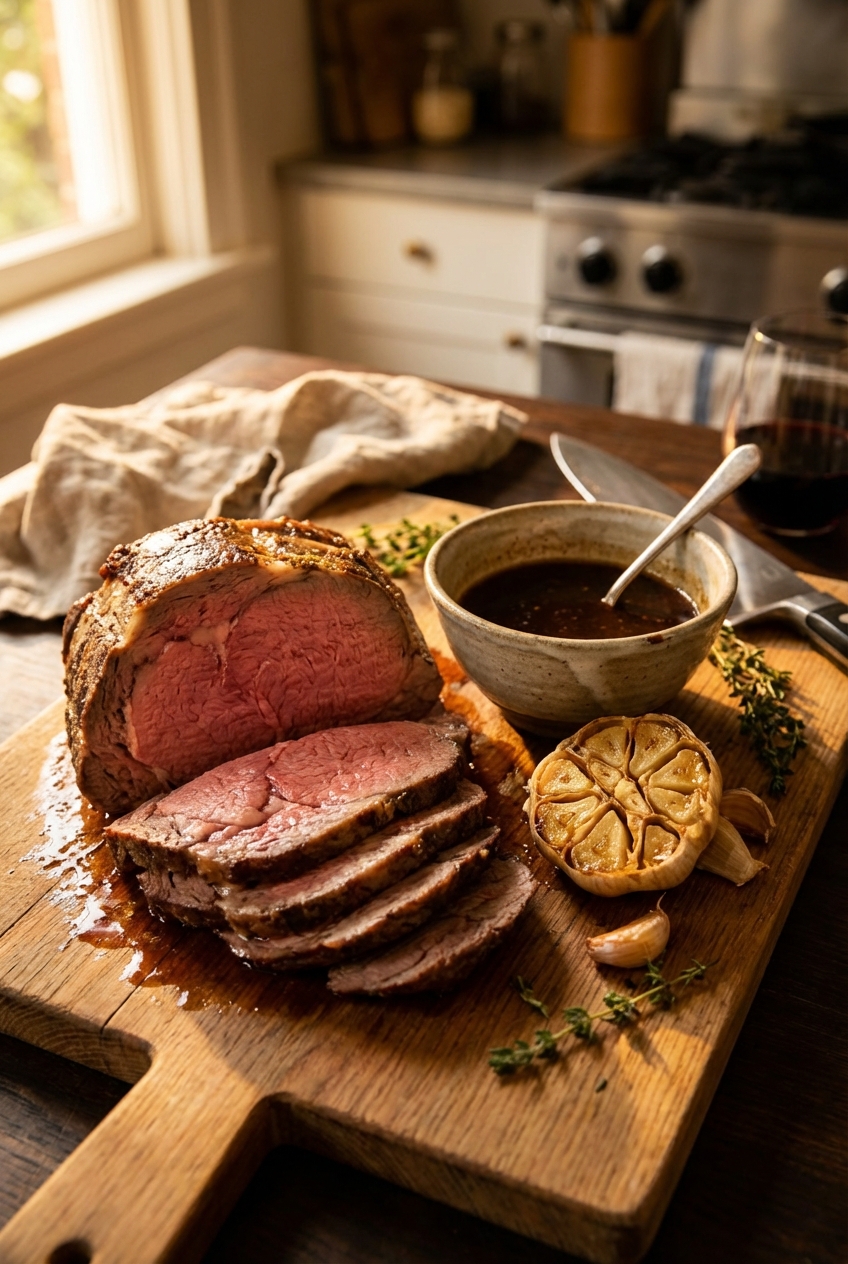
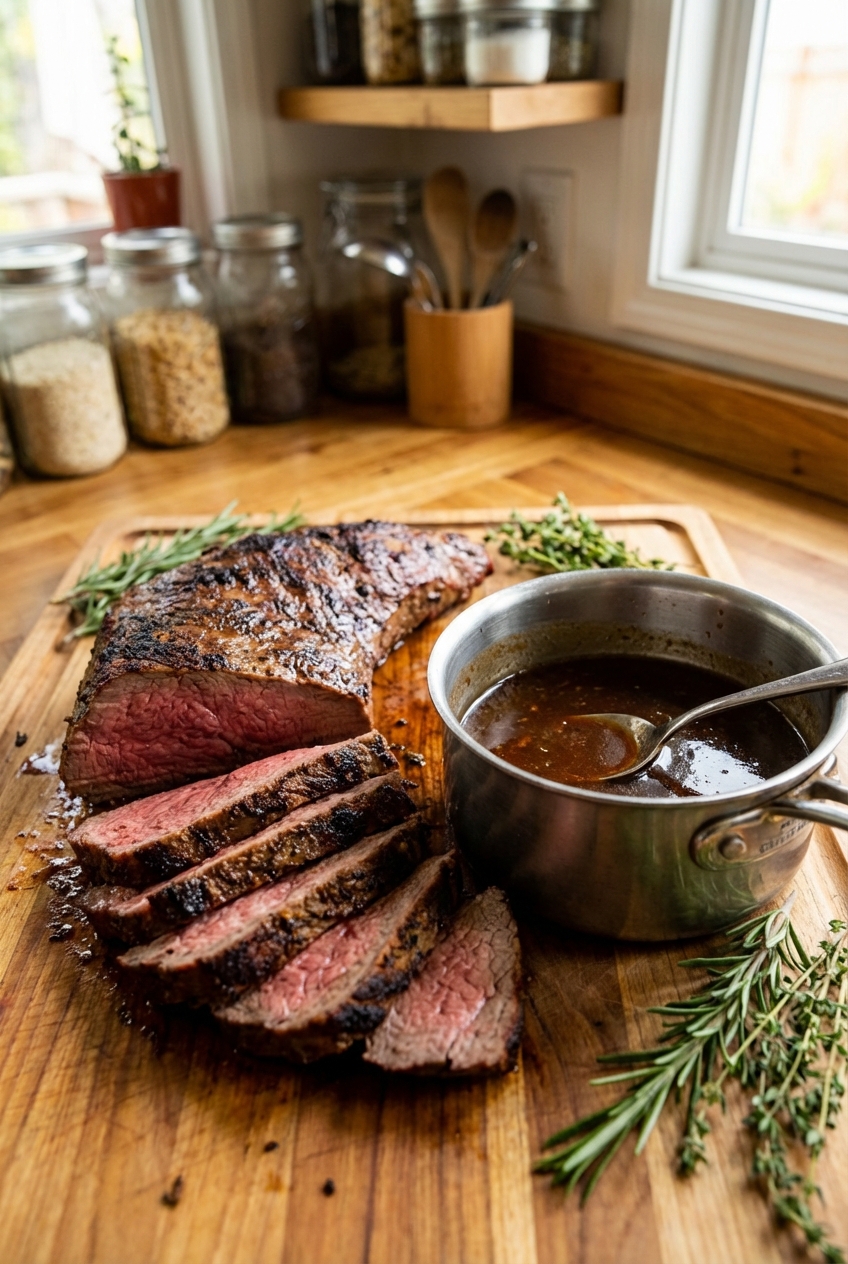
A real photograph of sliced medium-rare roast beef on a cutting board with a small bowl of pan sauce and roasted garlic in warm kitchen light

Roast beef used to mean a whole Sunday production. This version is for modern life: you want the juicy, rosy center, the deeply browned crust, and a sauce that tastes like you tried harder than you did.

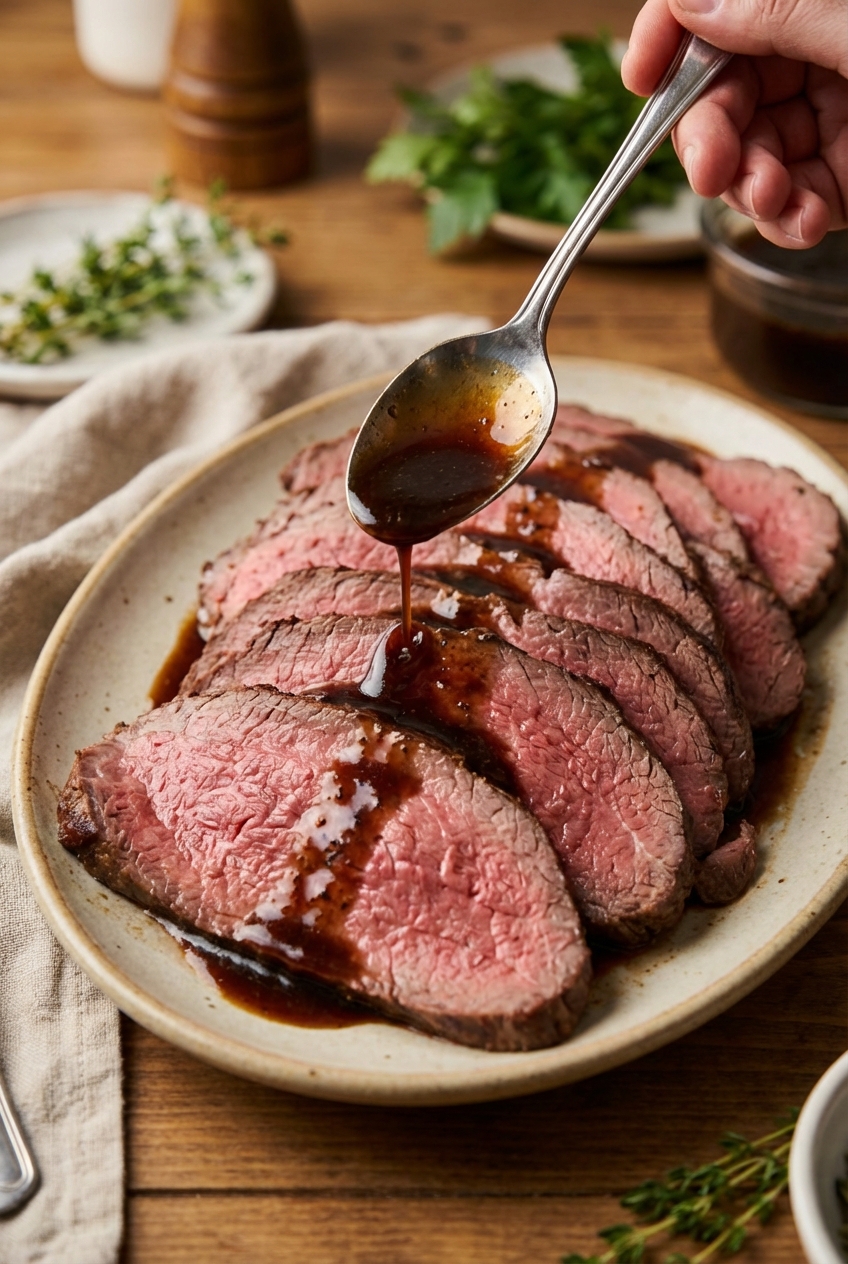
The trick is simple. We use a smaller, quick-cooking cut (top sirloin roast), hit it with a bold rub, and roast hot enough to build a crust without drying the inside. Then we pull a very responsible move: we turn the pan drippings into a fast shallot, garlic, and Dijon pan sauce that makes everything on the plate behave like it has its life together.

Whether you are feeding family, meal prepping protein for the week, or building the best roast beef sandwich of your life, this one is low drama and high reward.
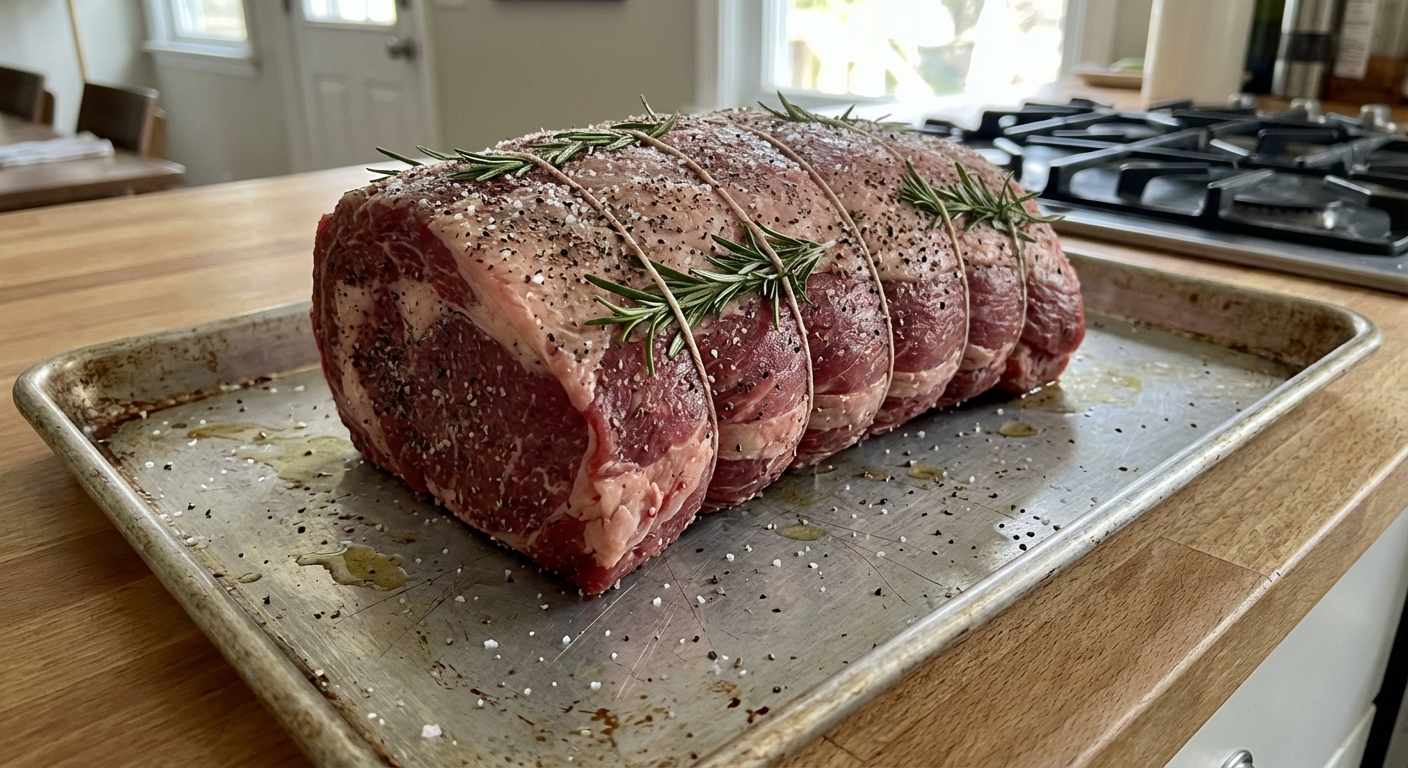
A real photograph of a top sirloin roast tied with butcher twine and seasoned with salt, pepper, and rosemary on a rimmed baking sheet

Why It Works

  • Quick cook time: A 2 to 2.5 pound roast is on the table in about 45 minutes, plus resting.
  • Big flavor, accessible ingredients: Pantry spices, Dijon, and a splash of broth or wine do all the heavy lifting.
  • Juicy slices: A hot oven plus a proper rest helps keep the inside tender instead of gray and dry.
  • Bright, glossy pan sauce: The shallot-Dijon finish cuts through the richness and tastes restaurant-y without being fussy.

Pairs Well With

Storage Tips

Refrigerate: Cool roast beef quickly, then store in an airtight container for up to 4 days. Keep the sauce separate if you can.

Freeze: Slice the beef, portion it, and freeze up to 2 months. Wrap tightly or use a freezer bag with as much air pressed out as possible.

Reheat without drying it out: Warm slices in a skillet with a splash of broth and a spoon of sauce over low heat. Or, cover and reheat in a 300°F oven just until warm. Avoid blasting it in the microwave unless you like beef jerky vibes.

Leftover MVP ideas: Roast beef sandwiches with horseradish mayo, quick beef and veggie bowls, or chopped beef folded into eggs with cheddar.

Common Questions

What cut is best for quick roast beef?

Top sirloin roast is a great modern choice: flavorful, lean enough for clean slices, and it cooks faster than big traditional roasts. You can also use tri-tip (adjust cook time) or eye of round (leaner, slice extra thin and do not overcook).

What temperature should I cook roast beef to?

For most people, medium-rare is the sweet spot. Pull the roast at 125°F for medium-rare (it typically rests up to about 130 to 135°F), or pull at 135°F for medium (it typically rests up to about 140 to 145°F). Carryover depends on roast size and shape, but 5 to 10 degrees is a solid expectation.

Do I really need to rest the roast?

Yes. Resting for 10 to 15 minutes helps the juices redistribute so you get cleaner slices and less juice running all over your cutting board. Consider it the easiest step with the biggest payoff.

How do I get a better crust?

Pat the roast dry, salt it well, and roast on a rack so hot air can circulate. If you want extra crust, finish with a 1 to 2 minute broil, but keep a close eye on it.

Can I make it without alcohol?

Absolutely. Use beef broth plus a small splash of apple cider vinegar or lemon to brighten the sauce.

Is it safe to eat roast beef medium-rare?

For a whole-muscle roast, the outside gets seared and the inside is intact, which is why medium-rare is common. Still, use a thermometer, and if you are pregnant, immunocompromised, or cooking for someone who prefers extra caution, cook to a higher final temperature.

I love the idea of a classic roast, but I also live in reality where dinner cannot require a three hour calendar invitation. The first time I tried to “make roast beef on a Tuesday,” I picked a smaller sirloin roast, cranked the heat, and told myself I would fix it with sauce if things got weird.

Good news: it did not get weird. It got crisp on the outside, tender in the middle, and the pan sauce turned the whole thing into something that felt like a weekend meal without the weekend timeline. Now it is my go-to when I want comfort food energy with a modern attention span.