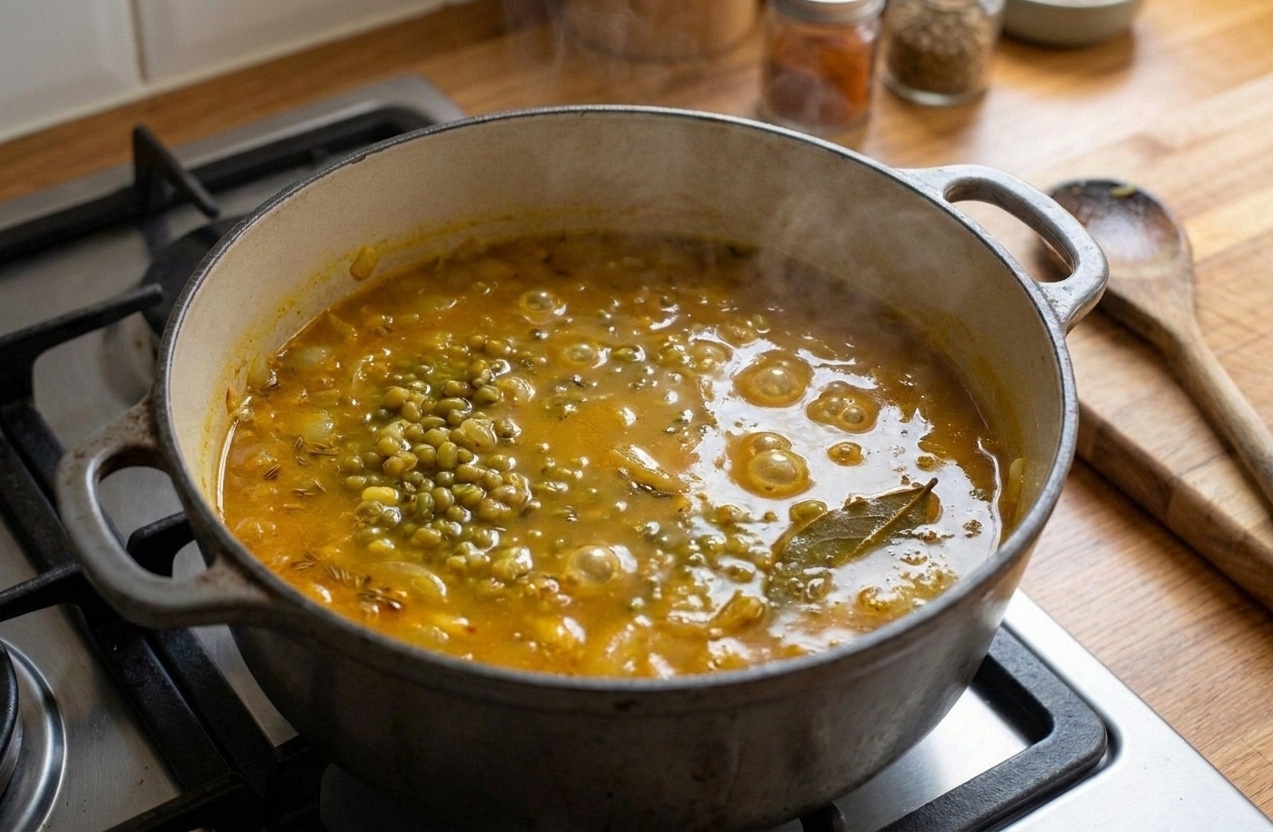
What are mung beans, and do I need to soak them?
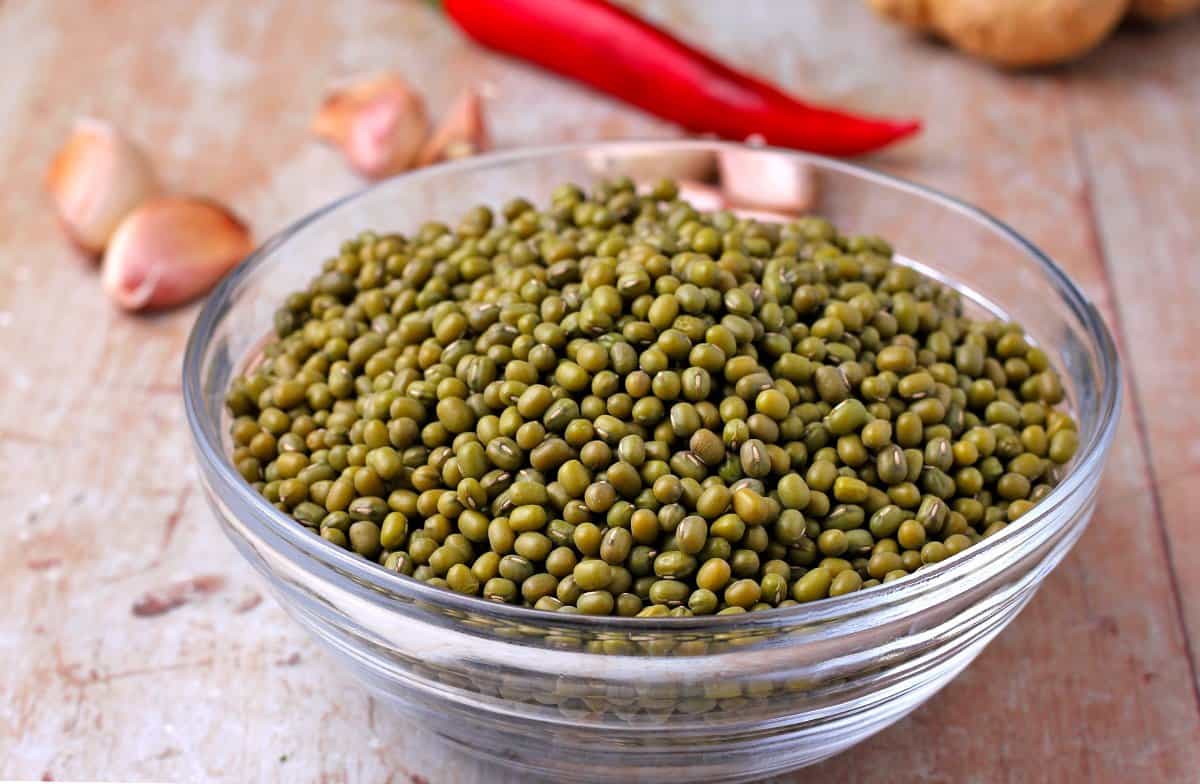
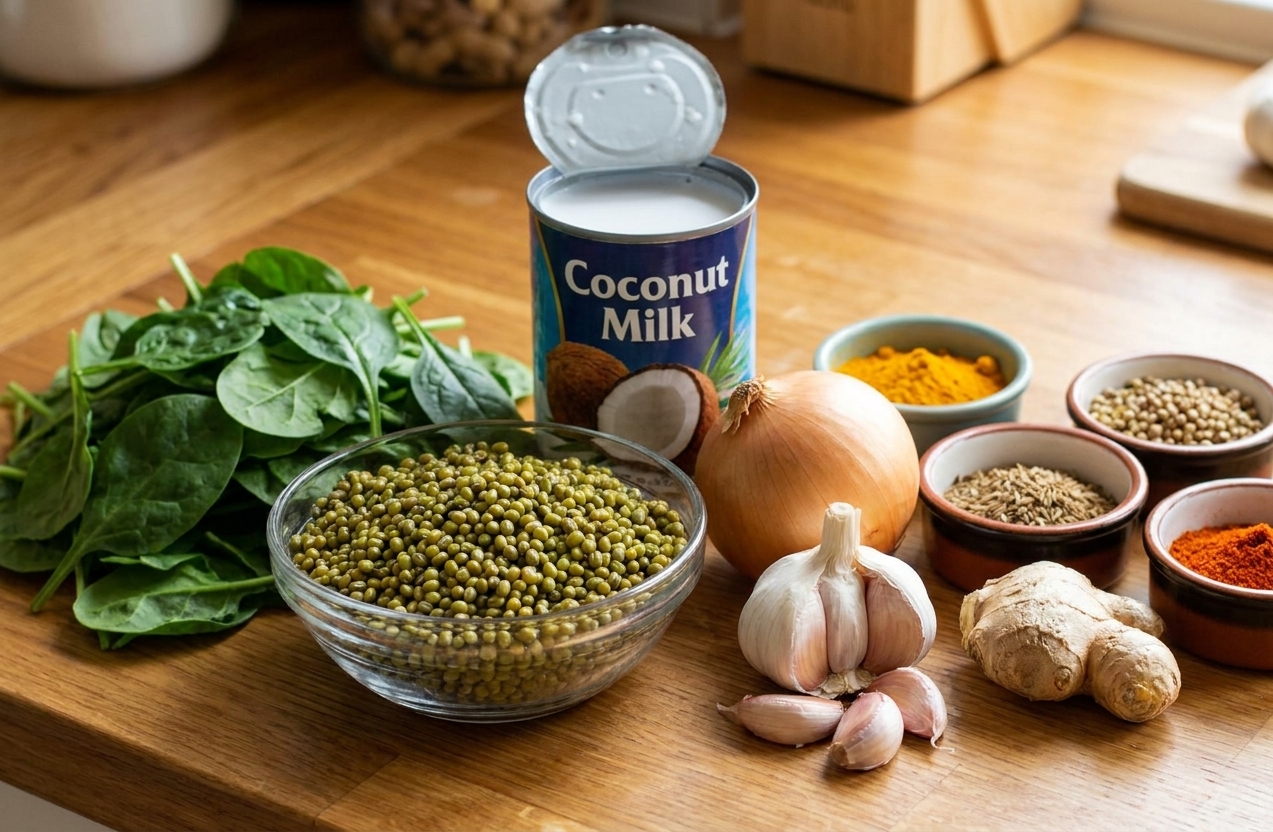
Mung beans are small green legumes that cook up tender and mild. For this recipe, you do not need to soak them. Just rinse well and quickly check for any little stones or debris (it happens). If you want them to cook a bit faster and more evenly, you can soak 30 to 60 minutes, but it’s optional.
How long do whole mung beans take to cook?
Most whole green mung beans turn tender in about 25 to 35 minutes at a steady simmer, but older beans can take longer. Cook until tender, and add a splash of broth or water if the pot looks dry.
Can I use split mung beans (moong dal) instead of whole?
Yes. Split mung beans cook faster and break down more, giving you a thicker, more stew-like curry. Start checking for tenderness around 15 to 20 minutes and add small splashes of water if it gets too thick.
Is this spicy?
As written, it’s gently warm, not fiery. If you want heat, add more cayenne or a chopped jalapeño with the onions. If you went too far, add extra coconut milk and a little sugar or honey to calm it down.
Can I make it without coconut milk?
You can, but it will be less creamy. Swap in half-and-half or plain yogurt off heat for creaminess, or use extra broth and finish with a drizzle of olive oil. If using yogurt, stir it in at the end so it does not split.
What should I serve with mung bean curry?
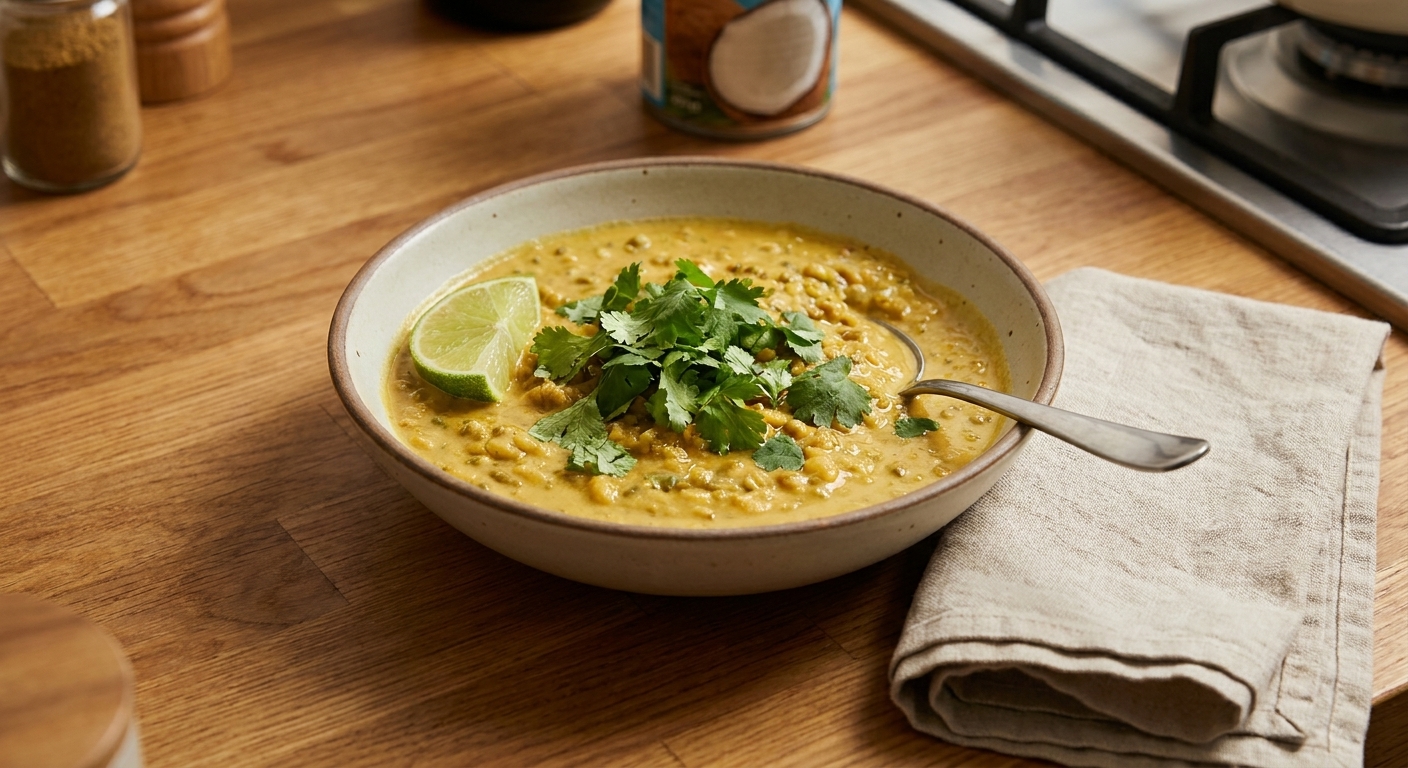
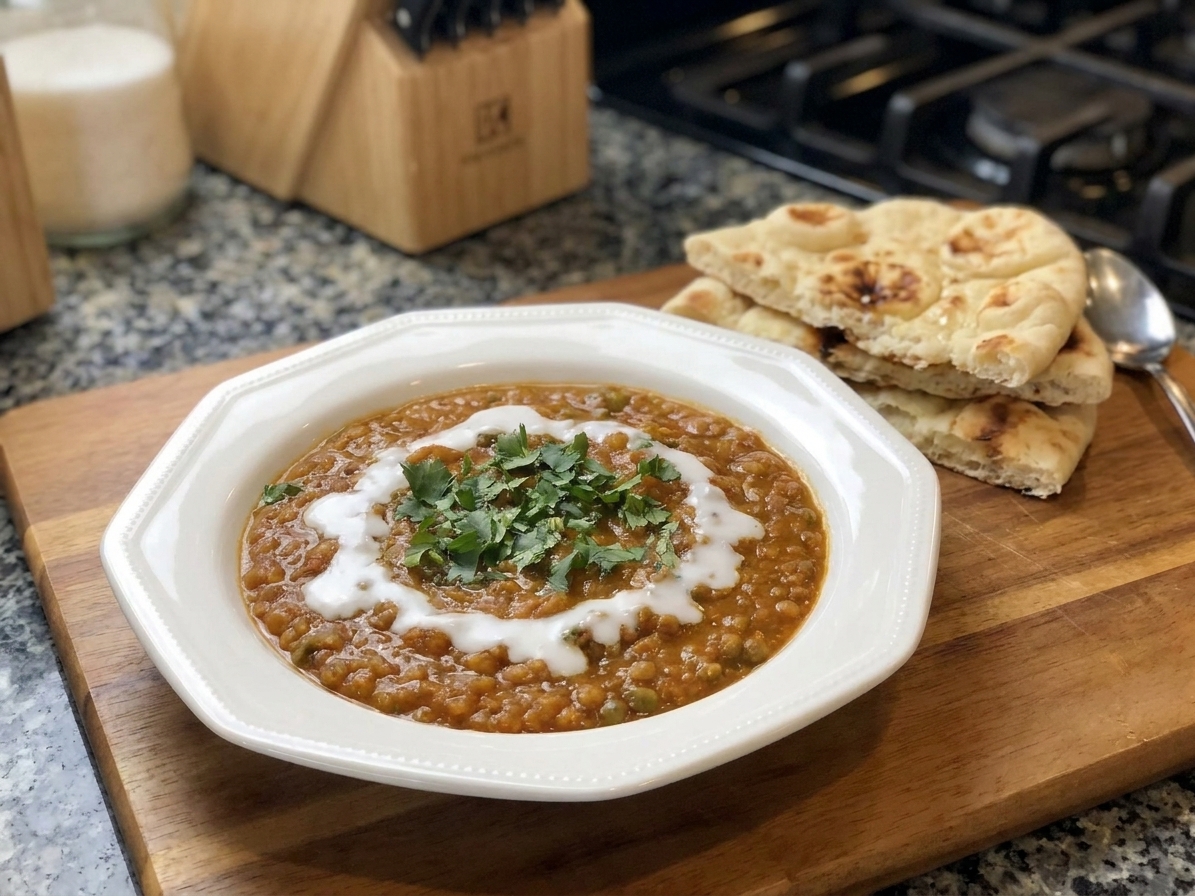
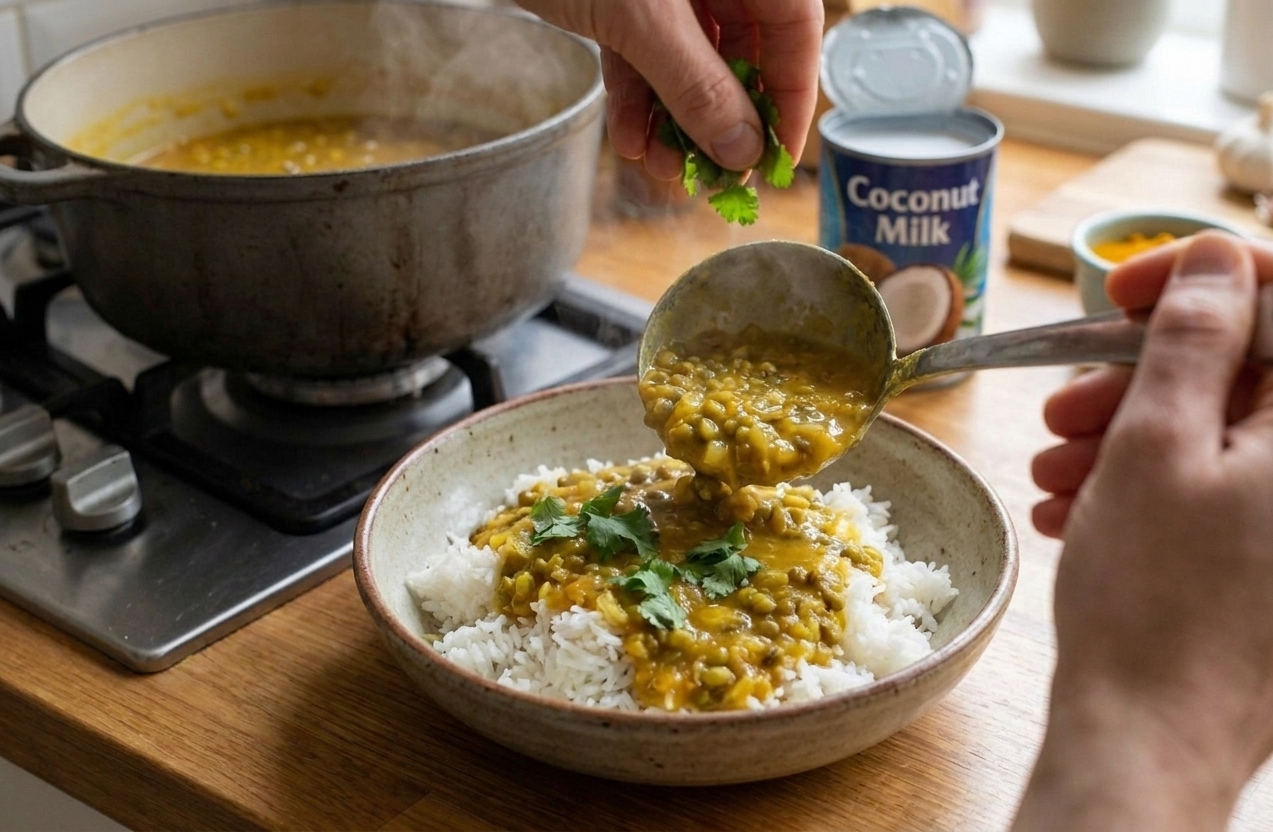
Steamed basmati rice, brown rice, quinoa, naan, or warm pita all work. I also love it with a quick cucumber salad and a spoonful of plain yogurt on top.