Mom's Best Recipes
Recipe

Mutton Shank Recipe

Slow-braised mutton shanks with warm spices, tender meat, and that classic soft but satisfying chew, all in a deeply savory gravy.

Author By Matt Campbell
4.8
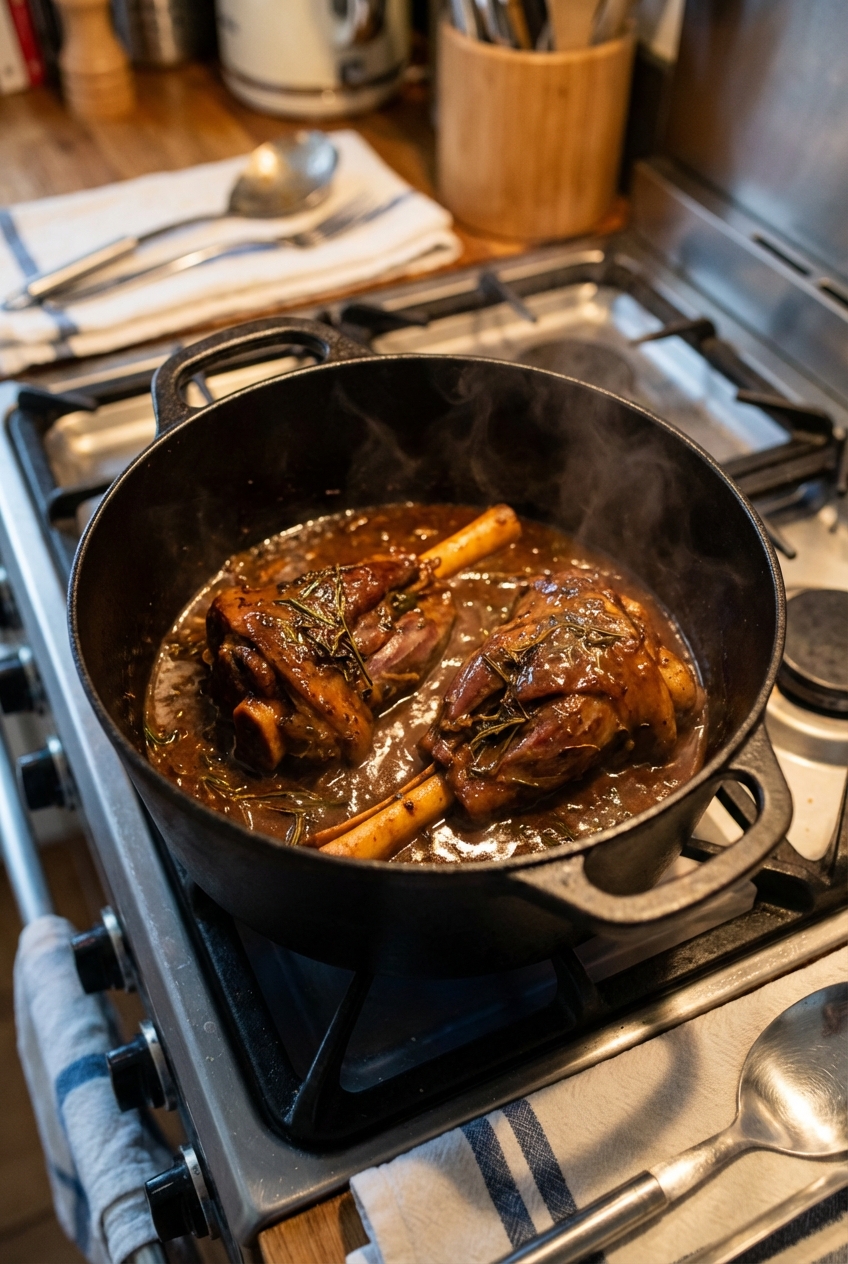
Two braised mutton shanks in a dark, glossy spiced gravy in a Dutch oven on a home stovetop

Mutton shanks are one of those meals that make your kitchen smell like you actually have your life together. The truth is, you mostly just let time do the heavy lifting. You sear, you build a quick onion and spice base, then you braise until the meat turns tender while still keeping that signature mutton chew that fans of the real deal love.

This is an South Asian-inspired, authentic-style mutton shank with accessible ingredients. No weird shortcuts, no 30-spice scavenger hunt. Just smart layering: browning for depth, whole spices for fragrance, and a long, gentle simmer that turns tough muscle into something you want to drag through the sauce with bread.

Time note: The total time below does not include optional marinating.
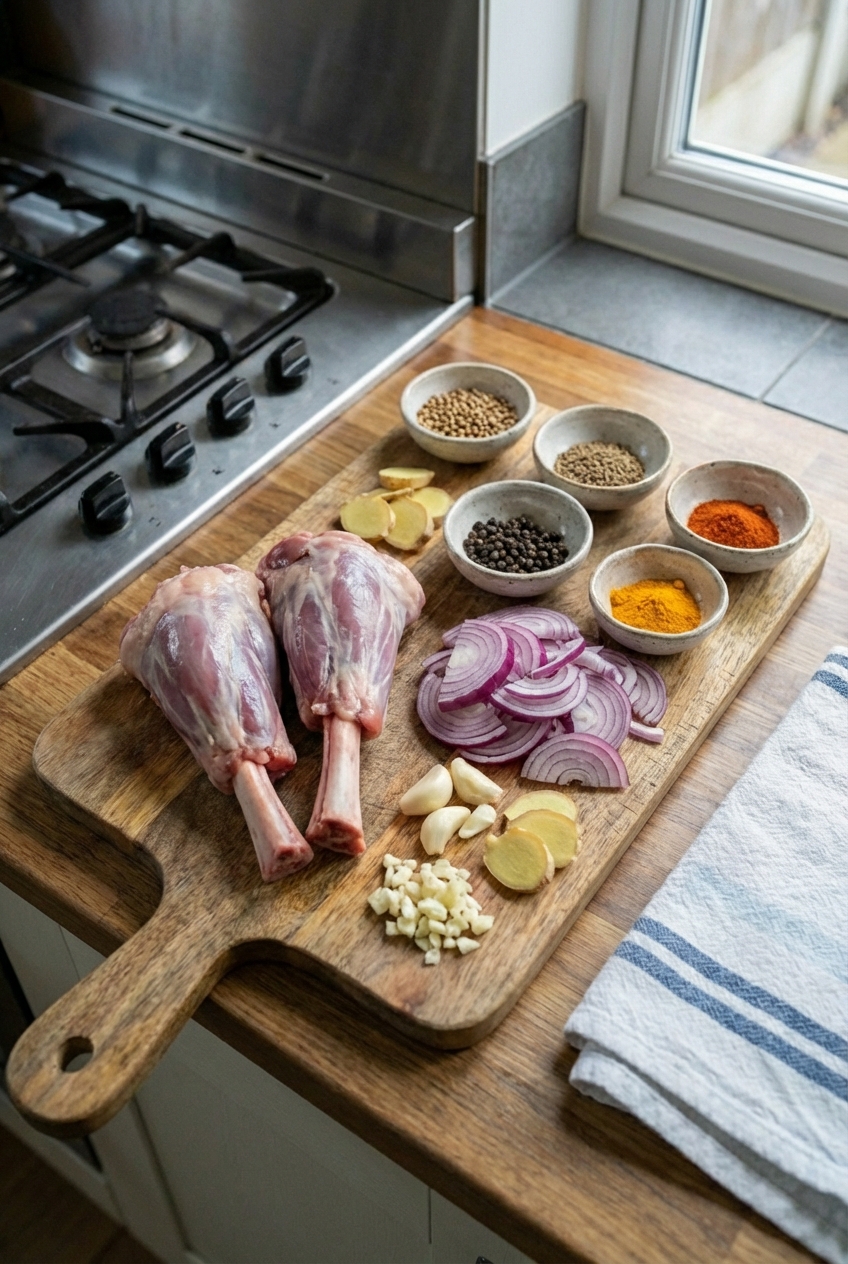
A wooden cutting board with raw mutton shanks, sliced onions, garlic, ginger, and small bowls of spices ready for cooking

Why It Works

  • Tender with that classic chew: The low-and-slow braise softens the shank while keeping the texture true to mutton.
  • Big flavor without fuss: Searing plus onions, ginger, garlic, and a tight spice set builds a restaurant-style gravy.
  • Gravy that clings: Reducing at the end gives you a glossy sauce that sticks to rice, roti, or mashed potatoes.
  • Flexible cooking options: Works on the stovetop or in the oven, whichever is easier to babysit.

Pairs Well With

Storage Tips

How to Store Leftovers

  • Fridge: Cool shanks and gravy completely, then store in an airtight container for up to 4 days. Keep the meat submerged in gravy so it stays moist.
  • Freezer: Freeze shanks with plenty of sauce for up to 3 months. Thaw overnight in the fridge.
  • Reheat: Warm gently in a covered pot with a splash of water or broth, low heat, until hot through. Mutton tightens up if you blast it on high.
  • Fat tip: Mutton can be rich. Chill leftovers overnight and lift off the solid fat cap if you want a cleaner gravy.
  • Best leftover move: Pull some meat off the bone, chop it, and simmer it back into the gravy. Instant next-day sandwich or rice bowl moment.

Common Questions

Common Questions

What is mutton, and can I use lamb shanks instead?

Mutton is meat from an older sheep, so it has a deeper flavor and naturally more chew than lamb. You can use lamb shanks, but the cook time will usually be shorter and the flavor will be milder. If using lamb, start checking tenderness around the 2-hour mark.

Do I need to marinate the mutton?

It helps, but it is not mandatory. Yogurt and lemon can soften the surface a bit and mellow any strong edge. A quick 20 to 30 minutes gives you a small boost, but a few hours or overnight makes a more noticeable difference.

How do I keep the shanks tender but still chewy?

Cook them low and steady and stop when the meat is tender and pulls with light pressure, but is not shredding on its own. Avoid rapid boiling. A gentle simmer (or low oven braise) gives collagen time to break down without tightening the meat.

How do I know the shanks are done?

A knife should slide in with minimal resistance, and the meat should loosen from the bone but still hold its shape when you lift it. If you like numbers, an optional check is around 190 to 205°F (88 to 96°C), but texture is the real test with shanks.

Why is my gravy bitter or too dark?

Common culprit: spices or aromatics got scorched during the sauté step. Keep the heat at medium to medium-low, stir often, and add a splash of water if the pot looks dry. If it is already bitter, add a little more yogurt or a small pinch of sugar and simmer gently.

My pot feels crowded. Does that matter?

Yes. Give the shanks a little breathing room so they braise evenly. If you are cooking 4 small shanks instead of 2 large, use a wider pot or braise in two batches, and add a splash more liquid as needed to keep the level at about halfway to two-thirds up the shanks.

The first time I cooked mutton shanks, I treated them like a weeknight chicken thigh situation. Spoiler: mutton does not care about your schedule. It wants time. When I finally stopped rushing and let the pot do its slow, steamy thing, the whole dish clicked. The sauce went from thin to glossy, the meat turned tender, and that little bit of chew made it feel like something you would happily eat with your hands, standing at the stove, “just tasting” five times in a row.