Mom's Best Recipes
Recipe

Nasi Goreng (Indonesian Fried Rice)

Smoky, sweet-savory fried rice with garlic, chile, kecap manis, and crisp-edged eggs. Fast, flexible, and built for leftovers.

Author By Matt Campbell
4.8
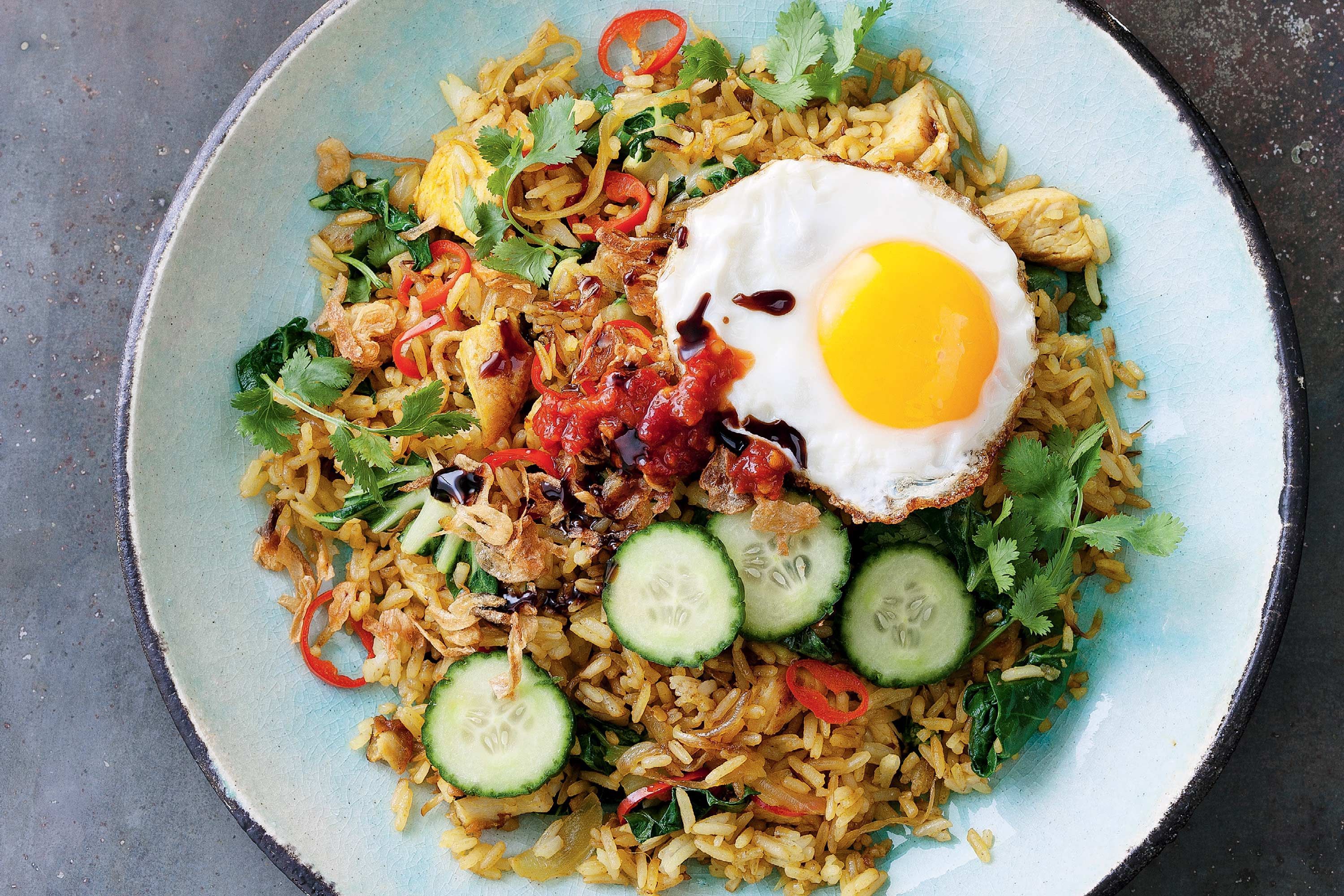
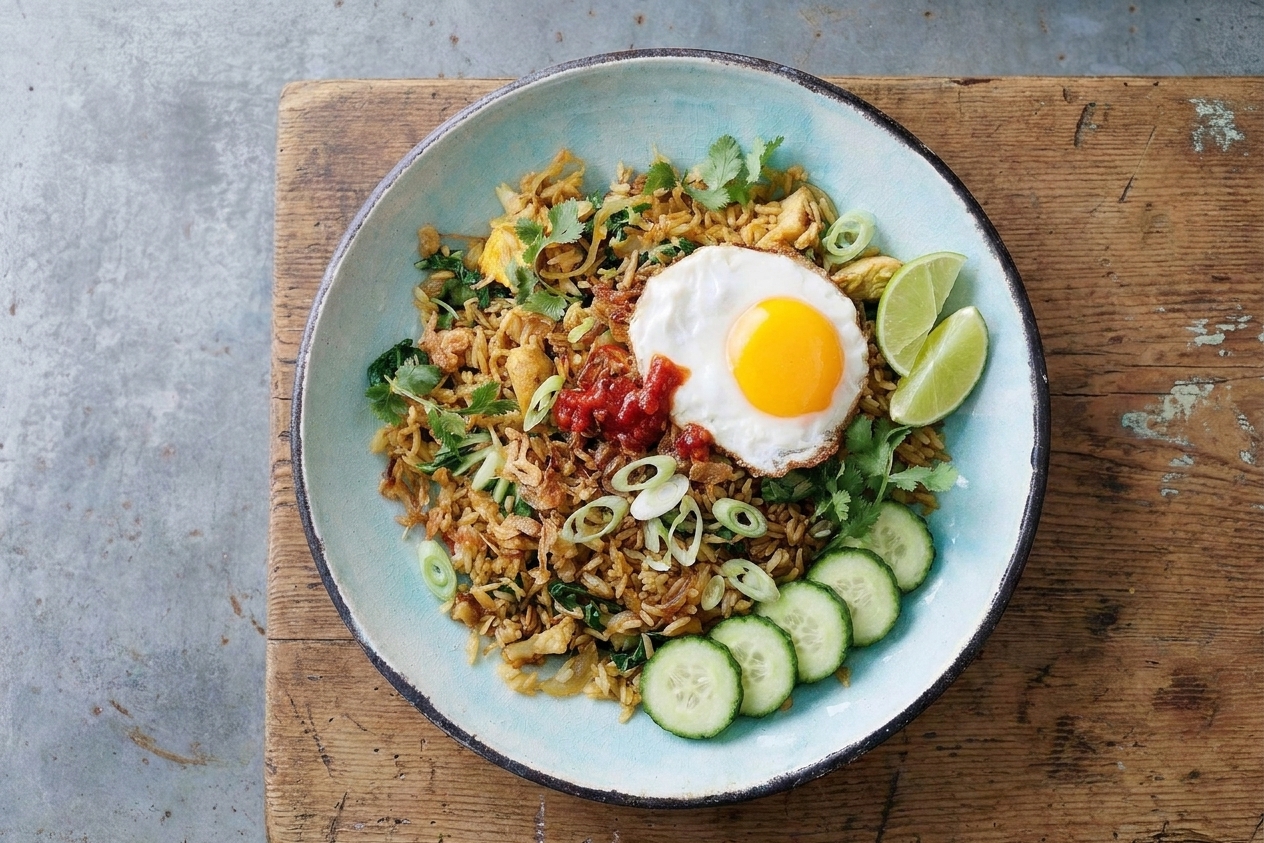
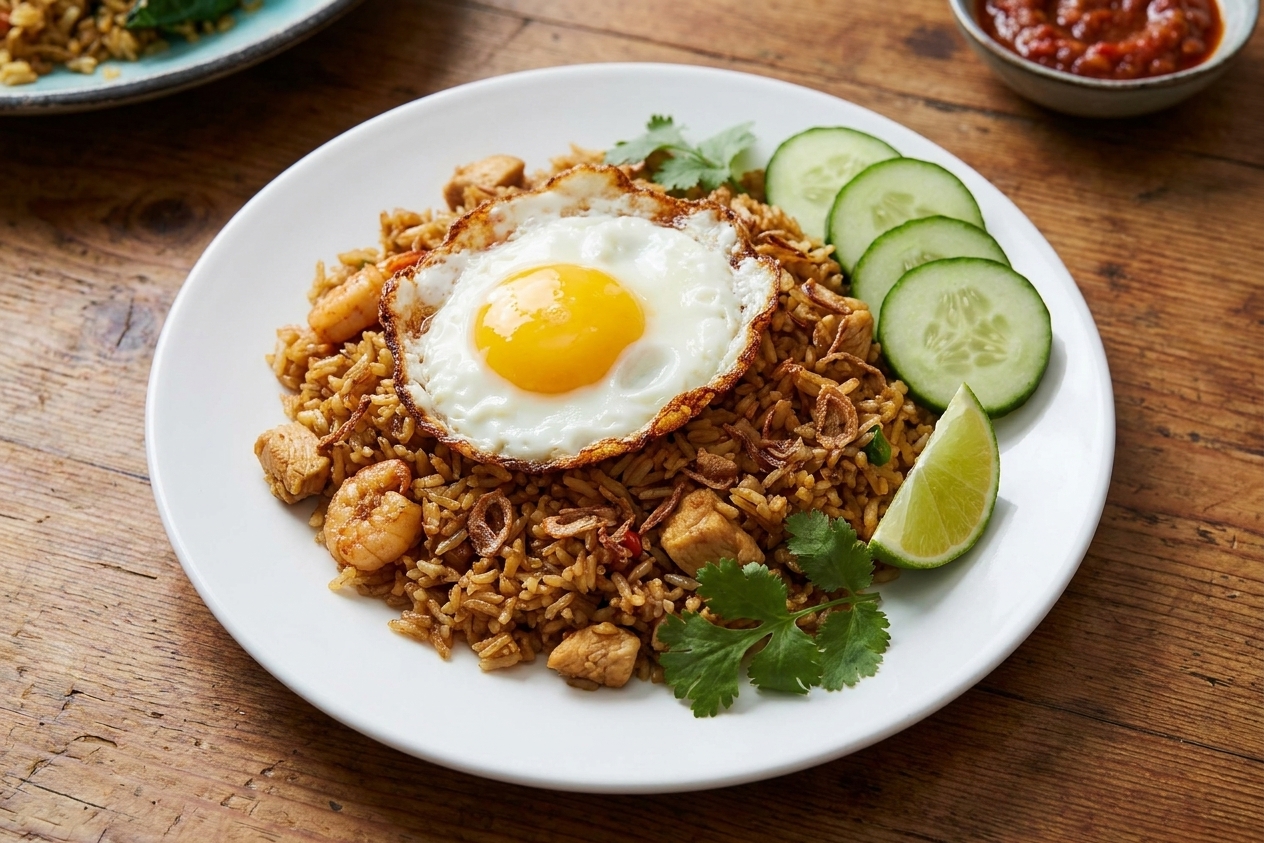
A plated serving of nasi goreng on a white plate topped with a crispy-edged sunny-side-up egg, cucumber slices, and a wedge of lime on a warm-toned kitchen table

Nasi goreng is the kind of fried rice that makes you stop mid-bite like, wait, why is this so good. It is smoky, a little sweet, deeply savory, and it somehow feels both cozy and exciting at the same time. The secret handshake here is kecap manis (sweet Indonesian soy sauce) plus a quick, punchy paste of garlic and chile. Add a crispy-edged fried egg on top and you have dinner that looks restaurant-worthy, even if your kitchen currently looks like a tiny storm passed through.

This version is built for real life: accessible ingredients, clear steps, and plenty of wiggle room. Use chicken, shrimp, tofu, or just vegetables. The only non-negotiable is this: use cold, cooked rice. Fresh rice turns mushy. Cold rice fries.
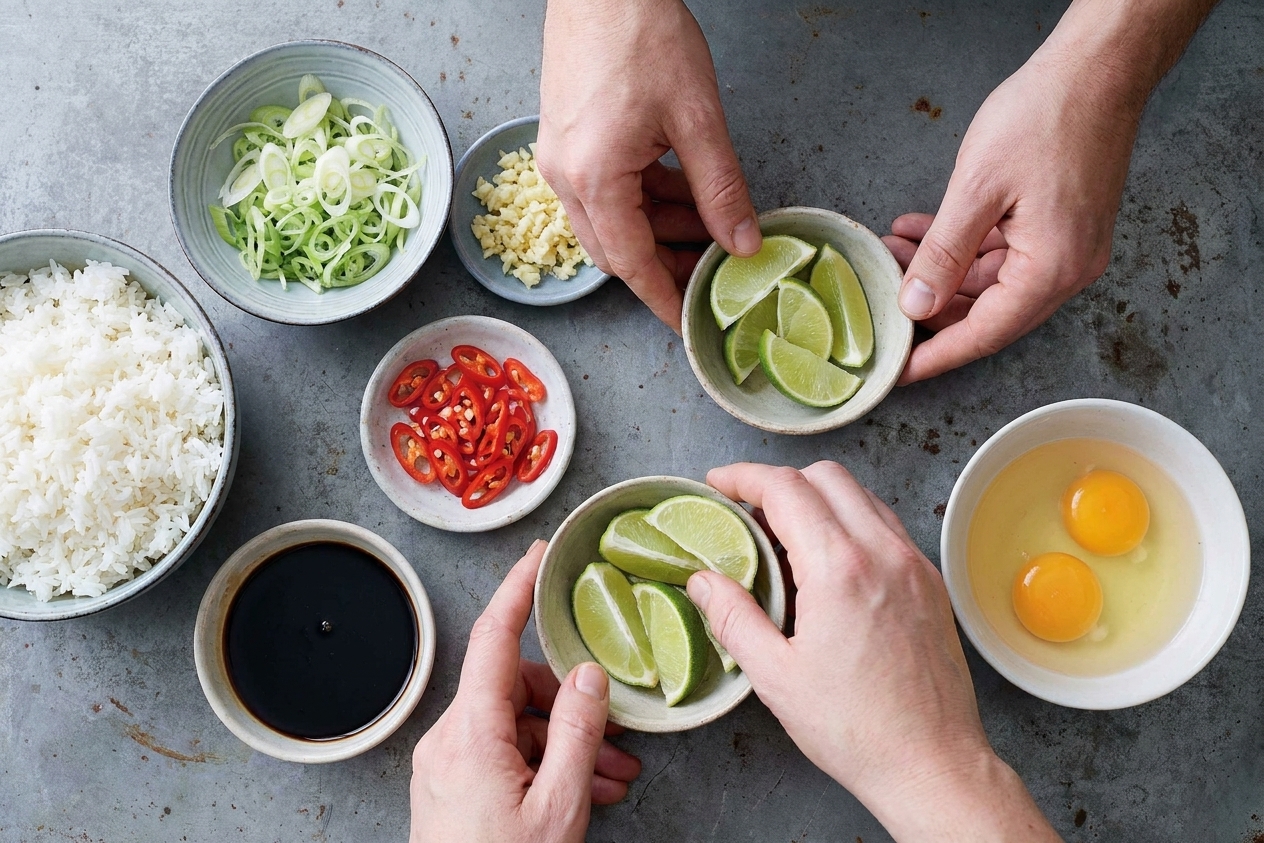
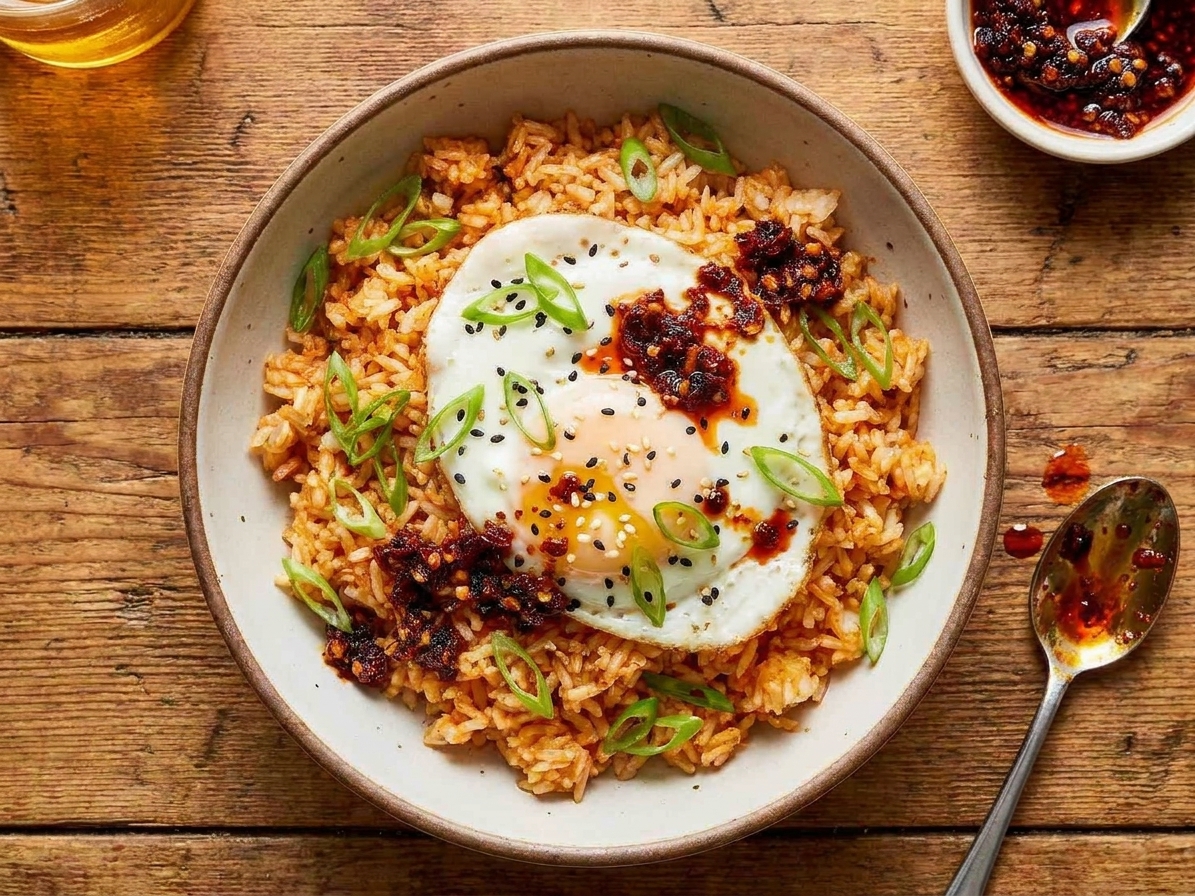
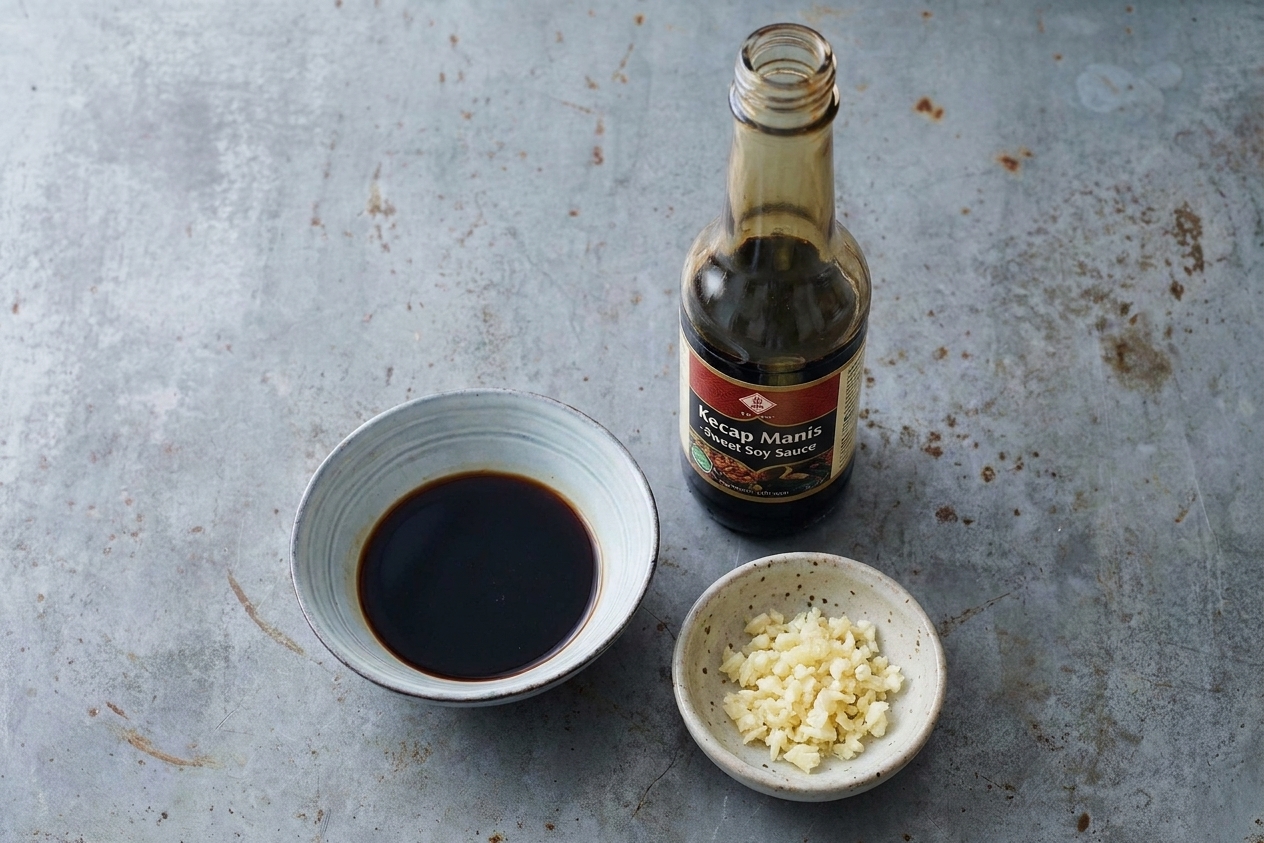
A kitchen counter setup with bowls of cold cooked rice, sliced scallions, minced garlic, sliced red chile, kecap manis, soy sauce, eggs, and lime ready for nasi goreng

Why It Works

  • Big flavor, minimal drama: Garlic, chile, and shrimp paste (optional but awesome) build that signature savory backbone fast.
  • The right texture: Cold rice plus high heat equals separate grains and a little toasty edge, not steamed clumps.
  • That sweet-salty balance: Kecap manis caramelizes slightly in the pan, giving the rice a glossy, dark, irresistible coating.
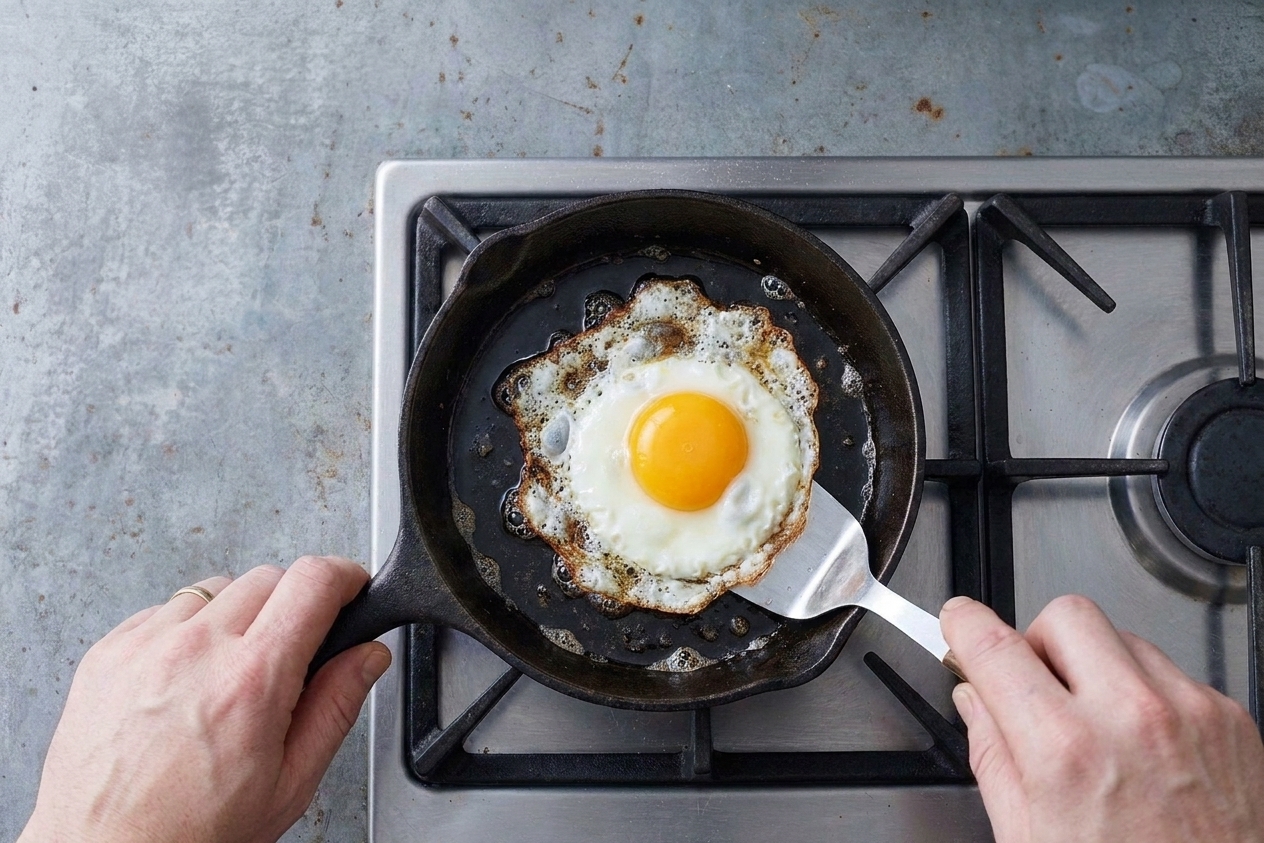
  • Egg makes it a meal: A fried egg with crisp edges and a runny yolk turns fried rice into comfort food with swagger.
  • The finishing crunch: Crispy fried shallots bring that classic savory crackle on top.

Pairs Well With

Storage Tips

Fridge: Cool nasi goreng quickly, then store in an airtight container for up to 3 to 4 days.

Reheat: Reheat until steaming hot. Best in a hot skillet with a small splash of water or broth to loosen it, then spread it out and let it sizzle. Microwave works too, but the pan brings back the crisp edges.

Freezer: Freeze in flat portions for up to 2 months. Thaw overnight in the fridge or reheat straight from frozen in a covered skillet on medium-low, then uncover and crank the heat to re-crisp.

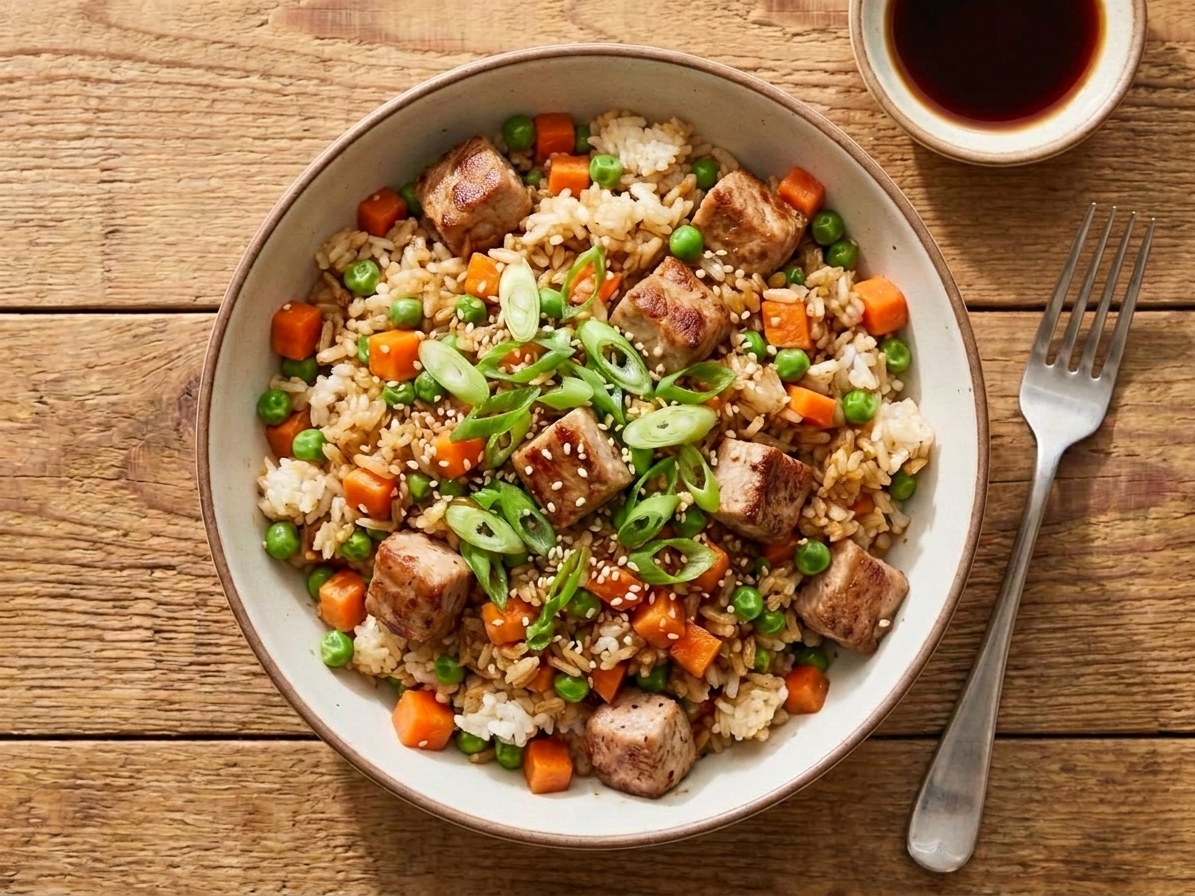
A glass meal prep container filled with leftover nasi goreng on a kitchen counter next to a lidded condiment cup and a lime wedge

Common Questions

What is nasi goreng?

Nasi goreng is Indonesian fried rice, usually seasoned with aromatics like garlic and chile, plus kecap manis for sweetness and color. Many versions also include terasi (shrimp paste) for extra depth, and it is commonly topped with a fried egg.

Do I really need kecap manis?

It is the classic flavor, and I recommend grabbing a bottle if you can. If you cannot, mix 2 tablespoons soy sauce with 1 tablespoon brown sugar (or palm sugar if you have it) and use that in place of 2 tablespoons kecap manis. It will be thinner and a bit less caramel-y. If you want it closer, stir in 1/2 teaspoon molasses or honey, or simmer the mixture for 30 to 60 seconds to thicken slightly before adding.

Is shrimp paste required?

No, but it is a cheat code for savory depth. If you use it, toast it briefly in the oil so it mellows and perfumes the whole dish. If you keep it vegetarian or vegan, or you avoid shrimp or seafood, skip it and add a touch more soy sauce and a pinch of sugar. If halal certification matters to you, look for a halal-certified shrimp paste.

What kind of rice is best?

Any long-grain rice works great. Jasmine is especially nice. The key is that it is cooked ahead and chilled, ideally overnight.

How do I keep fried rice from getting soggy?

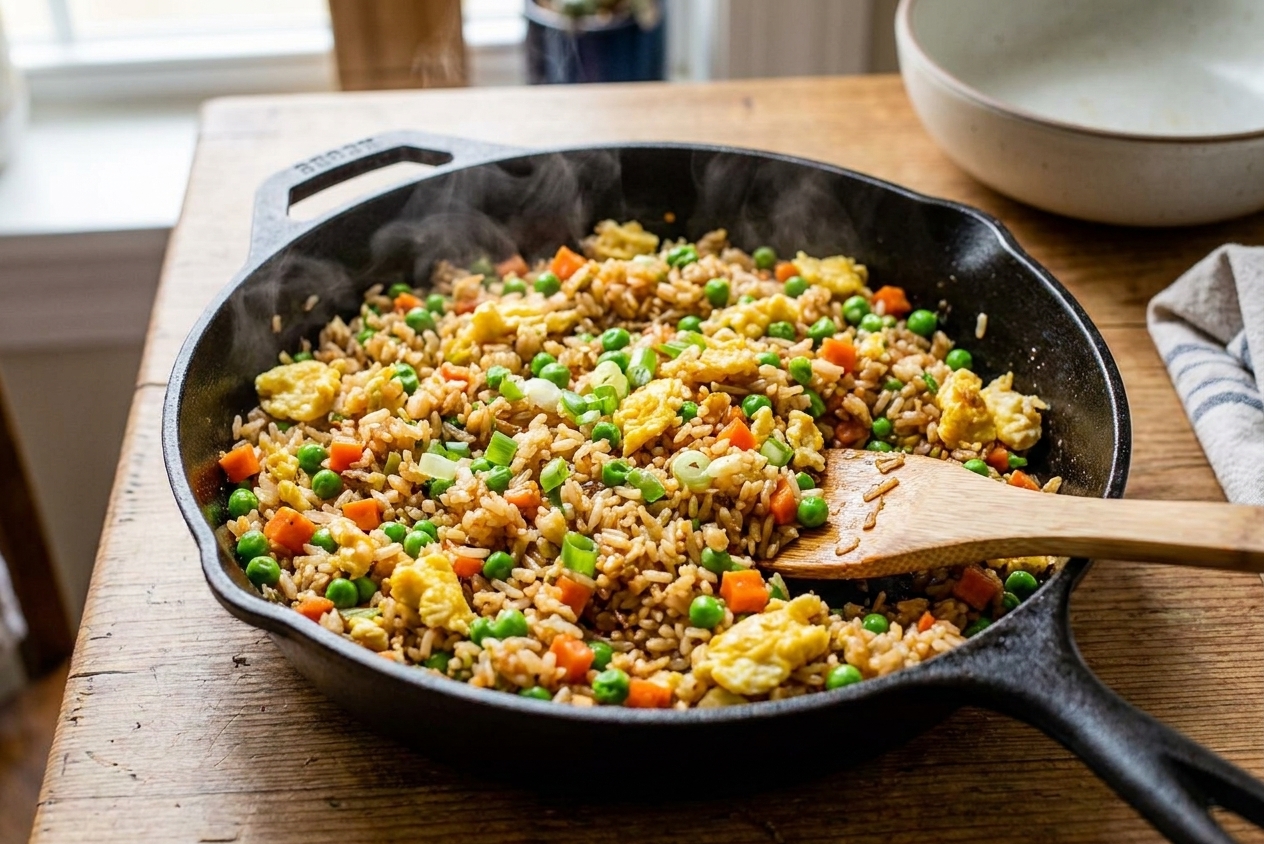
Cold rice, a wide pan, and high heat. Also, do not crowd the skillet. If you double the recipe, cook in batches.

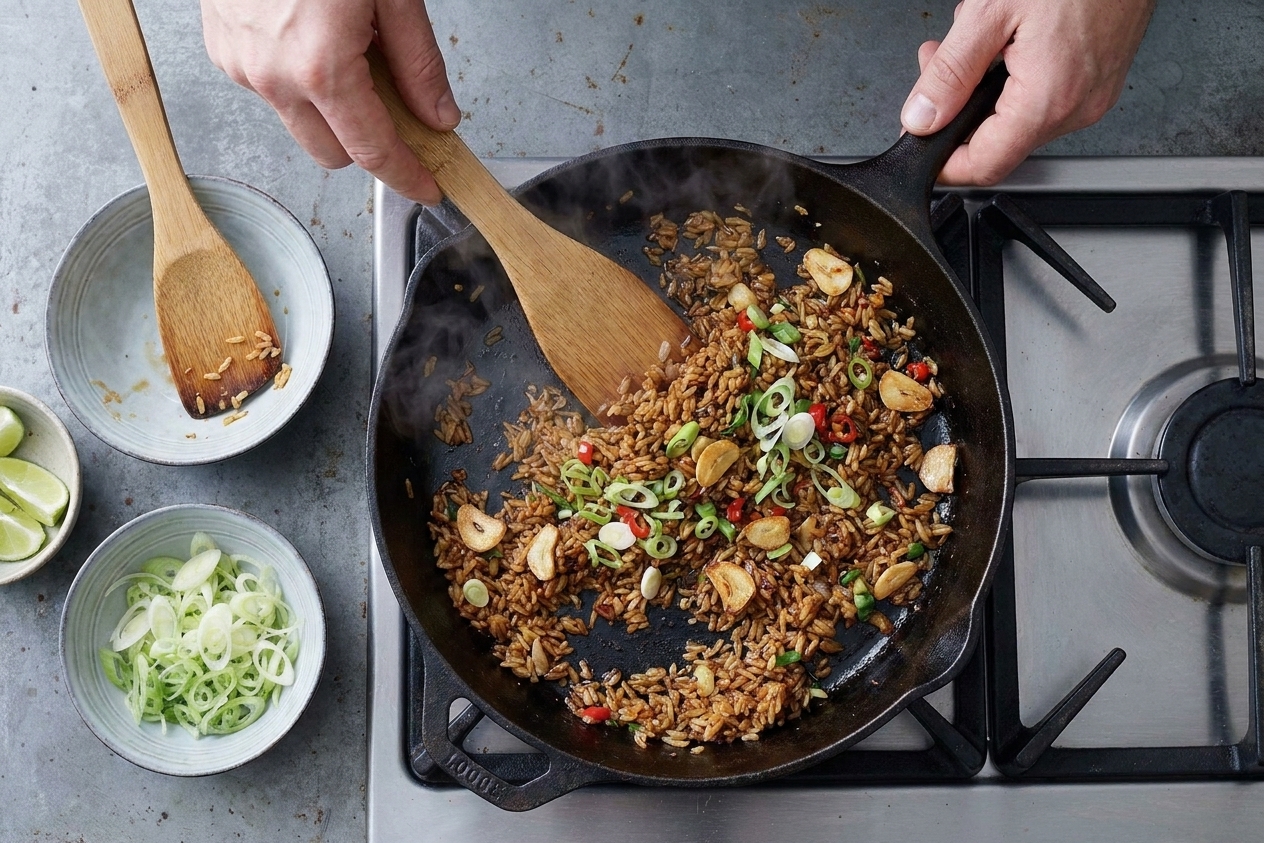
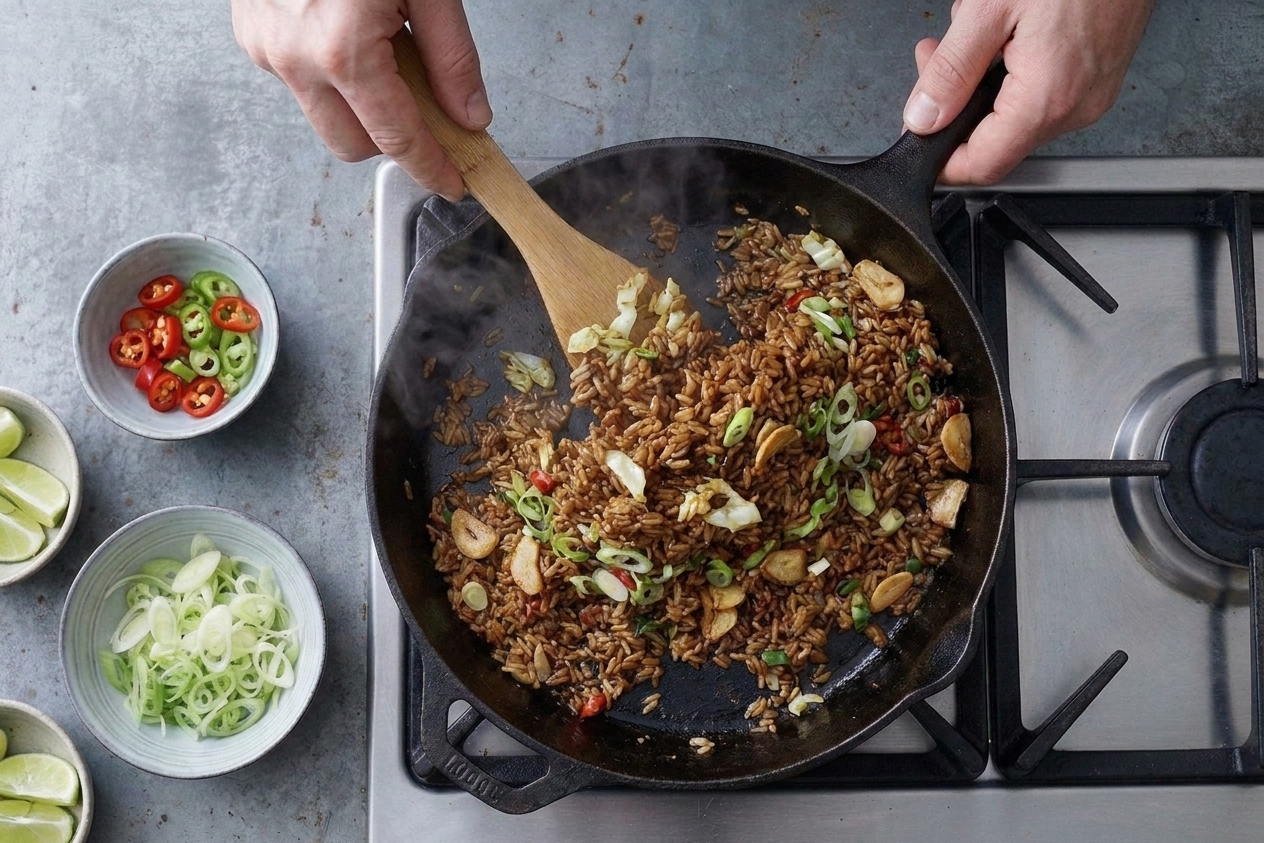
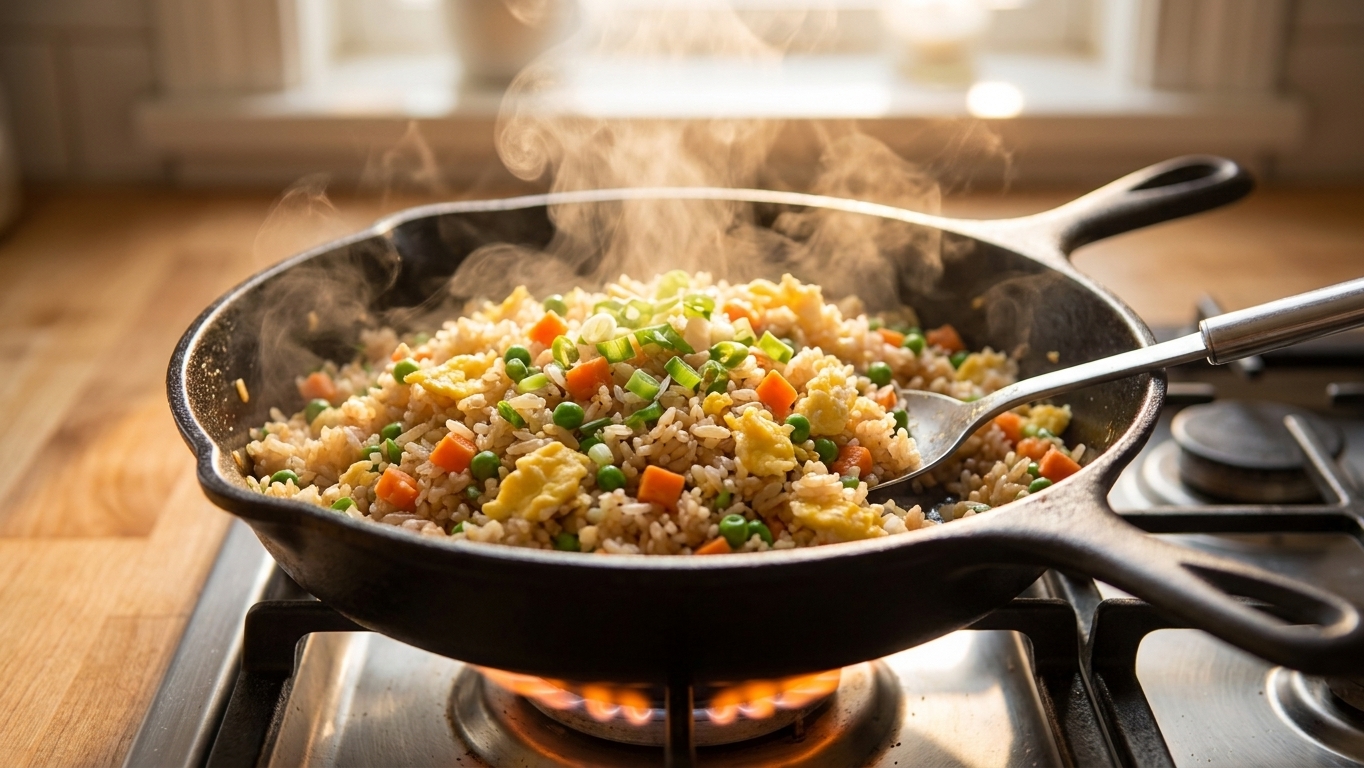
Nasi goreng rice sizzling in a dark skillet with a wooden spatula stirring, with visible bits of garlic and scallion on a stovetop

The first time I made nasi goreng at home, I was chasing that specific late-night takeout vibe: savory, a little sweet, slightly smoky, and somehow comforting in a way plain fried rice never quite hits. I remember thinking, okay, this is just rice, how different can it be. Then the kecap manis hit the hot pan and everything smelled like caramelized soy and garlic, and I was officially in it.

Now it is one of my favorite ways to turn “we have leftover rice” into a real meal. I put on music, fry an egg until the edges go lacey, and call it a win, even if I end up with exactly one extra pan to wash. Worth it.