Mom's Best Recipes
Recipe

Navy Bean Soup

Hearty, smoky, and gently creamy navy bean soup with ham, vegetables, and a bright lemon finish.

Author By Matt Campbell
4.8
A steaming bowl of navy bean soup with tender beans, diced carrots and celery, and a sprinkle of parsley on top, sitting on a wooden table with a spoon nearby

Navy bean soup is one of those old-school, no-drama recipes that somehow tastes like you tried harder than you did. It is humble, it is cozy, and it does that magical bean thing where the broth turns a little creamy all by itself. No cream, no blender required, just beans doing bean physics.

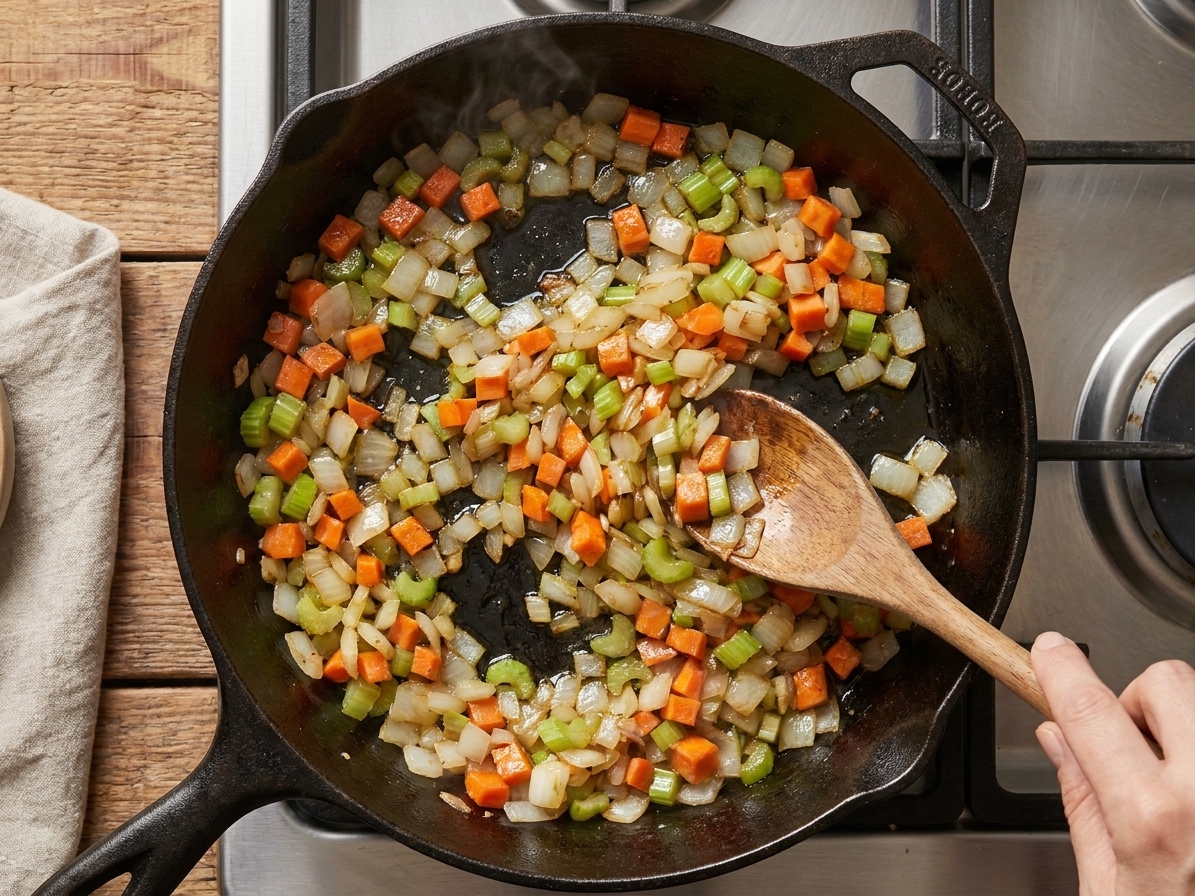
This version leans classic: sautéed onion, carrot, and celery, a hit of garlic, bay leaves, and a smoky ham hock or leftover ham for that deep, slow-cooked flavor. Then, right at the end, we wake the whole pot up with lemon. That tiny bright finish is the difference between “nice soup” and “why am I going back for thirds.”

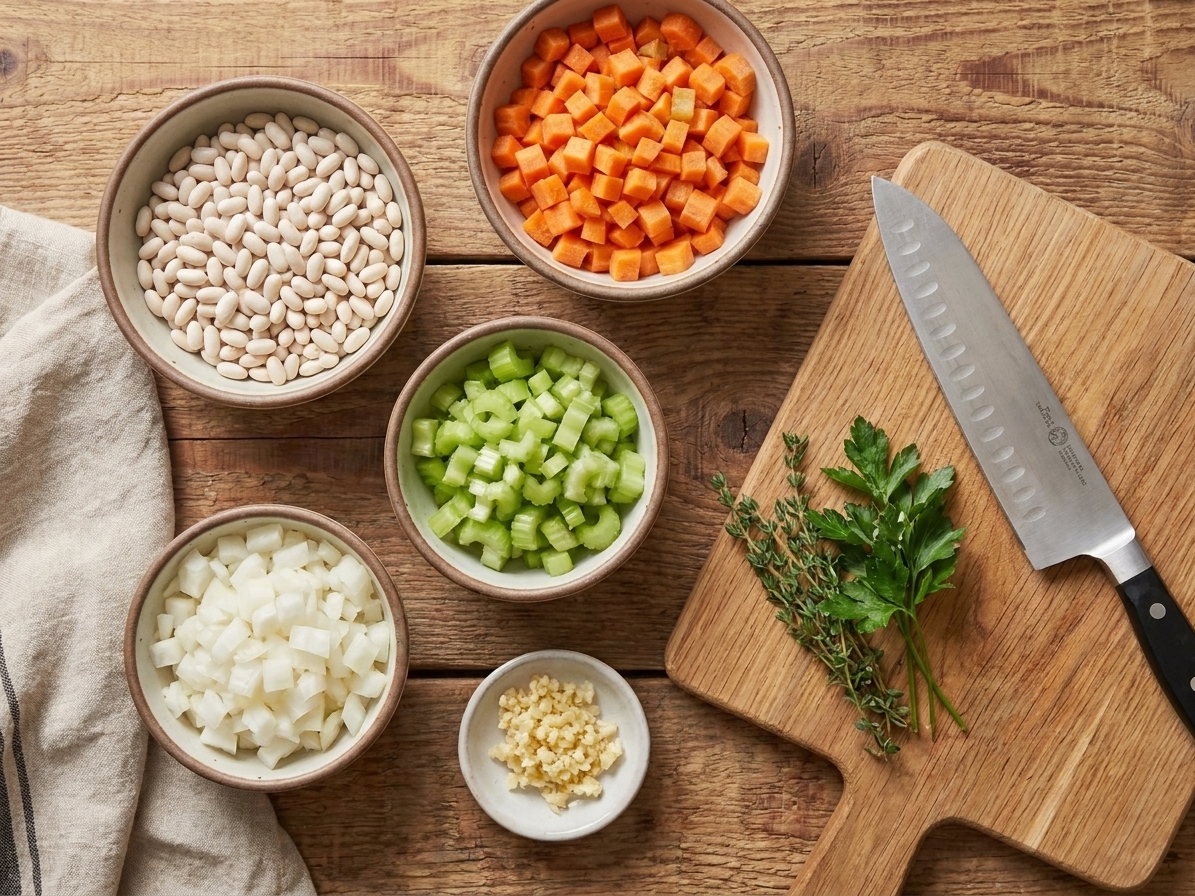
A kitchen counter with bowls of dried navy beans, chopped carrots, chopped celery, diced onion, minced garlic, and herbs laid out for soup prep

Why It Works

  • Thick, cozy texture without fuss: navy beans naturally break down as they simmer, so the broth turns silky with zero extra steps.
  • Big flavor from simple ingredients: sautéed aromatics plus smoky ham builds a rich base that tastes like it cooked all day.
  • Bright finish that matters: a squeeze of lemon at the end lifts the whole pot and balances the salt and smoke.
  • Leftovers that improve: it thickens overnight in the fridge and reheats like a dream.

Pairs Well With

Storage Tips

How to Store and Reheat

  • Refrigerator: Cool completely, then store in an airtight container for up to 4 days. The soup will thicken as it sits. Add a splash of broth or water when reheating.
  • Freezer: Freeze in containers with a little headspace for up to 3 months. Thaw overnight in the fridge for best texture.
  • Reheat: Warm gently on the stovetop over medium-low, stirring often. Beans can stick when the soup is thick, so keep an eye on it and loosen with liquid as needed.

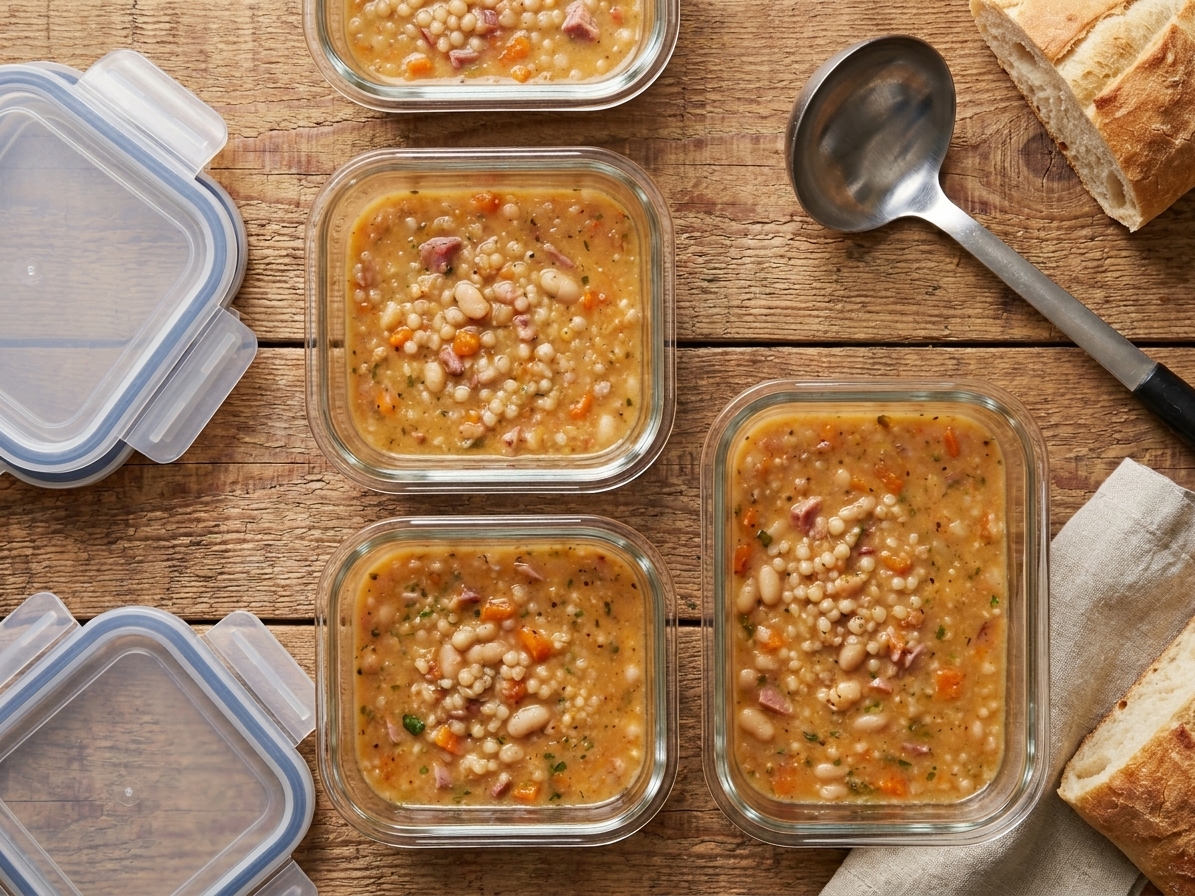
Portion containers filled with cooled navy bean soup on a kitchen counter, lids set nearby, ready for meal prep storage

Common Questions

Common Questions

Do I have to soak navy beans?

No, but it helps. Soaked beans cook more evenly and usually faster. If you forget, you can do a quick soak (details in the instructions) or simmer from dry and plan on extra time and a little extra liquid.

If I do not soak, how long will it take?

From dry, expect roughly 2 to 3 hours at a steady simmer, depending on bean age and your water. Start checking at the 90-minute mark, then keep going until the beans are fully tender and creamy inside. You may also need an extra splash or two of broth or water as they cook.

How do I make it creamy without adding dairy?

Two easy options: (1) mash some beans against the side of the pot near the end, or (2) remove about a cup of beans and broth, blend, and stir it back in. I usually just mash. It is low effort and very satisfying.

What if I do not have a ham hock?

Use leftover cooked ham or even thick-cut bacon. If you want a little of that slow-cooked depth a hock gives, add 1/2 teaspoon smoked paprika and keep an eye on the liquid level so the soup stays cozy, not paste.

Why are my beans still hard?

Most often it is either old beans (they take forever), the soup is too acidic too early, or your water is very mineral-heavy. Save anything acidic like tomatoes or lemon for the end. If your tap water is hard, try using filtered water or more broth. Also, keep the soup at a steady simmer, not a timid bubble.

Can I make this in a slow cooker?

Yes. Sauté the veggies first if you can for better flavor, then cook on low 7 to 8 hours or high 4 to 5 hours, until the beans are tender. Add lemon at the end.


The first time I made navy bean soup “seriously,” I treated it like a weekend project. I hovered. I over-stirred. I basically babysat dried beans like they were going to do something dramatic.

Now I love it because it is the opposite. Chop a few things, let the pot do the work, and then taste your way to the finish. Start with the salt in the recipe, especially if you are using low-sodium broth, then adjust at the end, especially if your ham is doing a lot of the heavy lifting. Add lemon boldly. And if the soup gets too thick, congratulations, you accidentally made it better for tomorrow.