Mom's Best Recipes
Recipe

New York Strip Steak

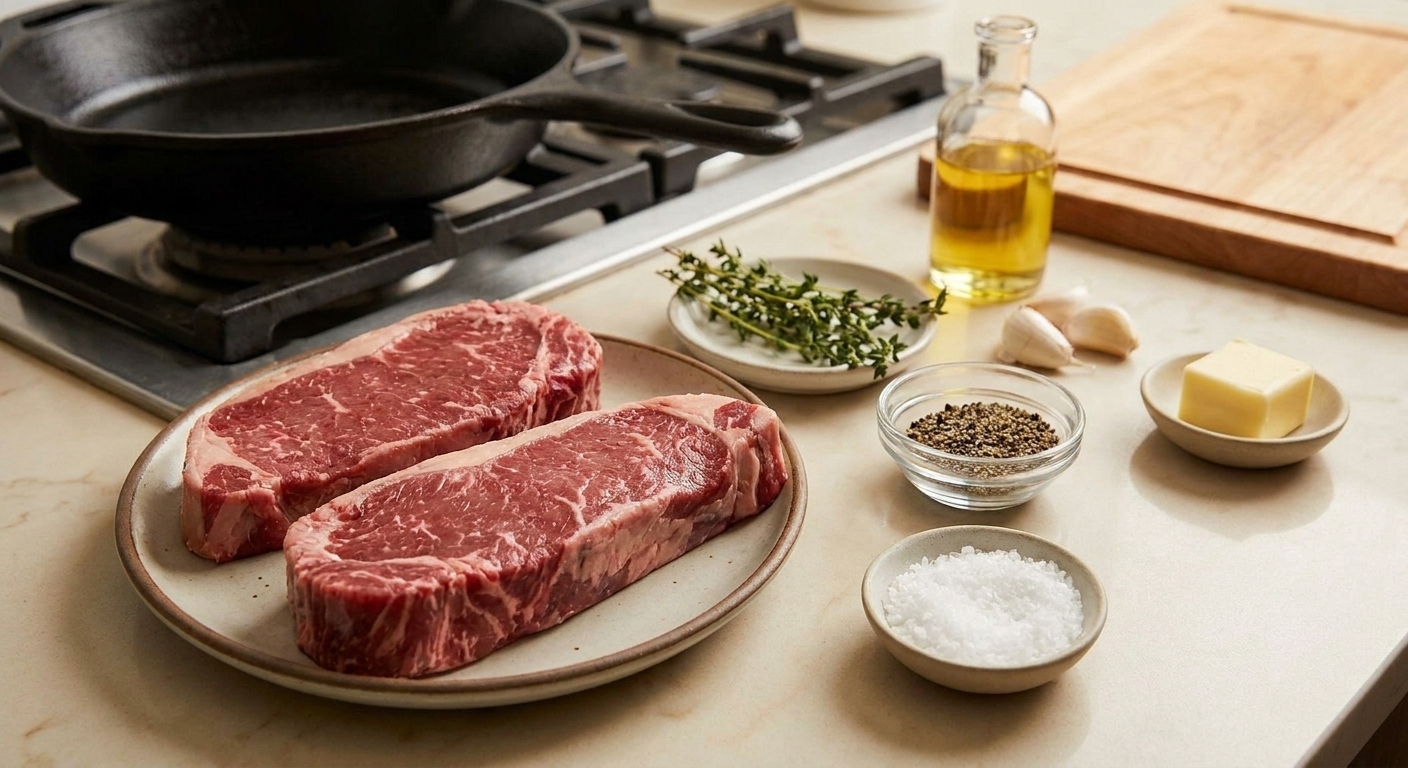
Cast iron seared New York strip with a buttery baste and an optional 2-minute pan sauce.

Author By Matt Campbell
4.8
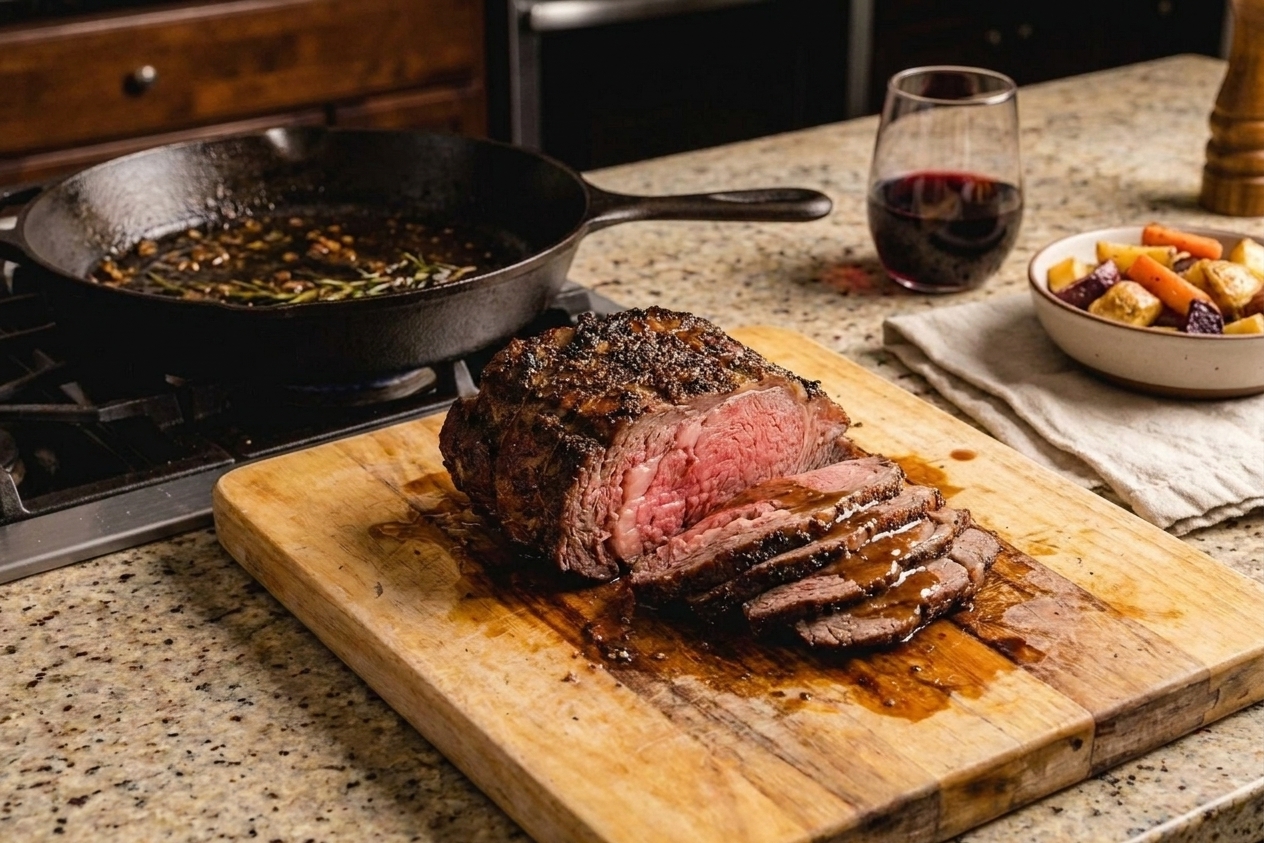
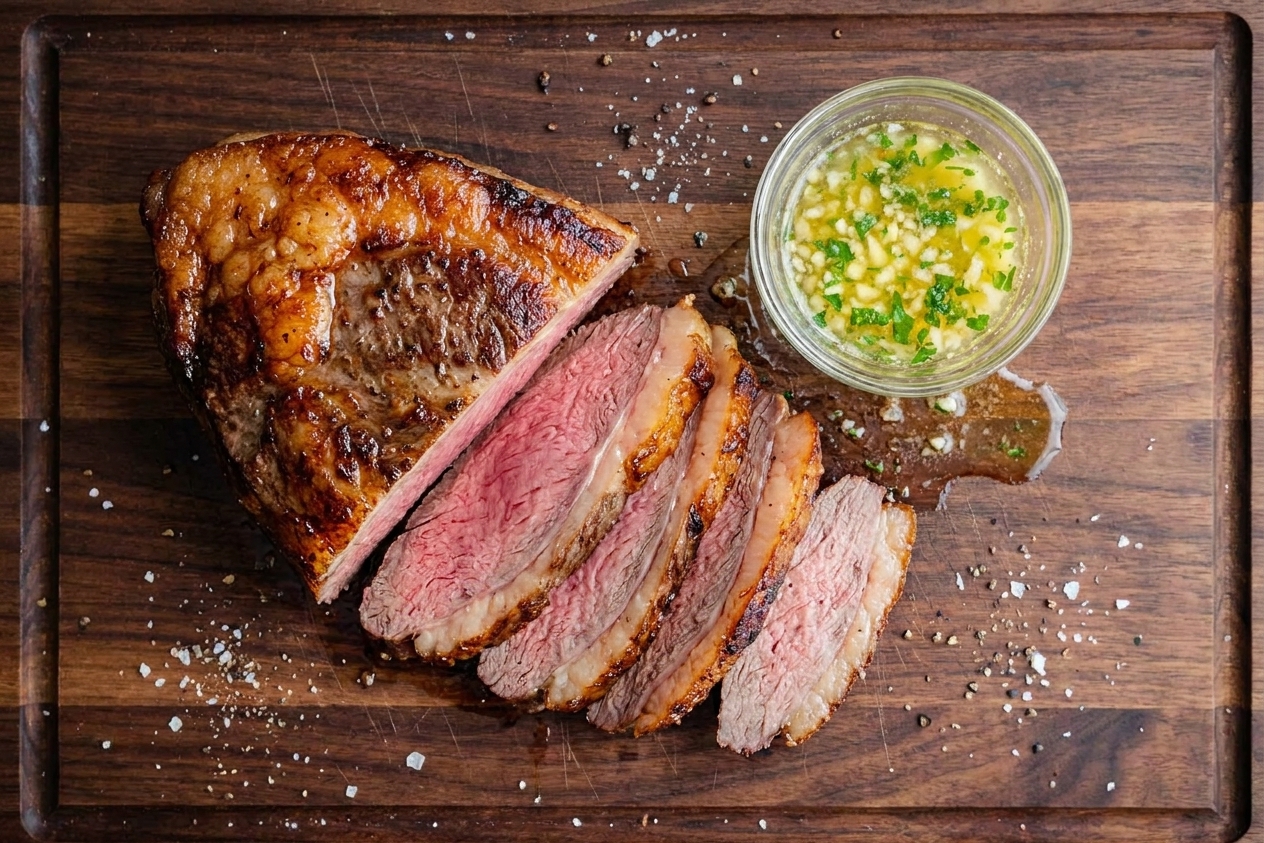
A sliced New York strip steak with a deep brown crust resting on a cutting board, with flaky salt and a small pool of buttery pan juices nearby on a warm-toned kitchen counter

New York strip is my go-to “I want steakhouse energy but I also want to eat before my patience expires” cut. It has that built-in fat cap for flavor, a beefy bite, and it plays really well with a ripping hot pan and a quick butter baste.

This recipe is how I make it most nights: simple seasoning, cast iron heat, and a short rest so the juices stay where they belong. If you have ten minutes and a decent skillet, you are in business.

Why It Works

  • Big crust, juicy center: High heat plus a dry steak gives you those crisp edges without overcooking.
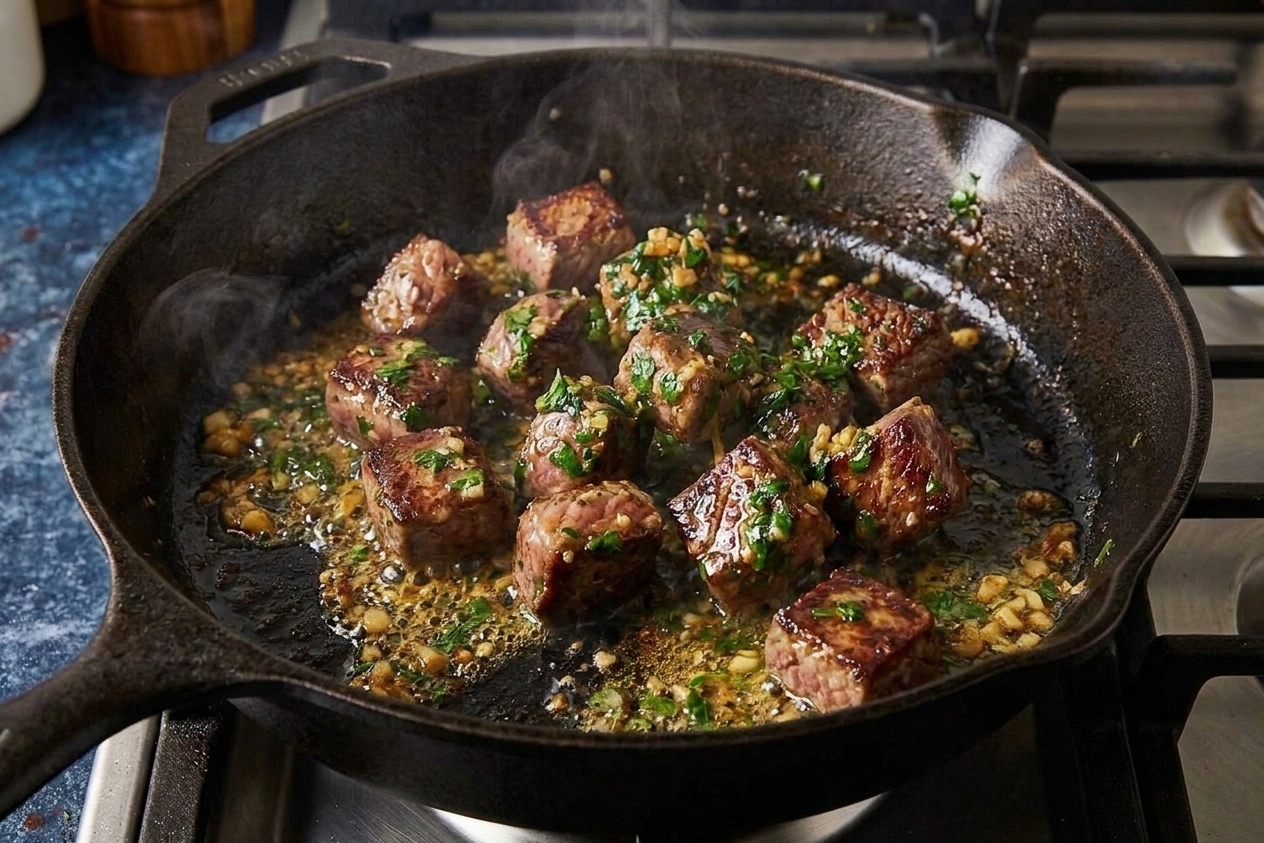
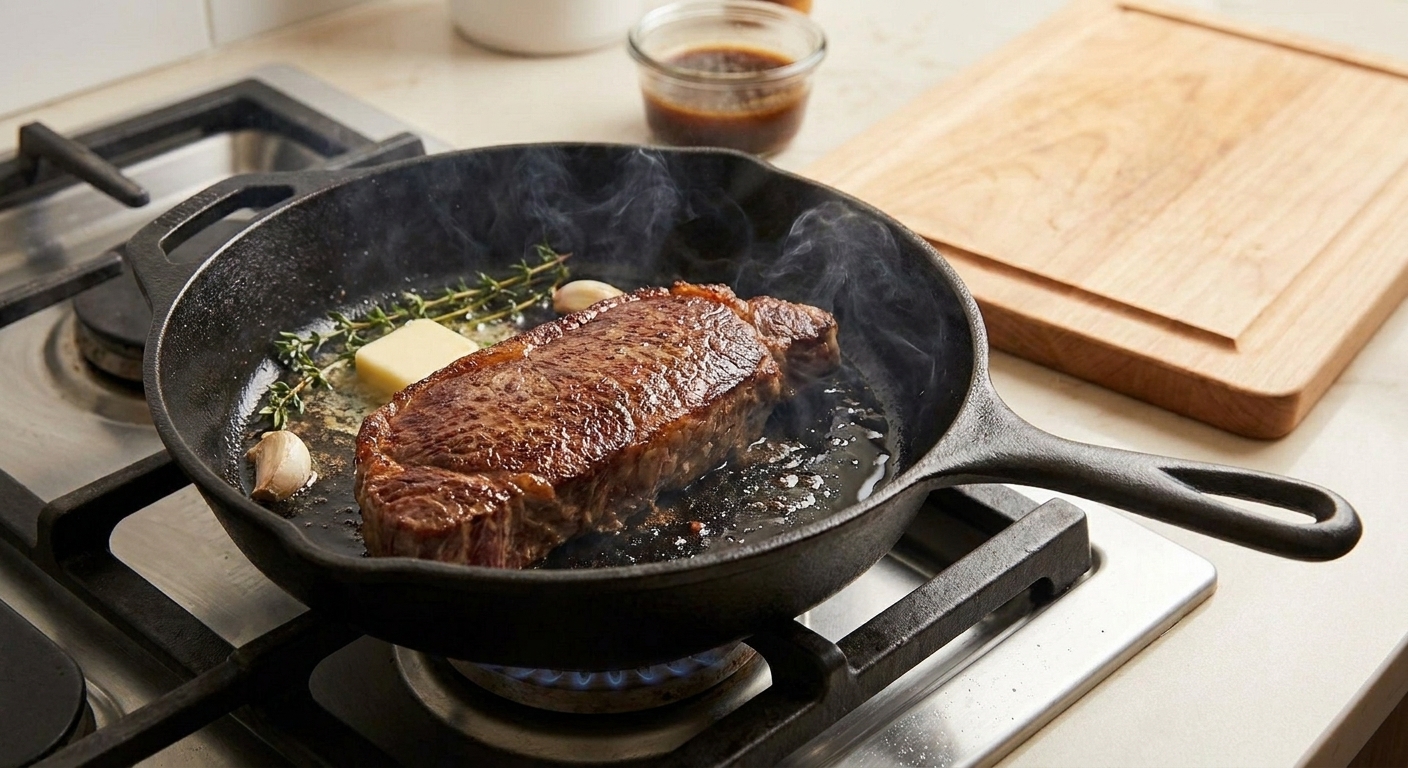
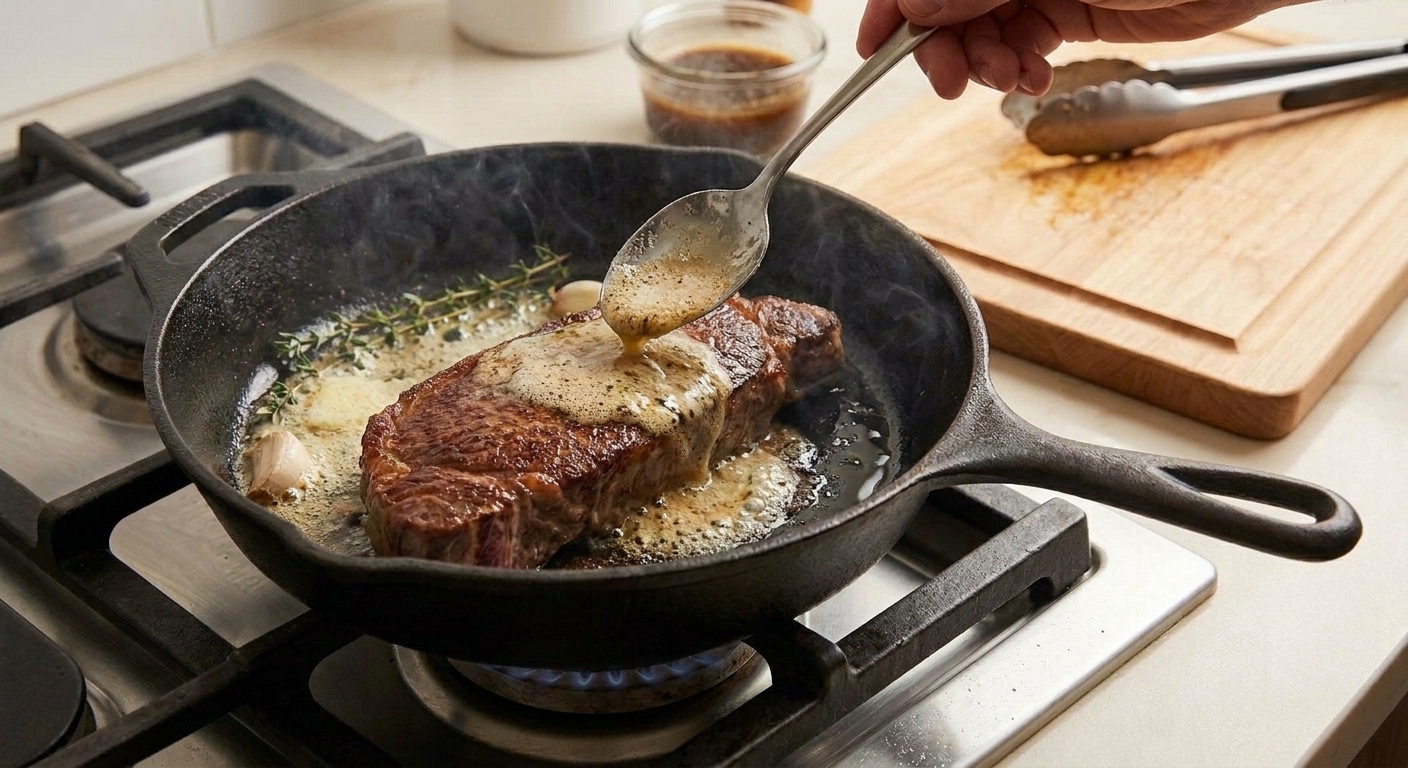
  • Butter-basted flavor: A quick baste with butter, garlic, and herbs turns the pan into a steak-scented spa.
  • Flexible doneness: Works for rare through well-done with a thermometer and a little confidence.
  • Optional pan sauce: You can finish with a fast deglaze that tastes like you tried harder than you did.

Pairs Well With

Storage Tips

Cool it fast: Let leftover steak cool briefly, then refrigerate. Do not leave cooked meat out for more than 2 hours total (or 1 hour if it is very warm in your kitchen).

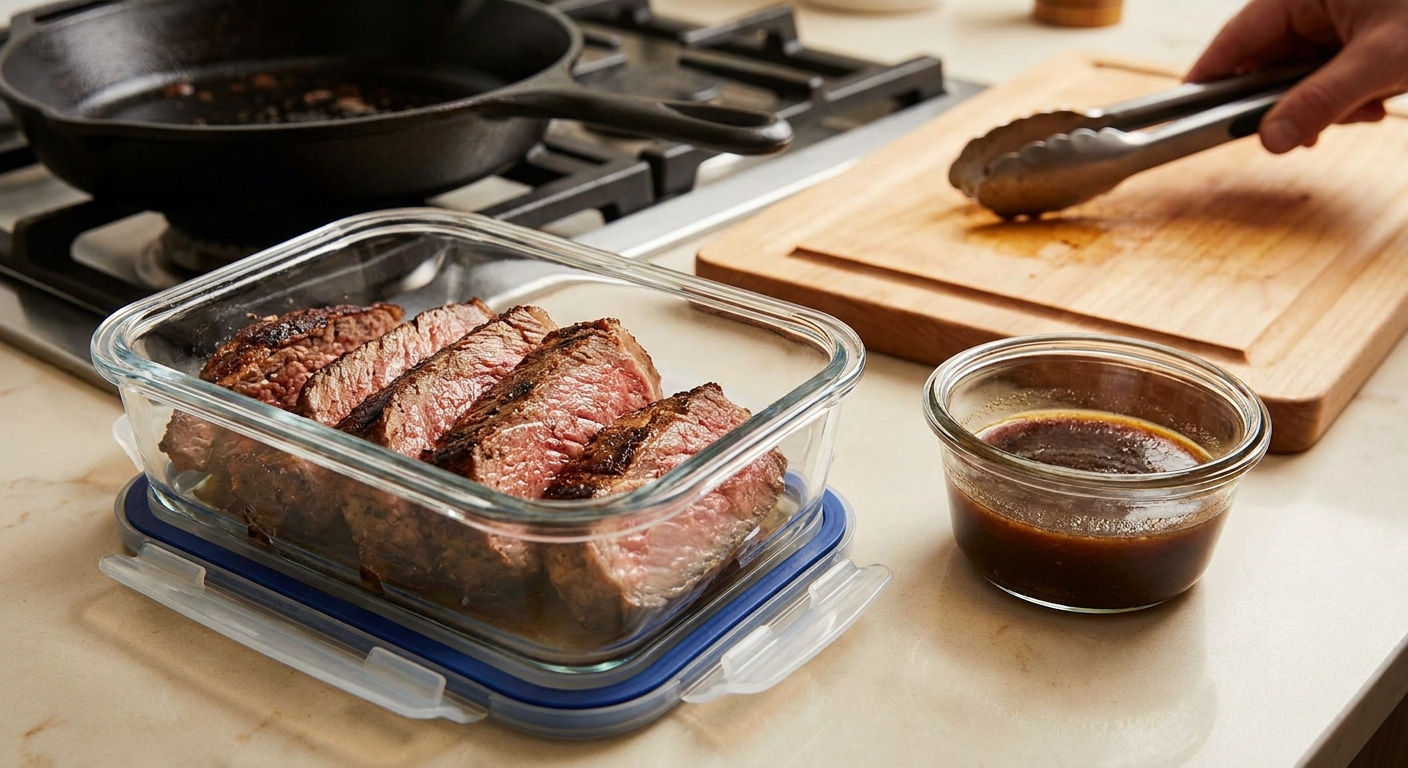
Refrigerate: Store in an airtight container up to 3 to 4 days. Keep any pan juices separate and spoon them over when reheating.

Freeze: Wrap tightly and freeze up to 2 months for best quality (it stays safe longer, but the texture starts to slide).

Reheat without drying it out: My favorite method is gentle. Slice the steak, then warm it in a skillet on low with a splash of broth or water and a knob of butter, just until warmed through. Or go cold and proud in a steak salad or sandwich.

Sliced cooked steak arranged in an airtight glass container with a small separate cup of pan juices on a kitchen counter

Common Questions

Is New York strip the same as New York striploin?

Often, yes, but labeling can vary by region and by whether the steak is bone-in or boneless. You may also see it labeled as strip steak, striploin, New York strip, or KC strip. Same general cut, different name tags depending on the butcher and the map.

Do I need to bring steak to room temperature?

You do not need to. What matters most is a dry surface and a hot pan. If you have time, letting it sit out 20 to 30 minutes helps it cook a little more evenly, but it is not required.

How do I know when it is done?

Use an instant-read thermometer. Pull the steak a few degrees early because it will coast up while resting. Carryover is usually about 3 to 7 F, depending on thickness.

  • Rare: 120 to 125 F
  • Medium-rare: 130 to 135 F
  • Medium: 140 to 145 F
  • Medium-well: 150 to 155 F
  • Well-done: 160 F and up

Food safety note: For intact steaks, the USDA recommends 145 F plus a 3-minute rest. Many people choose lower temps for tenderness. Use your judgment, and serve higher if cooking for anyone who needs it well-done.

Why is my steak not getting a good crust?

Usually one of these: the steak is wet, the pan is not hot enough, the skillet is crowded, or you are moving the steak around too soon. Pat it dry, preheat longer, and let it sear untouched.

Can I cook this without cast iron?

Yes. Use the heaviest stainless steel skillet you have. Nonstick is not ideal for high heat searing and butter basting.

My kitchen gets smoky. Any tips?

High heat steak can get a little dramatic. Use a high smoke point oil (avocado, canola, grapeseed), turn on the vent hood, and crack a window if you can. If your pan is smoking aggressively before the steak even hits it, dial the heat back a notch.

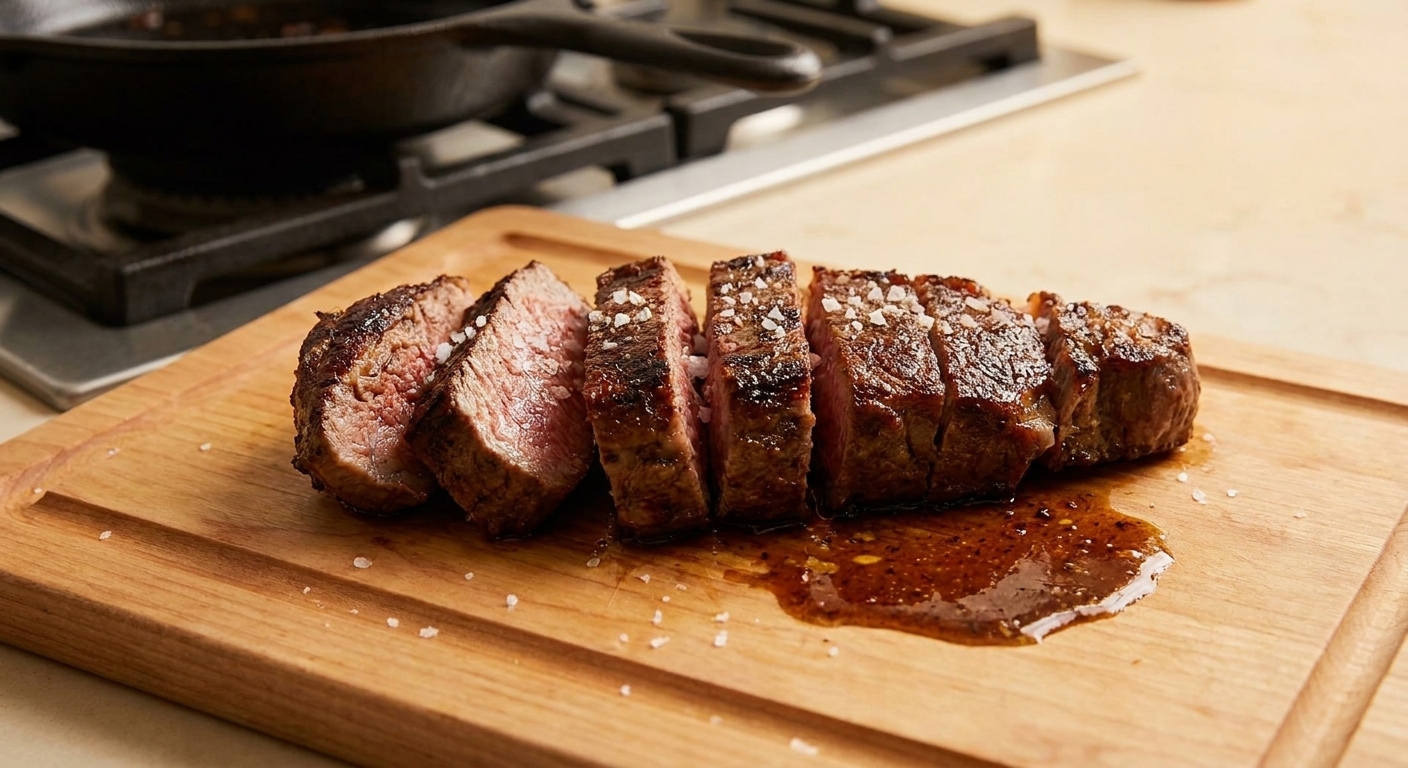
I used to think great steak required some secret chef ritual. Then I started paying attention to the boring stuff: dry the surface, get the pan hot, season like you mean it, and rest it. Suddenly my tiny kitchen was turning out steaks with that loud, crackly crust that makes people wander in and ask, “What are you cooking?”

This New York strip is the one I make when I want dinner to feel like a win, even if the rest of the day was a mess.