Mom's Best Recipes
Recipe

Oyakodon (Chicken and Egg Rice Bowl)

Tender chicken and onions simmered in a dashi-soy-sweet broth, finished with silky eggs and served over hot rice for the coziest bowl. This is a generously brothy, tsuyu-daku style on purpose, perfect for soaking into the rice.

Author By Matt Campbell
4.8
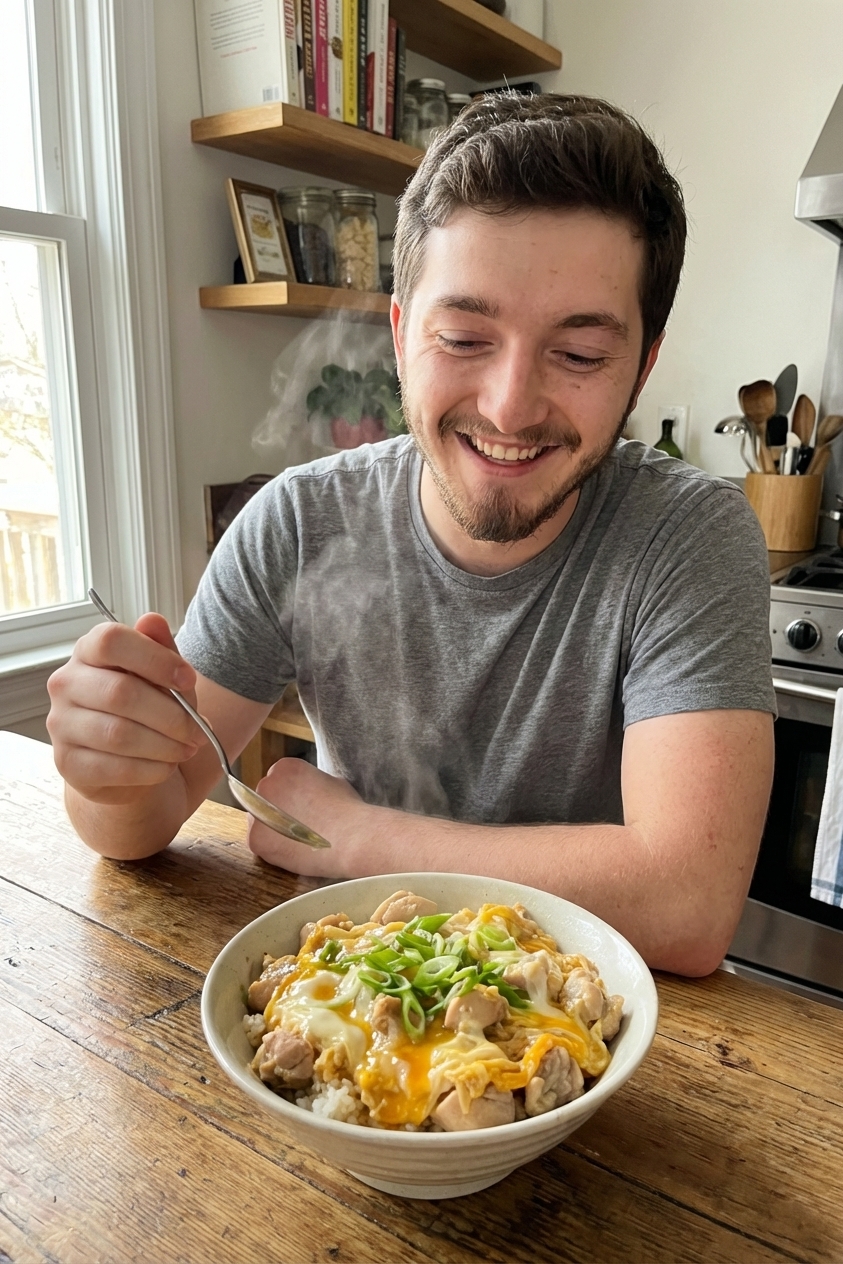
A steaming bowl of oyakodon with tender chicken and soft ribbons of egg over short-grain rice, garnished with sliced scallions, photographed on a simple kitchen table in natural light

Oyakodon is the kind of dinner that feels like it’s giving you a hug back. You simmer chicken and onions in a savory-sweet dashi broth, pour in eggs in stages so they set into soft ribbons, then slide the whole thing over hot short-grain rice. It’s gentle, cozy, and somehow still bright if you finish with scallions and a hit of shichimi togarashi.

If you’ve made katsudon, think of oyakodon as its lower-drama sibling. Katsudon is crunchy pork cutlet plus egg and sauce, which is amazing but involves breading and frying. Oyakodon is the “I want comfort, but I also want to be in bed by 9” version. Same donburi spirit, totally different vibe.

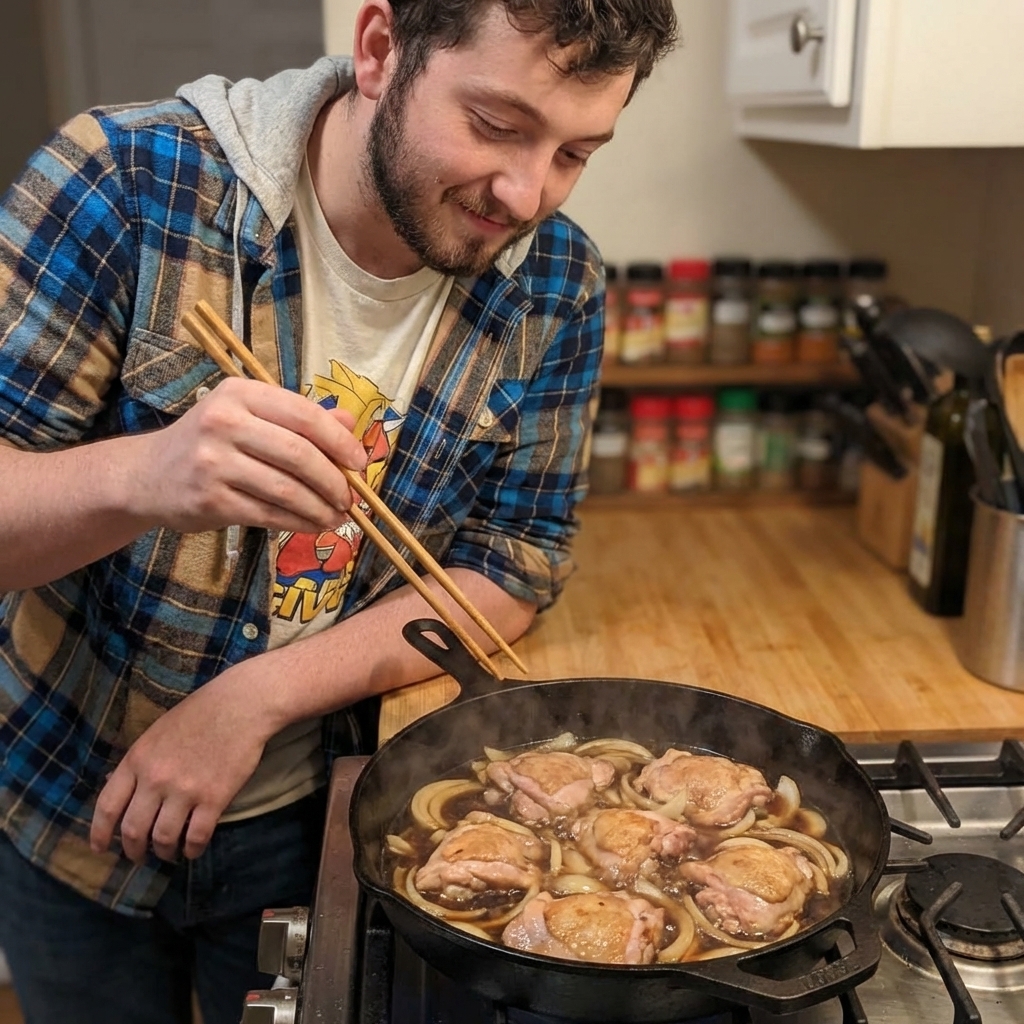
Chicken and sliced onions simmering in a shallow skillet with dashi-soy broth, with a pair of chopsticks resting on the edge of the pan

Why It Works

  • Big flavor from small effort: Dashi plus soy sauce, mirin, and a touch of sugar creates that classic Japanese sweet-savory broth in minutes.
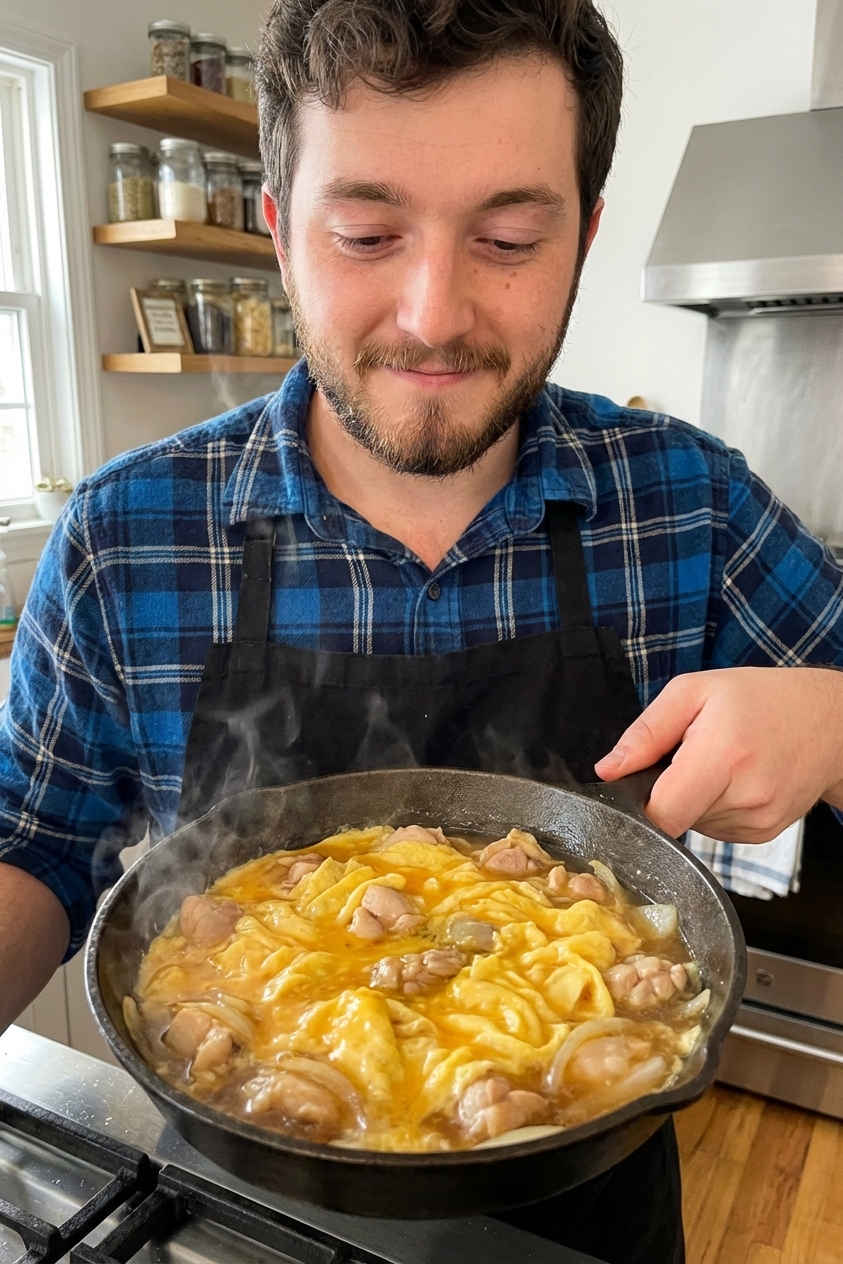
  • Eggs with the perfect texture: Pouring beaten eggs in stages gives you tender curds and silky ribbons instead of scrambled eggs.
  • Weeknight-friendly: One pan, no deep-frying, and it’s on the table fast with pantry staples.
  • Customizable without losing the point: Swap in thigh or breast, add greens, or adjust sweetness, but the broth-and-egg finish stays true.

Pairs Well With

Storage Tips

Oyakodon is at its best right after cooking, when the eggs are still soft and the rice is steamy. That said, leftovers are totally doable if you’re realistic about texture.

  • Refrigerate: Store the chicken, egg, and sauce separately from the rice if you can. Airtight containers, up to 2 days.
  • Reheat: Warm the chicken and sauce gently in a small pan over low heat with a splash of water. If you microwave, use 50 percent power and short bursts so the egg does not turn rubbery.
  • Rice: Reheat rice with a teaspoon of water and cover loosely to steam it back to life.
  • Freezing: Not ideal because eggs get spongy and watery after thawing. If you want to freeze something, freeze cooked rice instead.

Food safety note: If you are serving anyone who is pregnant, immunocompromised, or simply prefers firmer eggs, cook the egg layer longer until fully set.

Common Questions

What does “oyakodon” mean?

It translates to “parent and child bowl,” referring to chicken and egg served together over rice.

Do I have to use dashi?

Dashi is the signature flavor here. If you have dashi powder or a dashi packet, use it. For dietary transparency, many instant dashi products contain bonito (fish) and kombu (kelp), and some include added MSG. In a pinch, you can use low-sodium chicken broth, but the bowl will taste less distinctly Japanese.

Why pour the eggs in stages?

Because it gives you that classic texture: some set, some barely set, all silky. One big pour tends to set too evenly and can lean scrambled.

Is oyakodon supposed to be runny?

Traditionally, the eggs are often softly set rather than fully firm. If you prefer them more set (or you are cautious about egg doneness), just cover and cook a little longer until it looks right to you.

What chicken cut is best?

Boneless, skinless thighs are forgiving and stay juicy. Breast works too, just keep the simmer gentle and do not overcook it.

Can I add vegetables?

Absolutely. Mushrooms (shiitake), a handful of spinach, or thinly sliced cabbage are great. Add quick-cooking greens at the end so they just wilt.

What’s the difference between oyakodon and katsudon?

Katsudon uses a breaded, fried cutlet (usually pork) that gets simmered briefly with egg and sauce. Oyakodon uses simmered chicken, no breading, no frying. Both are donburi comfort, just different paths to it.

I love ambitious cooking projects, but oyakodon is what I make when I want a meal that behaves. One pan, a short ingredient list, and the reward is immediate: that moment when the eggs hit the simmering broth and turn into soft ribbons feels like kitchen magic that does not require a culinary degree. It’s also the dish that reminds me to taste as I go. A little more soy if it needs depth, a little more mirin if it needs roundness, and suddenly you have a bowl that tastes like you tried way harder than you did.