Mom's Best Recipes
Recipe

Pan-Seared Filet Mignon

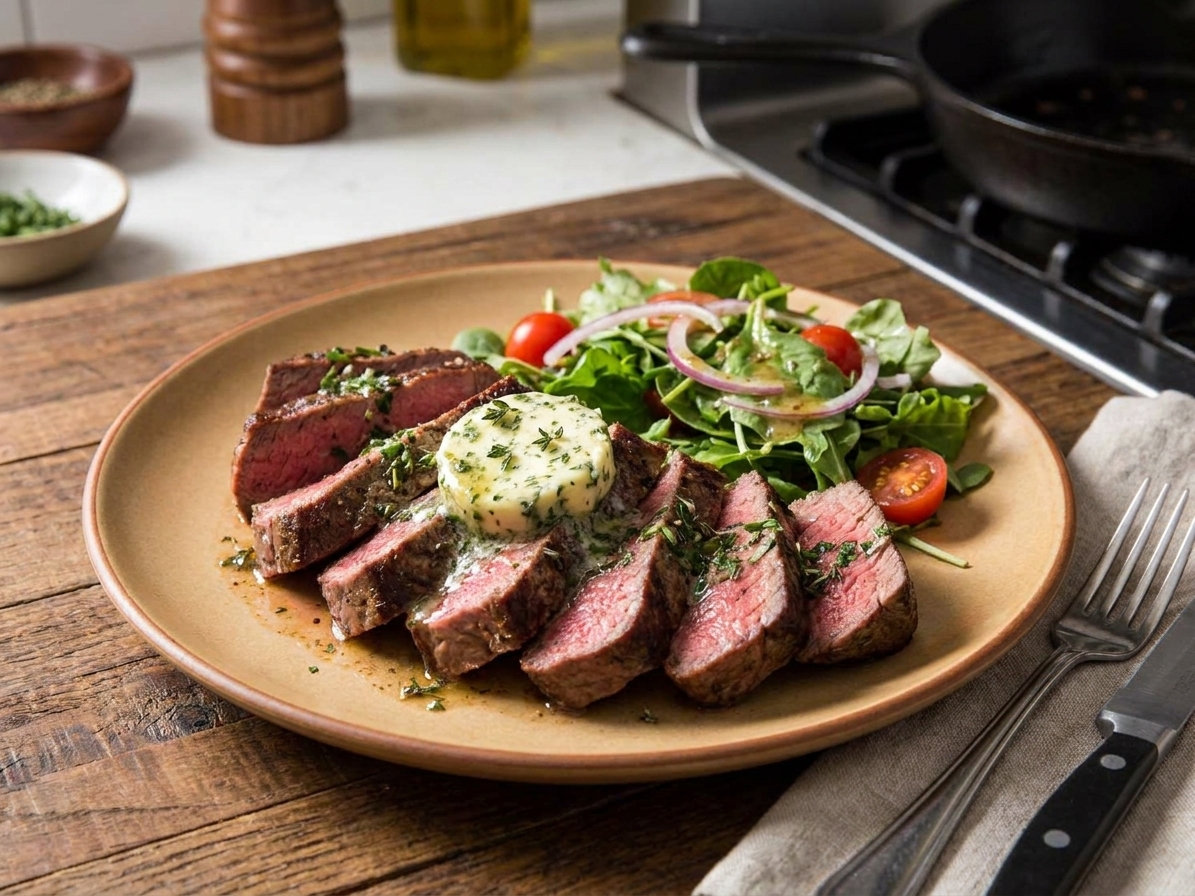
A no-drama skillet filet mignon with a deep sear, quick oven finish, and garlic herb butter basting.

Author By Matt Campbell
4.8
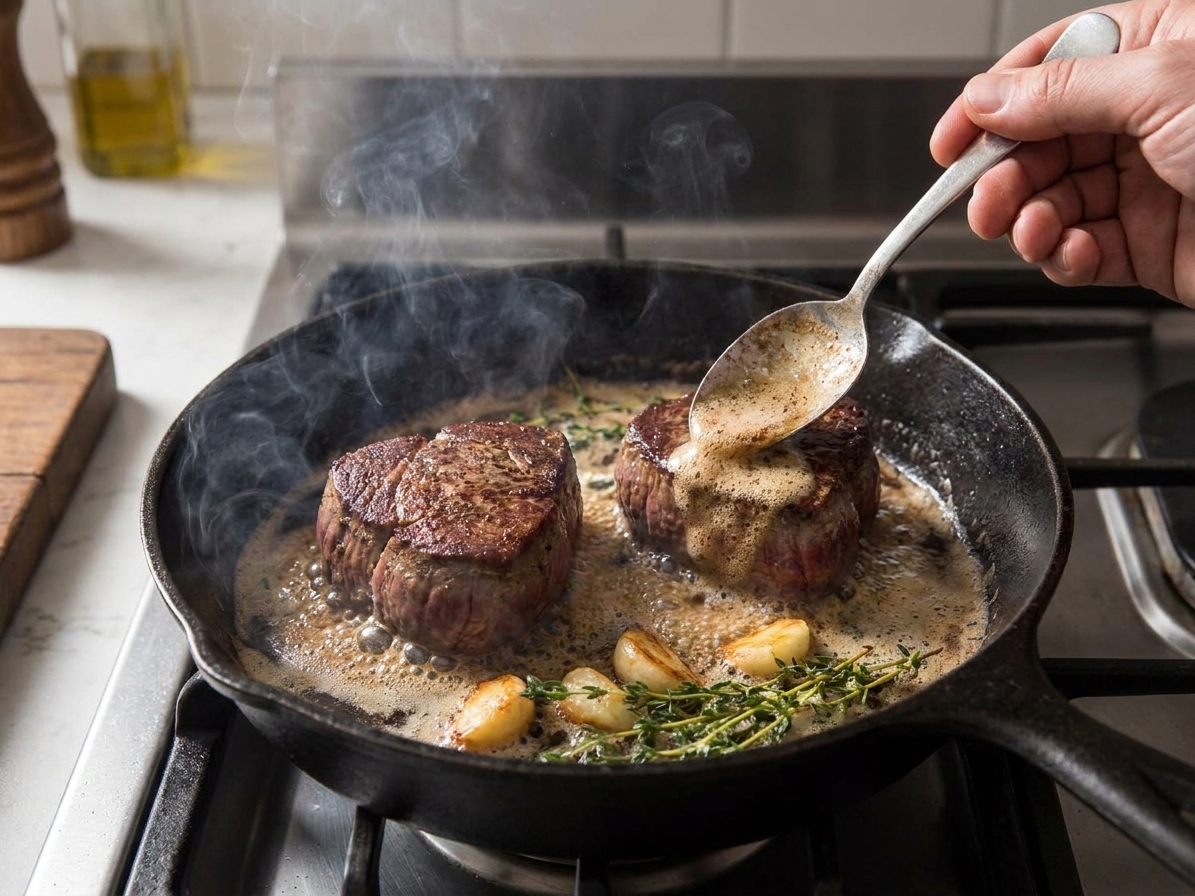
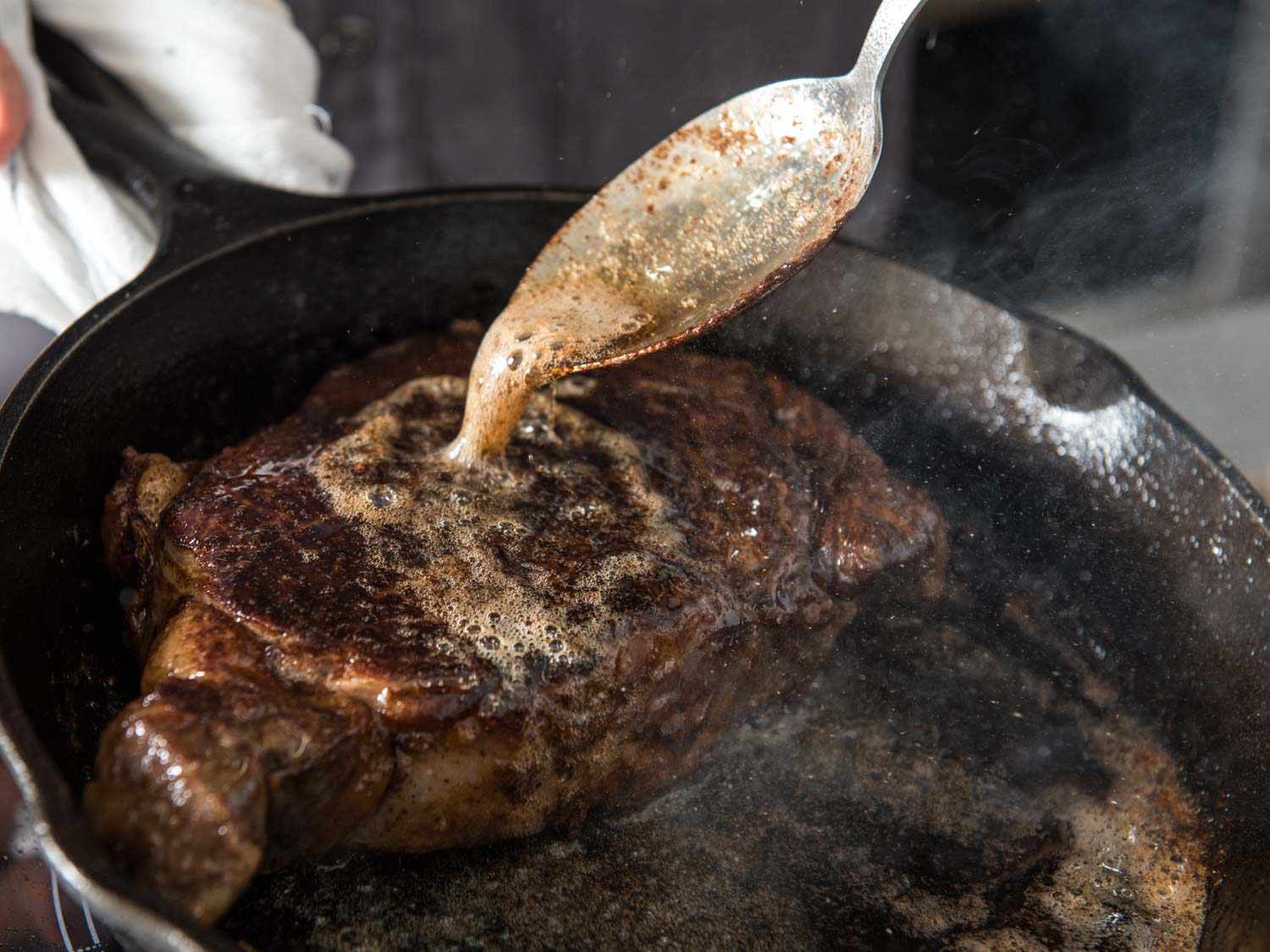
Two filet mignon steaks searing in a cast iron skillet with foaming butter, garlic cloves, and thyme sprigs on a home stove

Filet mignon is the friend who shows up dressed up, even if you only invited people over for a casual Tuesday. It is naturally tender, cooks fast, and has that steakhouse vibe without the steakhouse bill.

This method is my go-to when I want crisp edges, a rosy center, and a butter baste that tastes like you know what you are doing. No complicated marinades. No weird tricks. Just heat, salt, timing, and a little spoon-and-tilt action.

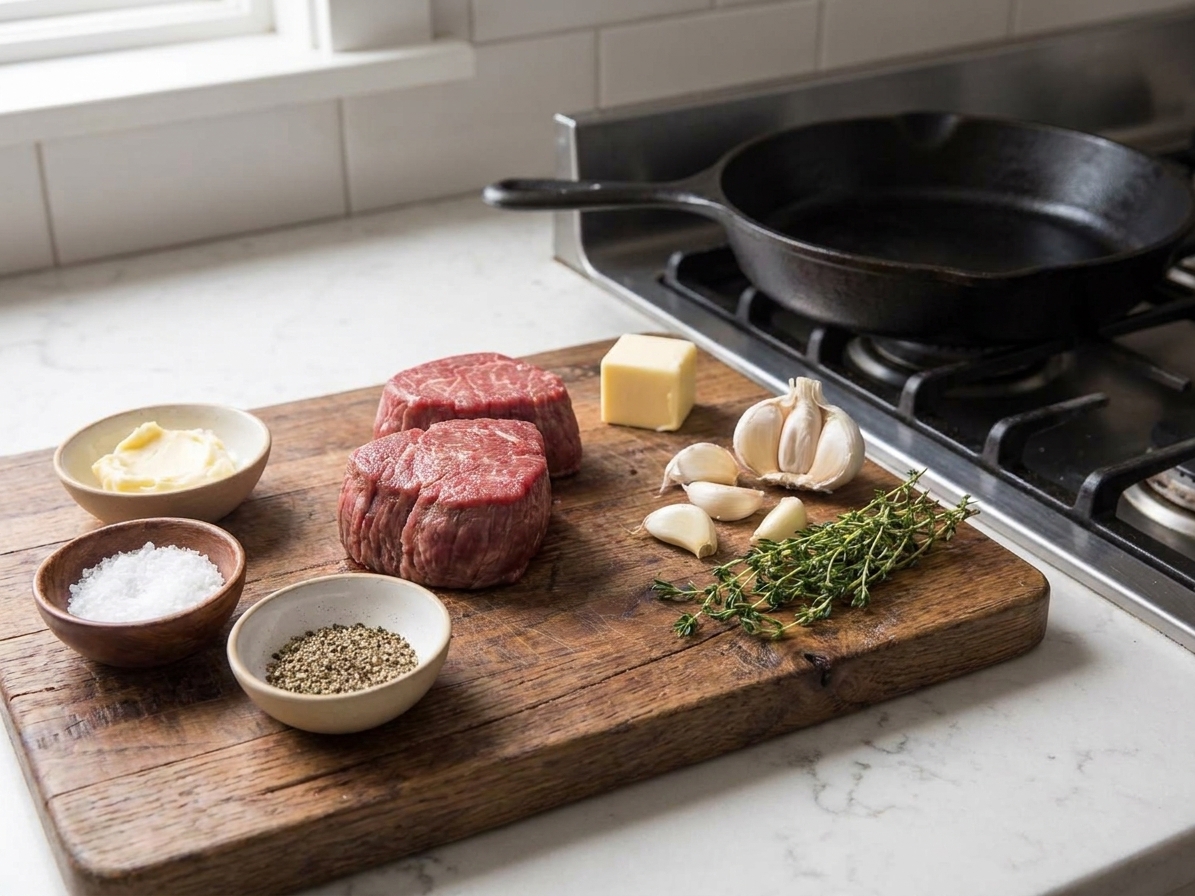
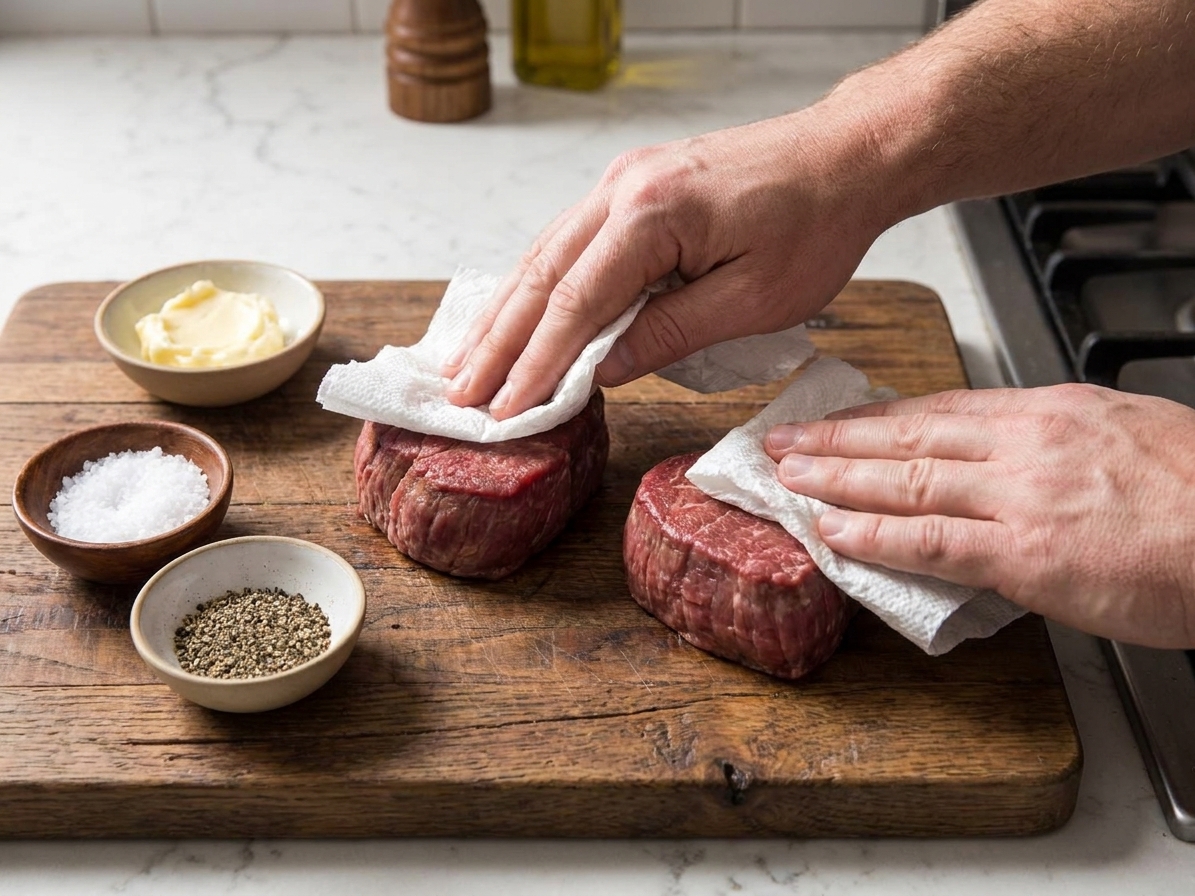
Raw filet mignon steaks, kosher salt, black pepper, butter, garlic, and fresh thyme arranged on a light kitchen counter with a cast iron skillet nearby

Why It Works

  • Big crust, tender middle: A hard sear builds flavor fast, and the oven finish keeps the center even and juicy.
  • Butter basting = instant luxury: Foaming butter with garlic and herbs coats the steak and fills in the flavor that filet can sometimes lack.
  • Clear doneness targets: You get specific temperatures and timing, plus a rest that actually matters.
  • Accessible ingredients: Salt, pepper, butter, garlic, herbs. That is the whole magic trick.

Pairs Well With

Storage Tips

How to Store Leftovers

  • Cool briefly: Let steak cool just until it is no longer steaming hot, about 10 to 20 minutes, then refrigerate. Do not leave it out longer than 2 hours (1 hour if it is very warm in your kitchen).
  • Refrigerate: Store in an airtight container up to 3 days.
  • Freeze: Wrap tightly in plastic wrap, then foil, and freeze up to 2 months. Thaw overnight in the fridge.
  • Reheat without wrecking it: Warm slices gently in a skillet over low heat with a tiny splash of broth or water and a small knob of butter, just until heated through. Or use a 275°F oven until warm. Avoid the microwave if you like tenderness.
  • Leftover move: Thinly slice and tuck into a toasted baguette with horseradish mayo and arugula.

Common Questions

Common Questions

What is the best thickness for filet mignon?

Aim for 1.5 to 2 inches thick. Thin filets overcook before you get a good crust. If your steaks are closer to 1 inch, skip the oven and reduce sear time a bit.

Should I bring filet mignon to room temperature?

You do not need to. What matters more is drying the surface and using a hot pan. If you want, let it sit out 20 to 30 minutes while you prep, but it is not required.

What internal temperature should I target?

Pull the steak from heat a little early because it keeps cooking as it rests. These are pull temps with typical rest temps listed right after.

  • Rare: pull at 120°F, rest to about 125°F
  • Medium-rare: pull at 125 to 128°F, rest to about 130 to 135°F
  • Medium: pull at 135°F, rest to about 140 to 145°F

USDA note: If you want the official benchmark for whole cuts of beef, it is 145°F plus a 3 minute rest. Most people prefer filet below that for tenderness, so choose your comfort level and use a thermometer.

Do I need a cast iron skillet?

Cast iron is ideal, but any heavy, oven-safe skillet works. If your pan is not oven-safe, you can sear on the stovetop and finish on a sheet pan in the oven.

Can I cook filet mignon without butter?

Yes. Sear in a high-heat oil and finish with a drizzle of olive oil. That said, butter basting is where the steakhouse flavor lives, so I recommend it when possible.

Why is my crust not forming?

Usually one of these: the steak surface is damp, the pan is not hot enough, the pan is crowded, or you moved the steak too soon. Pat dry, preheat properly, and let it sear undisturbed.
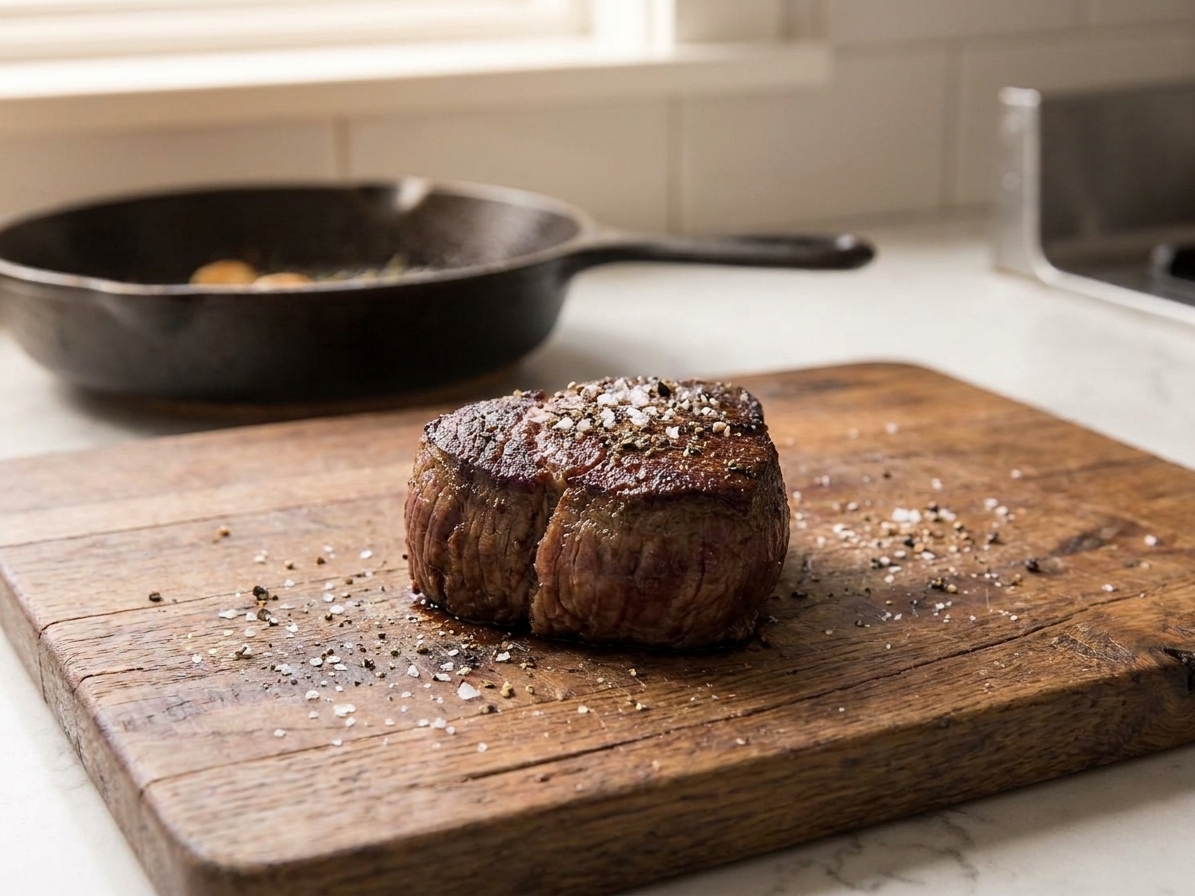

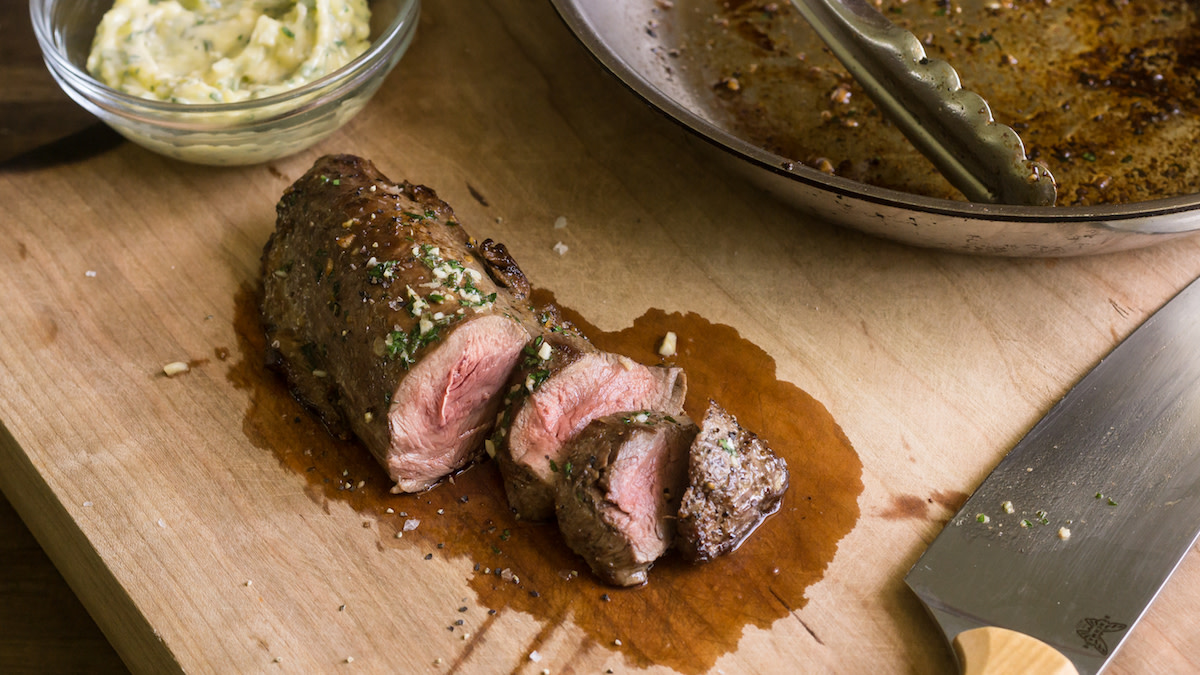
Close-up of a filet mignon with a deep brown crust resting on a cutting board with coarse salt and cracked pepper visible

I used to think filet mignon was strictly restaurant territory, like it came with a dress code and a waiter who says, “Excellent choice.” Then I started cooking more professionally and realized the “secret” is mostly heat management and not being afraid to use a thermometer.

Now it is my favorite special-occasion meal that still feels chill. Two steaks, one pan, a little butter, and suddenly your kitchen smells like you are about to charge $38 a plate. I support this energy.