Mom's Best Recipes
Recipe

Panang Curry Recipe

Creamy coconut, smoky chiles, and earthy aromatics in a fast, weeknight-friendly Panang that tastes like it simmered all day.

Author By Matt Campbell
4.8
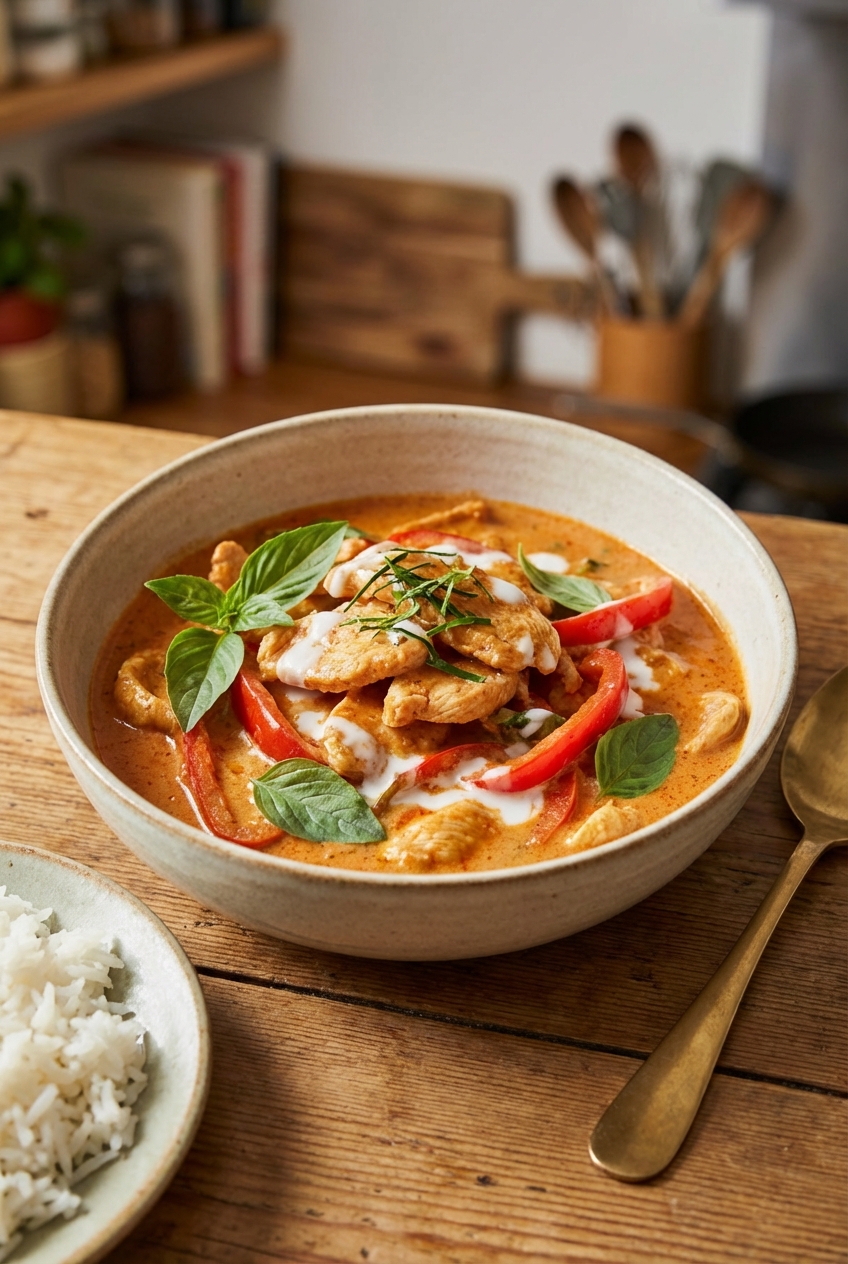
A bowl of Panang curry with sliced chicken, red bell pepper, and Thai basil in a creamy reddish coconut sauce

Panang curry is the cozy sweater of Thai curries: rich, nutty, and softly spicy, with a clingy sauce that begs for rice. My version leans smoky and earthy on purpose. We toast the curry paste until it goes brick red and fragrant, bloom a little smoked paprika (optional, but fun), and finish with lime so the whole thing tastes alive, not flat.

It is also very doable on a Tuesday. No obscure ingredients required, and you can flex it with chicken, shrimp, tofu, or whatever is hanging out in your fridge pretending it is not about to expire.
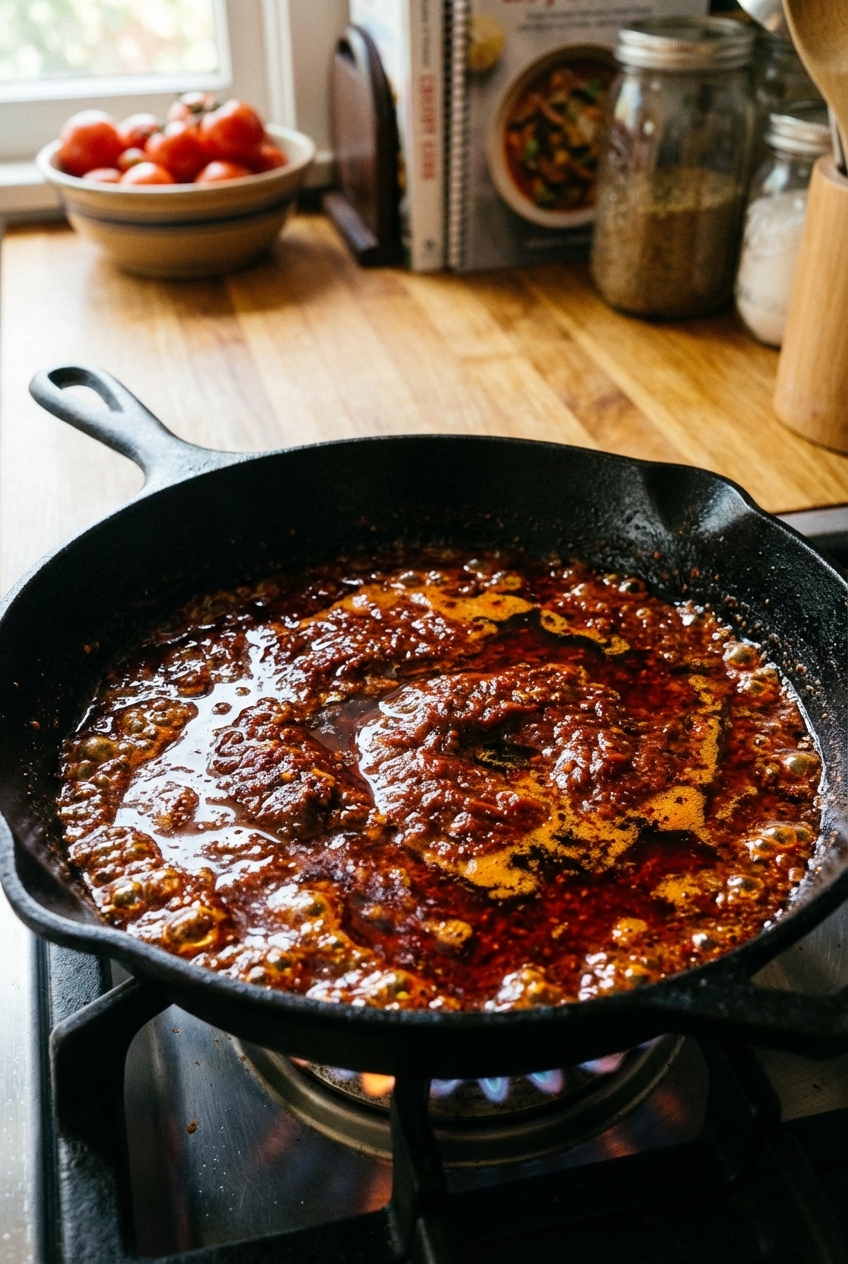
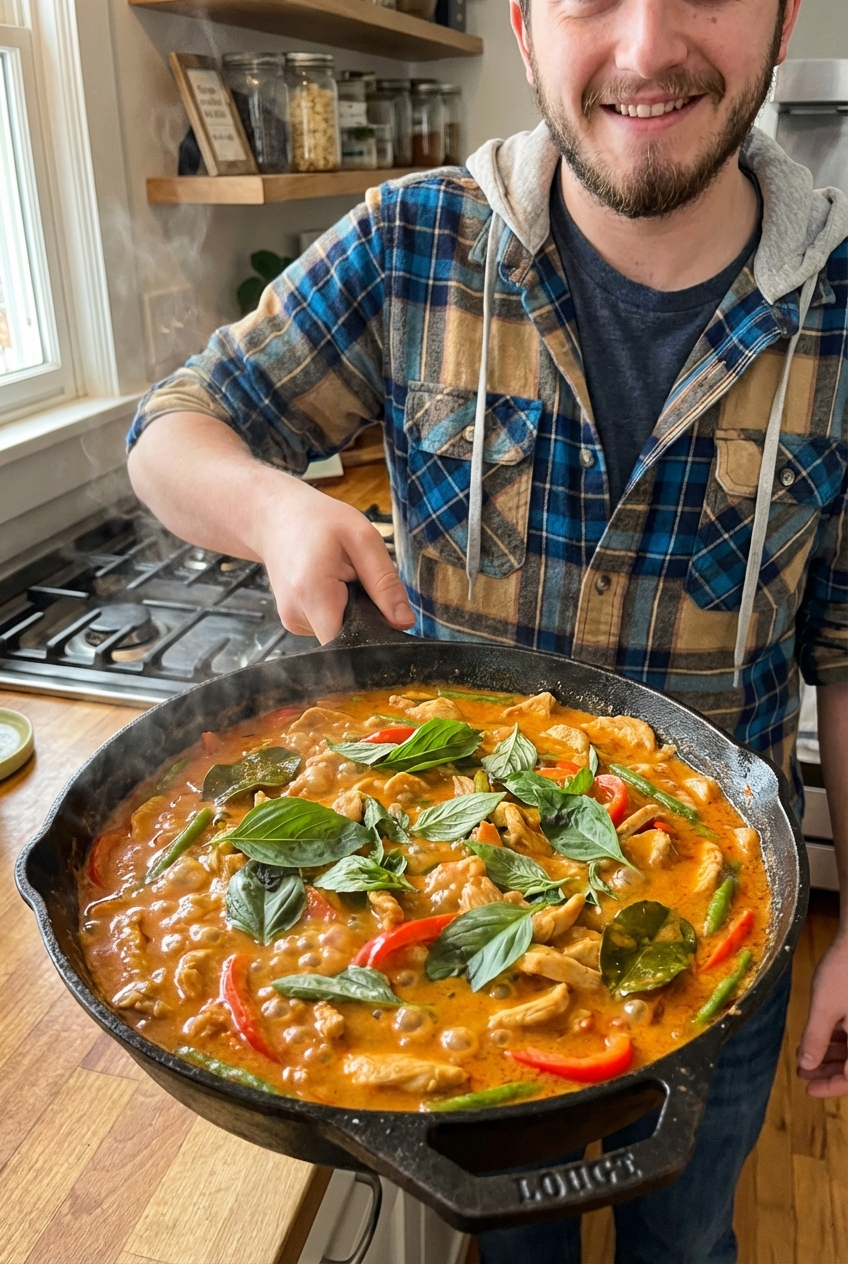
Red curry paste sizzling in a skillet with coconut cream until darkened and glossy

Why It Works

  • Big flavor fast: frying the curry paste in coconut cream concentrates aromatics and builds that signature Panang depth.
  • Smoky and earthy, not bitter: a short toast on the paste plus optional smoked paprika gives warmth without tasting burnt.
  • Thick, spoon-coating sauce: Panang is meant to be richer than many Thai curries, and a little peanut butter helps get you there with pantry ease. Using one can of coconut milk (divided) keeps the sauce lush, not watery.
  • Bright finish: basil plus a squeeze of lime at the end keeps the curry from feeling heavy. Add lime to taste so it stays nutty, not sour.

Pairs Well With

Storage Tips

Cool fast: get leftovers into shallow containers and refrigerate within 2 hours.

  • Fridge: 3 to 4 days in an airtight container. The sauce will thicken as it sits.
  • Freezer: up to 2 months. Coconut-based sauces can separate a bit after freezing, but they come back together when reheated gently.

Reheat: warm in a saucepan over medium-low, stirring often. Add a splash of water or broth to loosen. Finish with a small squeeze of lime to wake it back up, but taste first so it does not drift tart.

Meal prep tip: store rice and curry separately so the rice stays fluffy and the curry does not get absorbed into one solid brick.

Common Questions

Is Panang curry spicy?

It is usually medium, but it depends heavily on your curry paste. Start with 3 tablespoons paste if you are spice-cautious, then add more after the coconut milk goes in and you taste the sauce.

What makes Panang different from red curry?

Panang is typically richer, thicker, and a little sweeter than Thai red curry. It often includes peanuts (or a nutty element) and uses less liquid, so the sauce hugs the protein instead of being soupy.

I cannot find Panang curry paste. What can I use?

Use Thai red curry paste and add the peanut butter plus an extra pinch of ground cumin or coriander for that earthy Panang vibe. It will be close enough to make your dinner excellent.

Can I make it vegetarian?

Yes. Use tofu or chickpeas, and swap fish sauce for soy sauce (or vegan fish sauce if you have it). Add mushrooms for extra savoriness.

Why did my coconut sauce look oily?

A little separation is normal when you fry curry paste in coconut cream. If it looks aggressively broken, turn the heat down and whisk in a splash of water or broth until it smooths out.

The first time I tried to make Panang at home, I treated the curry paste like it was fragile. Quick stir, splash of coconut milk, done. The result was fine, but it tasted like it was missing a middle chapter.

Then I learned the move: fry the paste in thick coconut cream until it darkens and gets loud. The kitchen smells like toasted chiles and lemongrass, and suddenly you are not just making curry. You are building it. Now it is my go-to when I want something comforting but still bright enough to make me sit up straight after the first bite.