Mom's Best Recipes
Recipe

Pasta-Style Spaghetti Squash

Roasted until sweet and tender, then tossed with a quick butter, garlic, and Parmesan finish for strands that feel rich, not watery.

Author By Matt Campbell
4.8
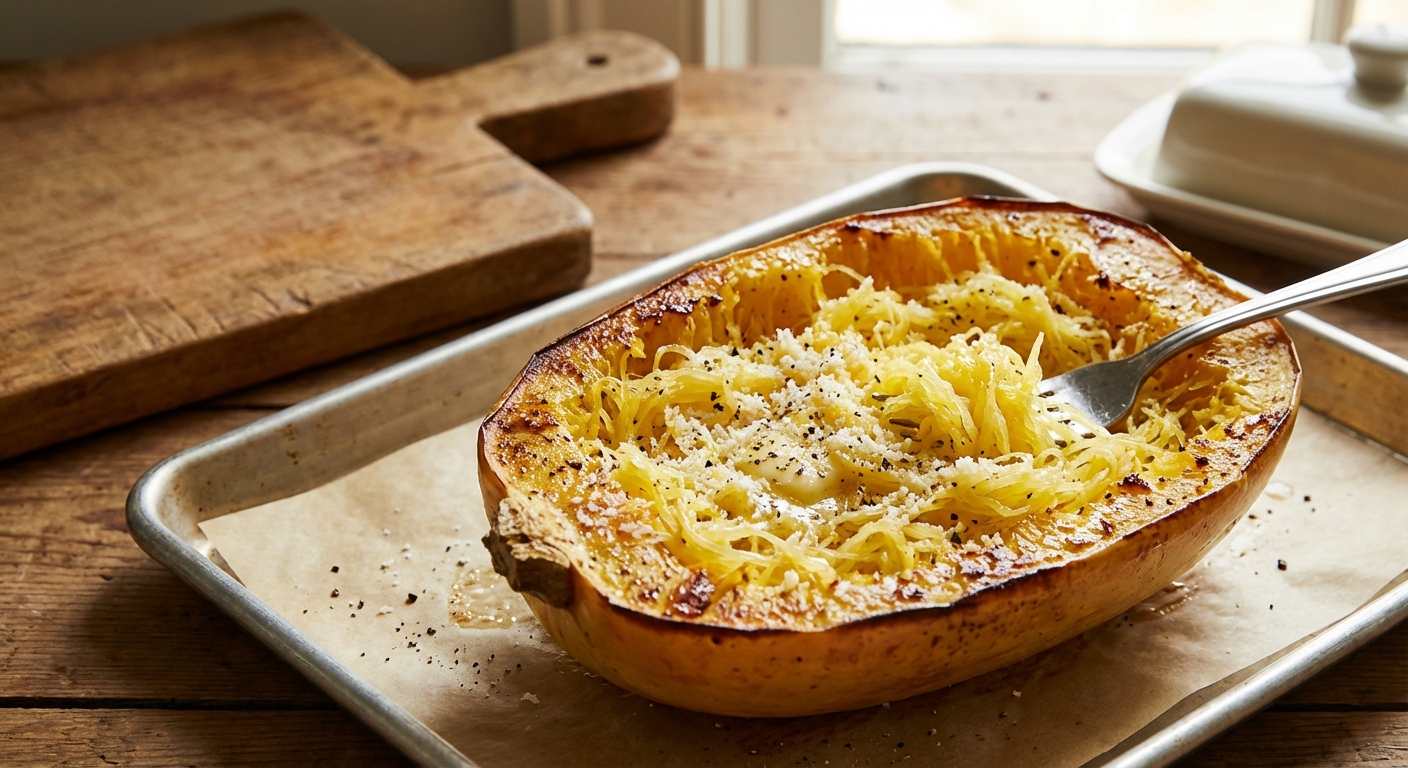
A roasted spaghetti squash half on a baking sheet with silky strands fluffed by a fork, topped with melted butter, Parmesan, and cracked black pepper

Spaghetti squash gets a bad rap because it can go from “cute noodle swap” to “wet stringy sadness” in about five minutes. This is the version that actually eats like a cozy bowl of pasta. The goal is silky, smooth strands with a little buttery shine, not puddles on the plate.

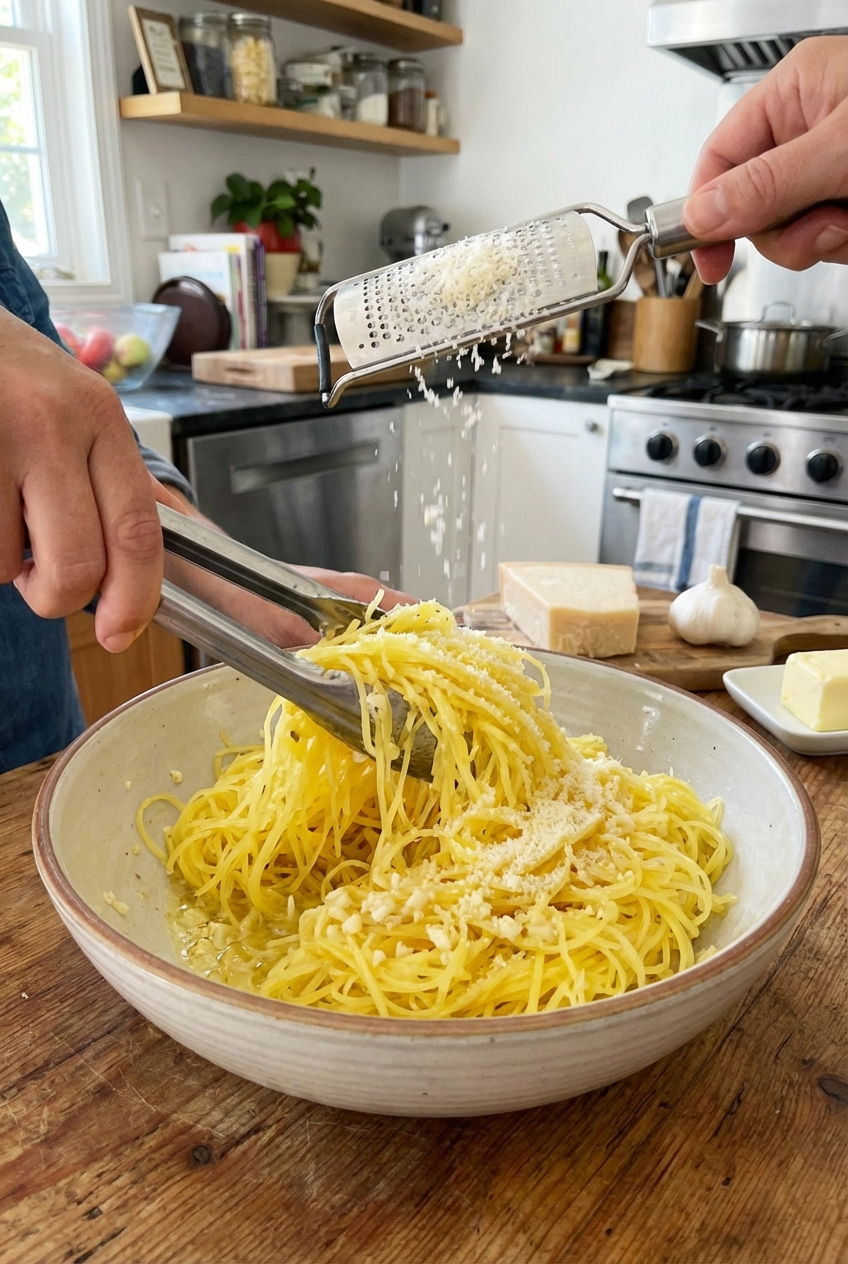
My method is simple: roast it hot, season it right, and finish it like you mean it. A touch of butter (or olive oil), garlic, Parmesan, and a squeeze of lemon wakes the whole thing up. It is weeknight-friendly, kid-friendly, and honestly kind of impressive for something that starts as a weird oval gourd.
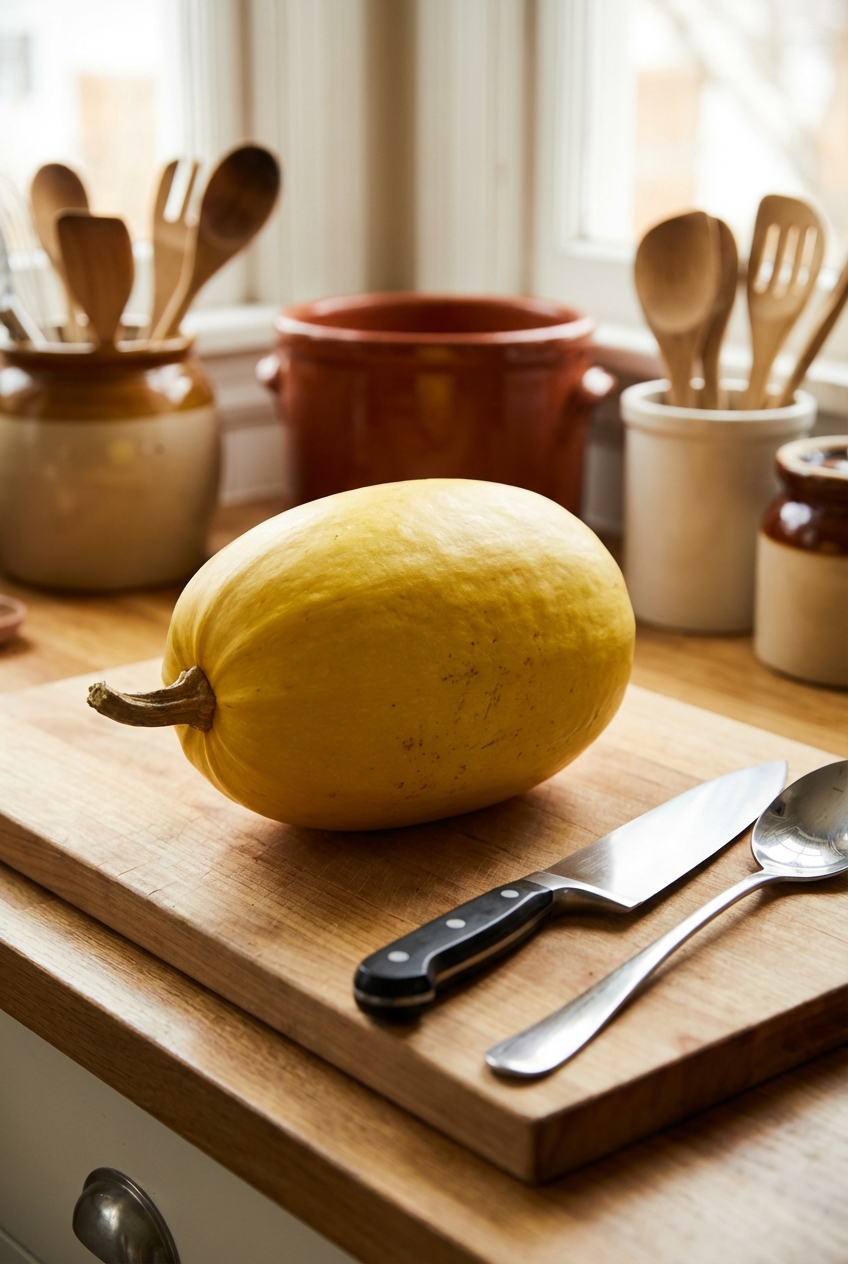

A whole spaghetti squash on a cutting board with a chef's knife and a spoon nearby

Why It Works

  • Less watery squash: roasting cut-side down at high heat helps drive off moisture and concentrate sweetness.
  • Silky texture: resting after roasting lets steam settle so the strands stay tender, not soggy.
  • Real flavor: garlic blooms in butter, Parmesan adds savory depth, and lemon lifts everything so it tastes bright instead of bland.
  • Accessible ingredients: nothing fancy, just smart technique and good seasoning.

Pairs Well With

Storage Tips

Refrigerate: Cool completely, then store in an airtight container for up to 4 days. Leftovers will usually be already dressed (butter, cheese, and all), and that is totally fine. If you are meal prepping, you can store the plain strands and the garlic butter separately for the freshest flavor.

Reheat: Warm in a skillet over medium heat. If it looks watery, skip the splash of water and just let it sizzle for a minute or two to cook off moisture, then add a small pat of butter or a drizzle of olive oil to bring back the shine. Microwave works too, but the skillet keeps it silkier and avoids that steamy puddle situation.

Freeze: You can, but texture takes a hit. If you still want to freeze it, spread cooled strands on a sheet pan to freeze first, then bag for up to 2 months. Thaw overnight in the fridge and reheat in a skillet to evaporate extra moisture.

Common Questions

Why is my spaghetti squash watery?

It is usually from trapped steam or a squash that went a little too long and turned soft around the edges. Roast at 425°F cut-side down and do not wrap it in foil. After roasting, let it rest 5 to 10 minutes so steam can settle before you fluff the strands. If it still seems wet, toss the strands in a hot skillet for 2 to 3 minutes to cook off extra moisture.

How do I make the strands more “smooth” and less crunchy?

Roast a little longer. You want a fork to slide into the thickest part with almost no resistance. Also, toss the hot strands with butter or olive oil right away to coat them.

Do I need to salt it before roasting?

Yes, lightly. Salt seasons the interior and can help reduce surface moisture during roasting. I salt the cut faces and add more at the end to taste.

Can I make this dairy-free?

Absolutely. Use olive oil instead of butter and swap Parmesan for nutritional yeast or a dairy-free Parmesan-style alternative. Add an extra squeeze of lemon for brightness.

Is spaghetti squash “authentic” Italian?

Nope. Think of this as Italian-American–style comfort: roasted squash treated like a real pasta moment with garlic, fat, cheese, and a little acid. Nothing weird, nothing fussy.

Any tips for cutting spaghetti squash safely?

Yes. Spaghetti squash is a wrist workout. Prick it all over with a fork, microwave it for 2 to 3 minutes to slightly soften the skin, then cut it lengthwise on a stable cutting board. (Let it cool for a minute first. It will be hot.)

I started making spaghetti squash when I was trying to be “responsible” on weeknights, which is funny because my version of responsible still involves butter and a suspicious amount of Parmesan. The first few times were a little chaotic. I roasted it too low, drowned it in sauce, and wondered why it tasted like watered-down marinara strings.

Then I treated it like it deserved respect. Hot oven. Proper salt. Quick garlic butter. Lemon at the end. Suddenly it was not a substitute anymore. It was just a really good dinner that happened to come in its own bowl.