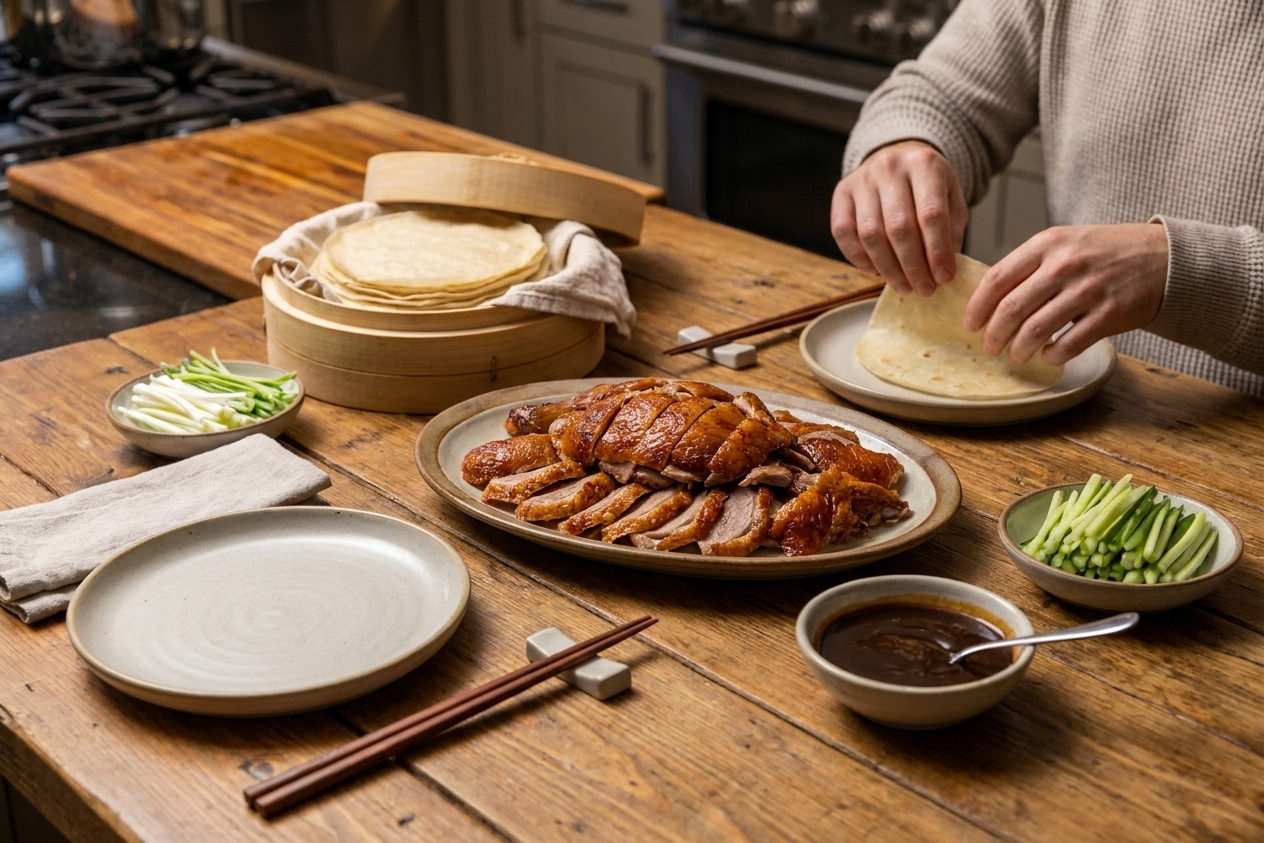
Is this traditional Peking duck?
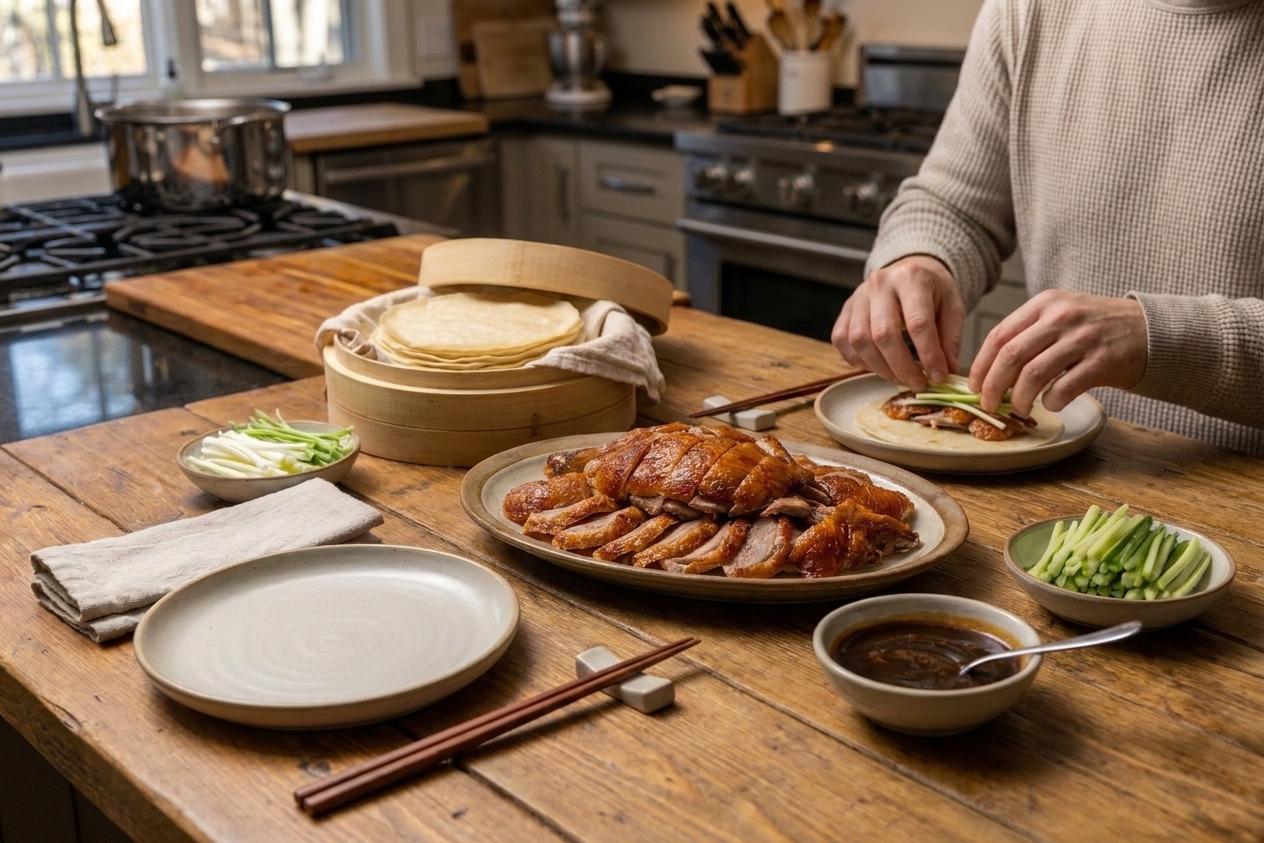
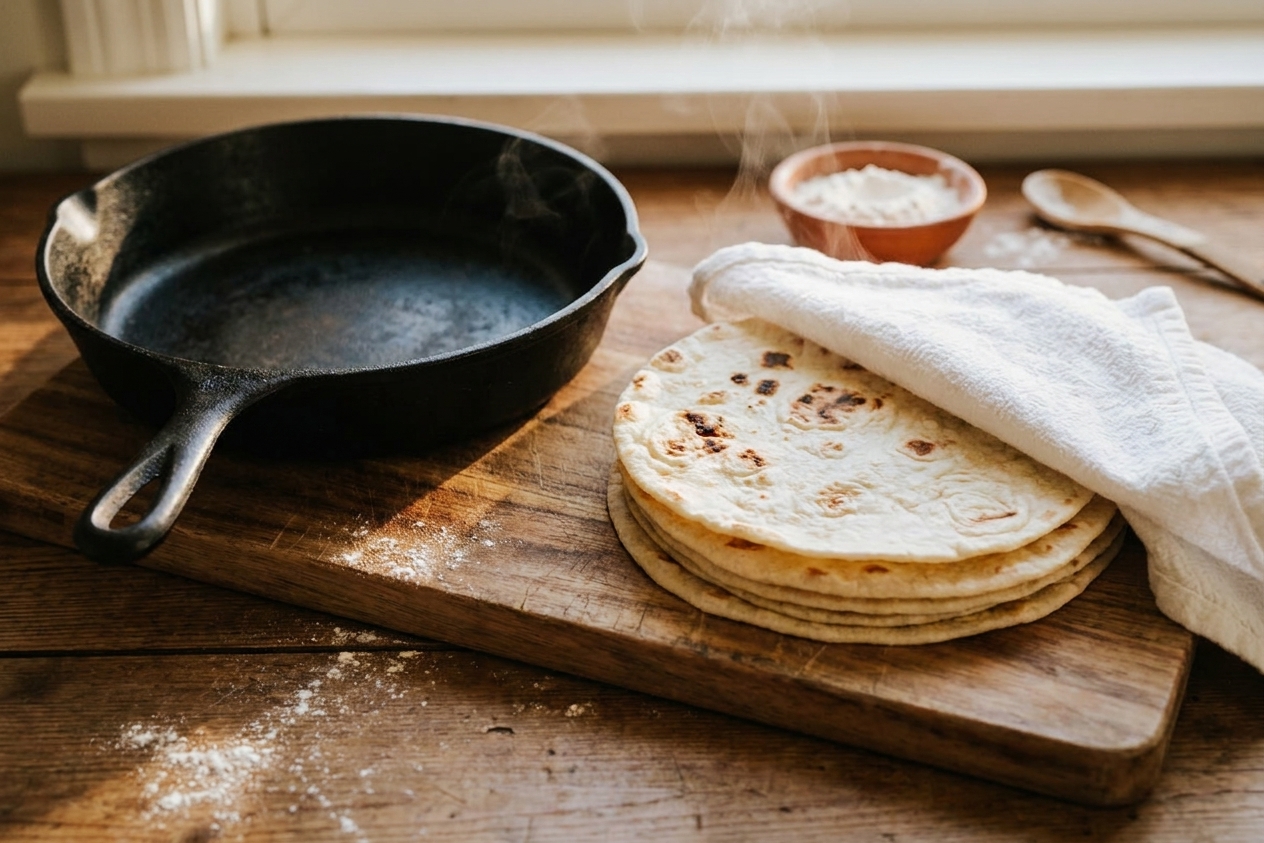
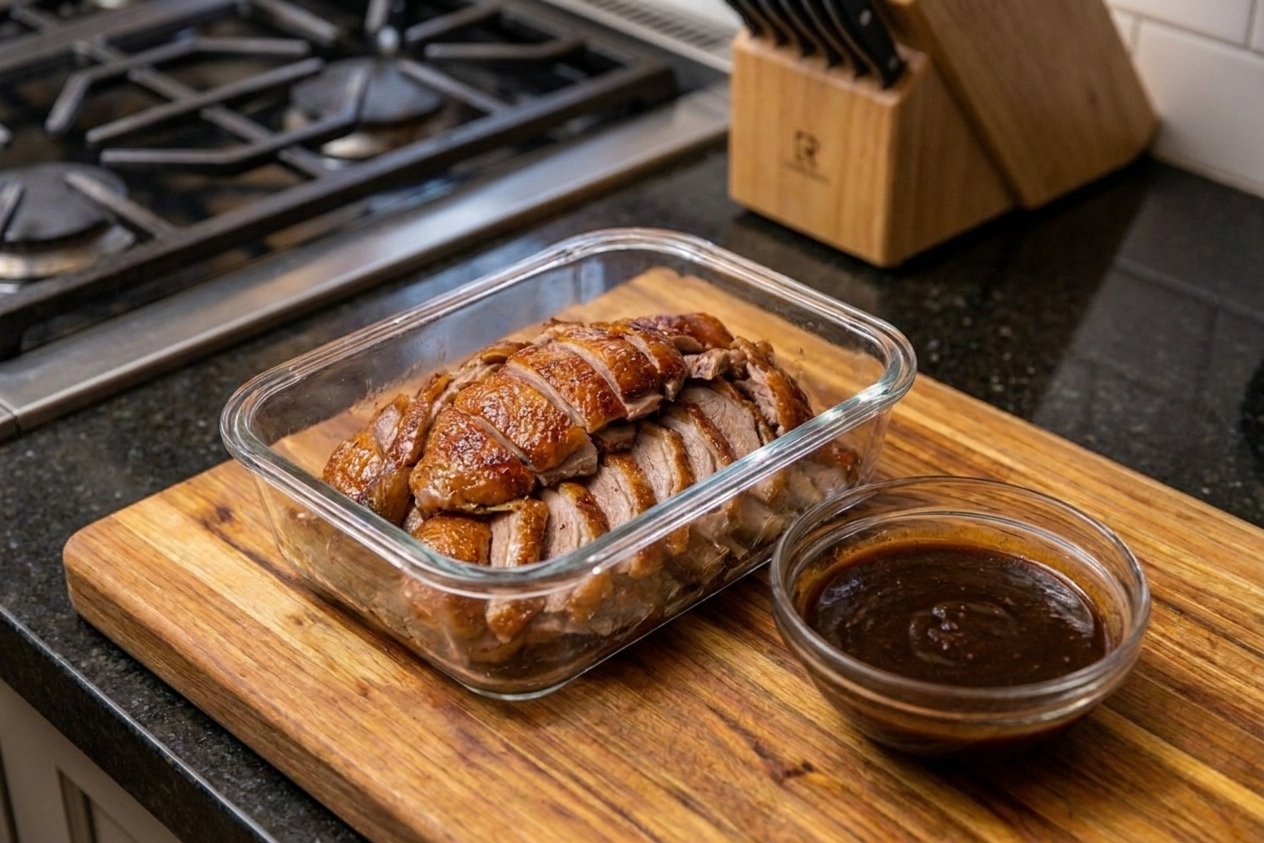
It is Peking-duck-inspired. Classic Beijing roast duck often involves scalding, inflating, maltose syrup, and specialized roasting setups. This recipe is the home-kitchen version that still gets you the two big payoffs: crackly skin and juicy meat, plus the pancake-and-scallion experience.
Do I need to inflate the duck or pour boiling water over it?
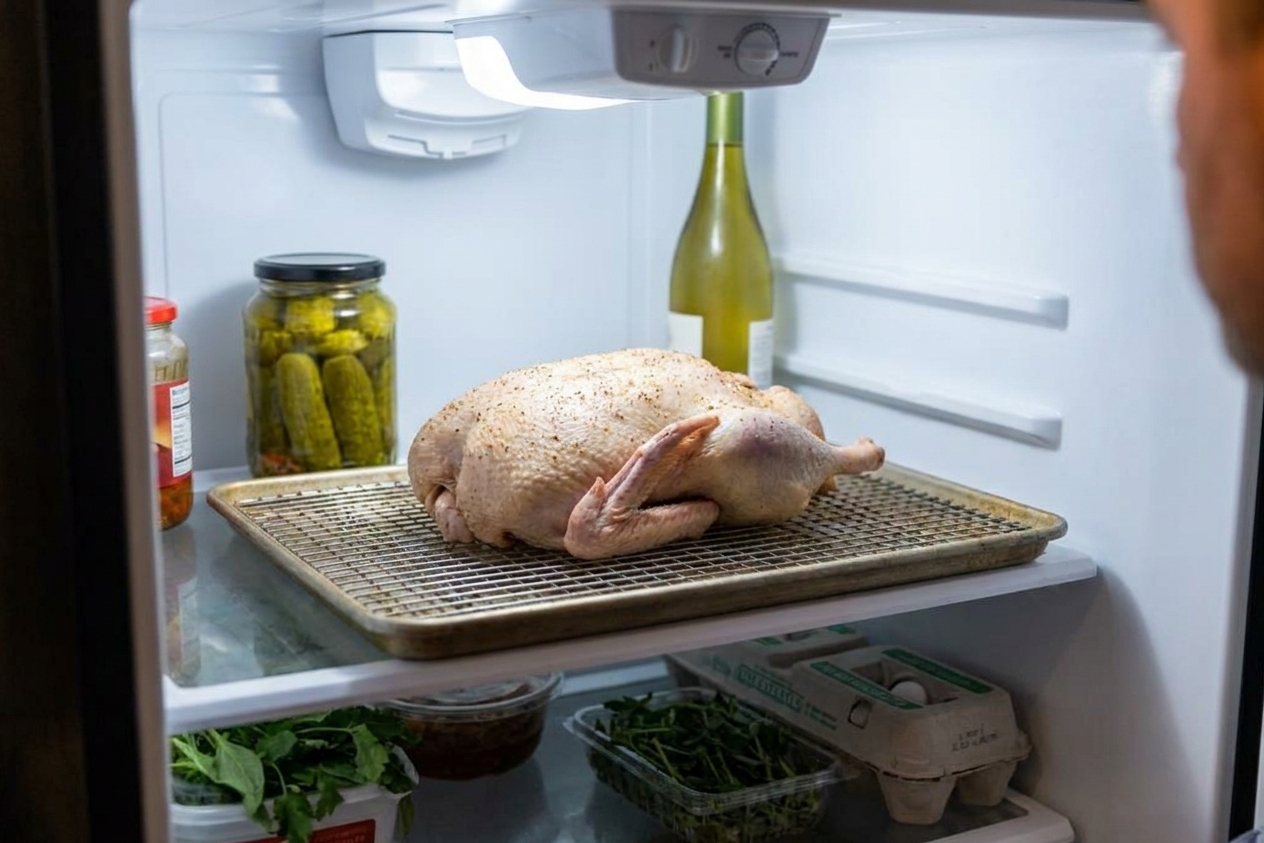
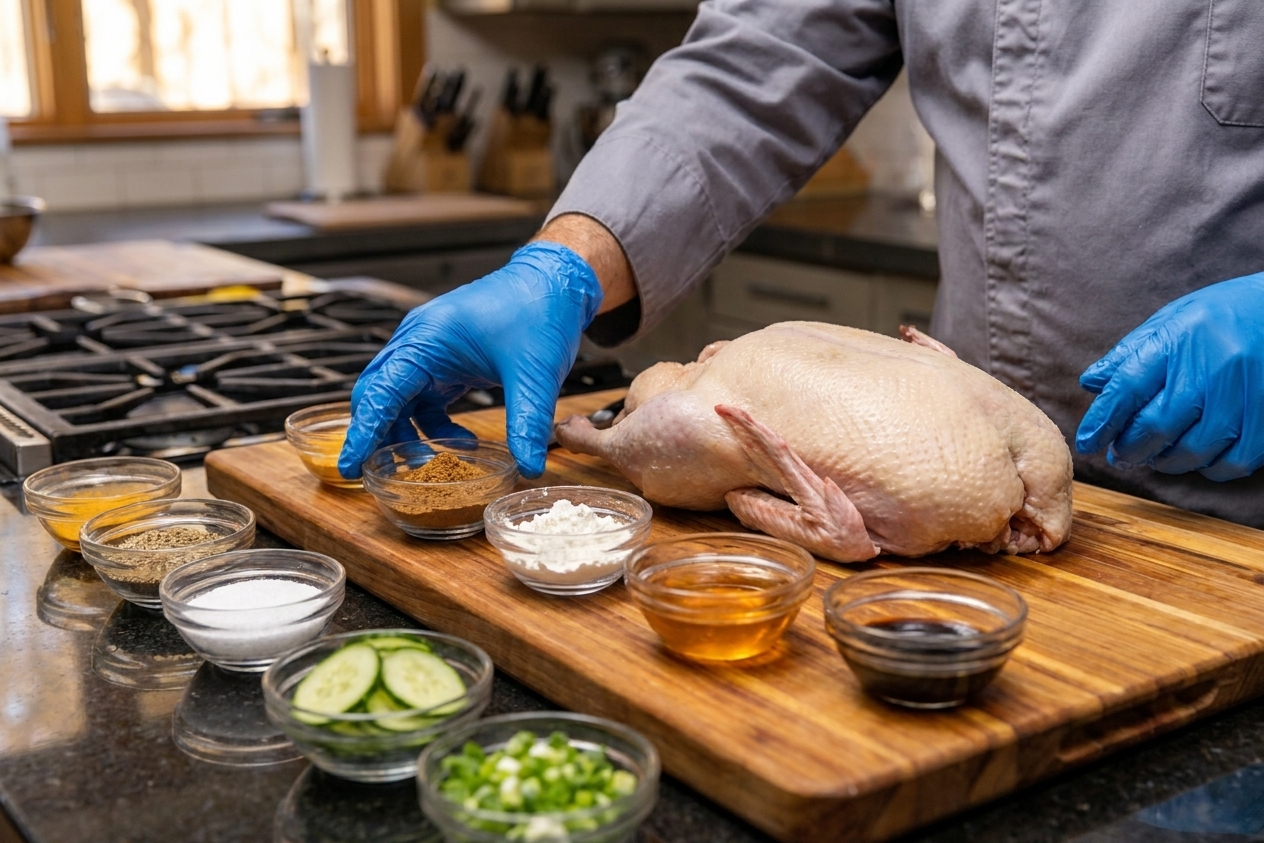
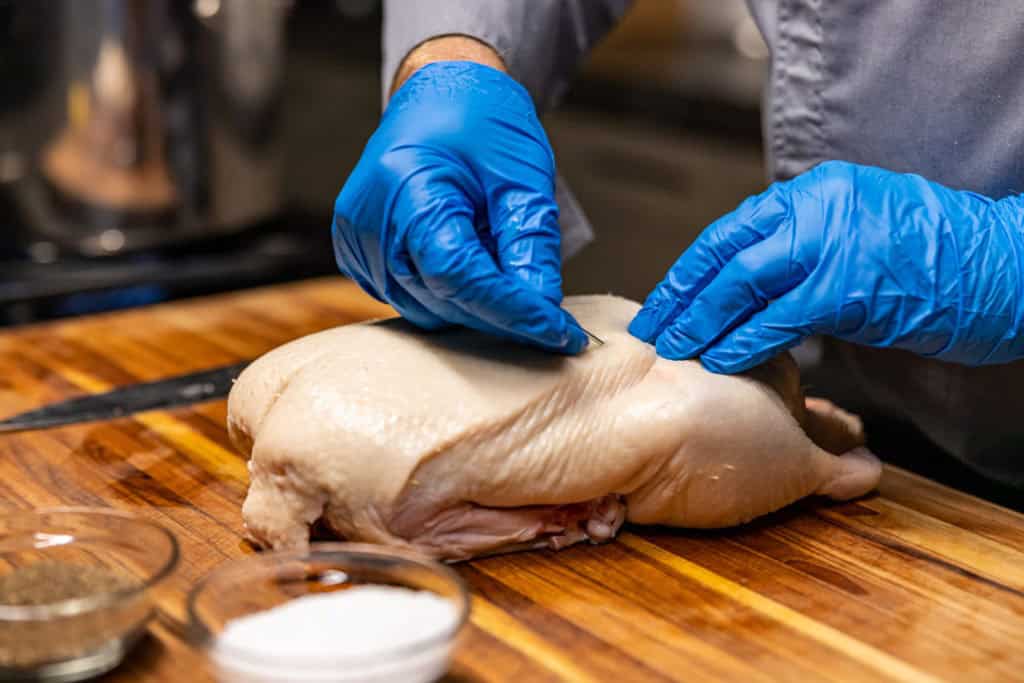
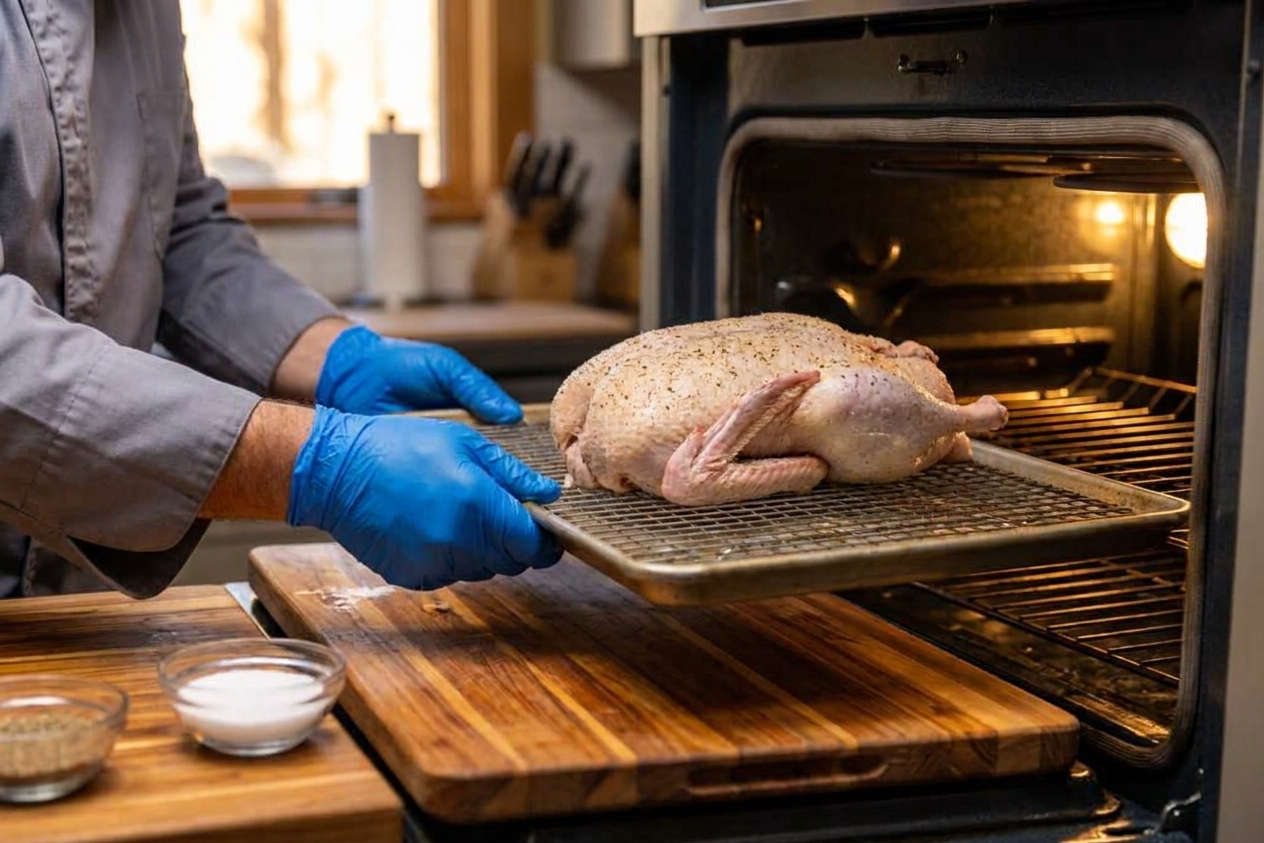
No. Those methods can help in restaurant setups, but this recipe focuses on what reliably works at home: dry brine + air-dry + roast in two stages. If you want, you can pour boiling water over the duck to tighten the skin, but it is optional and messy.
How do I know when the duck is done?
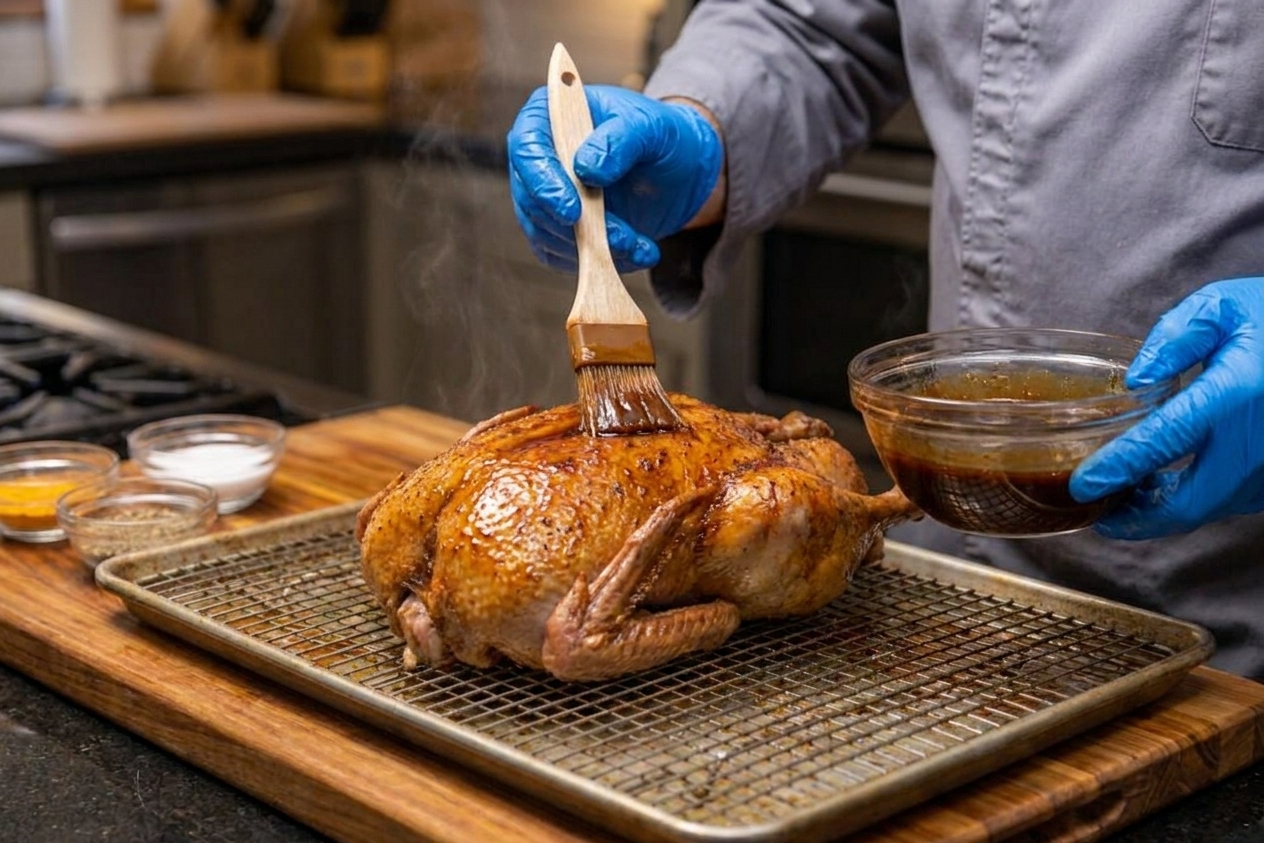
Poultry is considered safe at 165°F. For duck legs and thighs, many people prefer a higher temp for texture: aim for 175°F to 185°F in the thigh (without touching bone) if you want it more tender and pull-apart. The breast will usually land lower, which is fine. The skin should look deep golden and feel crisp.
Why is there so much smoke?
Duck renders a lot of fat. Use a rimmed sheet pan under the rack and keep an eye on the drippings. The water in the pan helps early on, but it can evaporate at higher heat. If the pan dries out and you notice smoke, carefully add a splash of hot water (or carefully pour off some fat if you can do it safely).
What if I cannot find hoisin sauce?
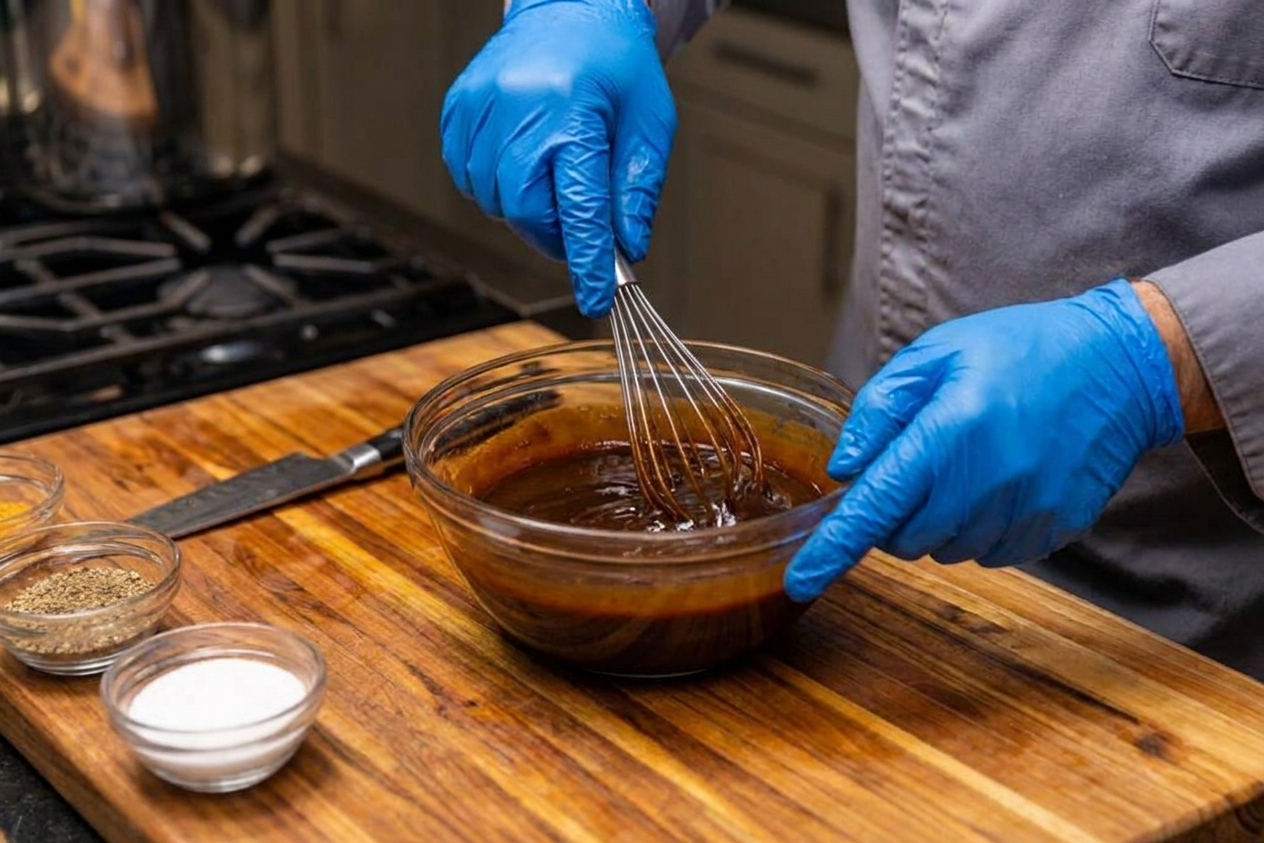
No problem. The sauce in this recipe is a quick hoisin-style blend using soy sauce, honey, peanut butter (or tahini), vinegar, and sesame oil. It is sticky, savory, and totally in the spirit.
Any allergy swaps for the peanut butter?
Use tahini or sunflower seed butter in the dipping sauce. Both give you that creamy body without changing the vibe.
Can I do this with duck pieces instead of a whole duck?
Yes. Legs and breasts cook differently, so you will want separate timing. If you go this route, roast legs longer and crisp breasts quickly at the end. The sauce and serving ideas stay the same.