Mom's Best Recipes
Recipe

Perfect Fluffy White Rice

Foolproof stovetop white rice using the absorption method: a reliable starting water ratio, a quick rinse, a gentle simmer, and a rest so every grain stays fluffy, not sticky.

Author By Matt Campbell
4.9
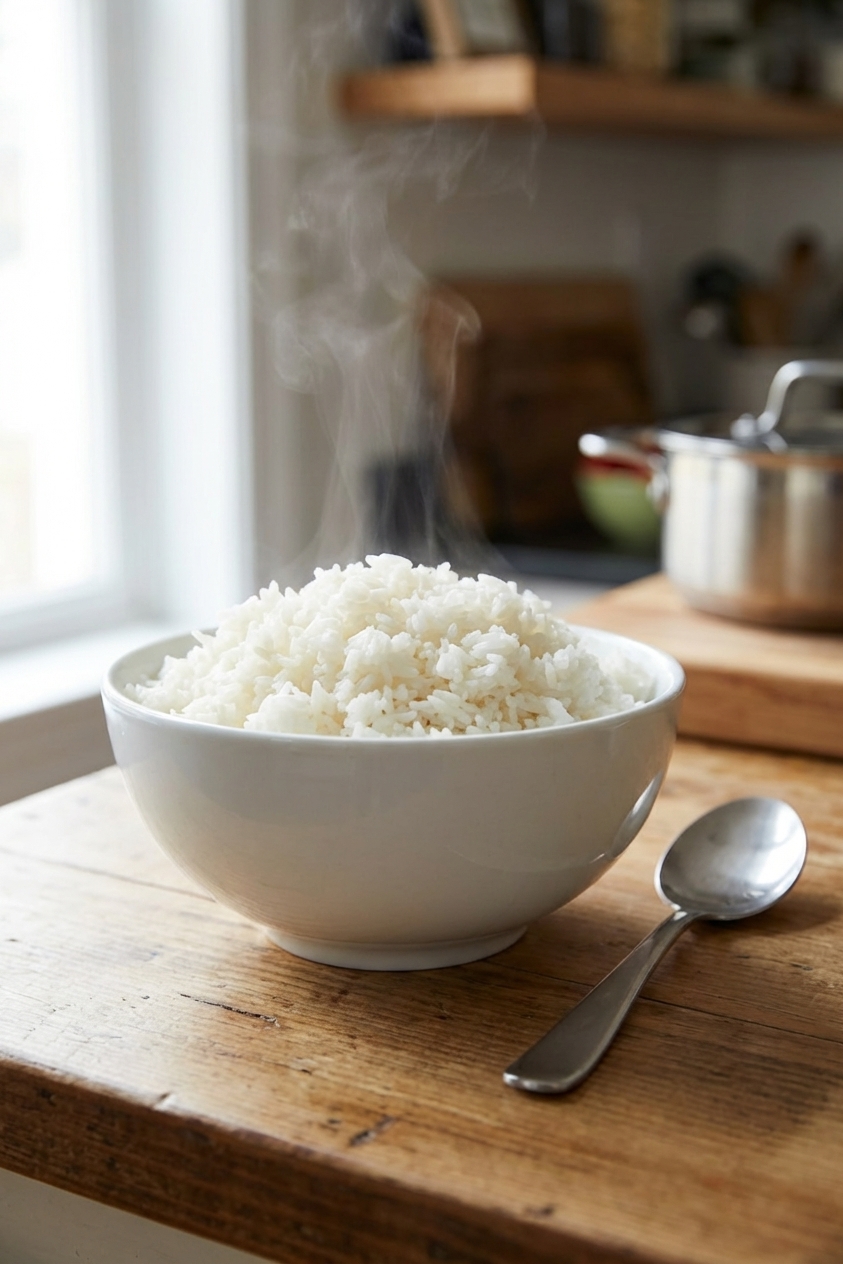
A real photograph of a white ceramic bowl filled with perfectly fluffy steamed white rice, individual grains visible, sitting on a wooden kitchen counter with a simple spoon nearby, soft natural window light

If you can boil water, you can make great rice. The annoying part is that rice loves to act different depending on the pot, the burner, and whether you got impatient and peeked under the lid. This stovetop method is the one I use when I want reliable, fluffy white rice with clean flavor and zero drama.

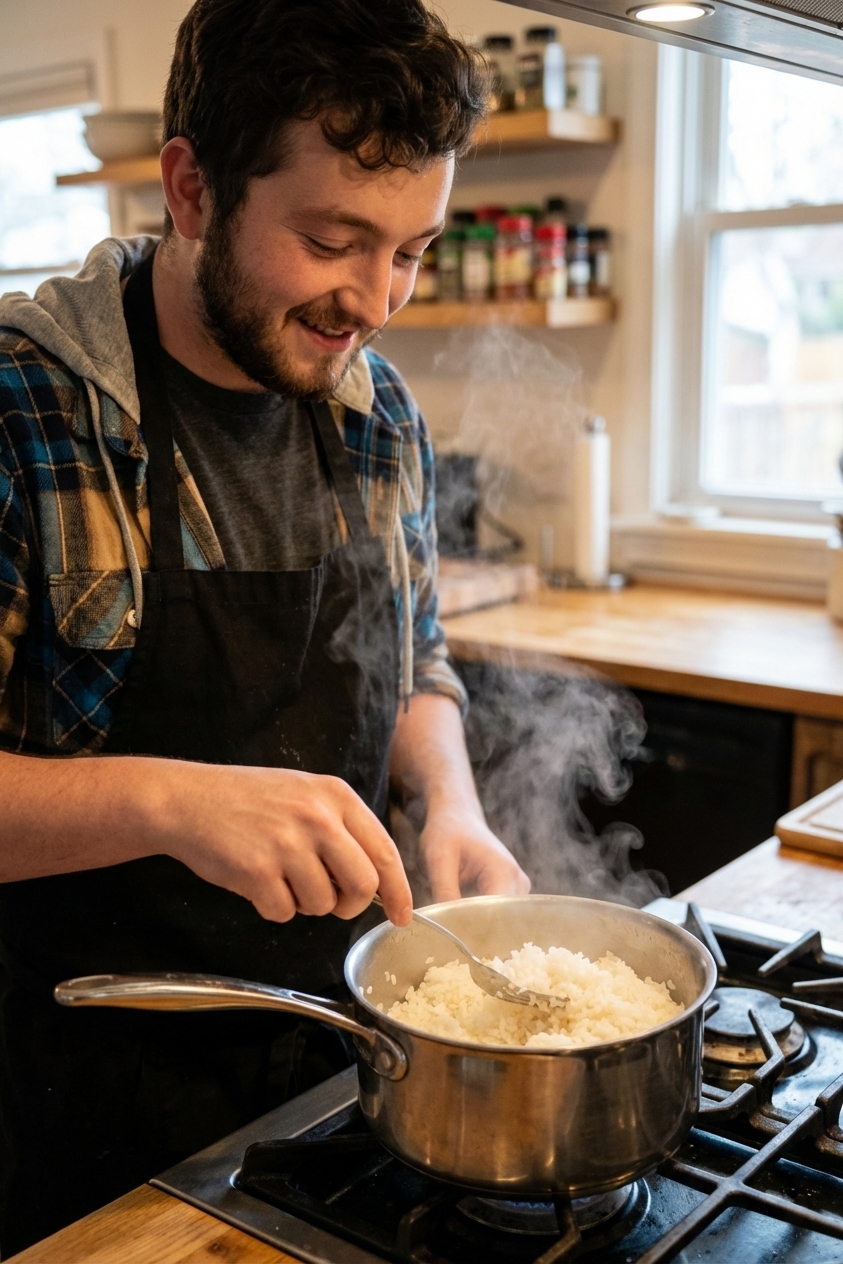
We are using the absorption method, which means the rice cooks in a measured amount of water until it is absorbed. No draining. No guessing. Just a quick rinse, a tight lid, a gentle simmer, and the most underrated step of all: resting the pot off heat.

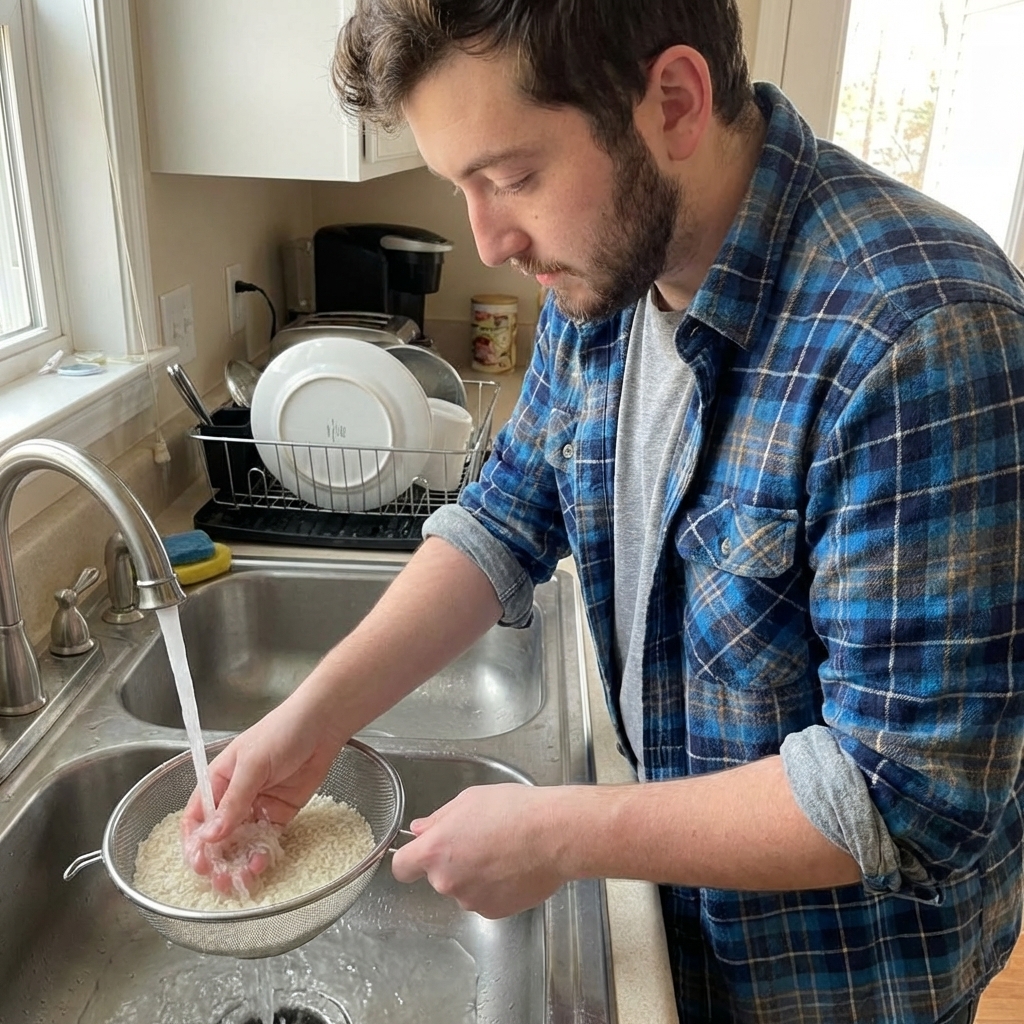
A real photograph of uncooked white rice being rinsed in a fine mesh strainer under running water in a home kitchen sink, hands visible, candid cooking moment

Why It Works

  • A reliable starting ratio for everyday long-grain white rice: 1 cup rice to 1 1/2 cups water usually gives fluffy grains that separate easily, with easy tweaks if your setup runs hot or your rice runs dry.
  • Rinsing removes excess surface starch, which is the main culprit behind gummy, sticky results.
  • Low simmer plus a tight lid cooks the rice evenly without blowing out the grains.
  • The 10-minute rest finishes the steam job, so the center of each grain softens and the texture becomes light instead of wet.

Pairs Well With

Storage Tips

Cool it fast: Spread leftover rice on a plate or sheet pan for 10 to 15 minutes so it stops steaming, then transfer to an airtight container and refrigerate promptly (within about 1 hour).

  • Fridge: Store up to 4 days.
  • Freezer: Freeze up to 2 months. Portion it in freezer bags, press flat, and you have rice “sheets” that thaw quickly.

Reheat (best texture): Add 1 to 2 teaspoons water per cup of rice, cover, and microwave in 30 to 60 second bursts, fluffing between rounds, until steaming hot. On the stovetop, warm in a small pot with a splash of water and a lid over low heat until steaming hot.

Leftover rice pro move: Day-old rice is perfect for fried rice because it is drier and less likely to clump.

Common Questions

Do I really need to rinse rice?

You do not have to, but if your goal is fluffy, separate grains, rinsing helps a lot. Rinse until the water runs mostly clear, usually 30 to 60 seconds.

What is the best water-to-rice ratio for white rice on the stove?

For standard long-grain white rice, 1 cup dry rice to 1 1/2 cups water is a reliable starting point for the absorption method. Since rice brands, age, pot shape, lid seal, and altitude can all affect results, adjust as needed: if it is consistently a little firm, bump the water up by 2 tablespoons. If it is consistently soft, reduce by 2 tablespoons.

Why can’t I lift the lid while it cooks?

In a covered pot, steam does most of the cooking. Every peek releases steam and drops the temperature, which can lead to uneven cooking and crunchy centers.

How long should I simmer it?

15 minutes on low works for many long-grain rices, but some batches (especially older or enriched rice) do better with 16 to 18 minutes at the gentlest simmer. If your rice is regularly coming out a bit firm, add 1 to 3 minutes before the rest.

How do I fix mushy rice?

Take the lid off, fluff gently, and let it sit over very low heat for 1 to 2 minutes to drive off moisture. Then rest off heat, uncovered, for 5 minutes. Next time, use 2 tablespoons less water or shorten the simmer by 1 to 2 minutes.

How do I fix crunchy rice?

Add 2 to 3 tablespoons hot water, cover, and cook on low for 3 to 5 minutes. Then rest 10 minutes off heat. Crunch usually means the heat was too high (water boiled off too fast), the lid was not tight, or it just needed another minute or two.

Why is my rice sticky even after rinsing?

Two common reasons: you used a variety that is naturally stickier (like short-grain), or the rice was stirred while cooking. For long-grain rice, stir only at the beginning to combine water and salt, then leave it alone.

Can I double this recipe?

Yes. Use the same ratio, but make sure your pot is large enough and keep the simmer gentle. The cook time is usually similar, but the rest becomes even more important.

Do coil stoves cook rice differently than gas?

Sometimes. Electric coils hold heat longer, so after you bring the pot to a boil, you may need to move it to a cooler burner to maintain a truly gentle simmer.

Rice used to be my kitchen confidence test. If it turned out fluffy, I felt like a wizard. If it came out gummy, I suddenly questioned every life choice I had made that day. What finally made it click was treating rice like it has feelings: rinse it gently, do not keep checking on it, and let it rest after the heat is off. The rest is where the magic happens, and it is also where I remind myself that not every good thing in the kitchen needs to be rushed.