How much seasoning should I use per fillet?
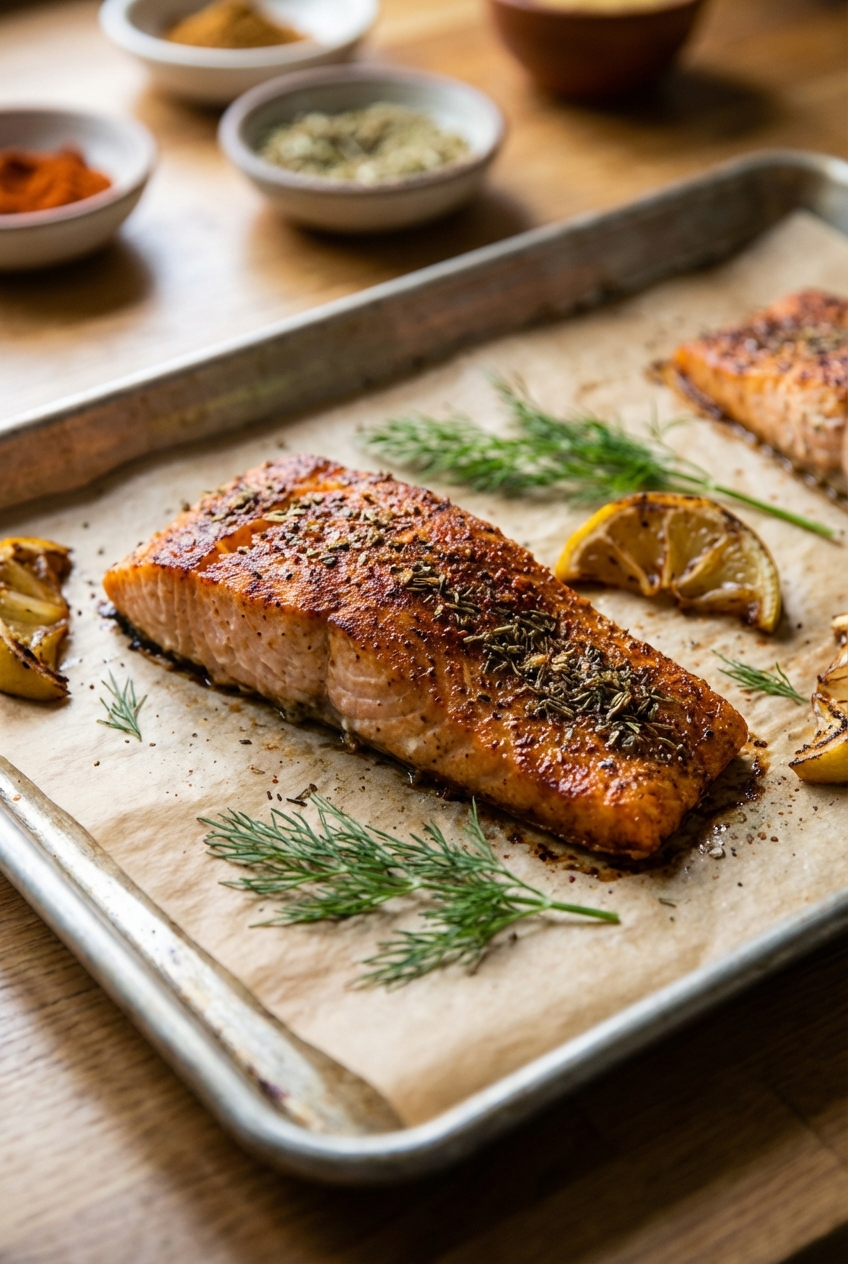
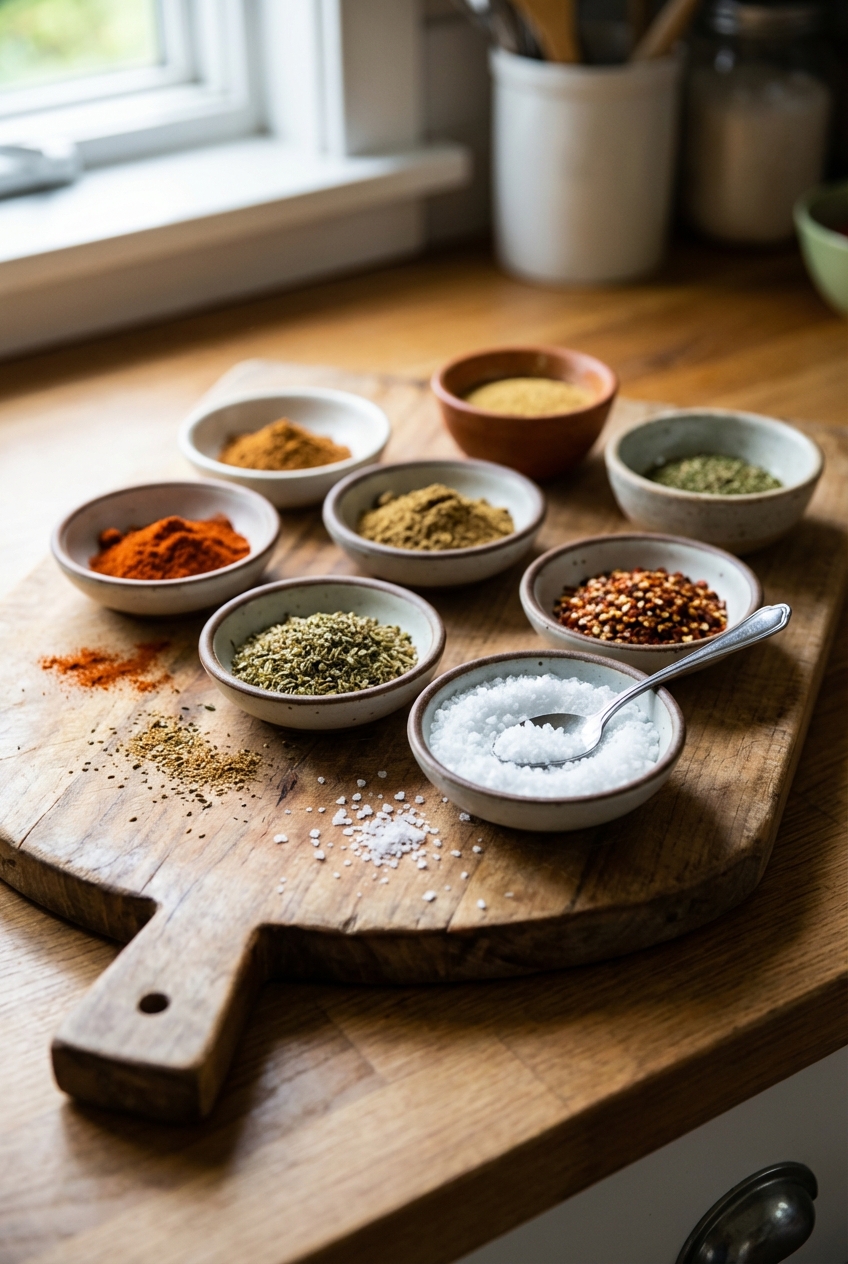
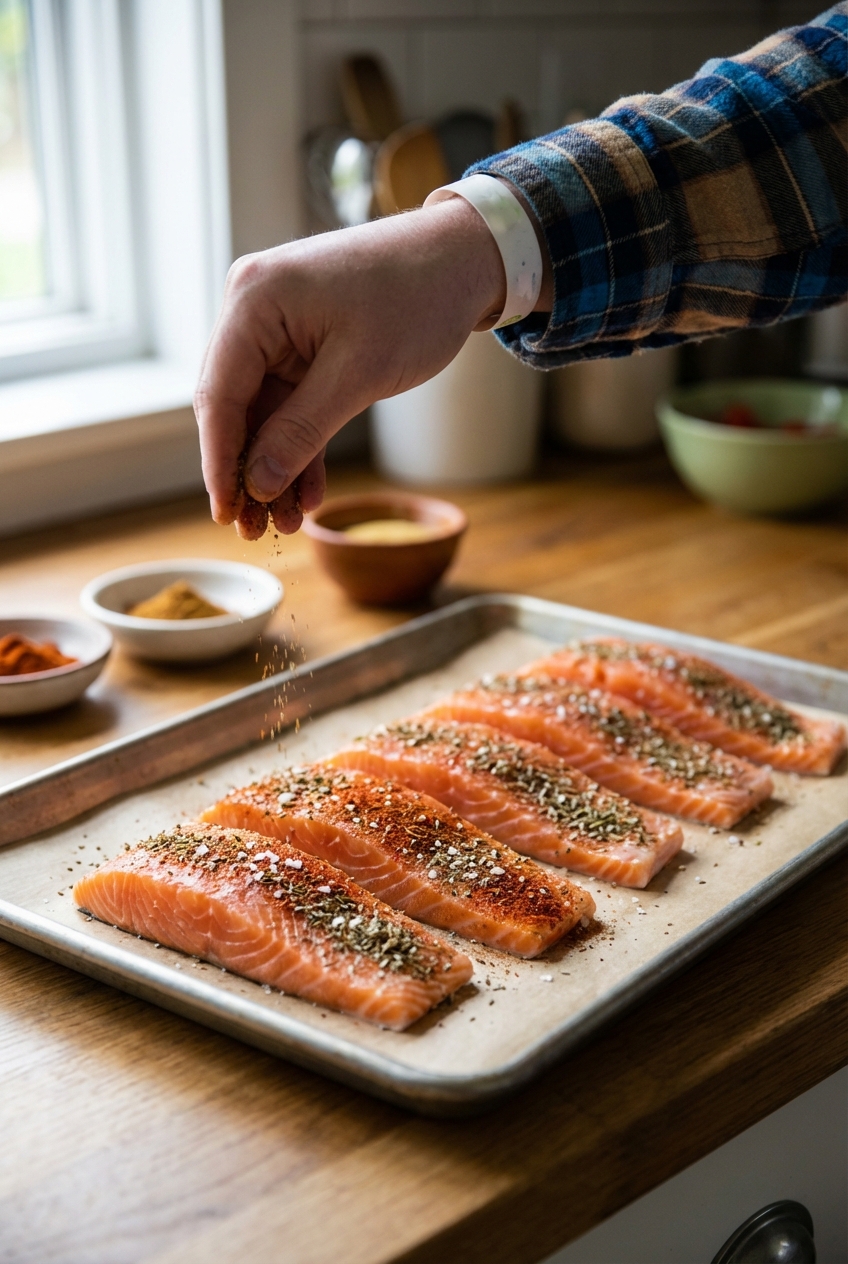
A good starting point is 1 to 1 1/2 teaspoons per 6-ounce fillet. If your salmon is thicker or you love a bolder crust, go closer to 2 teaspoons. The key is an even coat, not a sand dune.
Do I need to add salt separately?
Nope. This blend includes salt. If you are watching sodium, reduce the salt in the mix to 1 teaspoon and finish with a squeeze of lemon for extra pop.
Can I use this on frozen salmon?
Yes, but for best results, thaw first and pat dry. If you cook from frozen, add seasoning after the first few minutes of cooking once the surface is no longer icy and wet, then continue cooking.
Is brown sugar necessary?
It is the secret to that subtle sweet-savory crust. You can swap in coconut sugar, or use 1 teaspoon honey brushed on the salmon before seasoning. If you skip sweet entirely, the blend will still be tasty, just less caramelized.
What is the best cooking method for this blend?
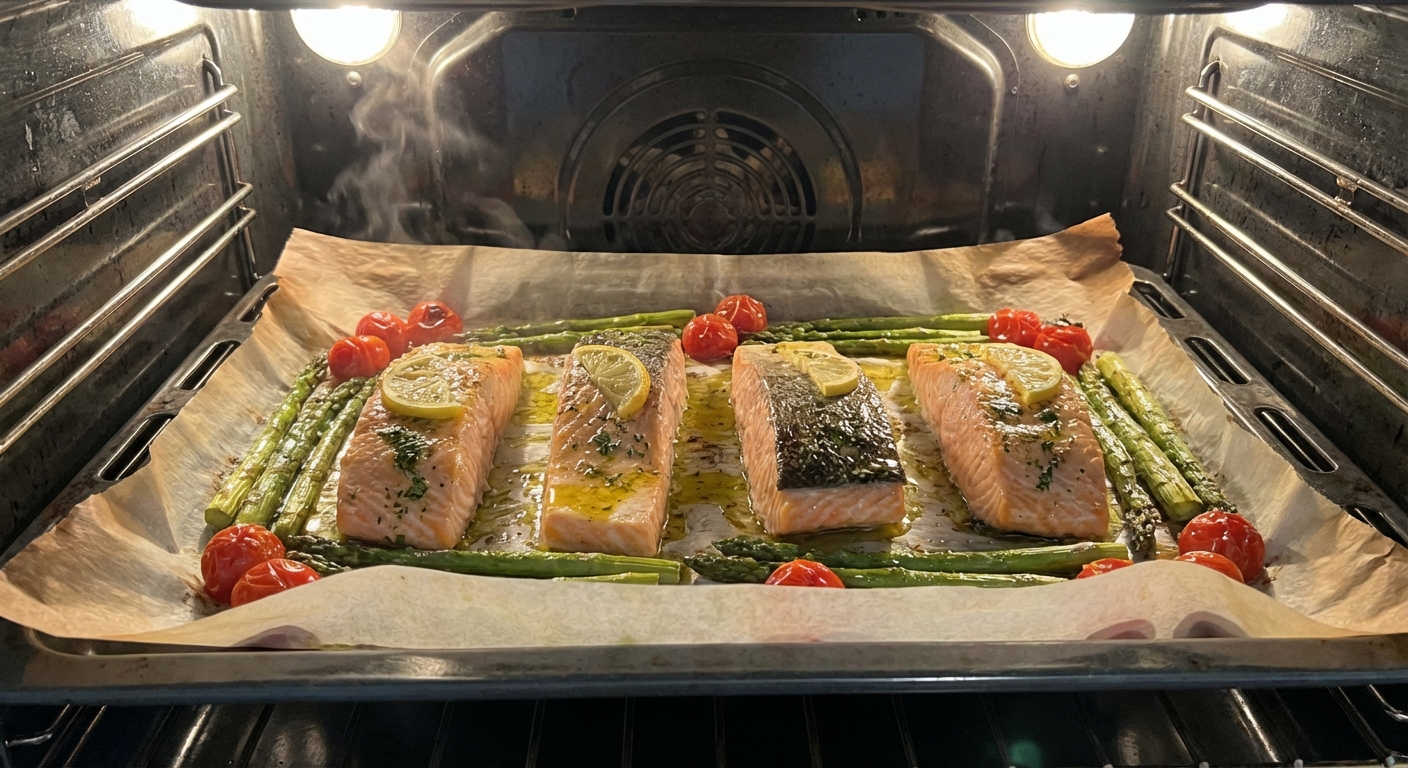
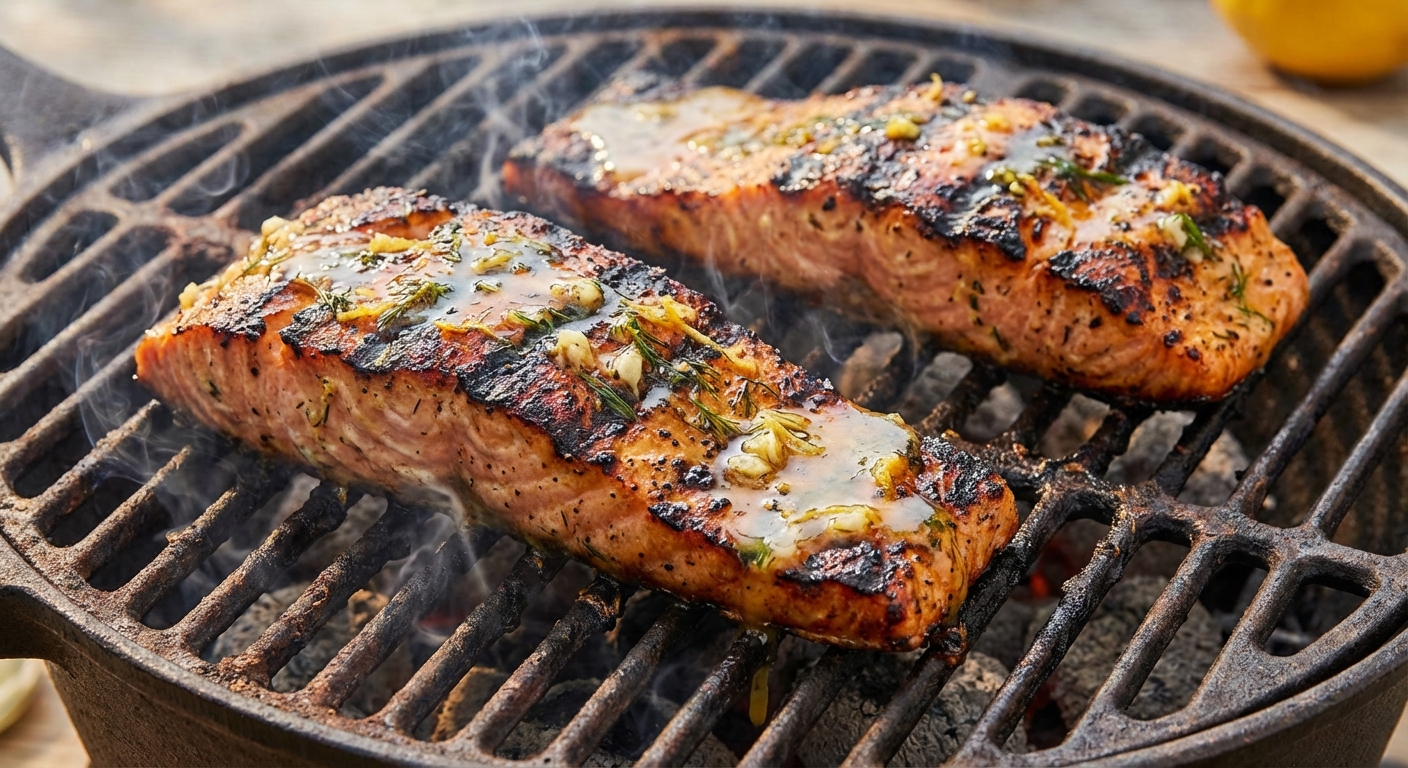
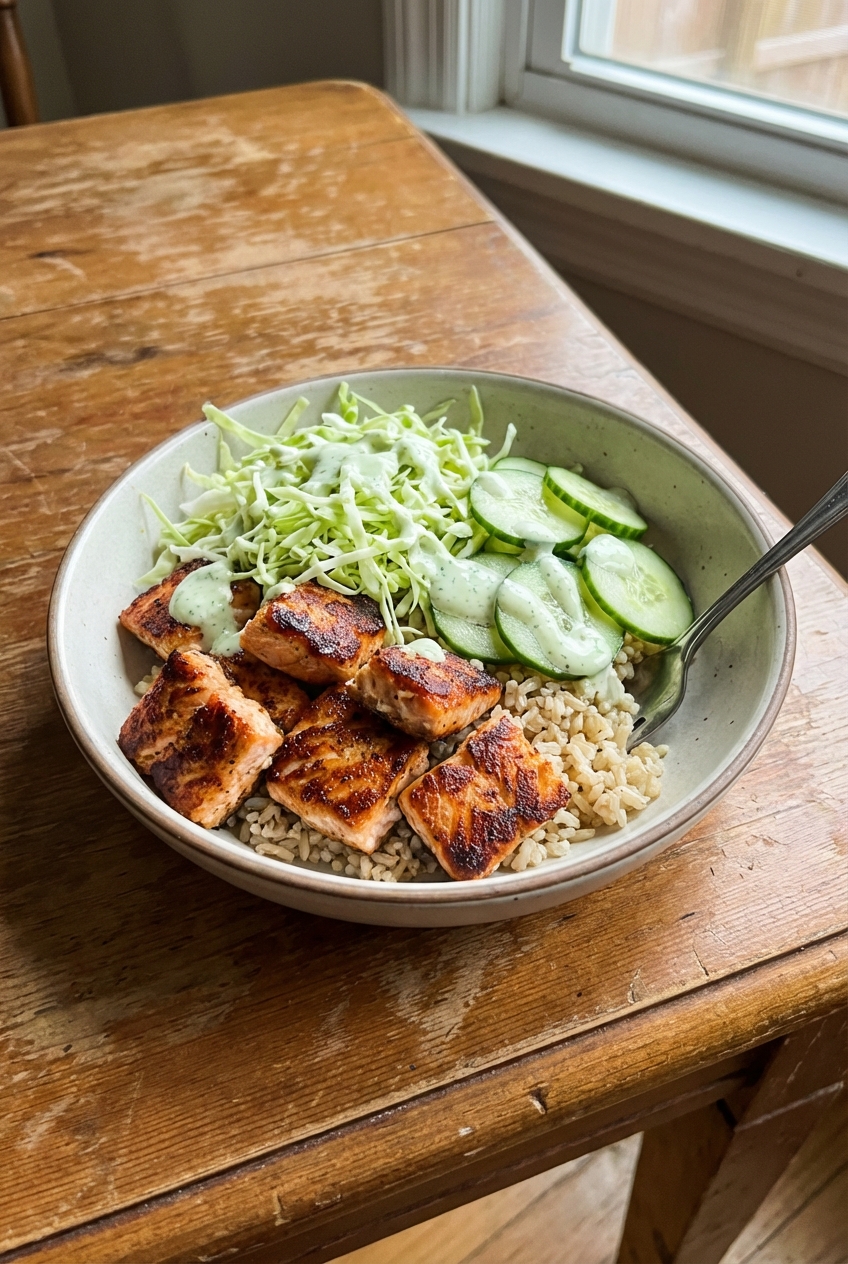
For low drama, bake at 425°F until just cooked through. For max crisp edges, use a hot skillet or the air fryer. This blend shines anywhere you can get a little browning.
How do I know when salmon is done?
The most reliable way is an instant-read thermometer. Aim for 125°F to 130°F in the thickest part for tender, medium salmon, or cook to 145°F for fully cooked (USDA guidance). Visually, it should turn opaque and flake easily with a fork.
Can I use this blend on other fish or chicken?
Absolutely. It is great on trout, cod, shrimp, chicken thighs, and even roasted potatoes. If using on very lean fish like cod, add a bit more oil or butter to keep it juicy.