How much salt should I add to pasta water?
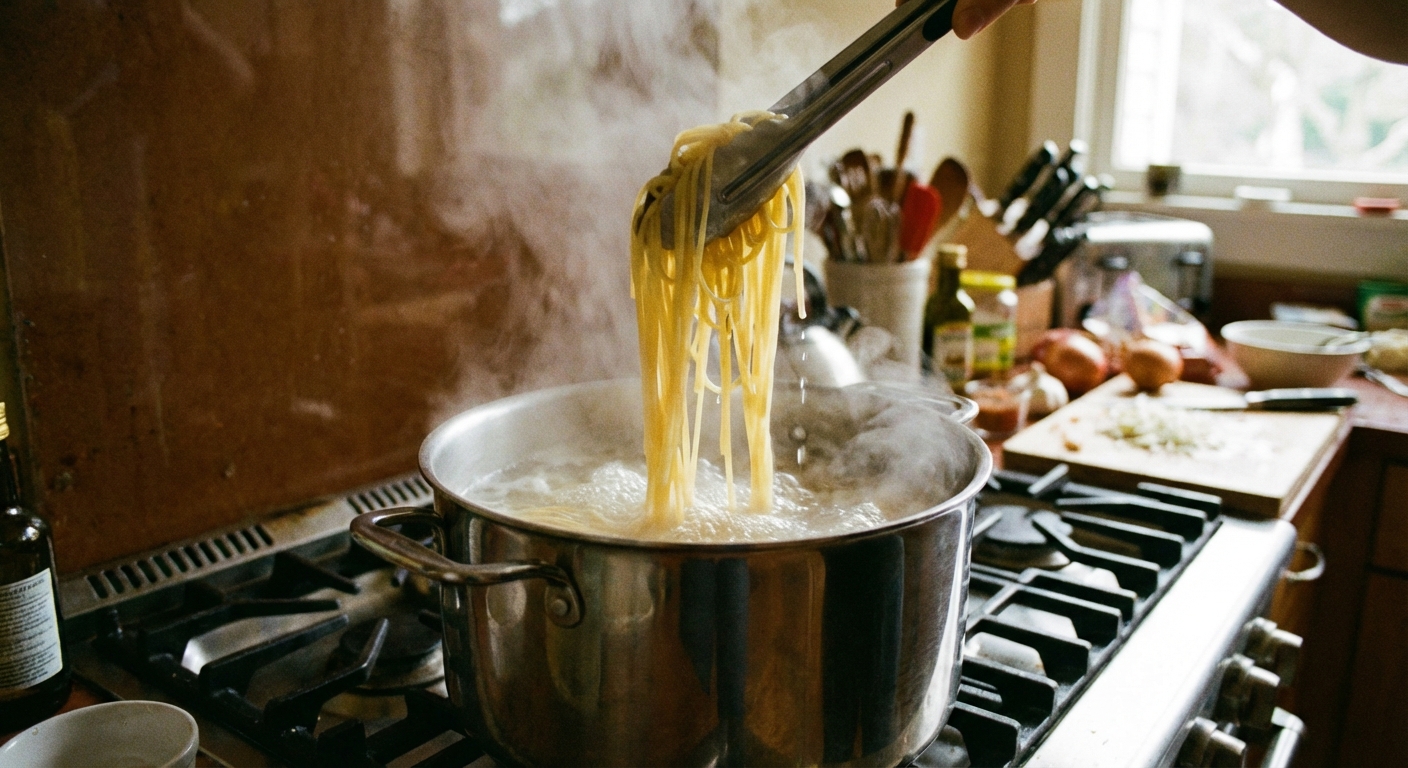
Use this as a solid starting point: 1 tablespoon kosher salt per 4 quarts (16 cups) water. If you use fine table salt, start closer to 2 teaspoons. Kosher salt brands vary a lot by volume (Diamond Crystal vs Morton), so if you want to be extra consistent, aim for about 10 to 12 g salt per liter of water and adjust to taste.
The water should taste pleasantly salty, like a gentle ocean wave, not a mouthful of regret.
Do I need oil in the pasta water?
No. Oil floats, so it does not prevent sticking in a meaningful way, and it can make sauce slide off later. Your best anti-stick tools are enough water, a full boil, and stirring during the first 1 to 2 minutes.
Should I rinse spaghetti after draining?
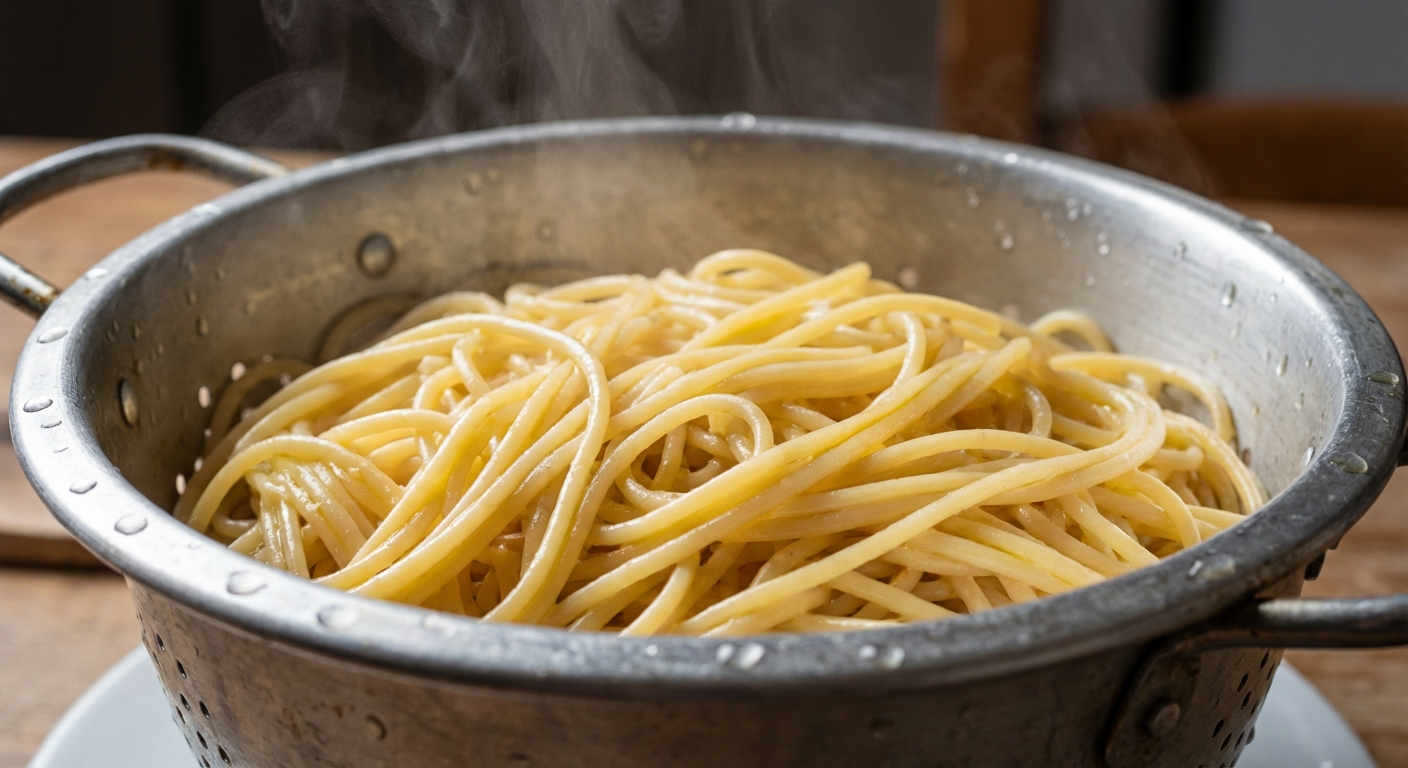
Not for hot pasta dishes. Rinsing washes off starch that helps sauce cling. The only time I rinse is for cold pasta salad or if I need to stop cooking immediately for a chilled prep.
How do I know when spaghetti is al dente?
Start tasting 2 minutes before the package time. Al dente means tender but still has a tiny bite in the center. If you bite into a strand and see a faint white core in the middle, you are close. If it tastes chalky, give it another 30 seconds and test again.
Why save pasta water?
It is salty and starchy, which makes it perfect for loosening sauce while also helping it emulsify into something silky. Add it a splash at a time in the pan with your sauce and pasta.
How much spaghetti per person?
For a main dish: 2 to 3 ounces (56 to 85 g) dry spaghetti per person. If pasta is a side, aim for 1.5 to 2 ounces. If your household treats pasta like a sport, you already know which end of that range you live on.
Why 12 ounces of spaghetti?
Because it fits the 4-serving math nicely. It is also about 3/4 of a standard 1 lb (16 oz) box. If you want to cook the whole box, scroll to the ingredient note below for an easy scale-up.