Mom's Best Recipes
Recipe

Perfectly Cooked Sausage Links

No split casings, no raw centers, no sad gray links. This foolproof stovetop method steams then sears for juicy sausages with snappy, browned edges.

Author By Matt Campbell
4.9
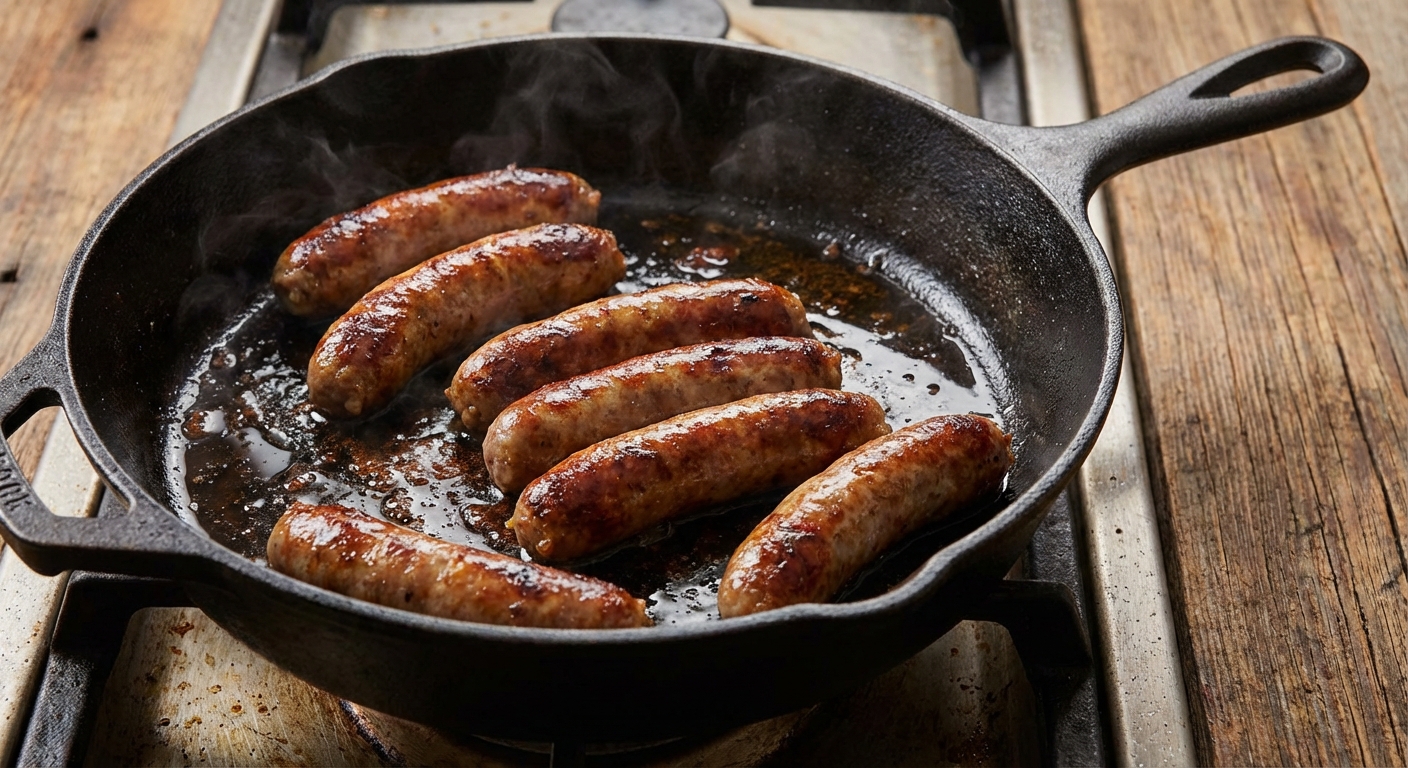
A cast iron skillet with browned sausage links, glistening with a crisp sear, with a small pool of pan juices

Sausage links are one of those weeknight miracles until they are not. One minute you are dreaming of crisp, browned edges and a juicy bite. The next, your links are split open like they saw a ghost, the outside is dark, and the inside is still pink in the center and suspicious. This recipe fixes all of that with a simple two-step plan: a quick steam to cook them gently, then a hot sear to make them irresistible.

It works for fresh raw sausages like Italian, bratwurst, chicken sausage, or even those fancy herb ones you bought on impulse. It also plays nice with different pans and different levels of kitchen energy. You will end up with evenly cooked links that stay plump, browned, and ready to star in sandwiches, pasta, breakfast plates, or straight from the pan while you pretend you are “just tasting.”

Quick safety note: Treat raw sausage like any raw meat. Do not rinse it, and wash hands, boards, and utensils after handling.
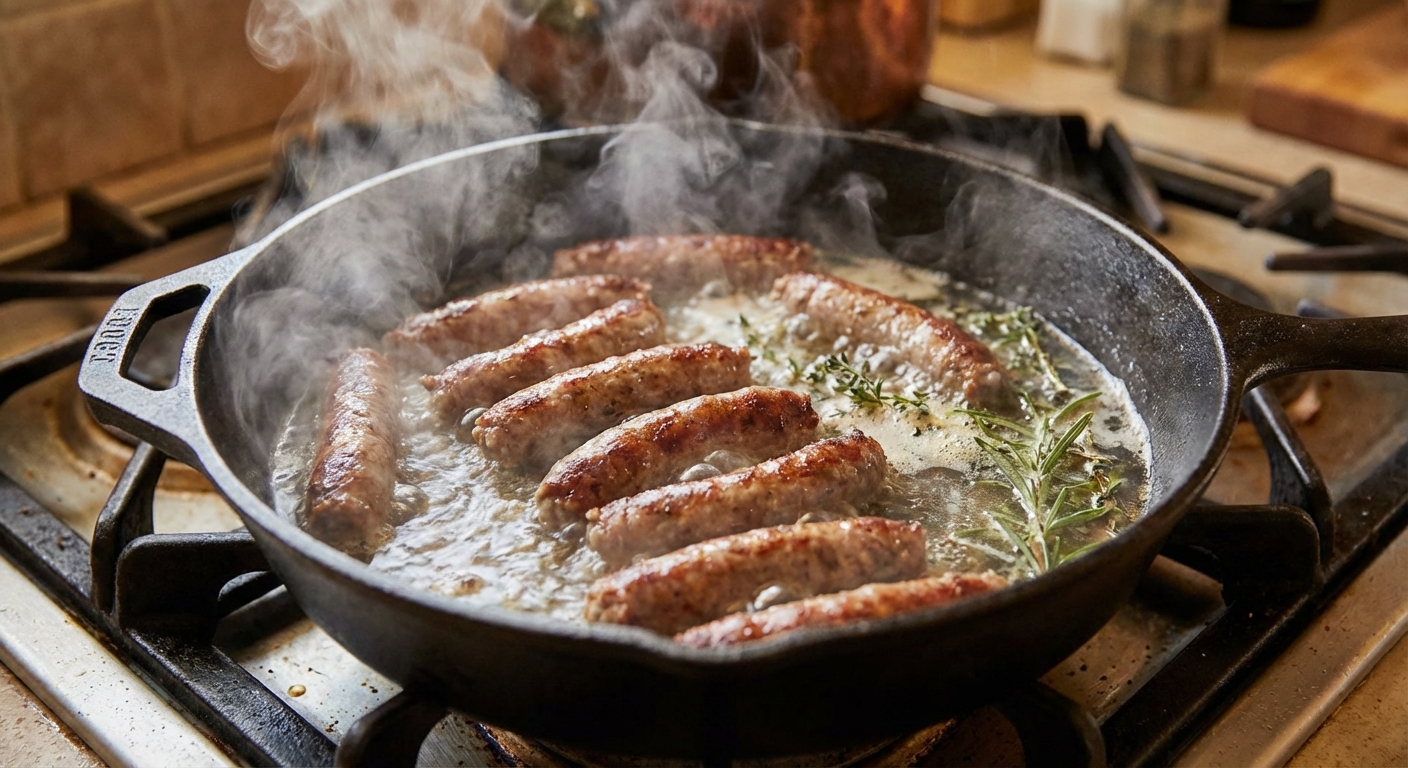
A skillet with sausage links simmering in a shallow layer of water as steam rises

Why It Works

  • Steam first, sear second: simmering in a little water cooks the sausage through gently to help prevent the casing from bursting, then searing builds color and flavor fast.
  • Juicy by design: the gentle cook helps prevent moisture loss, so you get a succulent interior instead of a dry, tight one.
  • Works with most fresh links: pork, chicken, turkey, mild or spicy, bratwurst or Italian. If it is raw in a casing, this method is your friend.
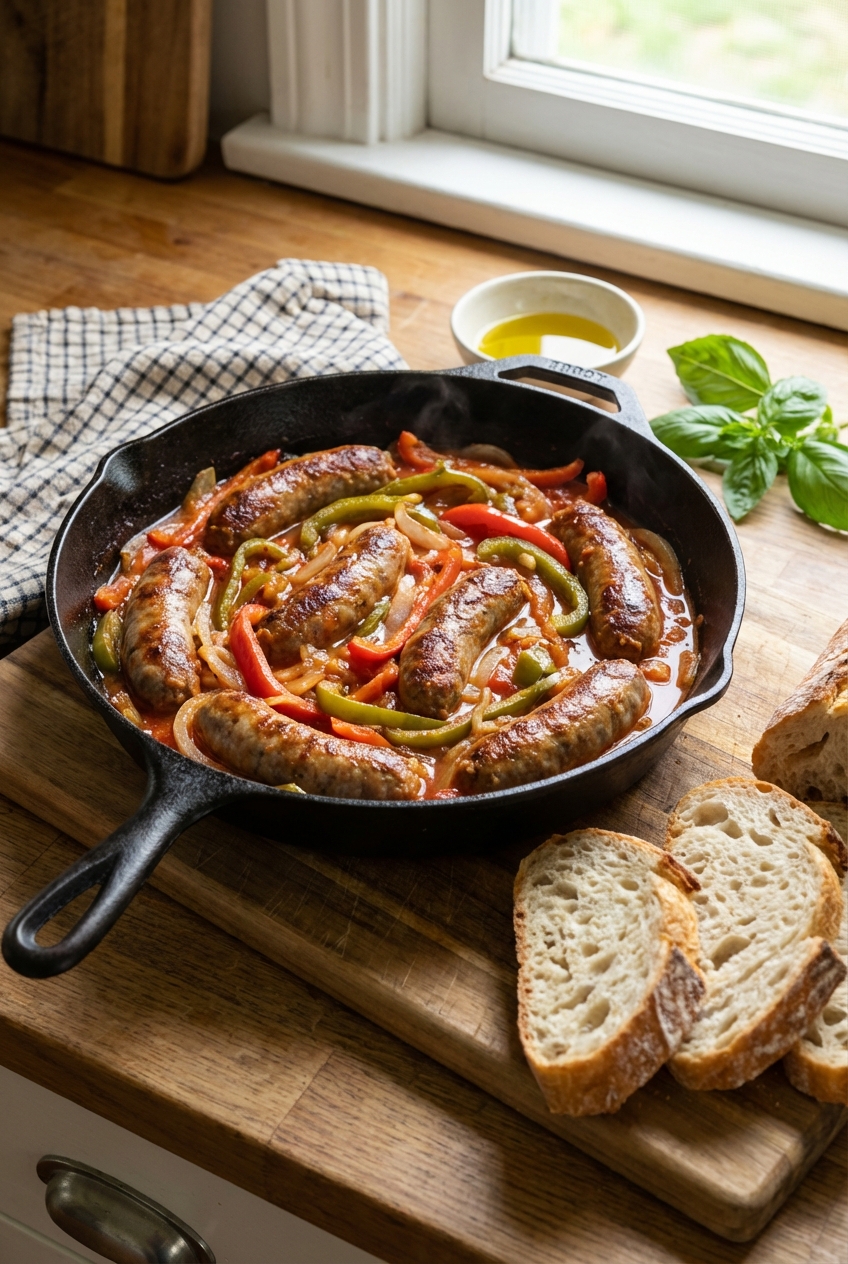
  • Built-in pan sauce options: once the sausages are done, you have flavorful browned bits ready for onions, peppers, mustard sauce, or a splash of wine.

Storage Tips

Refrigerate

Cool sausages to room temp, then store in an airtight container for up to 4 days.

Freeze

Freeze cooked links on a sheet pan until firm, then transfer to a freezer bag. They keep well for 2 to 3 months.

Reheat without drying them out

  • Skillet (best): add a splash of water, cover, and warm over medium-low for 4 to 6 minutes. Uncover and crisp for 1 to 2 minutes.
  • Oven: 350°F for 10 to 15 minutes, covered loosely with foil.
  • Microwave: works in a pinch. Add a damp paper towel over the links and heat in short bursts.

Midnight leftovers move: slice, crisp in a pan, then toss with whatever cooked veg you have and a fried egg. It is brunch energy with zero planning.

Common Questions

How do I know sausage is fully cooked?

The safest way is an instant-read thermometer. Fresh sausage is done at 160°F for pork and beef, and 165°F for poultry sausages. Insert the probe into the center of the thickest link without touching the pan. If your package directions differ, follow those.

Why did my sausage split?

Usually heat was too high too early, which makes the casing tighten before the inside is cooked. This method starts gently with steam, then finishes with a controlled sear to help prevent blowouts. That said, casing type and how tightly the links are stuffed can still cause an occasional split.

Can I cook sausage links from frozen?

Yes, but expect extra time, especially for thicker brats. Start with a longer covered simmer, about 12 to 15 minutes, then sear. Check doneness with a thermometer before serving. For best texture, thaw overnight in the fridge.

Do I need oil in the pan?

Often no, especially for pork sausage, since it renders its own fat. If you are using very lean chicken or turkey links, a small amount of oil helps browning.

What about fully cooked sausages?

For pre-cooked links, skip the steaming. Brown them over medium heat with a little oil (or a splash of water), turning often, until heated through, about 6 to 8 minutes depending on thickness. If you want to be extra sure, use a thermometer and follow package directions.

Can I do this on a grill?

Yes. Grill gently over indirect heat first until nearly done, then finish over direct heat for color. Think “slow then hot,” same idea as steam then sear.

I used to cook sausage links with the confidence of someone who has never been humbled by a split casing. I would crank the heat, walk away for one tiny chore, and come back to sausages that looked like they had tried to escape their own skins. Then I learned the steam then sear trick and suddenly my sausages stayed plump, juicy, and politely intact. Now it is my go-to move when dinner needs to feel like I tried, even if I absolutely did not.