Common Questions
What is the best brine ratio for refrigerator pickled pepperoncini?
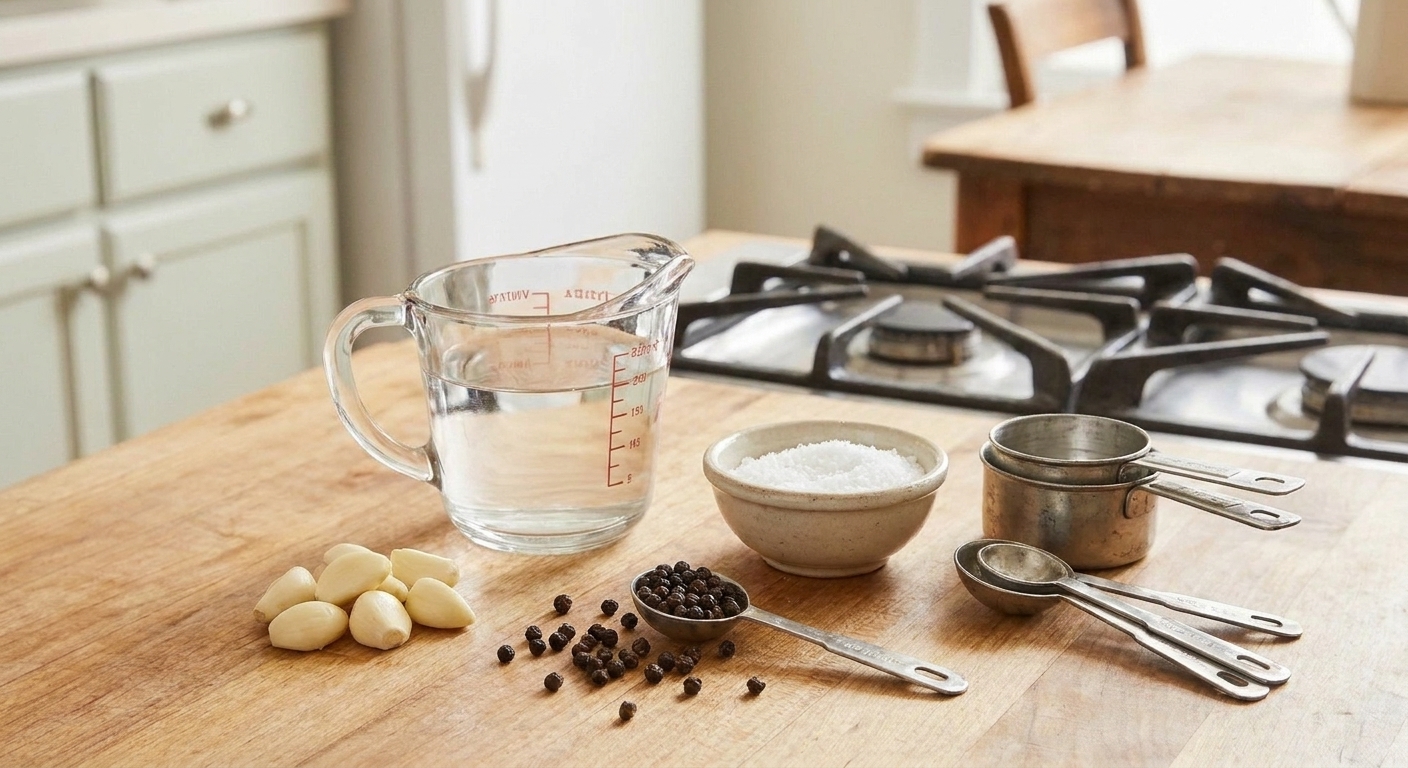
A reliable, punchy ratio is 1:1 vinegar to water, plus salt and a little sugar. For this recipe, that is 1 cup distilled white vinegar and 1 cup water, with 1 tablespoon kosher salt and 1 tablespoon sugar. It lands in the classic pepperoncini neighborhood: tangy, bright, and not harsh.
How much salt should I use if my kosher salt brand differs?
Kosher salt crystal sizes vary a lot, so the most consistent way is to measure by weight. Use 15 grams kosher salt for this batch. (That is about 1 tablespoon Diamond Crystal or about 2 teaspoons Morton.)
Do I need to boil the brine?
You do not have to, but I recommend a quick simmer. Warming the brine helps the salt and sugar dissolve and wakes up the garlic and spices. Let it cool for a few minutes so you do not pour boiling liquid into a cold jar.
How long before pickled pepperoncini taste ready?
They are pleasantly tangy after about 24 hours in the fridge, but the flavor really settles in at 48 to 72 hours. If you like a stronger pickle bite, give them 5 to 7 days.
Should I slice the pepperoncini or leave them whole?
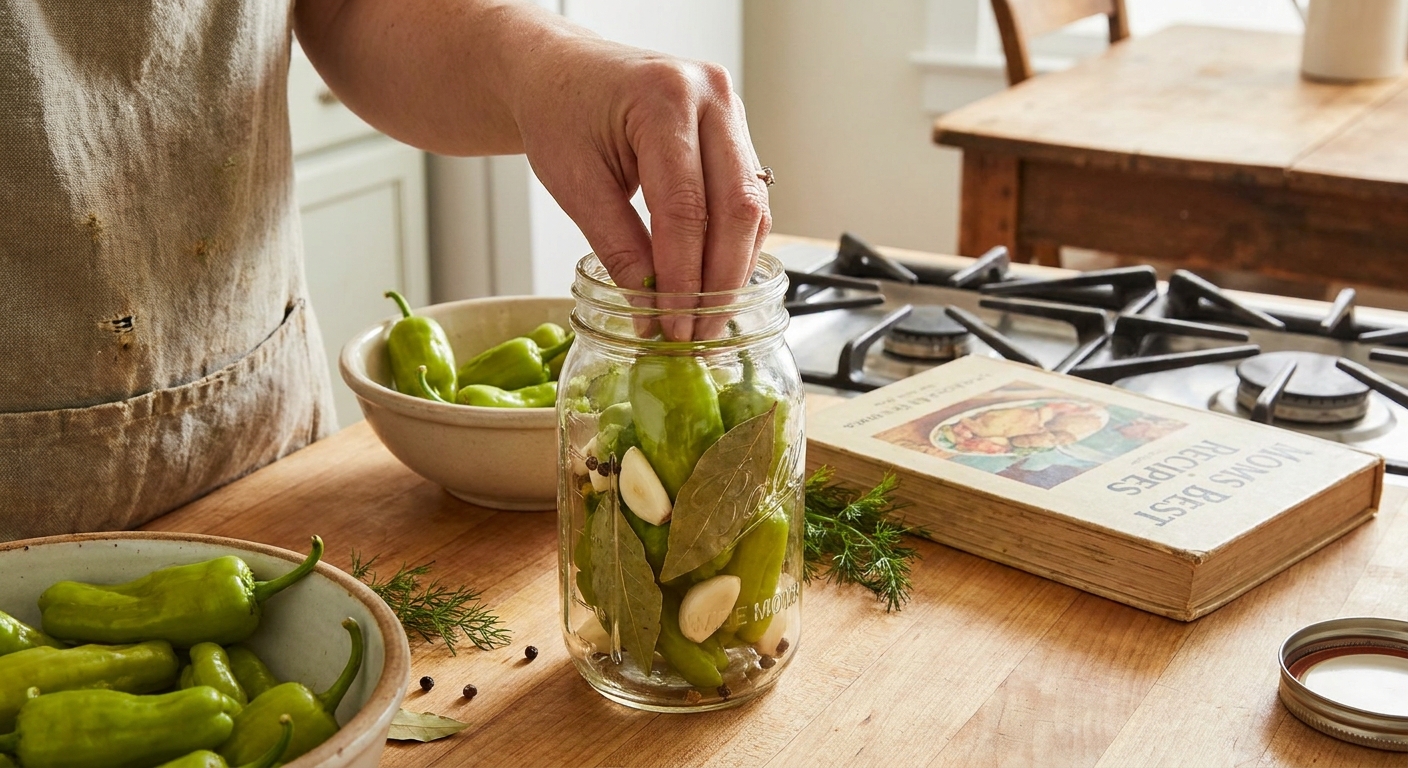
Either works. Whole peppers stay a bit crunchier and look cute in the jar. Sliced peppers pickle faster and are easier for topping pizza, sandwiches, and salads. If you slice, consider using gloves if you have sensitive skin, and wash your hands and cutting board well afterward.
Can I reuse the brine?
For best quality, I treat the brine as one-and-done. You can add a few fresh peppers to the jar once, but the brine gets diluted and the flavor fades. If anything looks cloudy, smells off, or feels slimy, it is time to toss it.
Do these taste like store-bought jarred pepperoncini?
They are very close: tangy and garlicky. Some store-bought versions have added preservatives and a slightly different vinegar blend. Homemade tends to taste brighter, especially in the first week.
Can I swap the vinegar?
Yes. Distilled white vinegar gives the most classic deli-style tang, but you can use white wine vinegar for a softer bite or apple cider vinegar for a fruitier tang. For safe, predictable results, stick with vinegar labeled 5% acidity.