Mom's Best Recipes
Recipe

Pineapple Stuffing

A classic sweet and savory baked stuffing made with bread cubes, crushed pineapple, butter, eggs, and a warm pinch of cinnamon.

Author By Matt Campbell
4.8
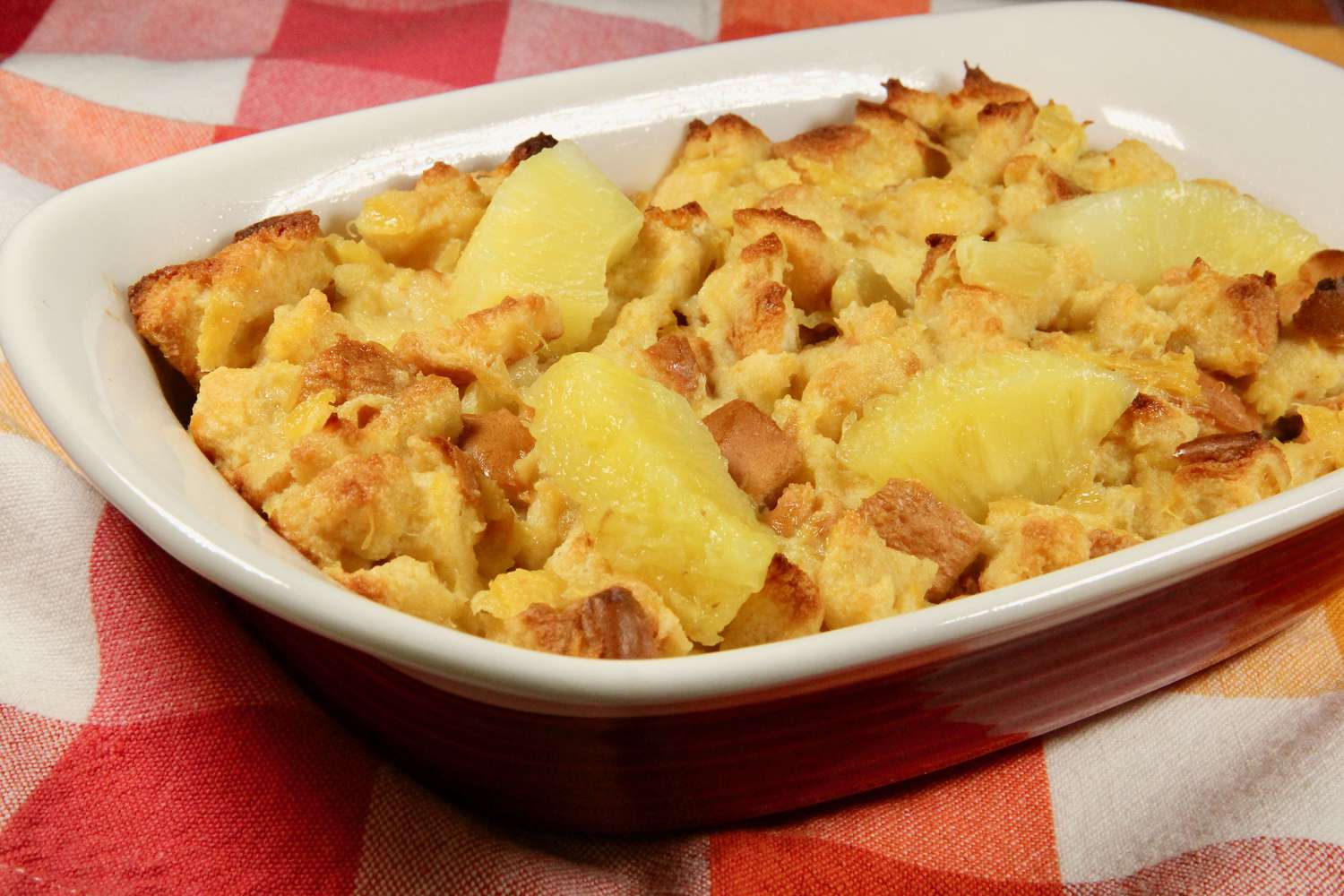
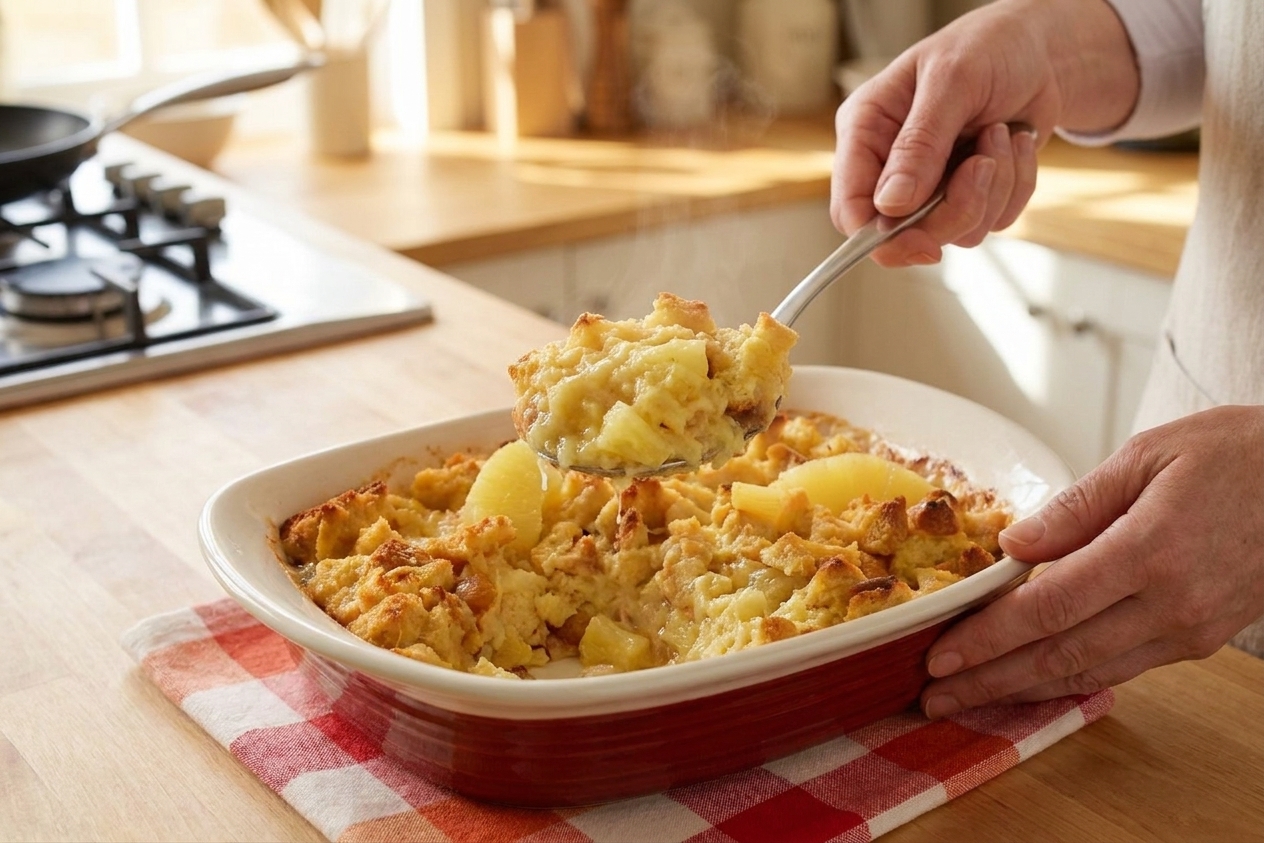
A golden-brown pineapple stuffing baked in a glass casserole dish on a wooden table, with lightly crisp edges and a soft, custardy center

Pineapple stuffing is one of those side dishes that makes people do a double take. Stuffing with fruit? Trust me, it works. You get buttery bread, a custardy middle, and little pops of tangy sweetness that play surprisingly well with savory mains.

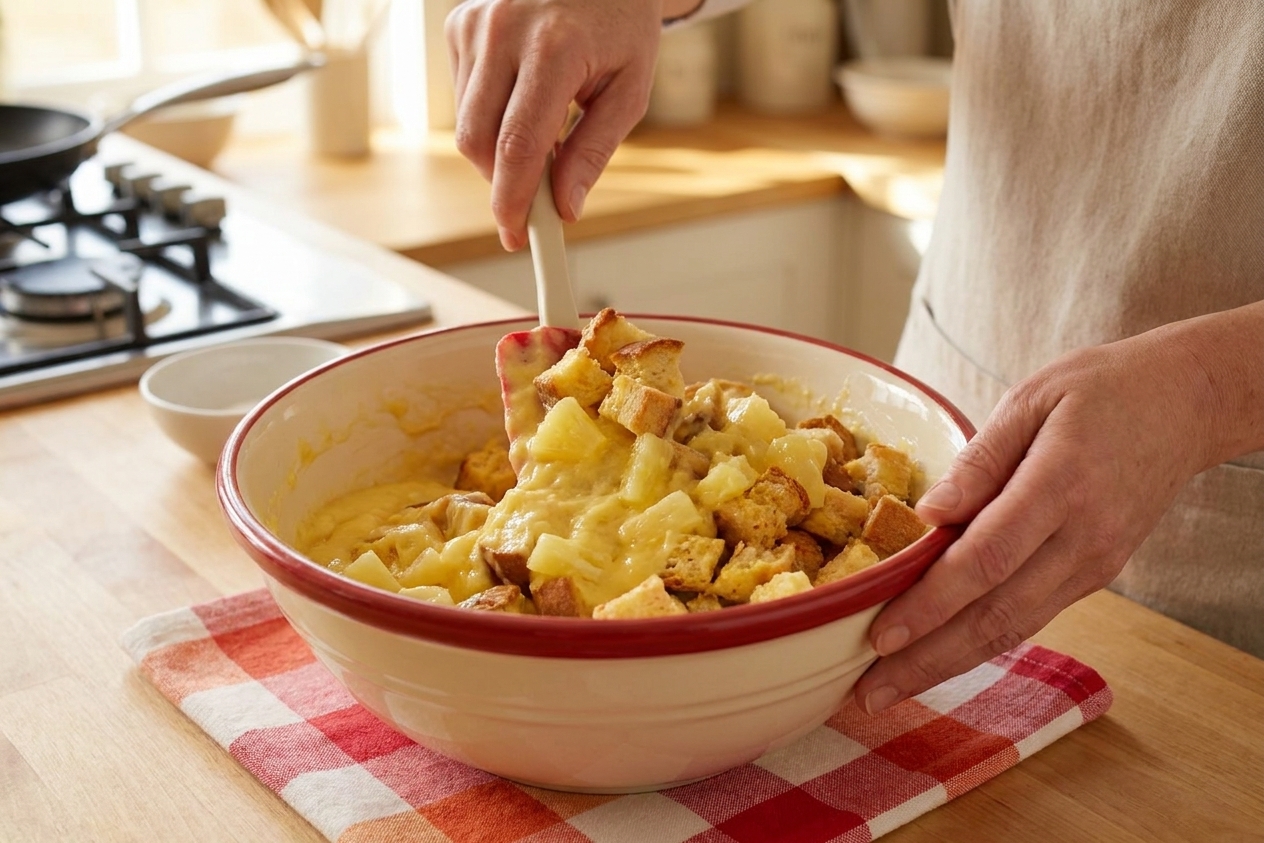
This version keeps it classic and accessible: crushed pineapple, soft bread cubes, eggs to set everything into a cozy bake, and just enough cinnamon to make the whole kitchen smell like a holiday memory. It is low drama, crowd-friendly, and the leftovers are straight-up dangerous because you will absolutely “just take a forkful” every time you open the fridge.

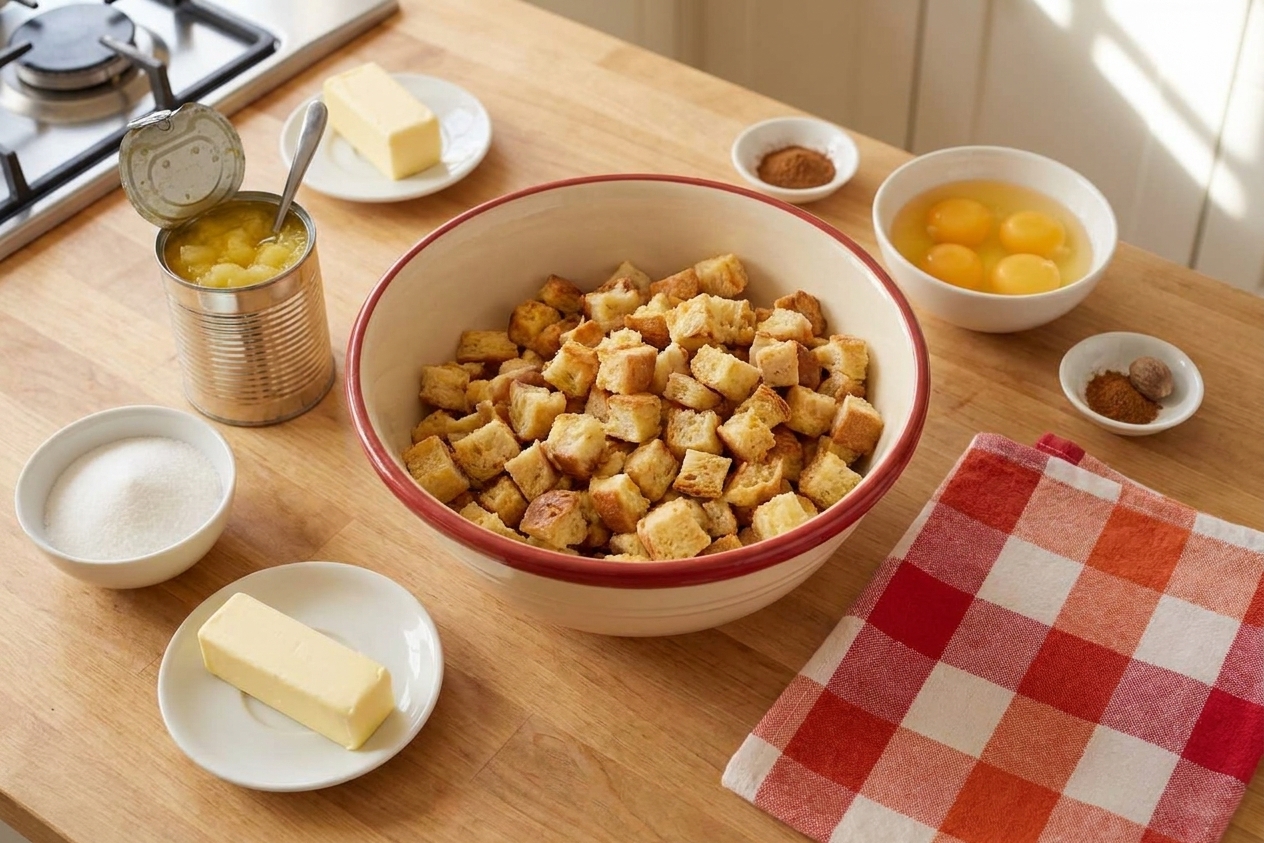
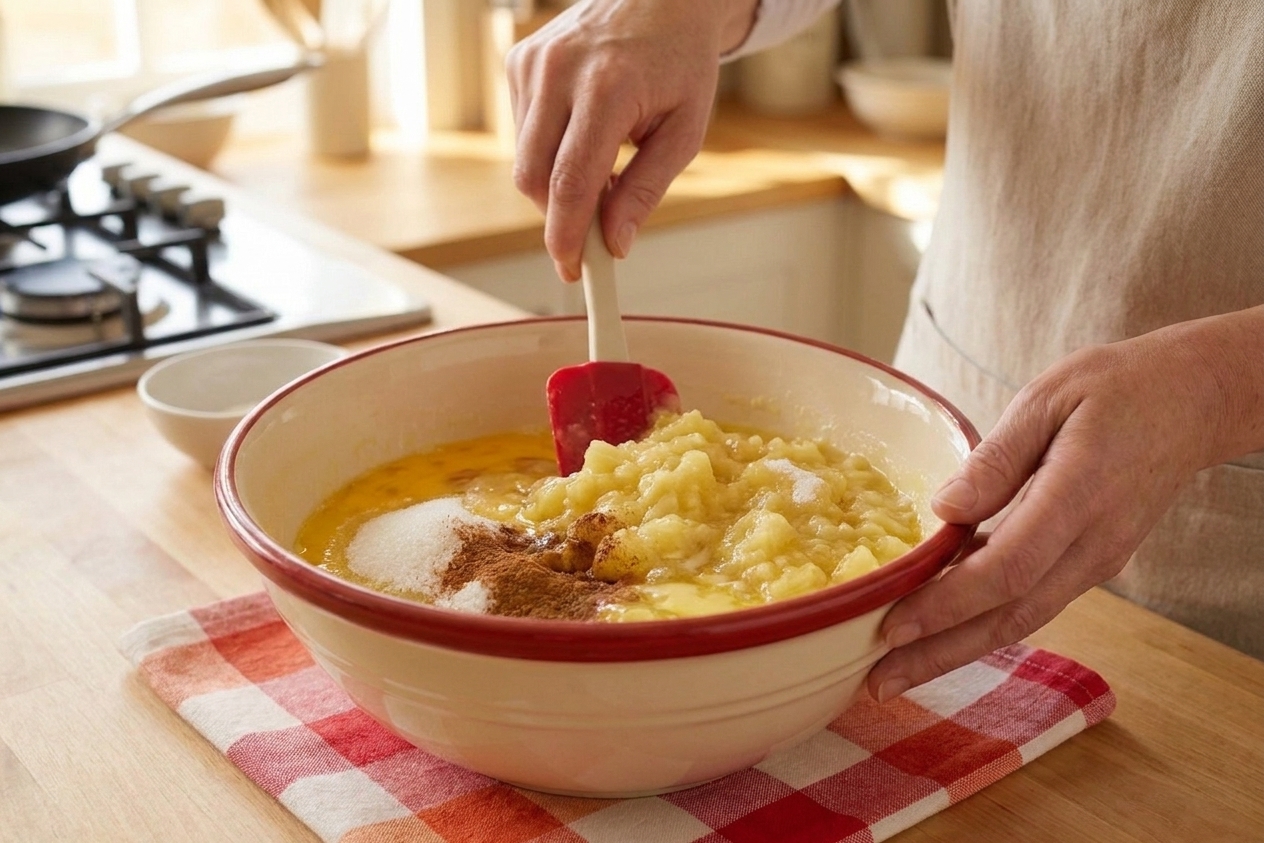
A kitchen counter with a bowl of bread cubes, a can of crushed pineapple, eggs, sugar, butter, and spices laid out for pineapple stuffing prep

Why It Works

  • Sweet-savory balance: Crushed pineapple brings bright acidity and sweetness, while buttery bread keeps it grounded and rich.
  • Crisp edges, soft center: Baking in a casserole gives you those golden corners with a custardy, spoonable middle.
  • No fancy bread required: Sandwich bread, challah, brioche, or leftover rolls all work great.
  • Make-ahead friendly: You can assemble it earlier, then bake when you are ready to eat.

Pairs Well With

Storage Tips

Refrigerate: Let the stuffing cool, then cover tightly or transfer to an airtight container. Store in the fridge for up to 4 days.

Reheat: For the best texture, reheat in a 350°F oven, covered with foil, for 15 to 20 minutes until hot. Uncover for the last 5 minutes to bring back the crisp edges. Microwave works for quick portions, but the edges will soften.

Freeze: Wrap tightly and freeze for up to 2 months. Thaw overnight in the fridge, then reheat covered at 350°F until warmed through. Expect the texture to be a bit softer after freezing, but still very snackable.

Common Questions

Is pineapple stuffing a dessert or a side dish?

It is a side dish, even though it leans sweet. Think of it like sweet potato casserole energy: it belongs right next to savory holiday food and somehow makes everything taste better.

Should I drain the crushed pineapple?

Lightly. You want some juice for moisture and flavor, but not so much that the casserole turns soupy. My move: drain it in a fine-mesh strainer for about 1 minute, then give it one gentle press with a spoon. You should still have a few tablespoons of juice clinging to the pineapple.

What bread works best?

Soft white sandwich bread is a common choice, but brioche or challah make it richer. If your bread is super fresh, dry the cubes in the oven for a few minutes so they soak up custard without turning gummy.

Can I make it ahead?

Yes. Assemble, cover tightly, and refrigerate up to 24 hours. Keep it cold (at or below 40°F) and bake straight from the fridge. Plan on adding 5 to 15 minutes, depending on how cold it is and how deep your dish is.

How do I know it is done?

The edges should be golden and the center should look set, not wet. A knife near the center should come out mostly clean with moist crumbs, not raw eggy custard. If you like a foolproof check, aim for about 160°F in the center.

Can I freeze pineapple stuffing?

Yes. Freeze it tightly wrapped for up to 2 months. The flavor holds great, but the texture can soften a bit after thawing. Reheat in the oven to bring back some of the crisp edges.
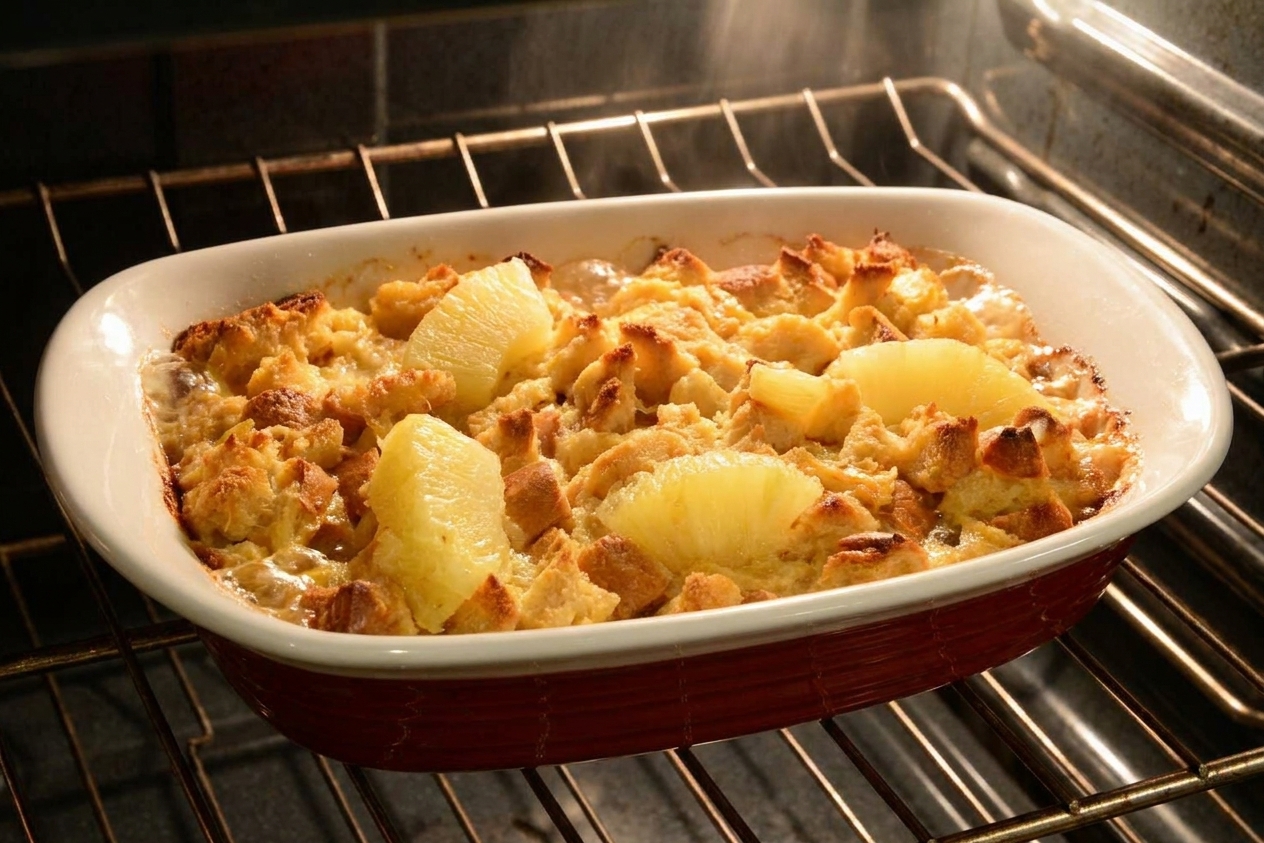

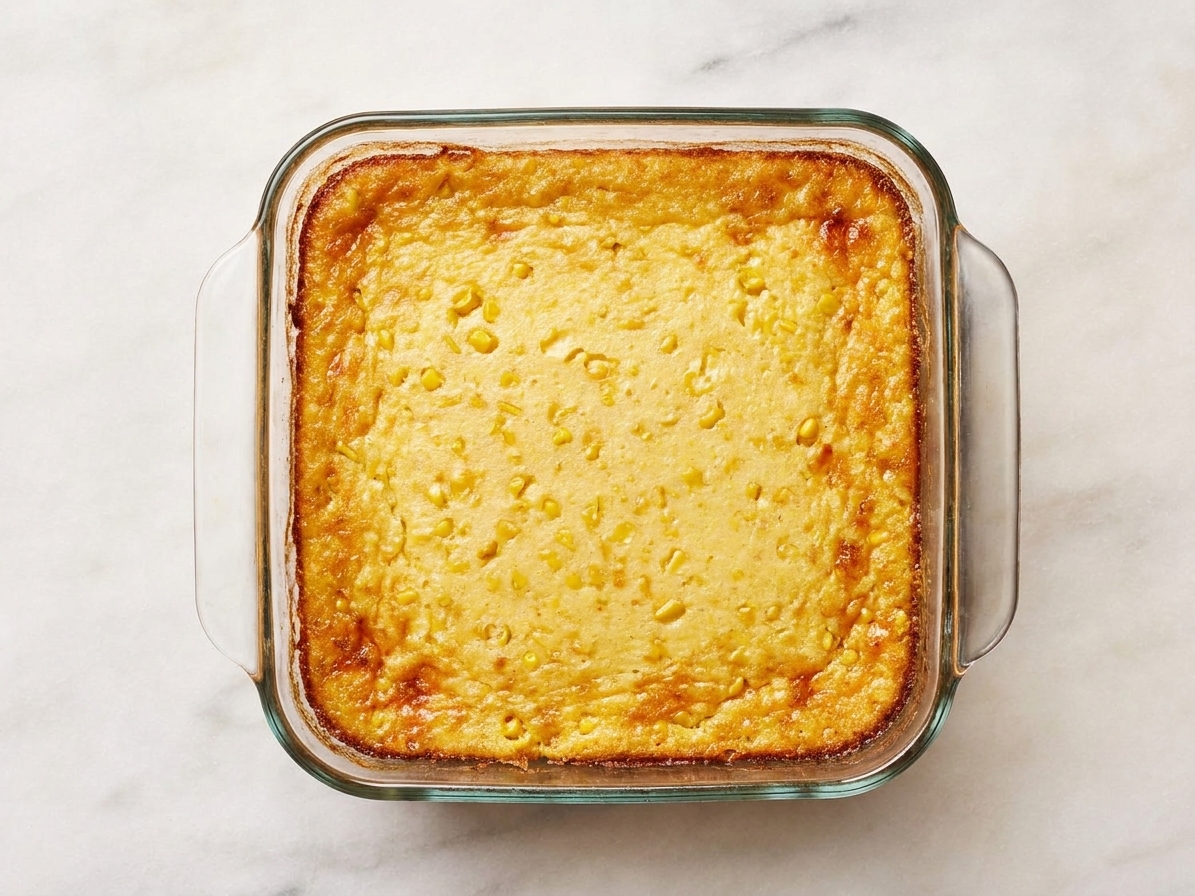
A casserole dish of pineapple stuffing on an oven rack, the top lightly browned and bubbling at the edges

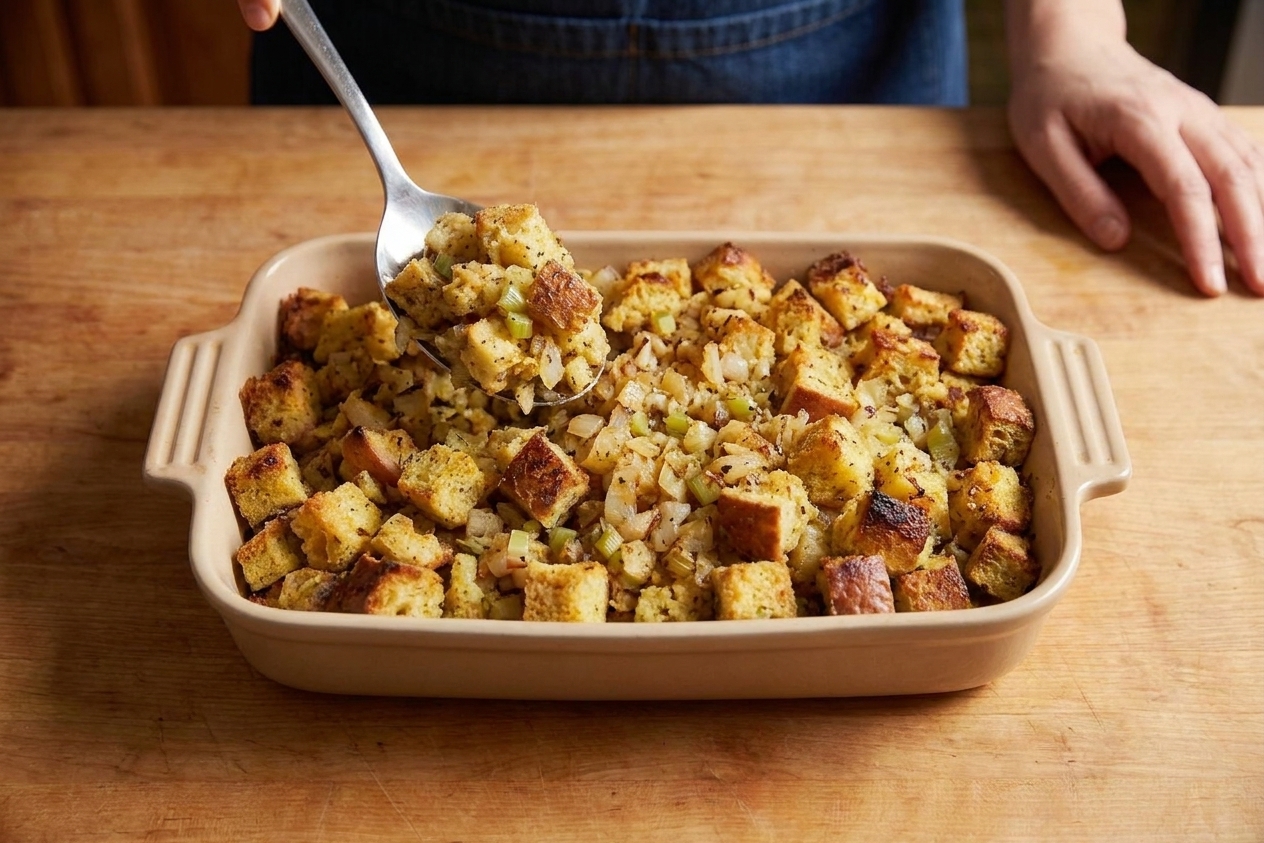
I grew up thinking stuffing was strictly savory, the kind you build from onions, celery, and sheer determination. Then I tried pineapple stuffing at a family get-together and immediately became that person hovering by the casserole with “just one more scoop.” It is cozy in the same way bread pudding is cozy, but it shows up to dinner like a side dish and does its job next to ham, turkey, or anything salty and browned. I love it because it is a little weird in the best way, and it tastes like somebody’s aunt has been quietly winning holidays for decades.