
Mom's Best Recipes
Recipe

Red Beans and Rice

Creamy, smoky, and deeply comforting red beans served over fluffy rice, made with accessible ingredients and simple, low-drama steps.

Author By Matt Campbell
4.8
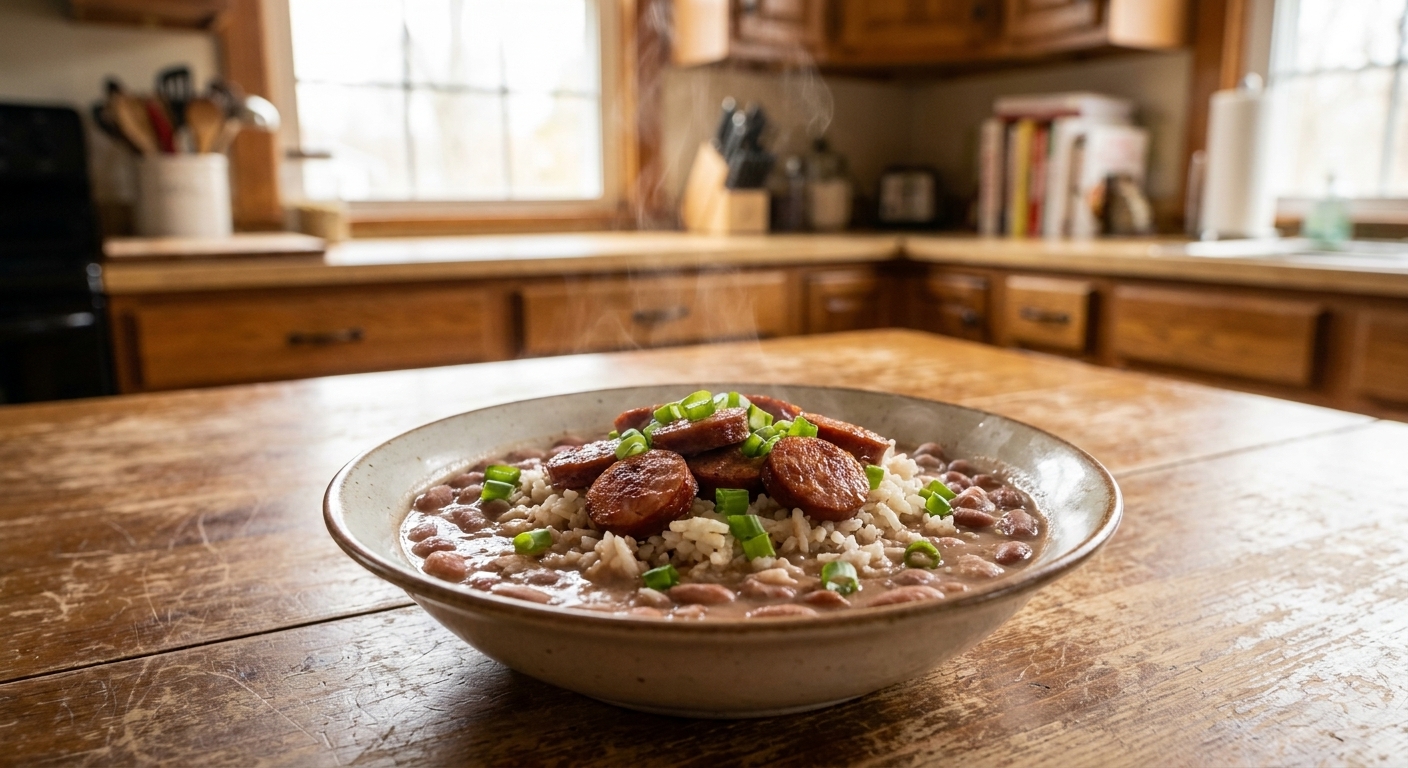
A real photograph of a warm bowl of red beans and rice with sliced smoked sausage on top, garnished with chopped green onions, sitting on a wooden table in a cozy home kitchen
Jump to Recipe

Red beans and rice is one of those dishes that feels like a kitchen hug. It is hearty, budget-friendly, and somehow tastes even better the next day. The vibe is simple: tender beans that go creamy on their own, smoky sausage for that savory backbone, and rice that soaks up every drop like it was born for this job.

This version is built for real life. You can use dried beans if you have time, or use canned beans if you need dinner to happen on a Tuesday. Either way, you are going to get a pot of cozy with crisp-edged sausage, a properly seasoned base, and that little moment when you taste the pot and think, “Okay, wow.”
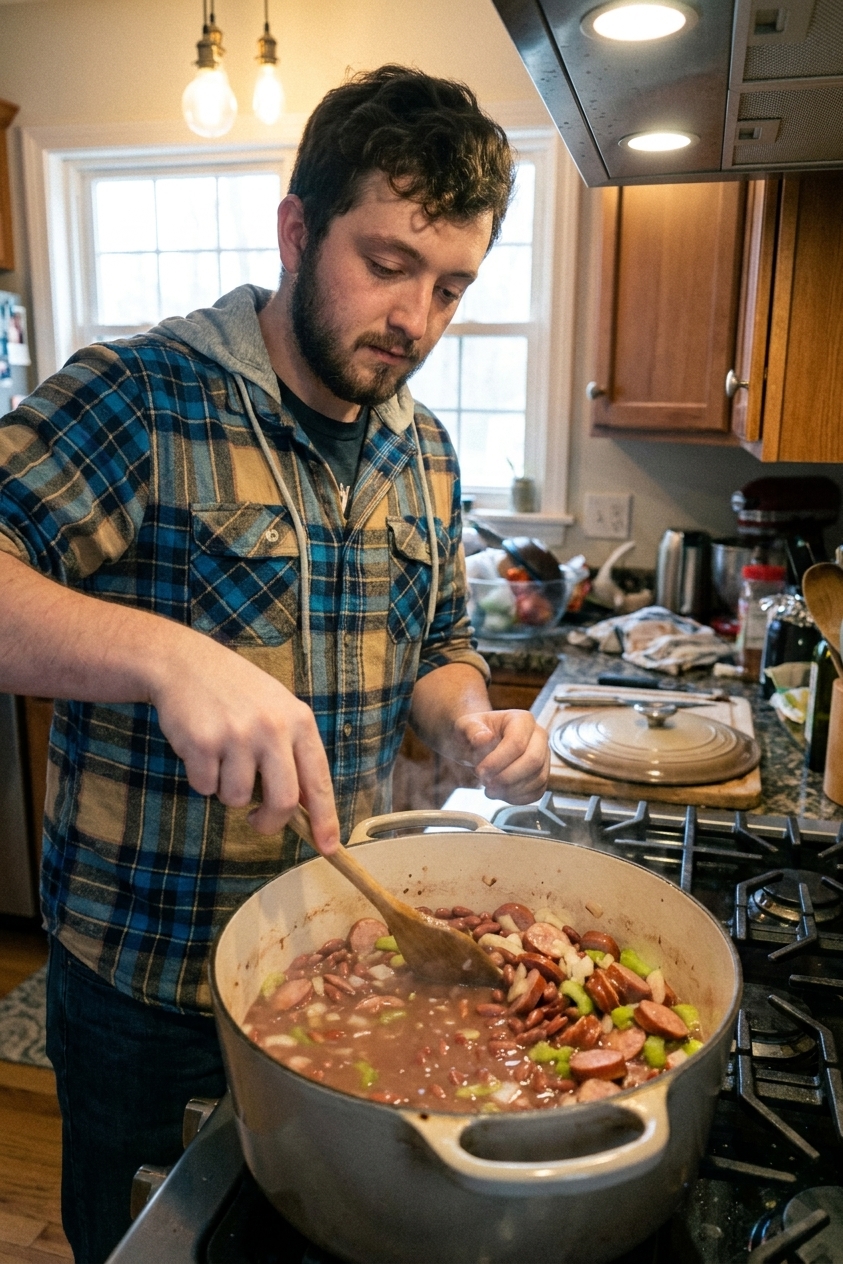
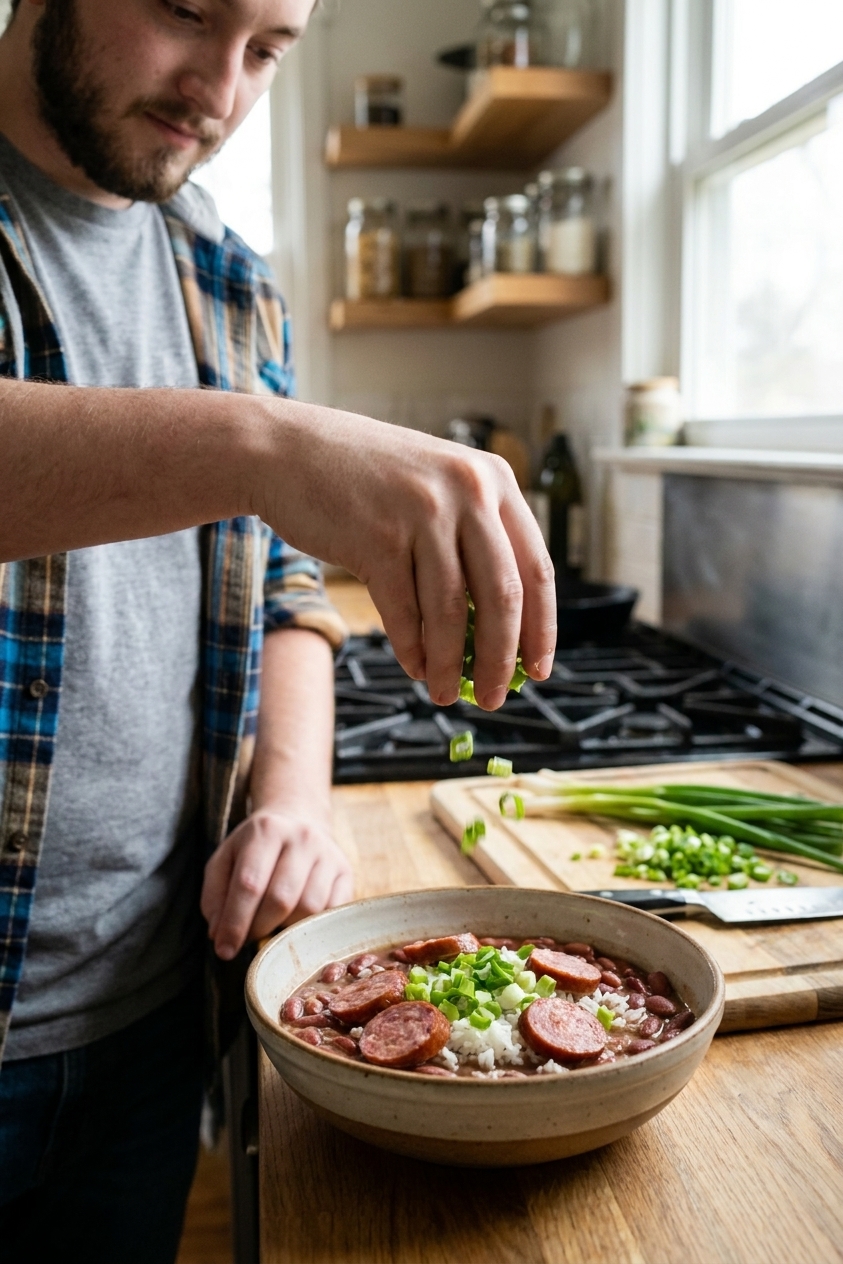
A real photograph of a Dutch oven on a stovetop with red beans simmering alongside sliced sausage and bits of onion and celery, steam rising

Why It Works

  • Big flavor from simple moves: browning the sausage first and building a classic onion, bell pepper, and celery base makes everything taste like it cooked all day.
  • Creamy beans without cream: mashing a scoop of beans thickens the pot naturally for that classic velvety texture.
  • Flexible for busy nights: instructions include both dried beans and a faster canned-bean route.
  • Leftovers are a gift: the flavors deepen overnight, which is basically free seasoning.

Pairs Well With

Storage Tips

How to Store Leftovers

Refrigerator: Store beans and rice separately if you can. Beans keep best in an airtight container for 4 to 5 days. Rice is best within 3 to 4 days.

Quick cooling tip (especially for rice): For best food safety, cool leftovers promptly. Spread rice out on a sheet pan or shallow dish so it cools faster, then refrigerate within about 1 hour when possible.

Freezer: Red beans freeze beautifully. Cool completely, then freeze in flat bags or containers for up to 3 months. Rice can be frozen too, but the texture is best if you freeze it in small portions.

Reheat: Warm the beans on the stovetop over medium-low with a splash of water or broth, stirring occasionally. Microwave works too, just stir halfway through. Rice reheats best with a tiny splash of water and a cover.

Flavor tip: The beans thicken as they sit. That is normal. Add liquid a tablespoon at a time until it loosens back up.

Common Questions

Common Questions

Do I have to soak the beans?

If you are using dried beans, soaking is strongly recommended for more even cooking and a creamier final texture. A quick soak also works if you forgot: boil 2 minutes, cover, rest 1 hour, then drain.

Can I make this with canned beans?

Yes. Canned beans are already cooked, so the goal here is flavor melding and thickening. Simmer long enough for everything to come together, then mash a small portion to get that classic creamy texture.

What kind of sausage should I use?

Smoked sausage or andouille are the classics. Kielbasa also works. If your crew is sensitive to heat, choose a mild smoked sausage and keep the cayenne optional.

Why are my beans still hard?

Usually one of three things: the beans are old, they need more time, or they are simmering at too low of a temperature. Also, do not add acidic ingredients (like vinegar or tomatoes) until the beans are tender.

Can I make it in a slow cooker?

Yes, but for best flavor, still brown the sausage and sauté the vegetables first. Then cook soaked beans on low until tender, usually 6 to 8 hours (sometimes a bit longer depending on the beans). Smoked sausage and andouille are typically fully cooked, so you can add them for the last 30 to 60 minutes for the best texture, or earlier if you do not mind it a little softer.

I love dishes like this because they feel like teamwork in a pot. You do a few smart things up front, like browning sausage and building a solid veggie base, and then the rest is just simmering and tasting. When I was first learning to cook seriously, red beans and rice taught me patience and seasoning. Not fancy patience, just the real kind, where you stir, taste, add a pinch of salt, and let the pot do its thing. It is the kind of meal that makes the kitchen smell like you know what you are doing, even if you are still figuring it out.