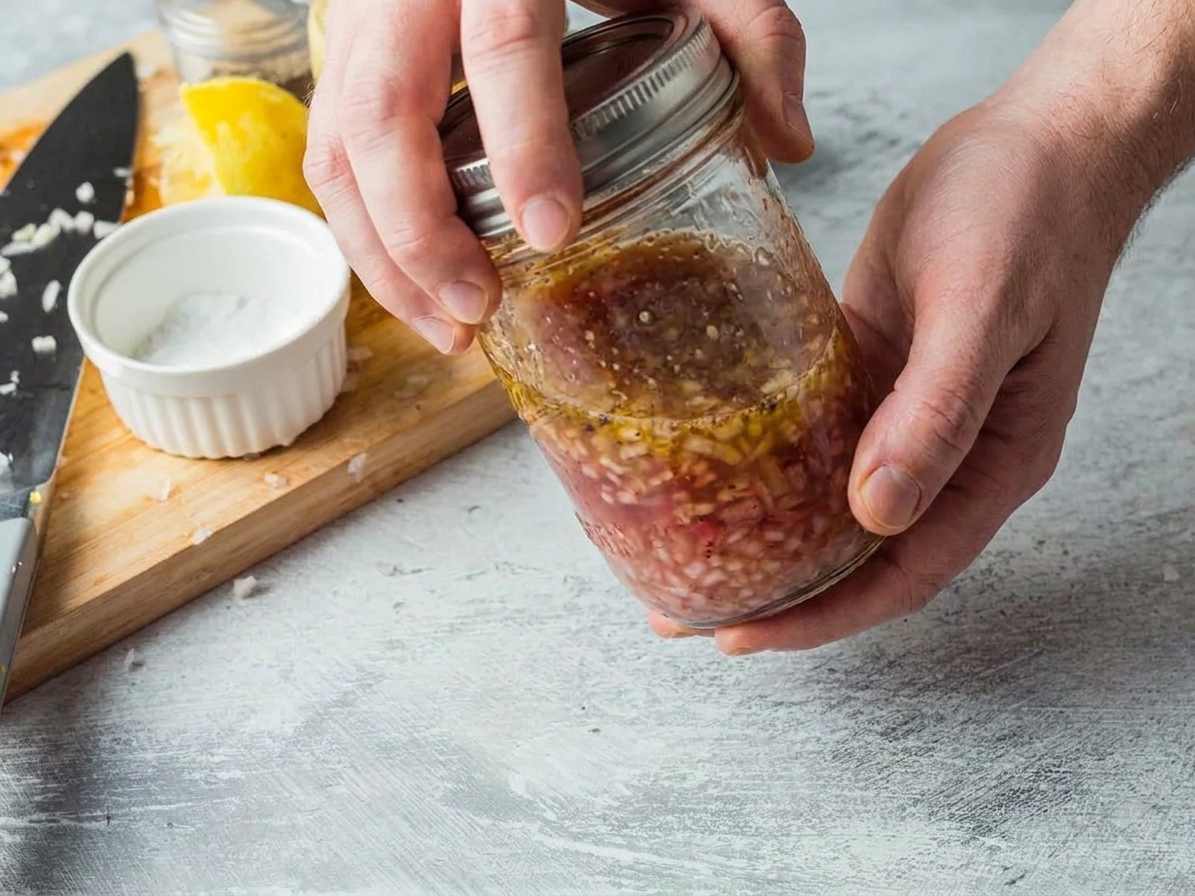
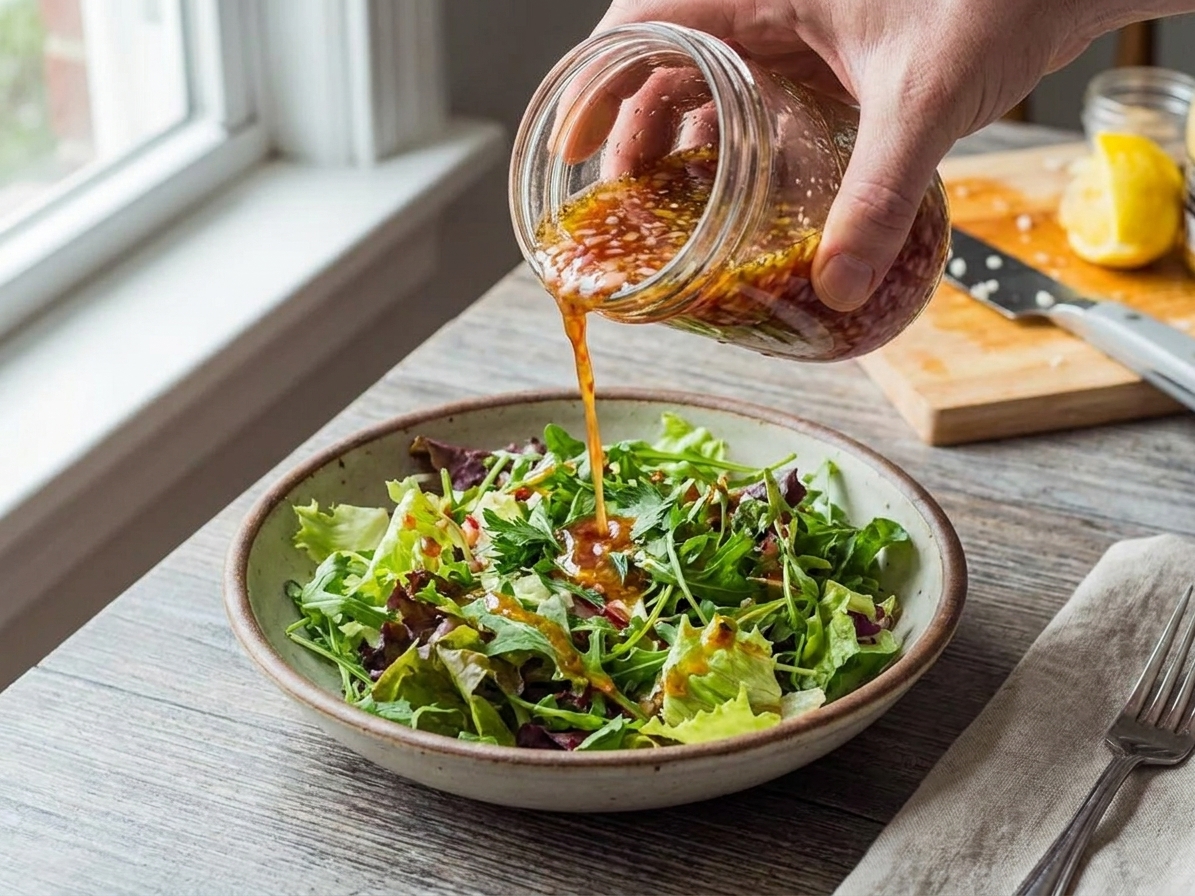
What is the best ratio for red wine vinaigrette?
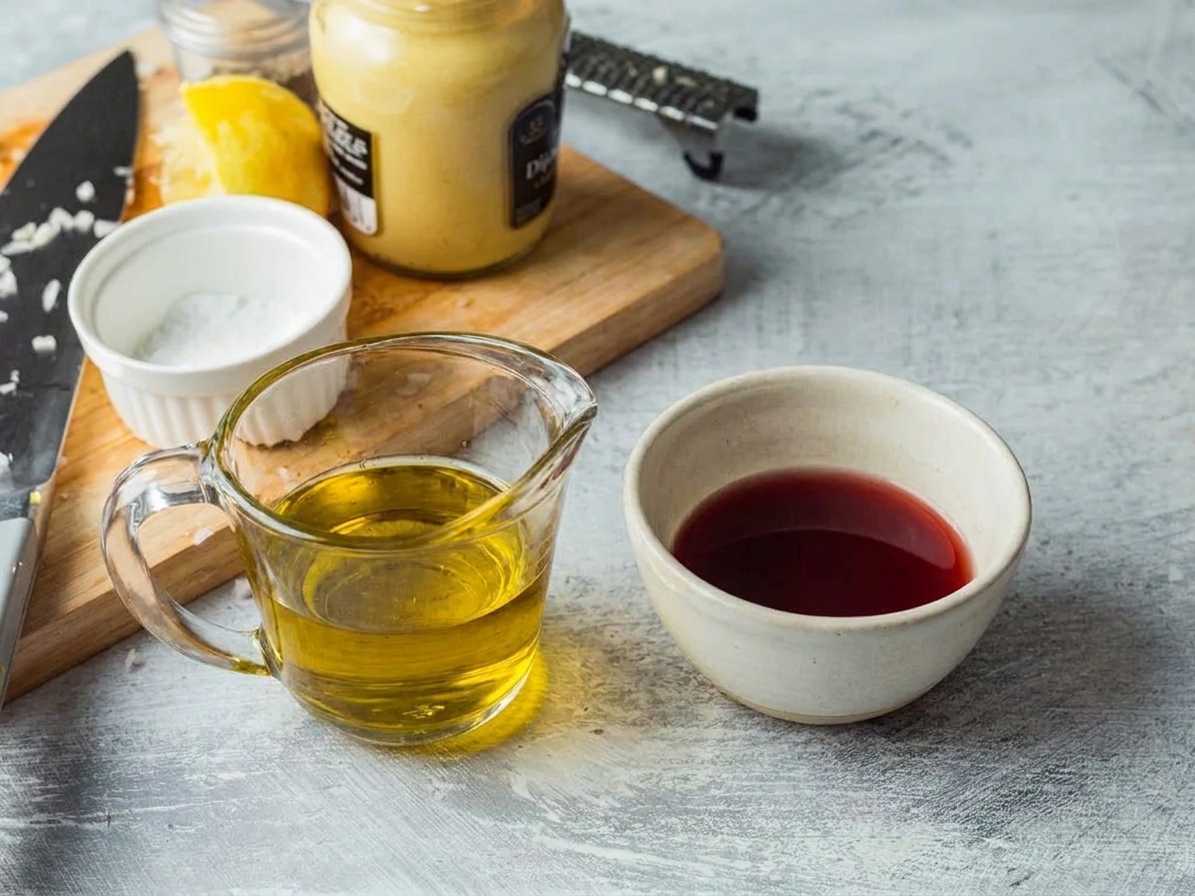
A reliable starting point is 3 parts oil to 1 part vinegar, and that is exactly what this recipe uses. It is classic for a reason: bright enough for greens, but not so sharp it takes over. If you want it a little punchier, you can pull back the oil by a tablespoon or two, or add an extra teaspoon of vinegar.
Can I make it without Dijon mustard?
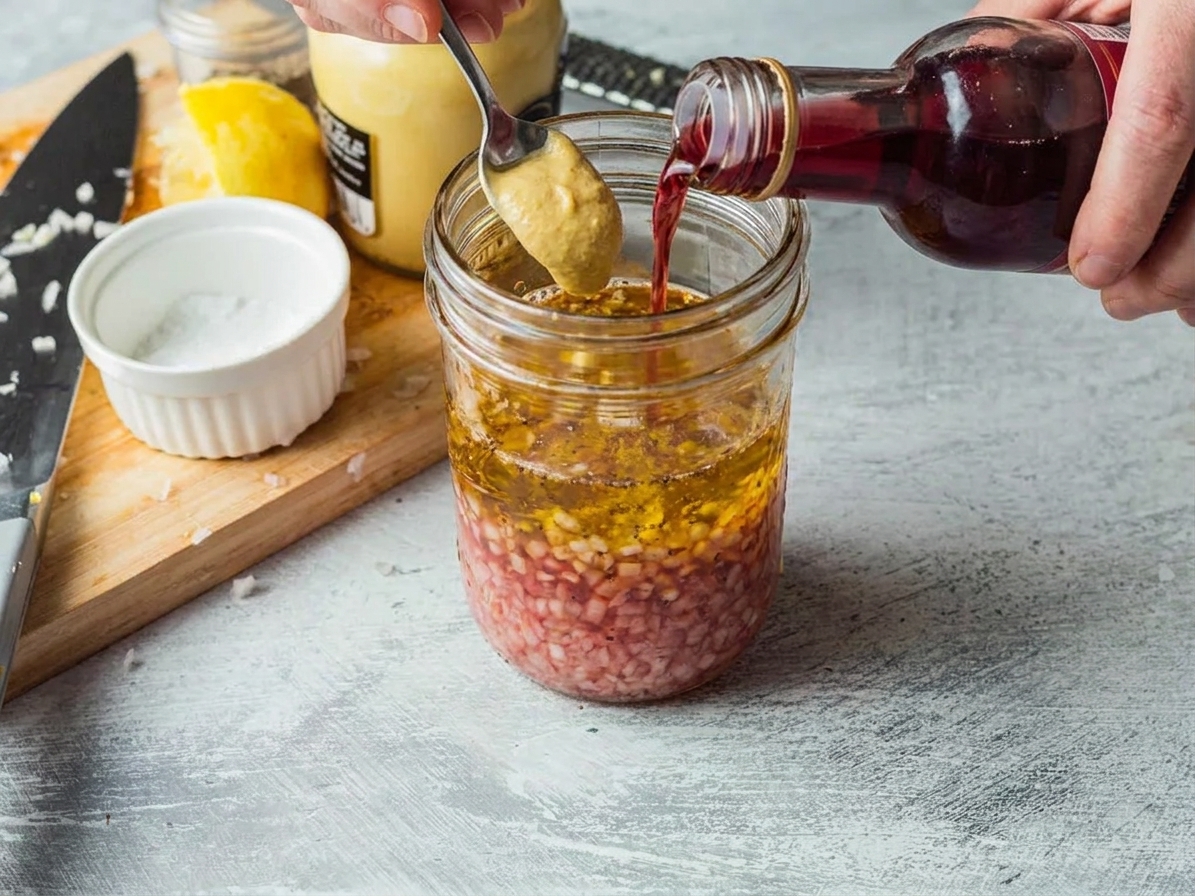
Yes. Dijon helps emulsify and adds a gentle heat. If you skip it, the dressing will separate faster, so just shake before using. You can also use a small spoonful of mayo as an emulsifier if that is your pantry reality.
My vinaigrette tastes too sharp. How do I fix it?
Add more oil to soften the acidity, or add a small pinch more honey to round it out. If it is sharp and flat, it usually needs salt.
Can I use red wine instead of red wine vinegar?
Not as a 1:1 swap. Wine is far less acidic than vinegar, so it will taste softer and less punchy. If you are in a pinch, you can reduce the wine a bit to concentrate flavor, then add vinegar or lemon juice to bring back some tang. It will work, but it will not taste quite like a true red wine vinaigrette.
Why did my vinaigrette turn cloudy?
That is usually a good sign. It means it emulsified, especially if you used Dijon and shook or whisked well.
Do dried herbs get stronger as it sits?
Yes. If you add dried Italian seasoning, the flavor will deepen as it hydrates. If you have time, let the dressing sit for 20 to 30 minutes, then taste again and adjust salt and vinegar if needed.