What cut of beef is best for pot roast?
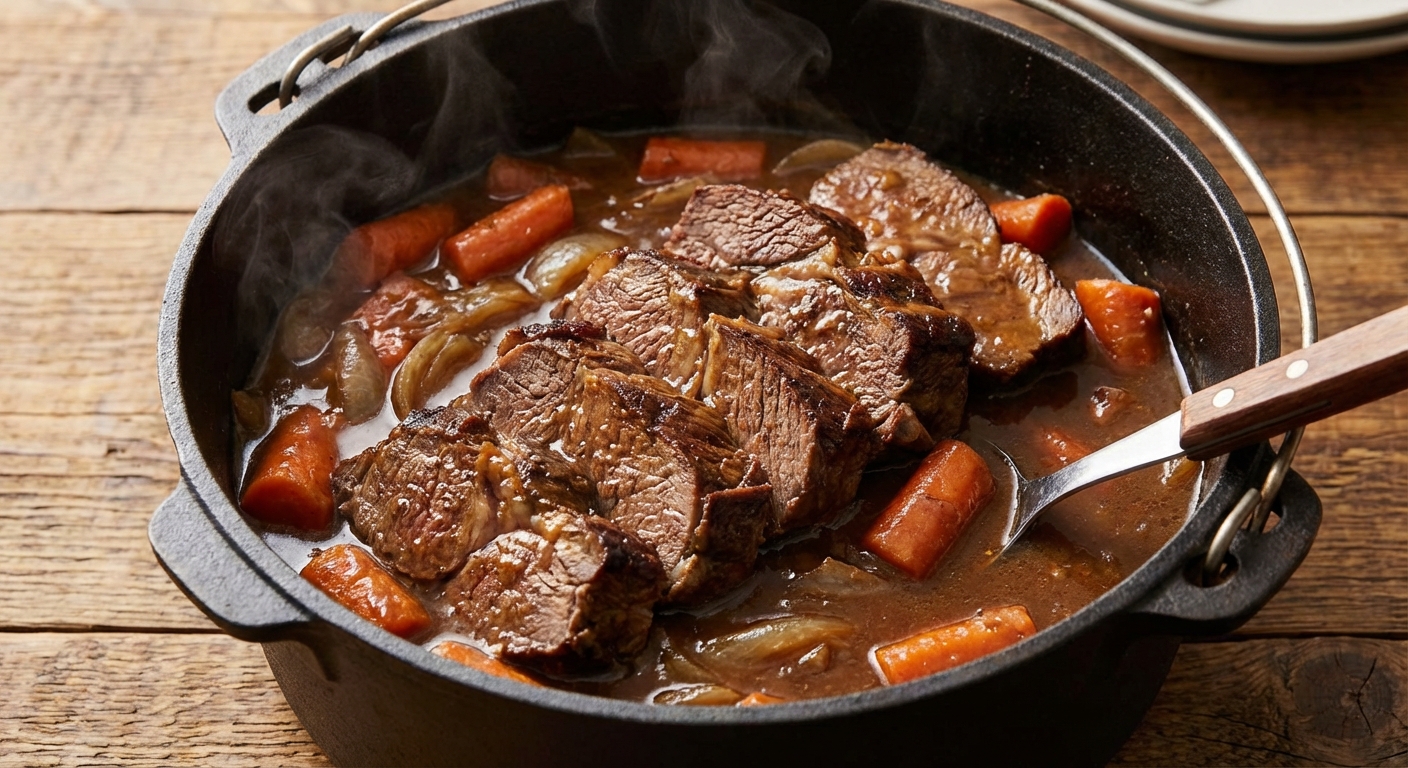
Chuck roast is the move. It has the marbling you need to turn spoon-tender after a long braise. Brisket and bottom round can work too, but chuck is the sweet spot for flavor and texture.
Why is my pot roast tough?
Usually it just needs more time. Tough means the connective tissue has not finished breaking down. Keep braising until a fork twists easily. If you like numbers, you will often see pot roast hit its happy place around 195 to 205°F, but the fork test is the real boss. Also make sure you are braising at a gentle simmer, not a hard boil.
Do I have to sear the beef?
You do not have to, but you will miss out on that browned, savory foundation. If you are short on time, at least brown two sides well. Better than nothing, and still delicious.
How do I thicken the gravy?
You have options, depending on your vibe:
Option 1 (easy): simmer uncovered for 5 to 10 minutes to reduce and concentrate.
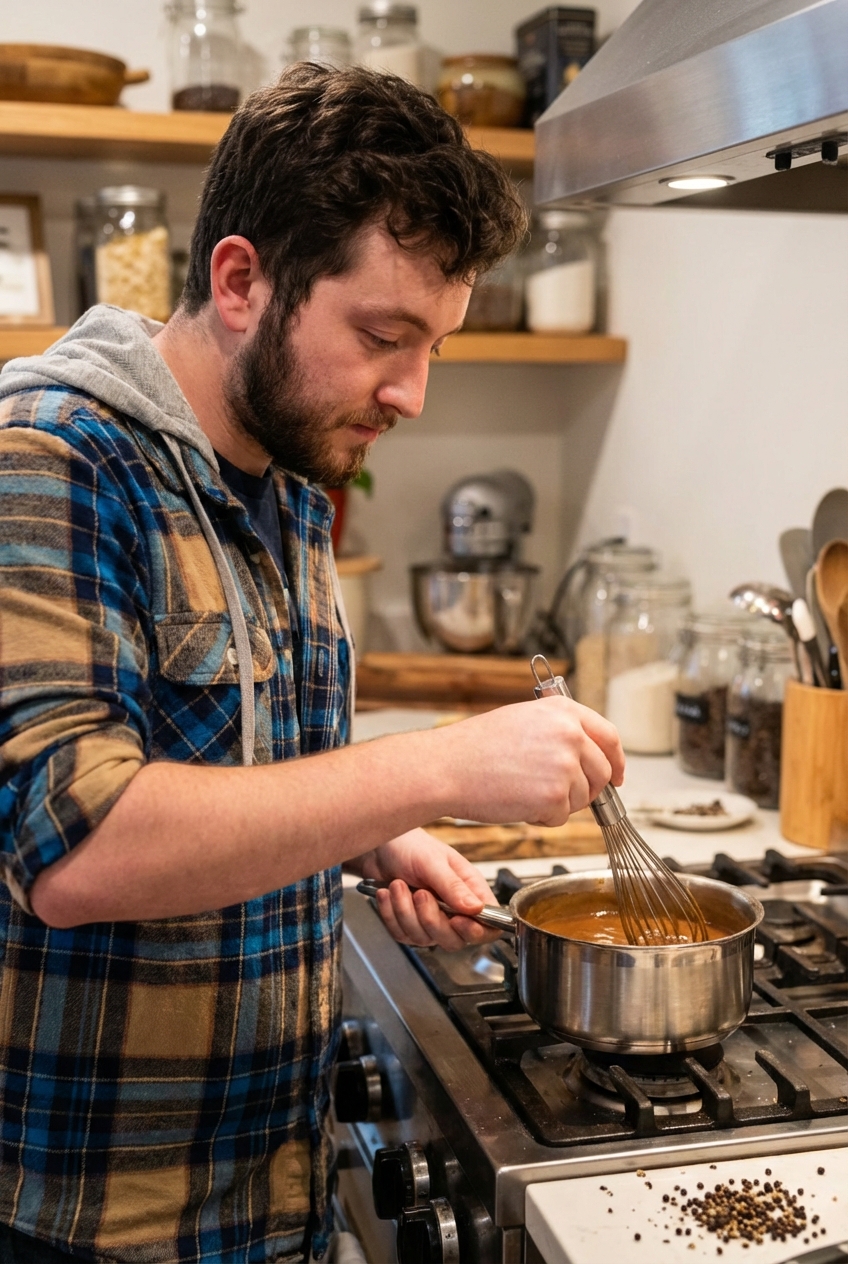
Option 2 (slurry): whisk 1 tbsp flour with 2 tbsp cold water or broth until smooth, then whisk into simmering gravy a little at a time. Simmer 2 to 3 minutes to cook out the flour.
Option 3 (buttery): mash 1 tbsp softened butter with 1 tbsp flour into a smooth paste, then whisk in small bits to simmering gravy until it looks how you want.
Can I make this in a slow cooker?
Yes. Sear the beef and sauté the aromatics on the stove first, then transfer everything to the slow cooker. Cook on low 8 to 9 hours or high 4 to 5 hours, but trust the doneness cue more than the clock: it is ready when a fork twists easily (often around 195 to 205°F).
For vegetables: instead of “halfway,” aim for a window. Add potatoes and carrots during the last 3 to 4 hours on LOW or the last 2 to 3 hours on HIGH, then cook until tender, not soft and sad. Keep the lid on as much as possible so the slow cooker stays hot and steady.