Mom's Best Recipes
Recipe

Rich & Thick Pizza Sauce

A bold, velvety pizza sauce that clings to the crust, tastes bright and garlicky, and never turns watery.

Author By Matt Campbell
4.8
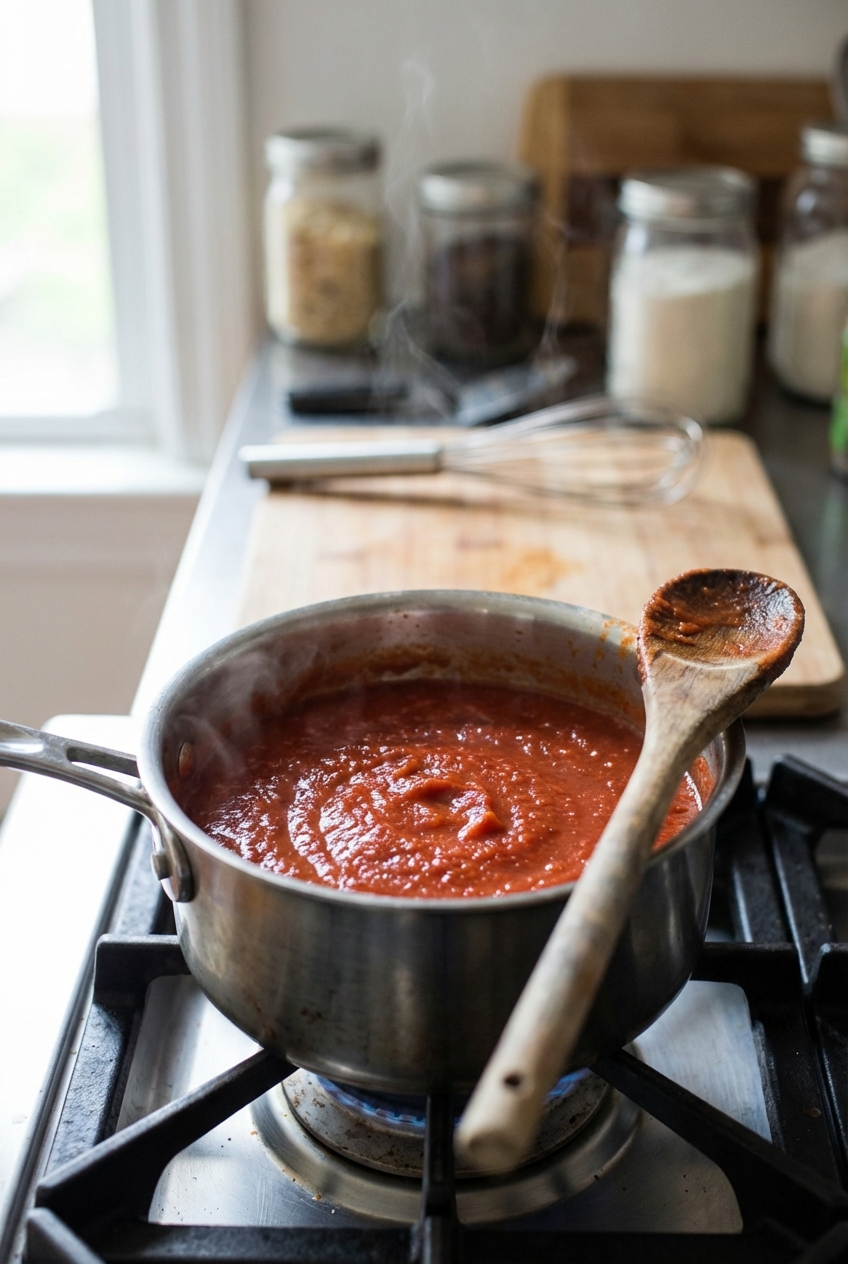
A small saucepan of thick red pizza sauce simmering on a stovetop with a wooden spoon resting inside

Some pizza sauces are basically red water with a dream. Not this one. This is the rich, thick, glossy kind that spreads like a charm, bakes up punchy, and actually tastes like you meant it.

We start with crushed tomatoes, build flavor fast with a quick garlic sizzle and tomato paste toast, then simmer just long enough to concentrate everything into a sauce that clings. No puddles. No soggy center. Just a bright, cozy, deeply tomato-forward base that makes even a basic weeknight pepperoni pie feel like a serious plan.
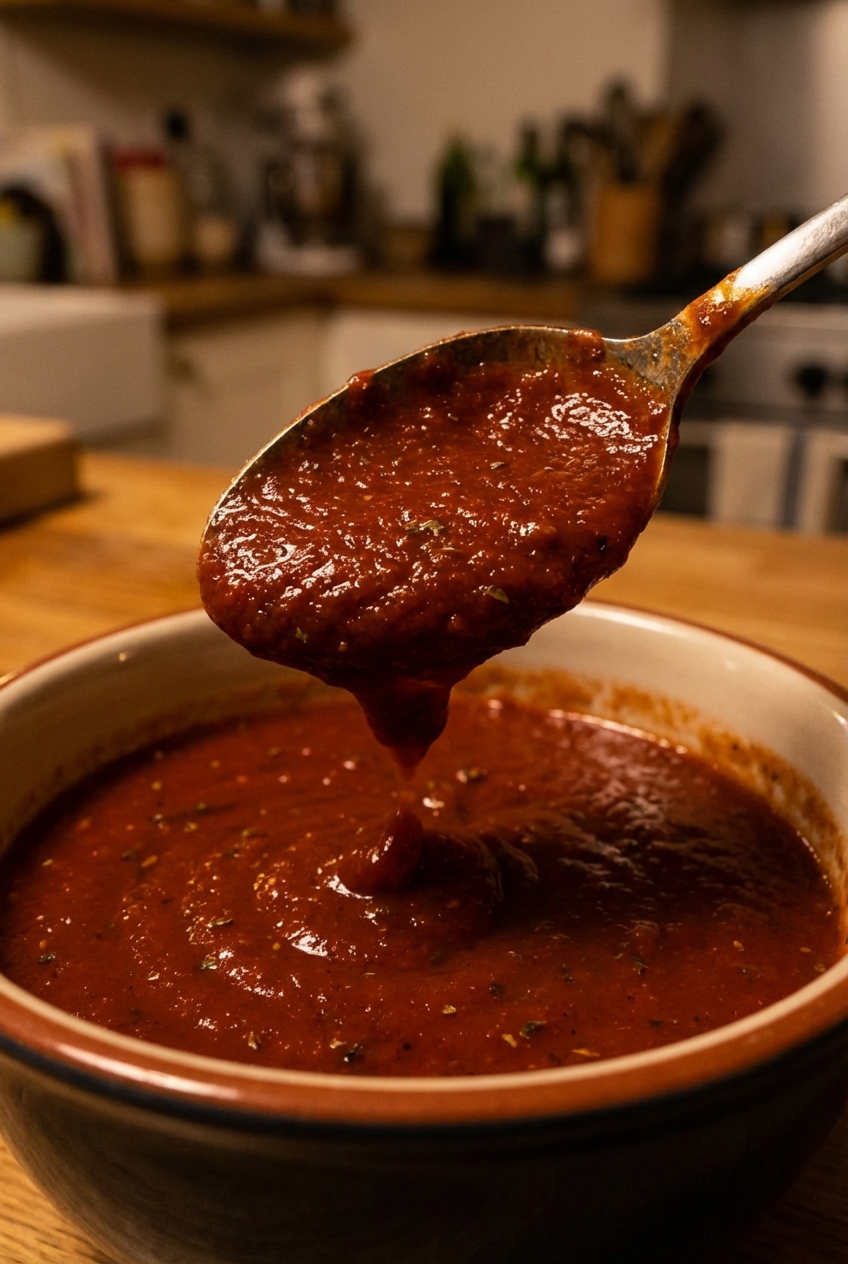
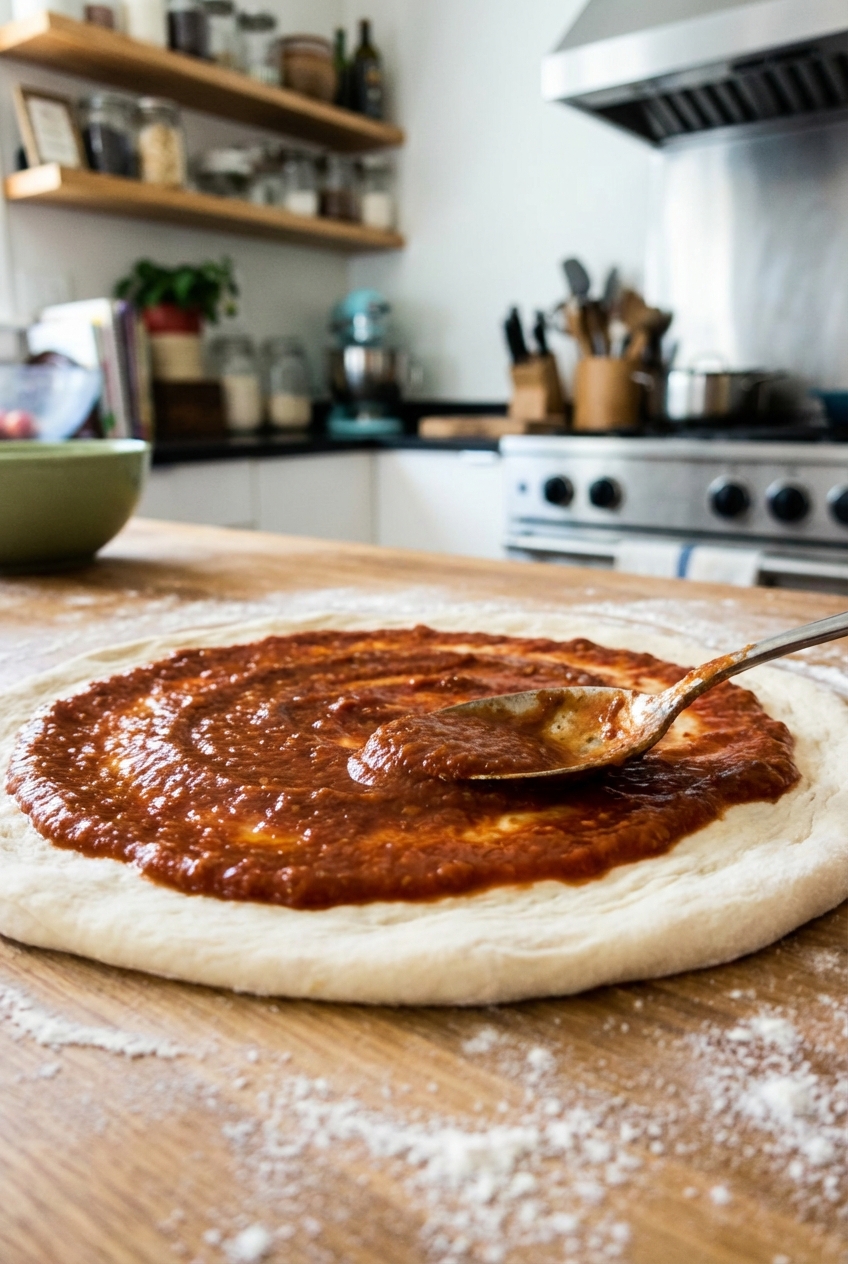
A spoon lifting a thick, smooth pizza sauce showing its rich texture

Why It Works

  • Thick by design: Tomato paste plus a short simmer gives you a sauce that stays put on dough.
  • Big flavor, simple ingredients: Pantry staples, no weird add-ins, no sugar bomb.
  • Pizza-shop vibes at home: Oregano, garlic, and a pinch of heat deliver that classic pizzeria aroma.
  • Flexible: Keep it smooth, leave it rustic, or blend it. Make it ahead and freeze it.

Pairs Well With

Storage Tips

Refrigerate: Let the sauce cool completely, then store in an airtight container for up to 5 days (standard food-safety guidance assumes clean handling and a cold fridge).

Freeze: Portion into freezer bags or deli containers (I like 1/2 cup portions for quick pizzas). Freeze up to 3 months for best quality. Thaw overnight in the fridge or gently in a saucepan.

Reheat: Warm on low heat, stirring occasionally. If it thickens too much after chilling, loosen with 1 to 2 tablespoons water and stir until glossy again.

Common Questions

Do I have to cook pizza sauce?

No, you can use uncooked sauce. But if you want rich and thick, simmering is the move. Cooking drives off excess water and rounds out the raw tomato edge.

If you insist on no-cook, use a thicker crushed tomato, consider draining off any excess liquid, and start with a little less tomato paste (you can always add more).

How much sauce per pizza?

For a 12-inch pizza, use 1/3 to 2/3 cup depending on how saucy you like it. A classic, not-too-heavy layer is about 1/2 cup. Spread it thin and even, and leave a 1/2-inch border for a clean crust.

Can I use whole peeled tomatoes?

Yes. Crush by hand or blitz briefly. If they seem extra watery, simmer a few more minutes to get back to that spoon-coating thickness.

Why did my sauce turn out bitter?

Usually it is one of two things: the garlic browned too much, or the tomatoes are extra acidic.

If the garlic actually burned, the bitterness is stubborn and it is best to restart the batch. Next time, keep the heat lower and stop at fragrant, not toasted.

If it is tomato acidity, try 1/8 teaspoon baking soda (it will foam for a second), then taste. Go pinches at a time, because too much can flatten flavor.

Can I make it smoother?

Absolutely. Blend with an immersion blender or in a regular blender once slightly cooled. Smooth sauce spreads easier, especially on thin crust.

I started making this sauce after one too many homemade pizzas that looked great, then came out of the oven with a sad little watery moat in the middle. The fix was not fancy. It was just treating pizza sauce like it deserves a tiny bit of attention: toast the paste, simmer it down, season like you mean it, and taste as you go. Now I keep a jar in the fridge like a little weeknight insurance policy, because the fastest way to feel like you have your life together is pulling off a crisp-edged pizza on a random Tuesday.