Mom's Best Recipes
Recipe

Roasted Brinjal

Silky roasted eggplant with caramelized edges, finished with a bright garlic lemon yogurt and herbs.

Author By Matt Campbell
4.8
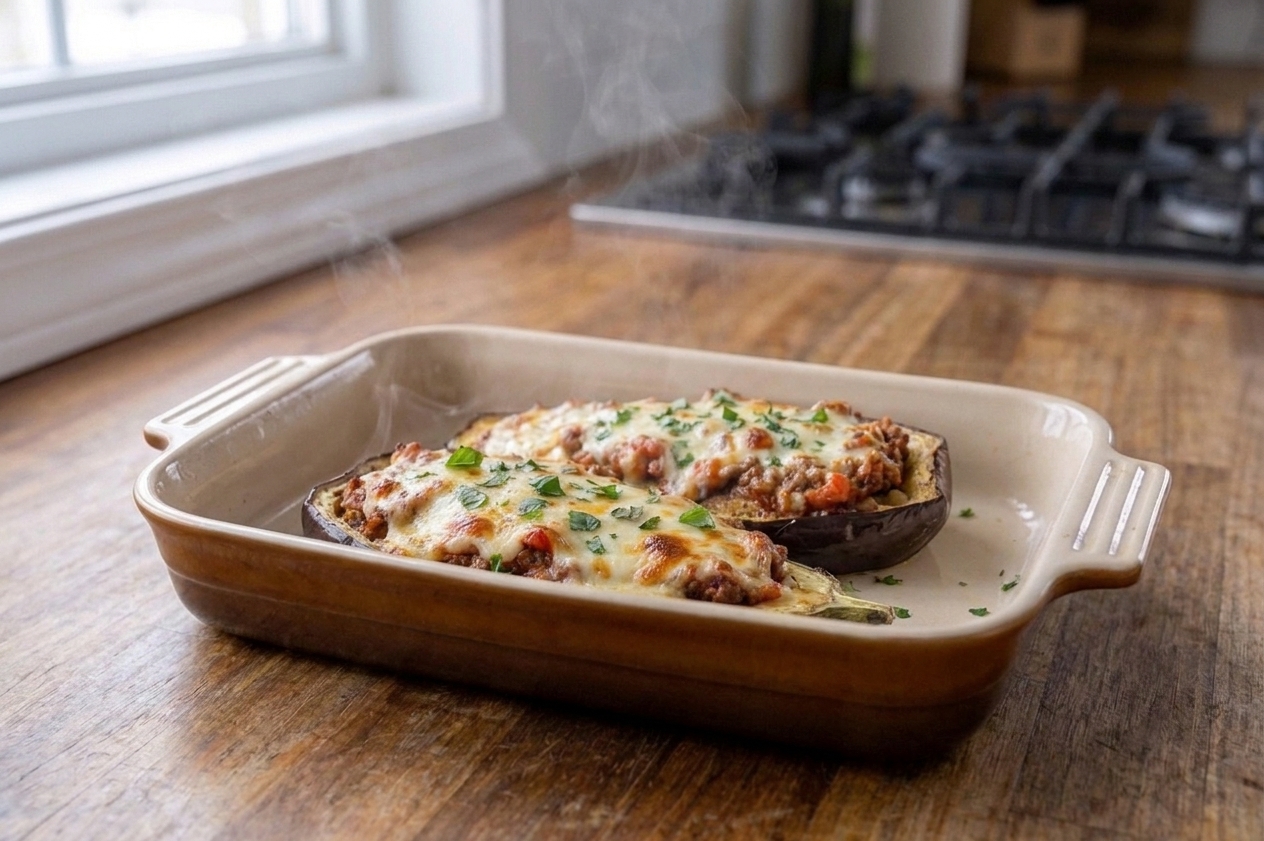
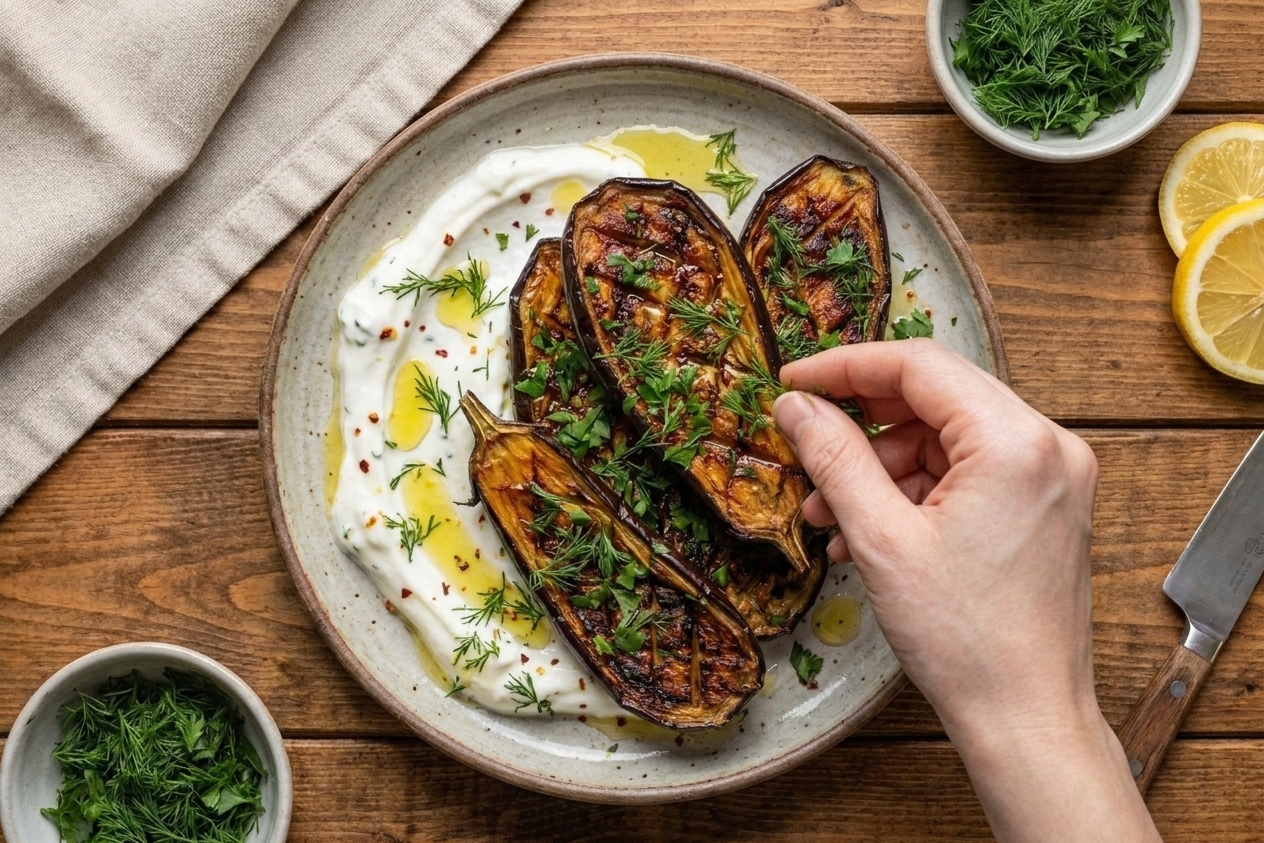
A serving platter of roasted brinjal wedges with caramelized edges, topped with garlic yogurt, chopped herbs, and a drizzle of olive oil on a warm kitchen table

Brinjal, eggplant, aubergine. Whatever you call it, this is one of those vegetables that can go from spongy and sad to silky and kind of ridiculous with the right heat and a little respect.

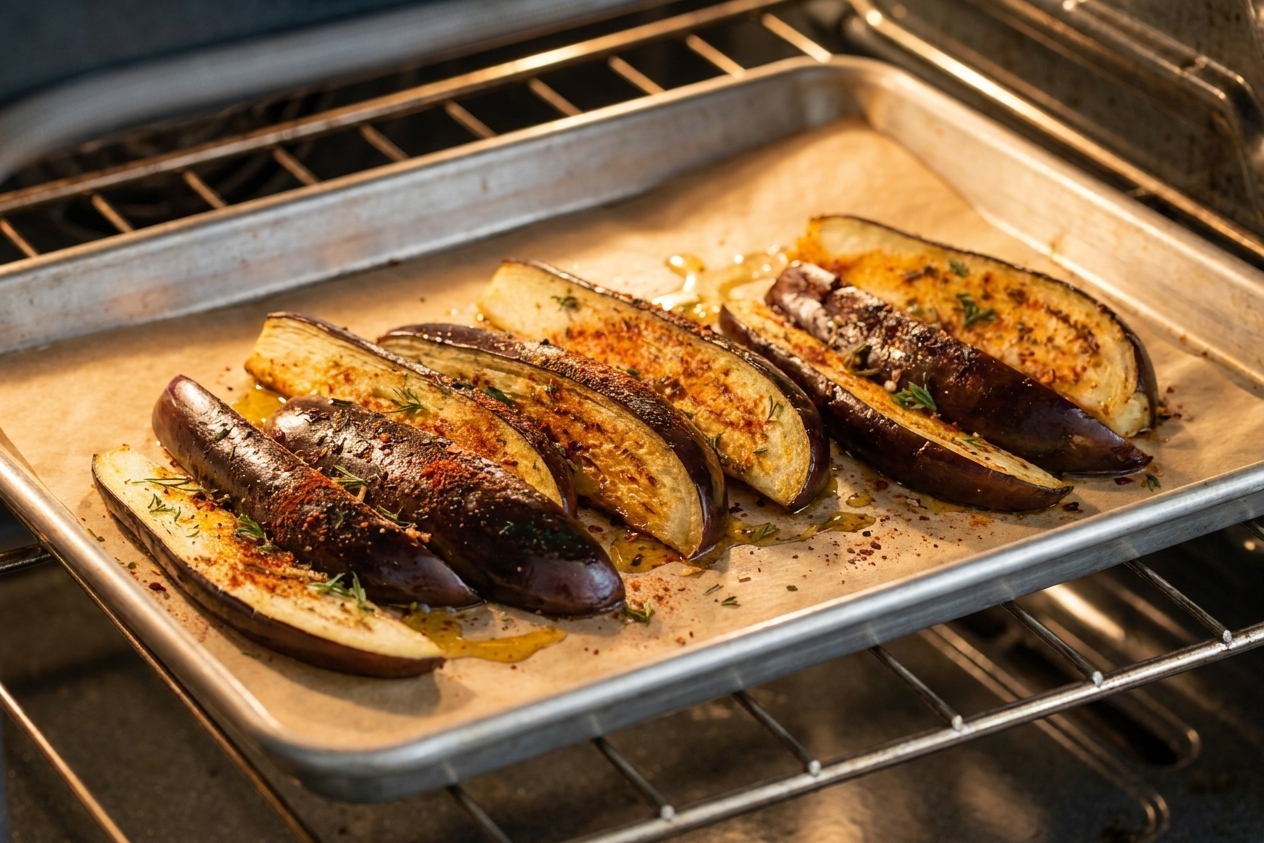
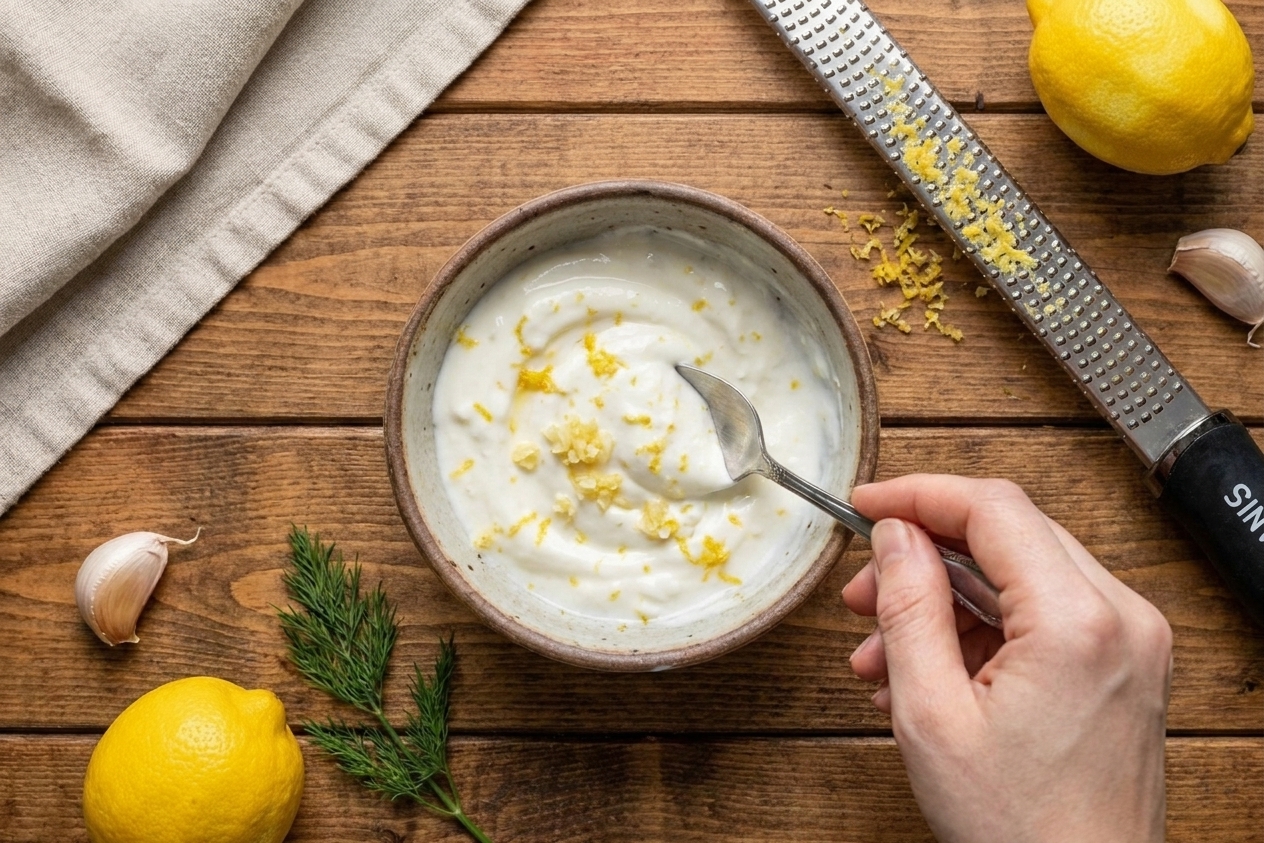
This roasted brinjal is my weeknight-friendly answer to big flavor without big drama. We roast it hot so it collapses into tender, creamy layers, then we hit it with a quick broil for crisp edges. After that, it is basically a blank canvas for a bright, garlicky lemon yogurt that makes you want to swipe up every last bit with warm bread.

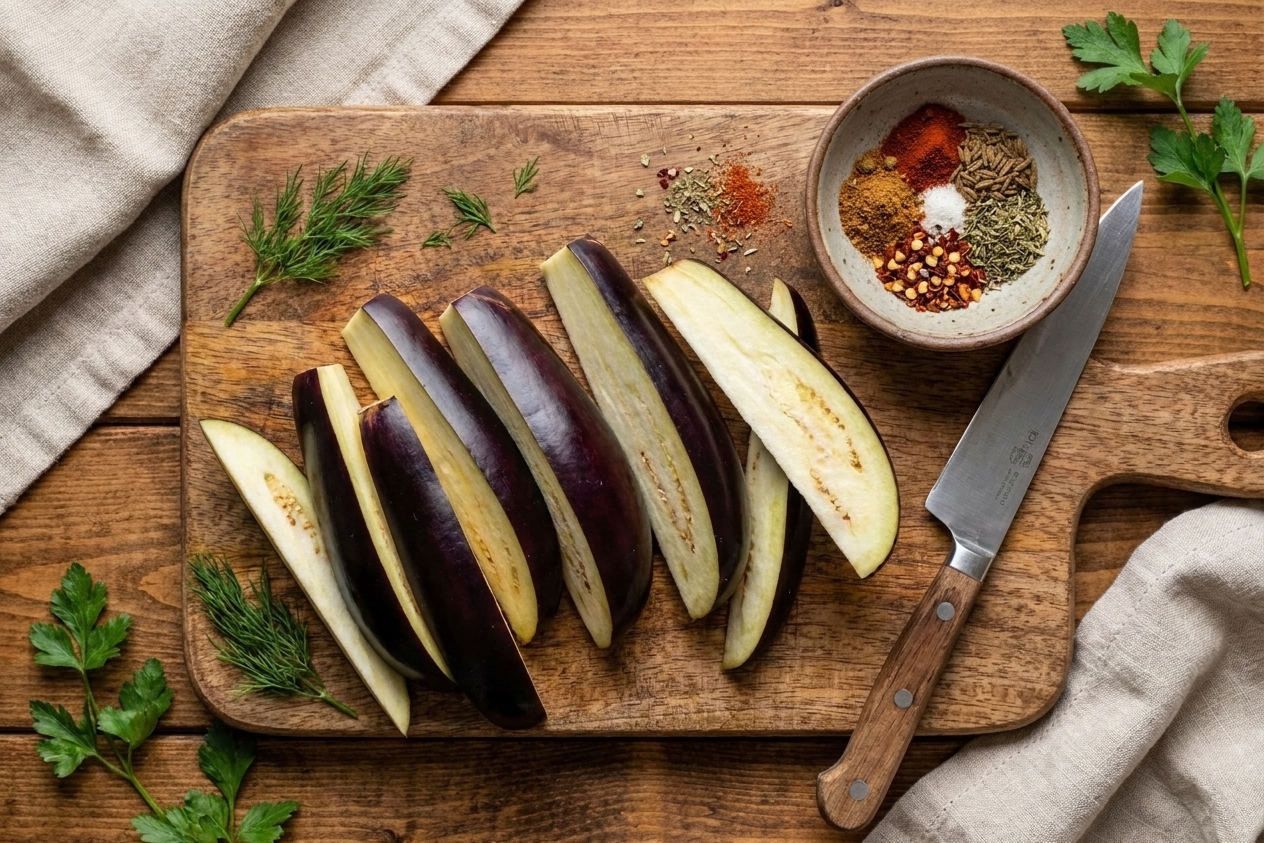
Whole brinjal eggplants, garlic, lemon, olive oil, yogurt, and spices arranged on a light kitchen counter with a baking sheet nearby

Why It Works

  • High heat helps with that creamy texture. Roasting at 425°F drives off moisture and softens the flesh until it turns tender and rich.
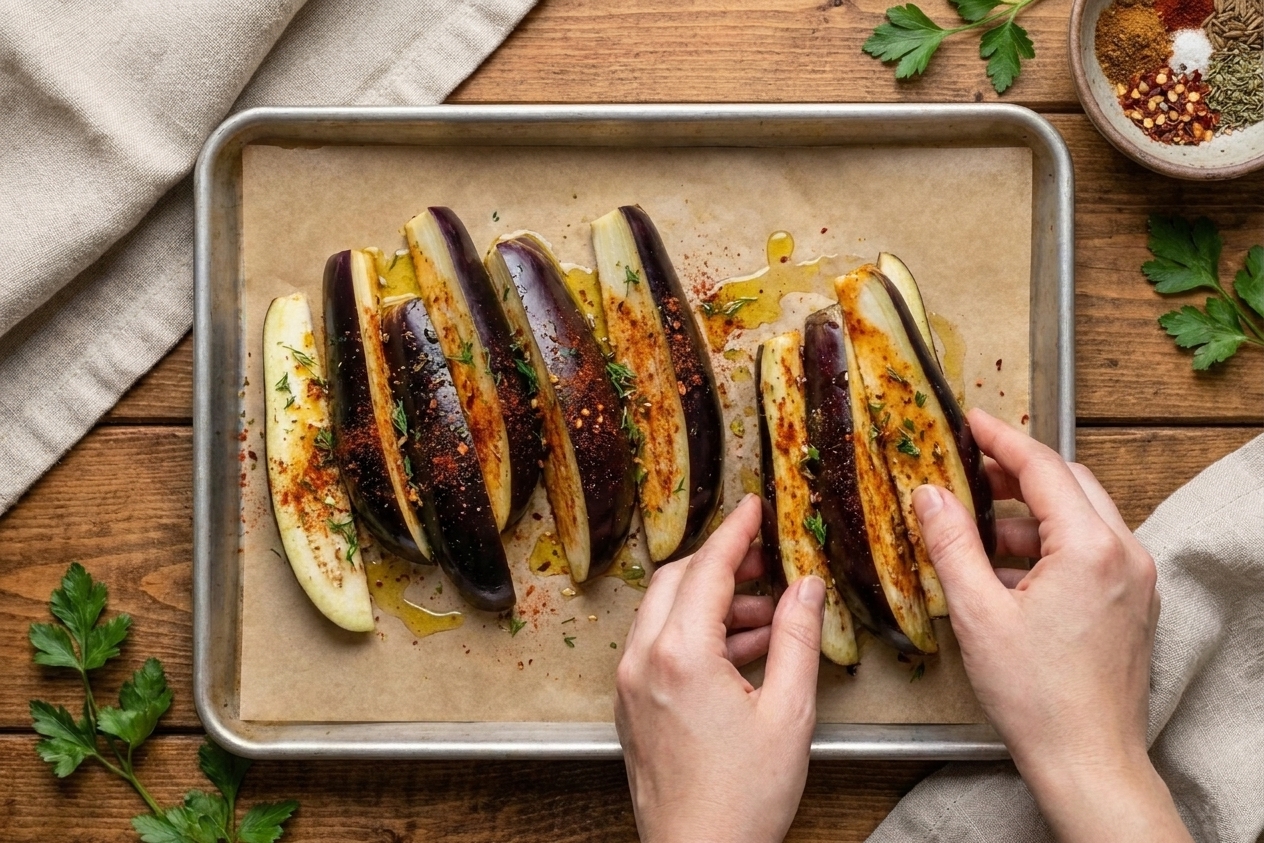
  • Oil plus salt equals real browning. A generous coat of olive oil and proper salting helps the cut sides caramelize instead of steam.
  • Broil finish for crisp edges. Two to four minutes under the broiler gives you those browned tips without drying the inside.
  • Bright sauce, cozy veg. Brinjal loves acidity. Lemon and yogurt keep the whole thing from tasting heavy.

Pairs Well With

Storage Tips

Fridge: Store roasted brinjal in an airtight container for up to 4 days for best quality. Store the yogurt sauce separately for best texture.

Reheat: Warm on a sheet pan at 400°F for 8 to 12 minutes until hot. If you want the edges to perk back up, broil for 1 to 2 minutes at the end. Microwaving works, but it will be softer.

Freezing: You can freeze the roasted brinjal (without sauce) for up to 2 months for best quality. Thaw overnight in the fridge, then reheat in a hot oven. The texture will be a bit softer, but still great for wraps, grain bowls, or blending into a dip.

Common Questions

Do I need to salt brinjal first?

Not the long, dramatic “sweat it for an hour” routine. For this recipe, a good sprinkle of salt right before roasting is enough. It seasons the flesh and helps it roast up tasting more intense.

Why is my roasted brinjal bitter?

Some eggplants are naturally more bitter, especially if they are older or have lots of large seeds. Choose firm brinjal with smooth, shiny skin. If you are worried, you can salt the cut sides and let them sit for 20 minutes, then blot dry before oiling.

Can I make this without yogurt?

Yep. Swap the yogurt sauce for tahini + lemon + water (thin to drizzle) or a quick salsa verde style herb sauce. Even just olive oil, lemon, and chopped herbs is great.

Should I peel brinjal before roasting?

Nope. The skin helps the wedges hold their shape. Once roasted, the skin is tender enough to eat, and any charred bits add flavor.

What is the best cut for roasting?

Wedges or thick planks. Small cubes tend to overcook before they brown nicely unless you use a lot of oil and space them perfectly.

Do different eggplants roast differently?

Yes. Smaller varieties (like Asian eggplant) can get tender faster, and big, older globe eggplants can take a bit longer. Start checking at around 20 minutes and go by texture: you want the thickest part to pierce easily and feel creamy, not bouncy.

I used to think eggplant was just… there. Like a background actor in the produce aisle. Then I started chasing that restaurant-style texture at home: creamy centers, browned edges, and a sauce that wakes everything up. Roasting brinjal became my little kitchen reset button. When I do not know what to cook, I roast a few wedges, make something tangy, and suddenly dinner feels intentional, even if I am eating it standing at the counter.