FAQ
What is the difference between amatriciana and carbonara?
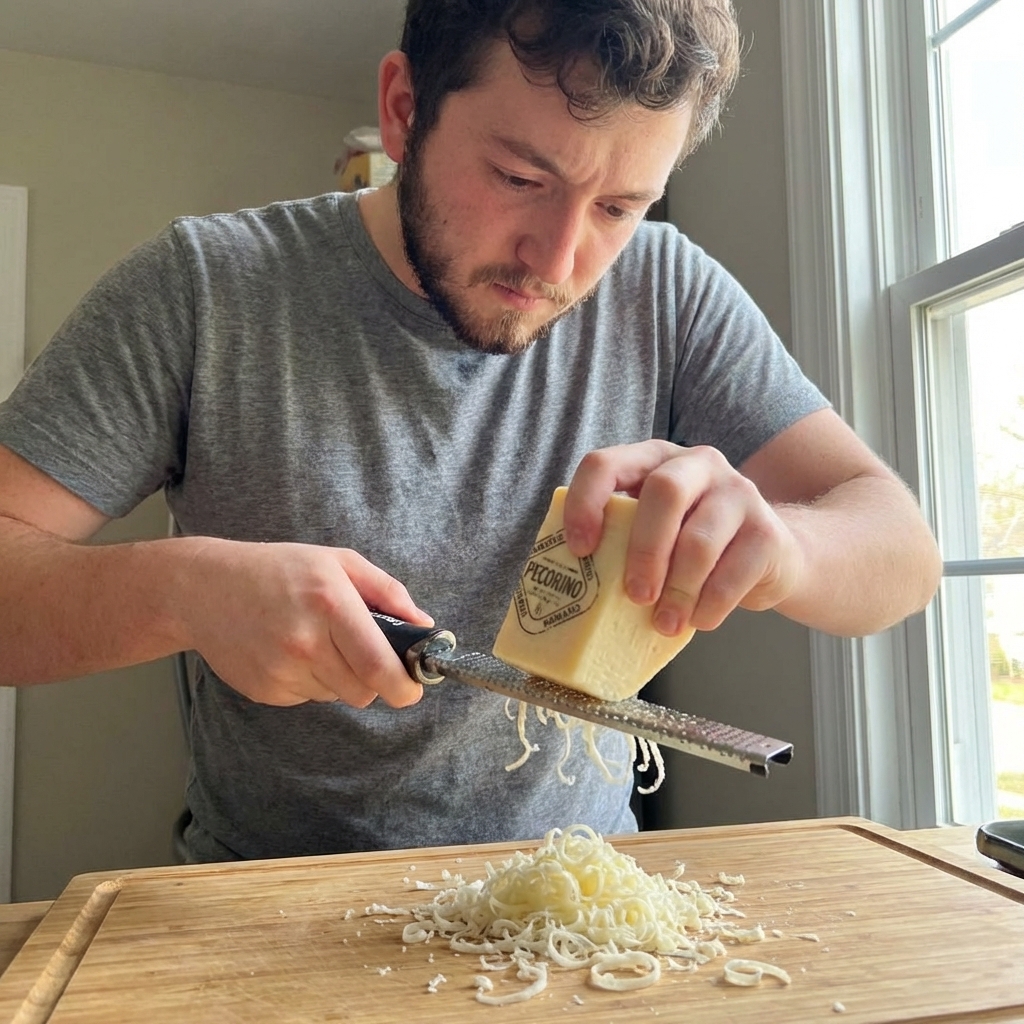
Carbonara is egg and Pecorino based, with guanciale and no tomato. Amatriciana is tomato based, finished with Pecorino, and traditionally no eggs.
Do I have to use guanciale?
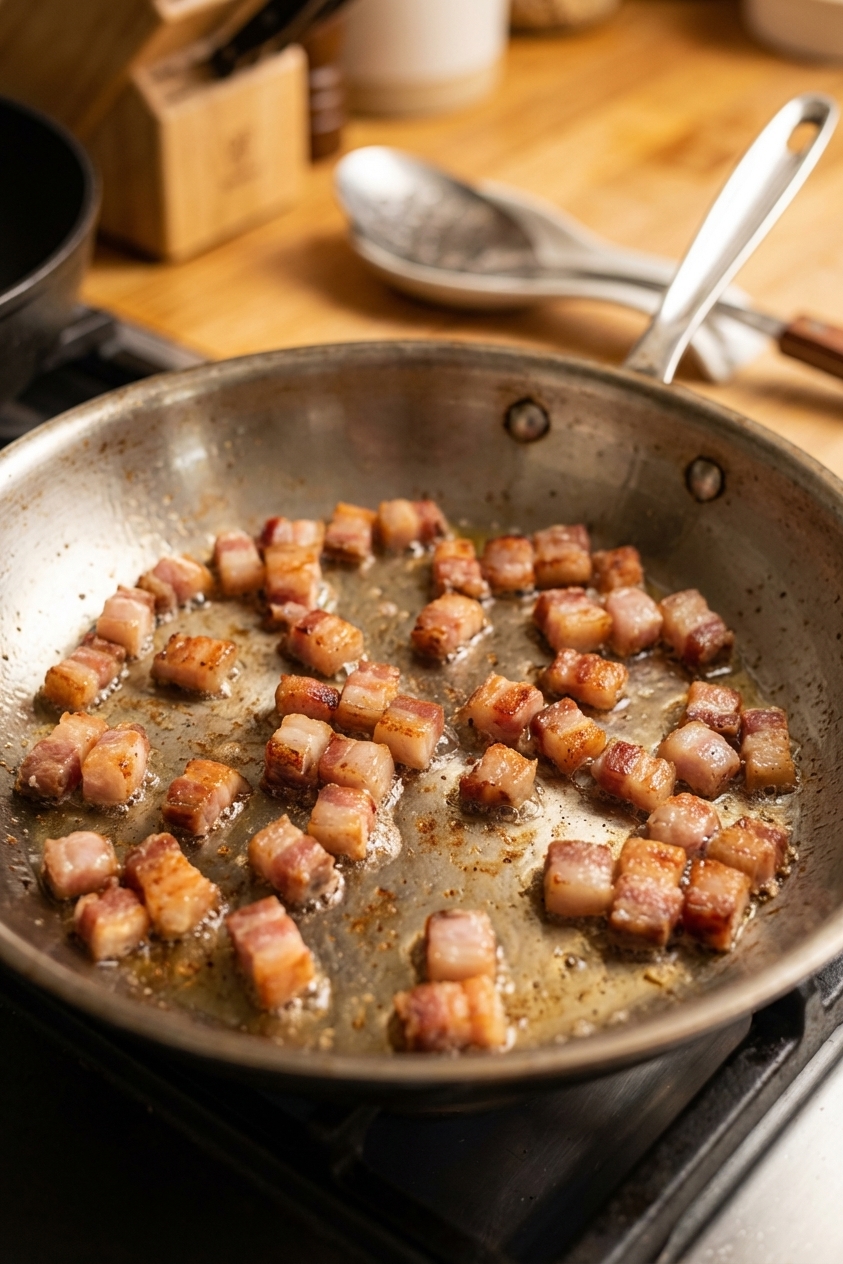
For the most classic Roman flavor, yes. Guanciale has a deeper, sweeter cured pork taste and a silkier fat than bacon. If you can find it, use it. If your guanciale has a heavily peppered rind, trim it off so it renders and browns evenly.
Okay but what if I only have bacon?
Honest answer: it will be tasty, but it will not taste quite like amatriciana. Bacon brings smoke and often more water, which can throw off the sauce. If bacon is your only option, choose thick-cut bacon, start it in a cold pan, render slowly, and pour off excess fat if it feels greasy. If you can get pancetta, that is a closer substitute than bacon.
Should I add onion or garlic?
Many classic versions keep it tight: guanciale, tomato, chile, and Pecorino. Some traditional and home-cook versions include a little onion, and some add a splash of wine. Garlic is more controversial. If you love it, keep it subtle: one lightly crushed clove, warmed in the guanciale fat, then removed before you add tomatoes.
My sauce turned oily or broke. What happened?
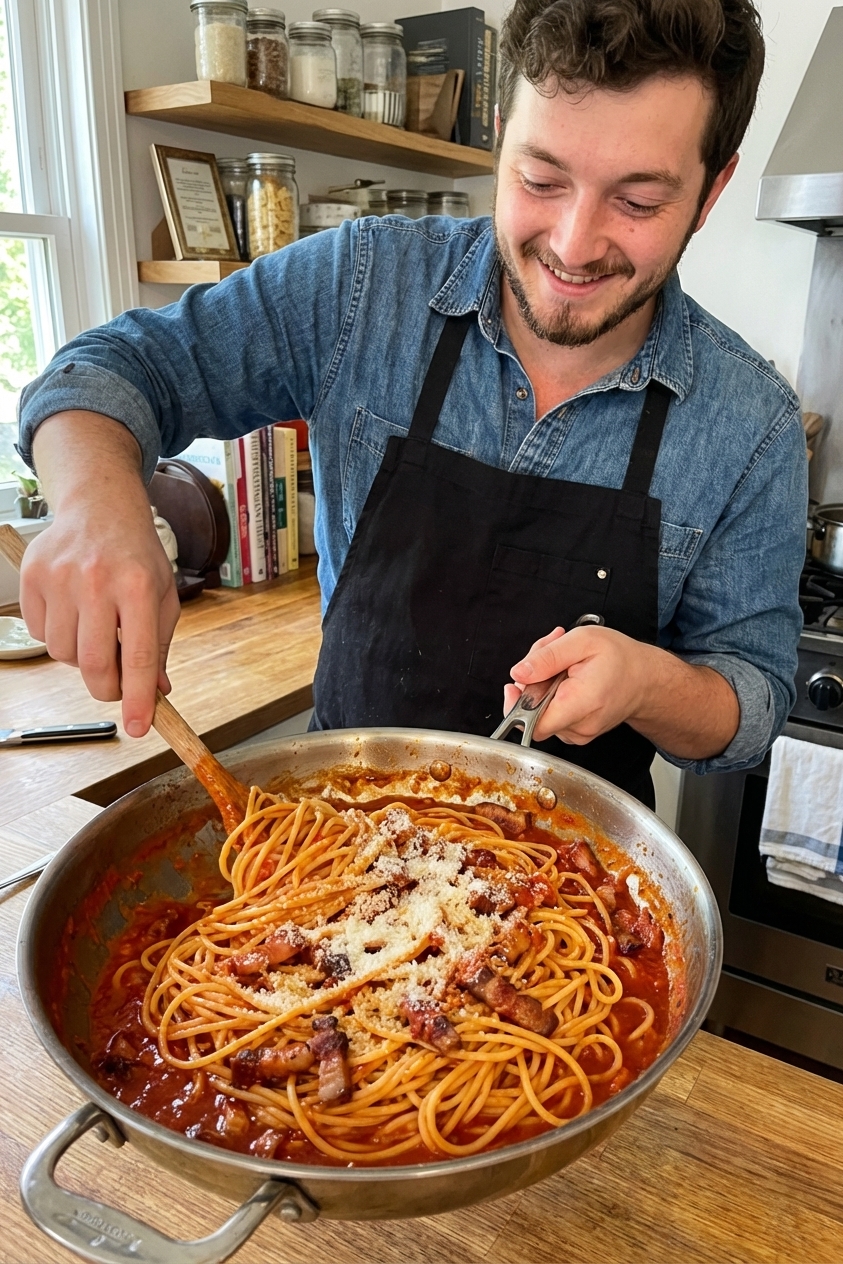
Usually one of three things: the pan was too hot, you added cheese over high heat, or you did not use enough pasta water. Fix it by lowering the heat, adding a splash of hot pasta water, and tossing vigorously until it looks glossy again.
Wine or no wine?
Both show up in the real world. No wine keeps it punchy and pork-forward. With wine adds brightness and helps lift browned bits from the pan. If using wine, add 1/4 cup dry white wine after the guanciale crisps, simmer 30 to 60 seconds, then add tomatoes.