Mom's Best Recipes
Recipe

Rotisserie-Style Roast Chicken

Crisp skin, juicy meat, and a garlicky, herby flavor bomb you can pull off on a real weeknight with a regular oven.

Author By Matt Campbell
4.9
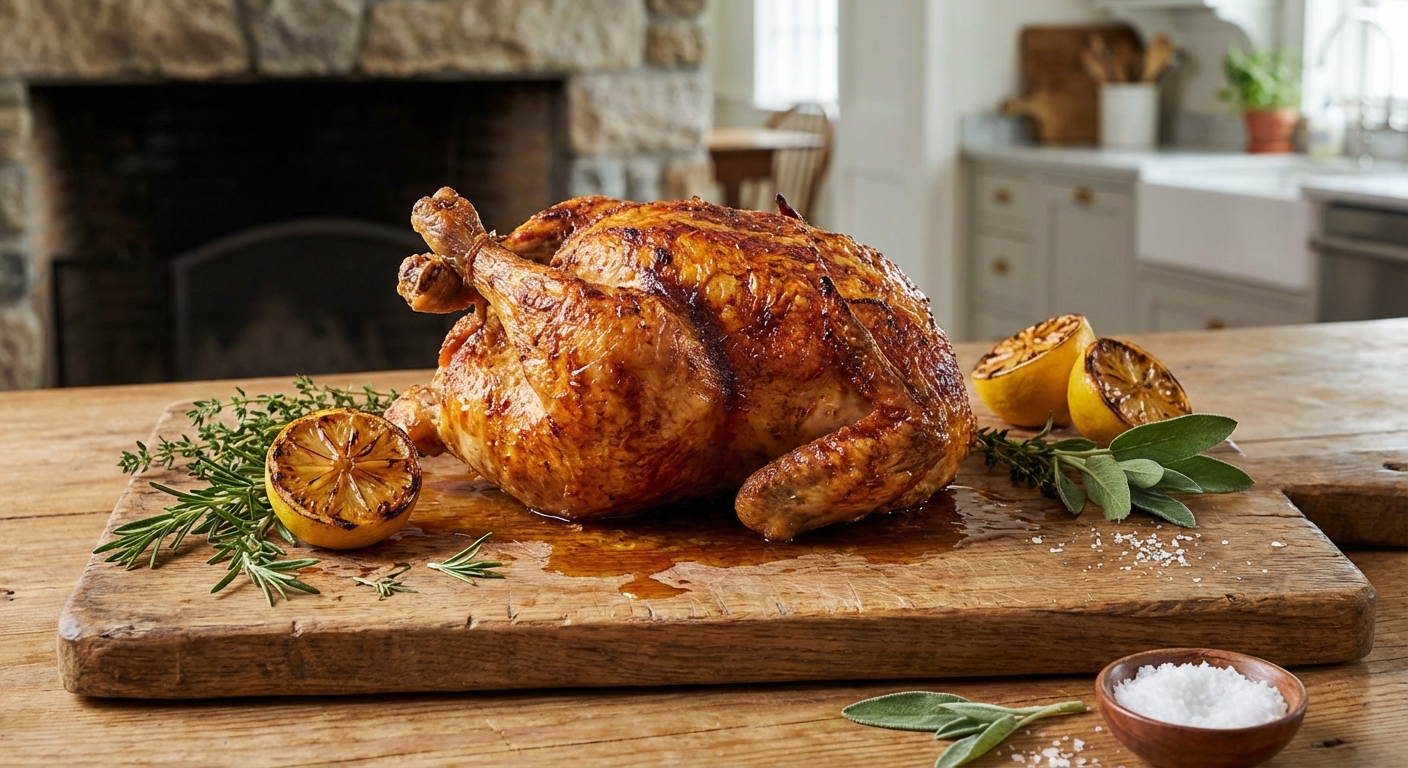
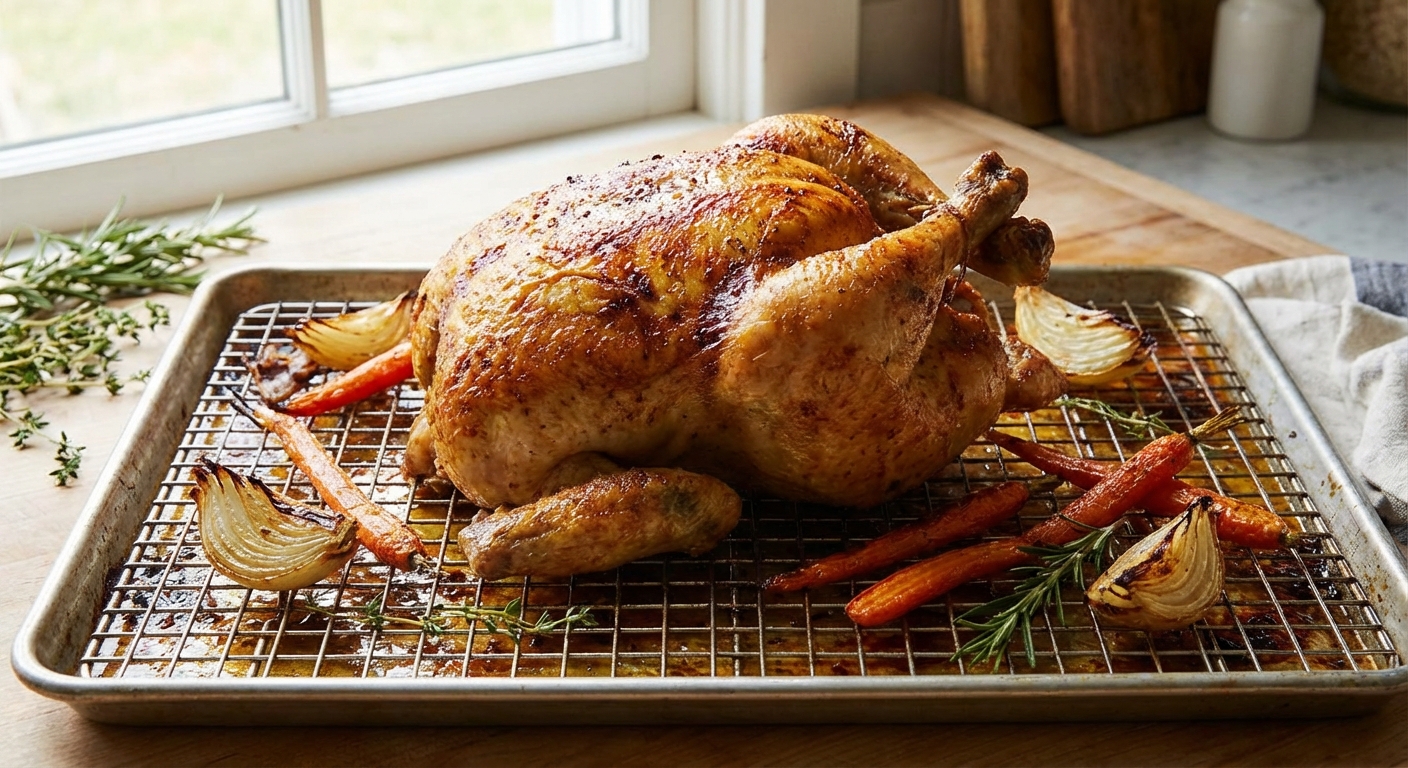
A whole rotisserie-style roast chicken with deeply golden, crisp skin resting on a carving board with lemon and herbs nearby

If you have ever walked past the glowing grocery-store rotisserie case and thought, why does that chicken look like it has its life together, this recipe is for you. We are going for that same juicy, savory, gently garlicky, smells-like-a-win chicken, except you do it in your own oven, in your own sweatpants, with full control over the seasoning.

The secrets are not secret at all: dry brine (salt early), dry skin (paper towels are your friend), high heat to start, and a butter-oil rub that actually sticks. And to keep your paprika and garlic powder from going from “toasty” to “why is this bitter,” we add the spices right before roasting, mixed into the butter and oil. Crisp edges, a juicy breast, and dark meat that tastes like it was born to be shredded into tacos at midnight.

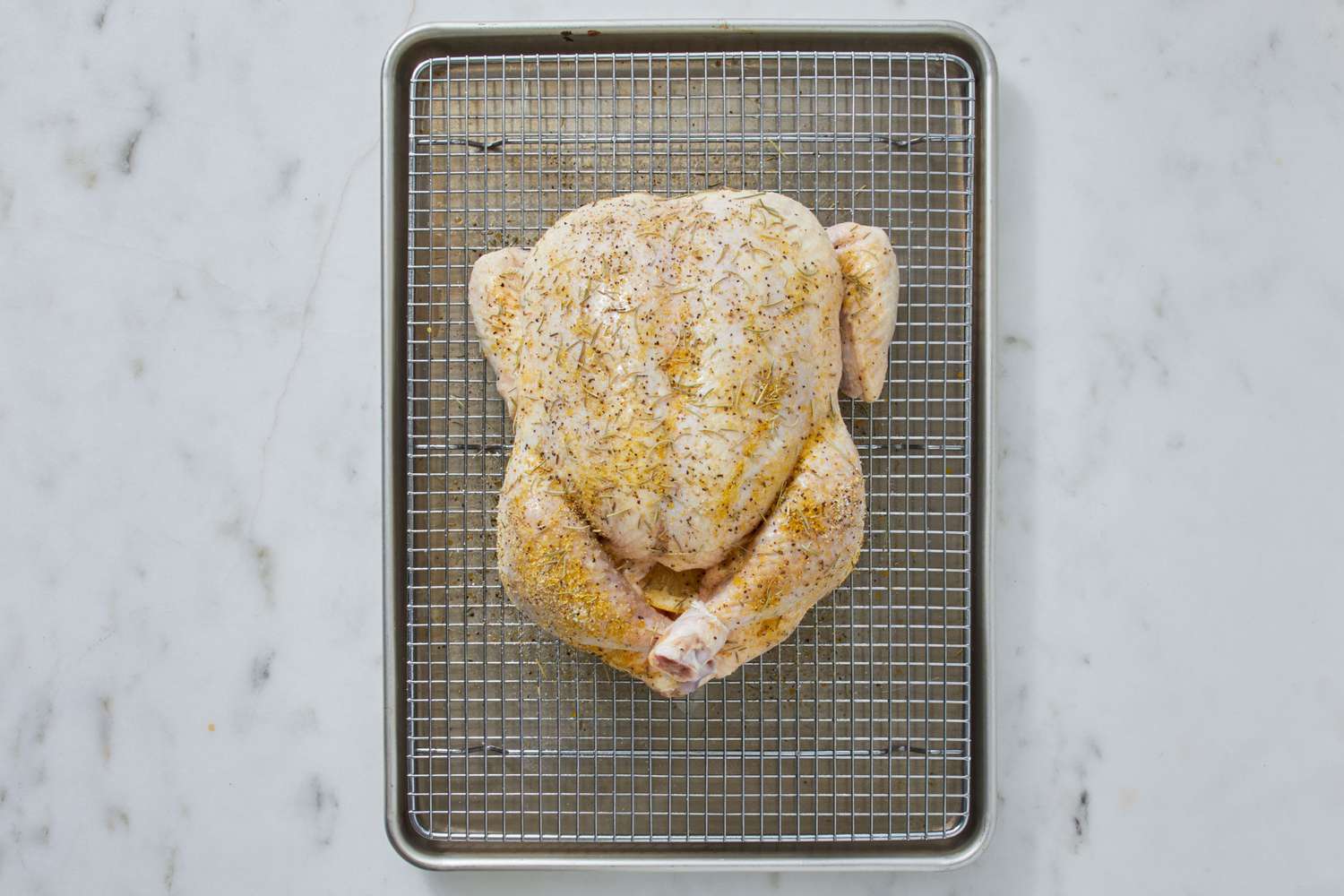
A whole raw chicken seasoned and sitting on a wire rack over a sheet pan, ready to roast

Why It Works

  • Dry brine = juicy meat. Salting ahead gives the chicken time to season itself all the way through and hold onto moisture.
  • Baking powder (a little) = crisp skin. It raises the pH and helps the skin brown and blister without tasting like a science project.
  • Spices added right before roasting = better flavor. Paprika and garlic powder are prone to burning at high heat, so we mix them into the butter-oil rub and apply at the last minute.
  • High heat first, then moderate heat. You get color quickly without drying out the breast.
  • Temperature, not vibes. Pulling the chicken when the breast hits 155 to 160°F and resting it gets you juicy slices. If you prefer the simplest conservative rule, cook breast to 165°F.

Storage Tips

Cool it fast: Let carved chicken cool at room temp for about 20 to 30 minutes, then refrigerate. Do not leave it out for hours while you “pick at it.” (No judgment. Just facts.)

  • Fridge: Store meat in an airtight container for up to 4 days. Keep skin separate if you want it to stay crisp.
  • Freezer: Freeze shredded or chopped meat for up to 3 months. Wrap tightly or use a freezer bag with as much air pressed out as possible.
  • Reheat without drying out: Warm in a covered skillet with a splash of broth, water, or pan drippings. Or microwave in short bursts with a damp paper towel over the top.
  • Bonus move: Simmer the carcass with onion, garlic, and a bay leaf for an easy stock. Your future soups will write you a thank-you note.

Common Questions

Do I have to truss the chicken?

No, but it helps. Trussing keeps the breast from overexposing itself to the heat and helps the bird cook more evenly. If you do not have kitchen twine, tuck the wing tips behind the shoulders and tie the legs with any clean cotton twine, or simply roast untrussed and keep an eye on temperature.

What temperature should I roast a whole chicken to?

I pull it when the thickest part of the breast hits 155 to 160°F, and the thickest part of the thigh is 170 to 175°F. During a 15 to 20 minute rest, the breast usually climbs, and the meat stays hot long enough to be safe and juicy. USDA guidance is 165°F for poultry (instant-read), so if you want the simplest, most conservative rule, cook the breast to 165°F.

Why is my skin not crispy?

Usually one of these: the chicken was not dry enough, the oven was not hot enough, or the pan was crowded and steaming the bird. Pat dry thoroughly, roast on a rack, and start hot. Also, avoid basting. It is basically a crispness reset button.

My skin is brown but not crisp. What happened?

Brown can happen even when the skin is still a little rubbery. That is usually moisture or steam. Make sure the chicken is air-dried uncovered in the fridge, use a rack for airflow, and keep veggies in the pan under the rack (not piled up around the bird). If you need a last-minute fix, bump the oven to 425°F for 5 to 10 minutes at the end and watch closely.

Can I use this seasoning on chicken pieces instead?

Absolutely. Use the same spice-butter rub on thighs, drumsticks, or bone-in breasts. Roast at 425°F until done, usually 30 to 45 minutes depending on size, and aim for 170°F on dark meat for best texture.

What if I only have salted butter?

Use it, just reduce the added salt slightly. The dry brine is doing the heavy lifting here, so keep the rub balanced and do not go wild.

What if my butter smokes at 450°F?

Some ovens run hot, and butter can brown fast. Two easy fixes: use 1 tbsp butter + 2 tbsp oil in the rub, or start at 425°F for the first blast instead of 450°F. You still get great color.
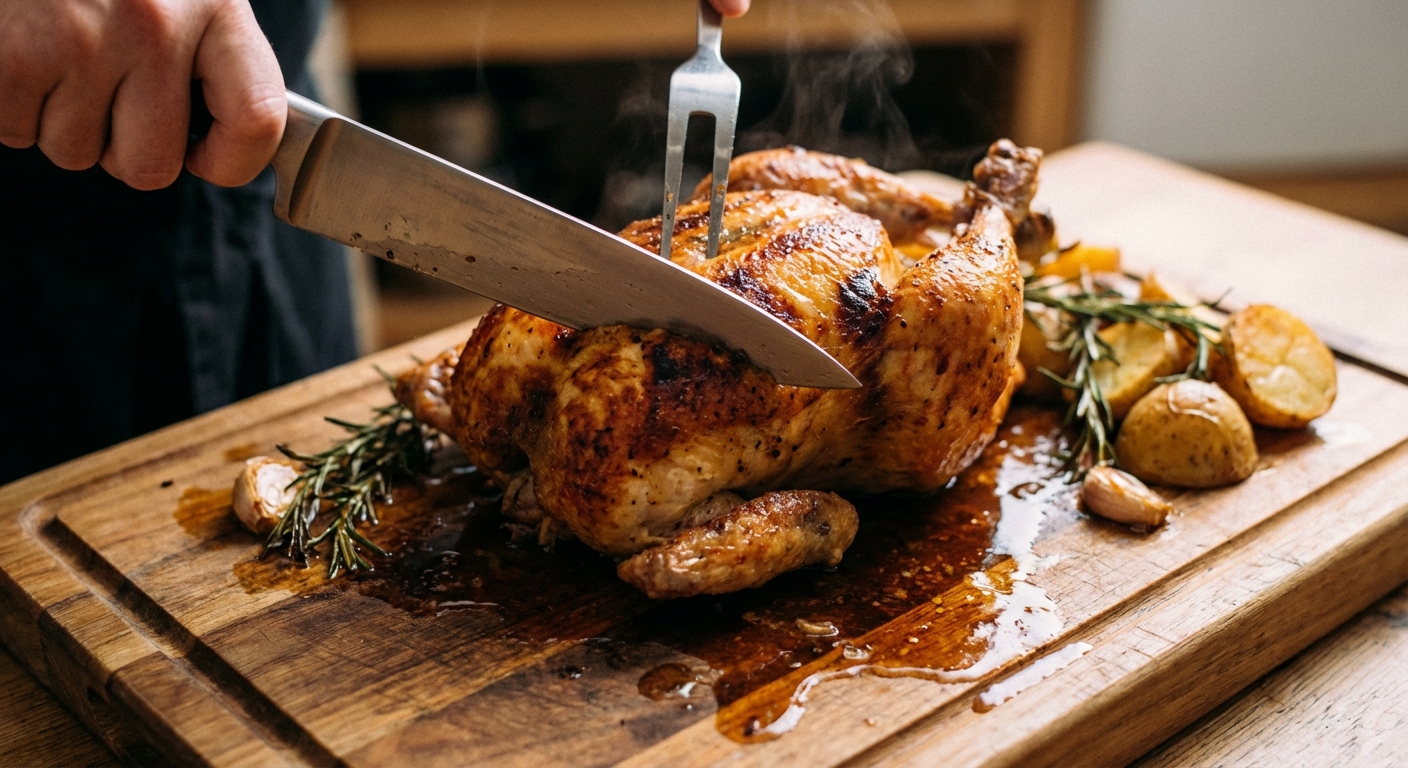

A roasted chicken being carved with a knife on a wooden cutting board, with juices pooling slightly

I started making “rotisserie style” chicken at home because I got tired of buying a store bird for the meat and then quietly resenting the mystery seasoning that tastes like onion powder and someone else’s decisions. The first time I nailed it, my kitchen smelled like a tiny deli that also had its life together. Now it is my favorite move when I need dinner plus leftovers that can shapeshift into sandwiches, ramen, salads, and the kind of late-night fridge improv that makes you feel suspiciously accomplished.