What makes béarnaise different from hollandaise?
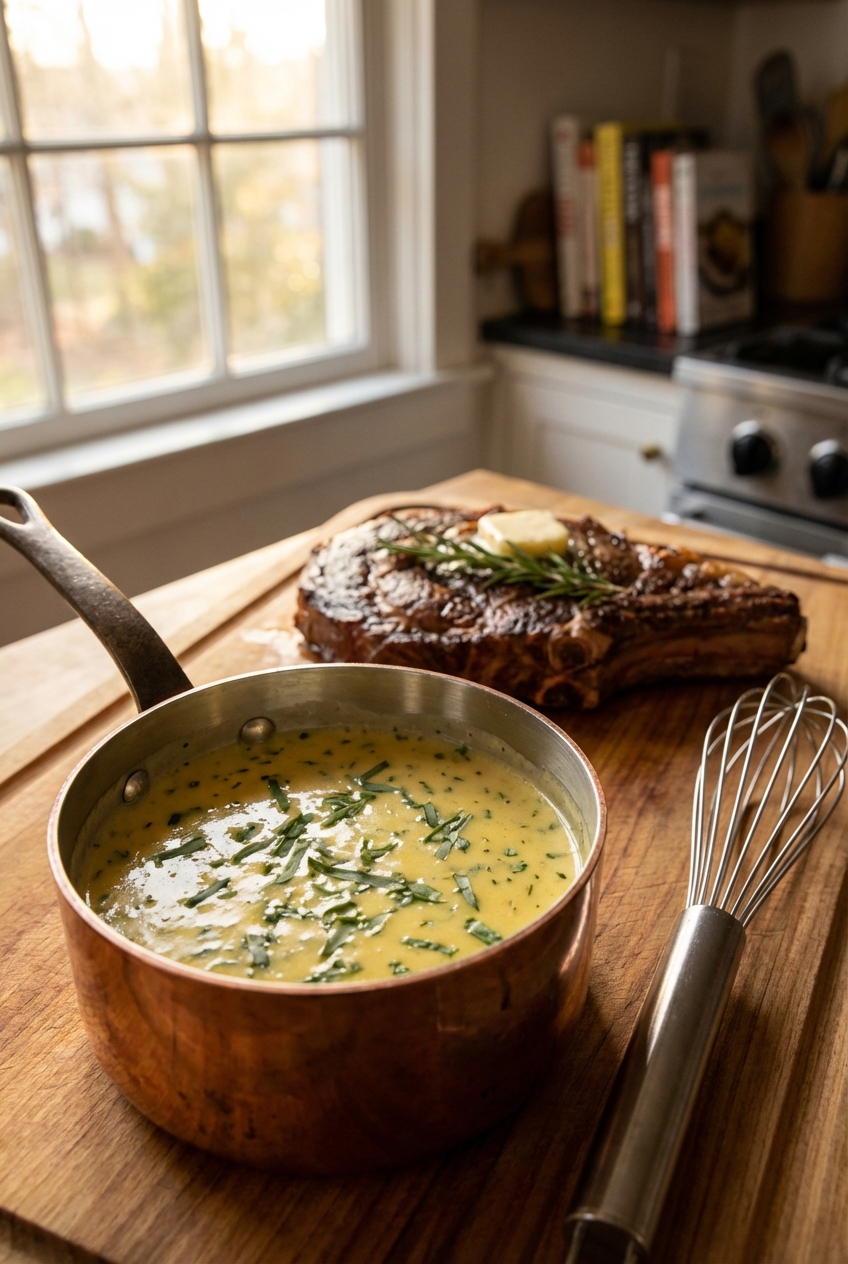
Béarnaise is basically hollandaise’s louder, more herbal cousin. Both are warm emulsions of egg yolk and butter, but béarnaise is flavored with a vinegar reduction that includes shallots and tarragon (often with peppercorns). Hollandaise is usually lemon-forward and simpler.
Why is my béarnaise too thin?
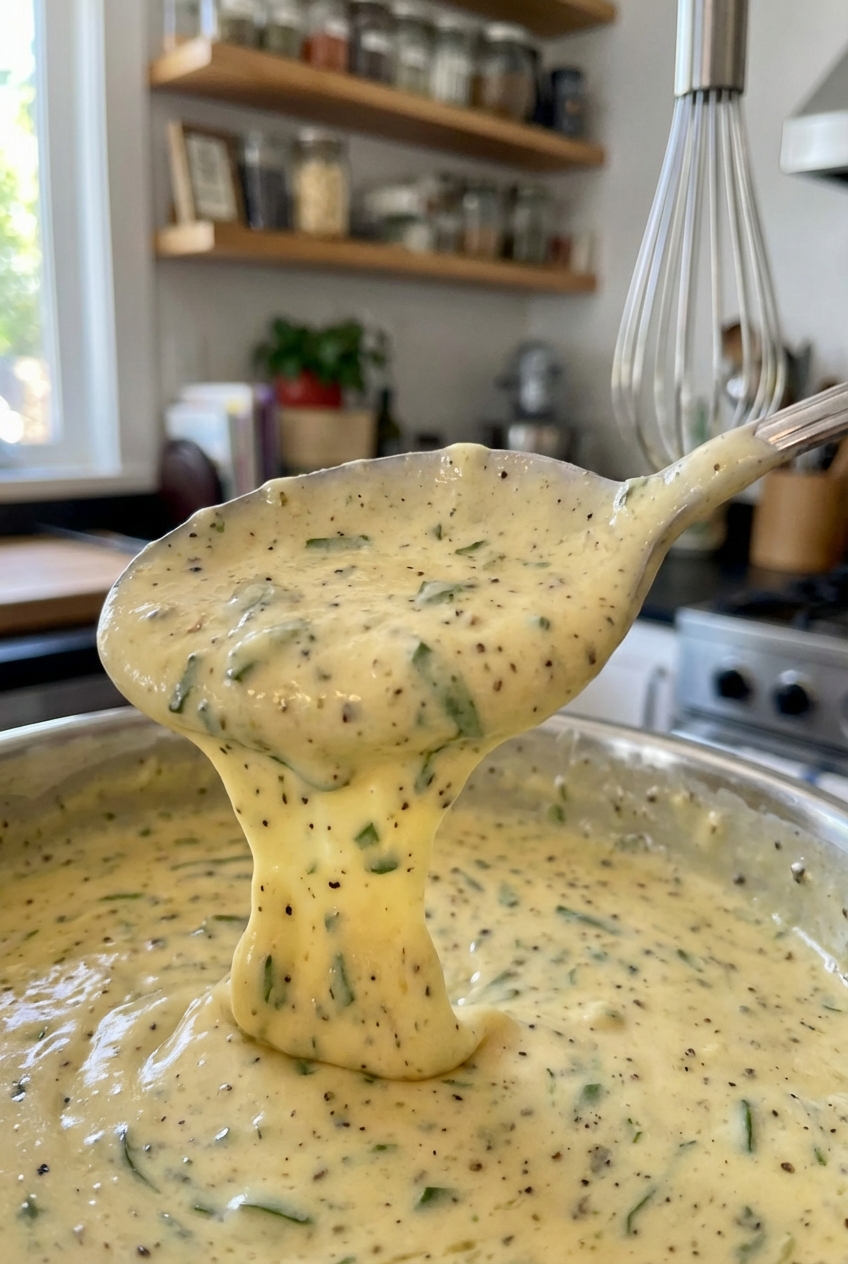
Usually one of three things: the yolks did not thicken enough over heat, the butter went in too fast, or the sauce got too warm and started to separate. Try whisking over gentle heat for 20 to 40 seconds to thicken, and make sure your butter is warm, not screaming hot.
Why did it scramble?
Heat was too high or the pan was direct heat instead of a gentle double boiler. Next time, keep the water at a bare simmer and lift the bowl off the heat if you feel it getting too hot.
Can I make béarnaise without alcohol?
Yes. Replace the white wine with more water or a splash of low-sodium chicken stock. You still want the vinegar for that signature tang.
Can I use dried tarragon?
You can, but fresh tarragon is the point here. If you only have dried, use 1 teaspoon dried in the reduction and let it steep, then strain well. The flavor will be softer and less bright.
Should I use clarified butter?
You can use either. This recipe works with regular melted butter, which is what most of us actually do at home. If you want the sauce a little more stable, use clarified butter and keep it warm (not hot).
Is it safe to eat?
Traditional béarnaise uses gently cooked egg yolks. The yolks are whisked over gentle heat until thickened, then the sauce is served warm, not hot. If you are concerned, use pasteurized eggs, and do not hold the sauce at room temperature for long periods.