Mom's Best Recipes
Recipe

Rustic Bechamel Sauce

A velvety, indulgent white sauce with cozy butter flavor and just enough nutmeg to make it feel special. Perfect for lasagna, mac and cheese, and any baked dish that wants a creamy upgrade.

Author By Matt Campbell
4.8
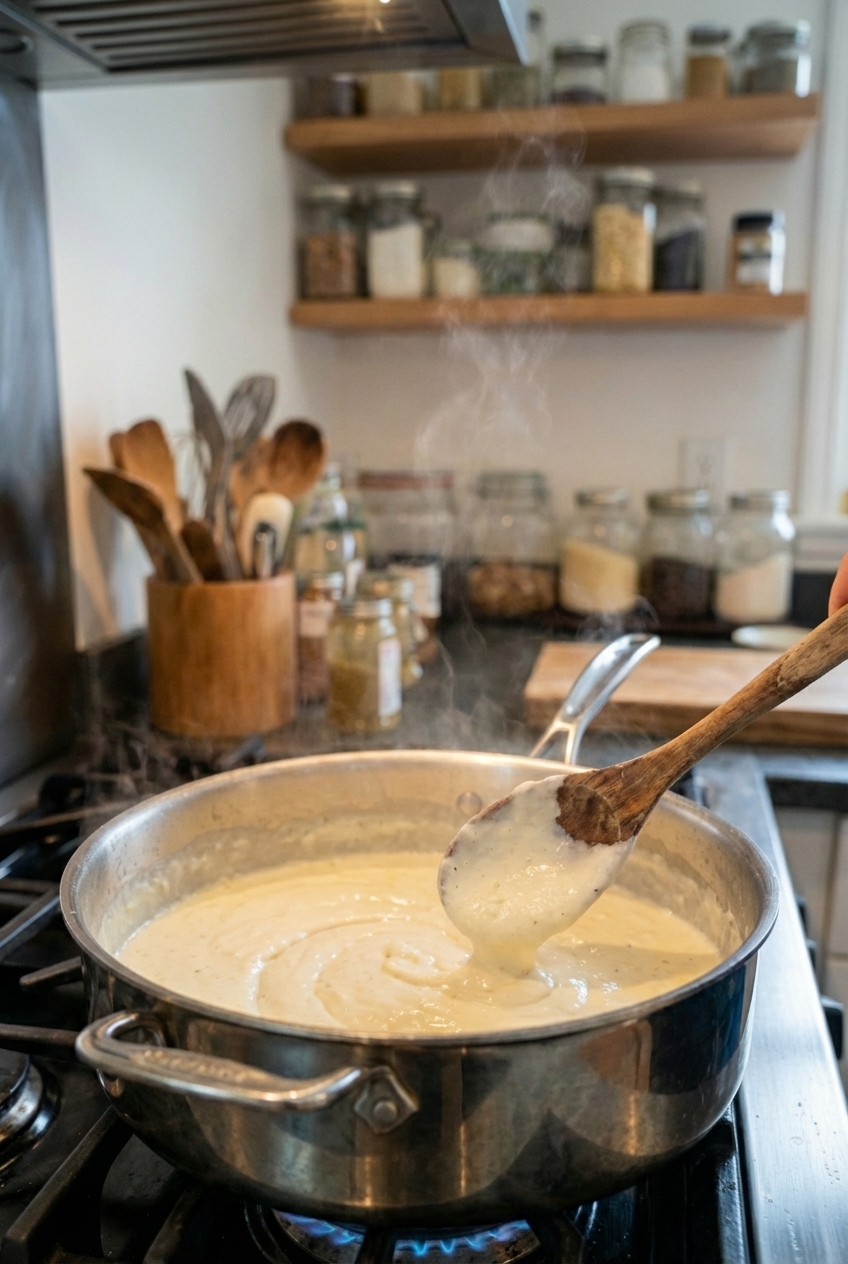
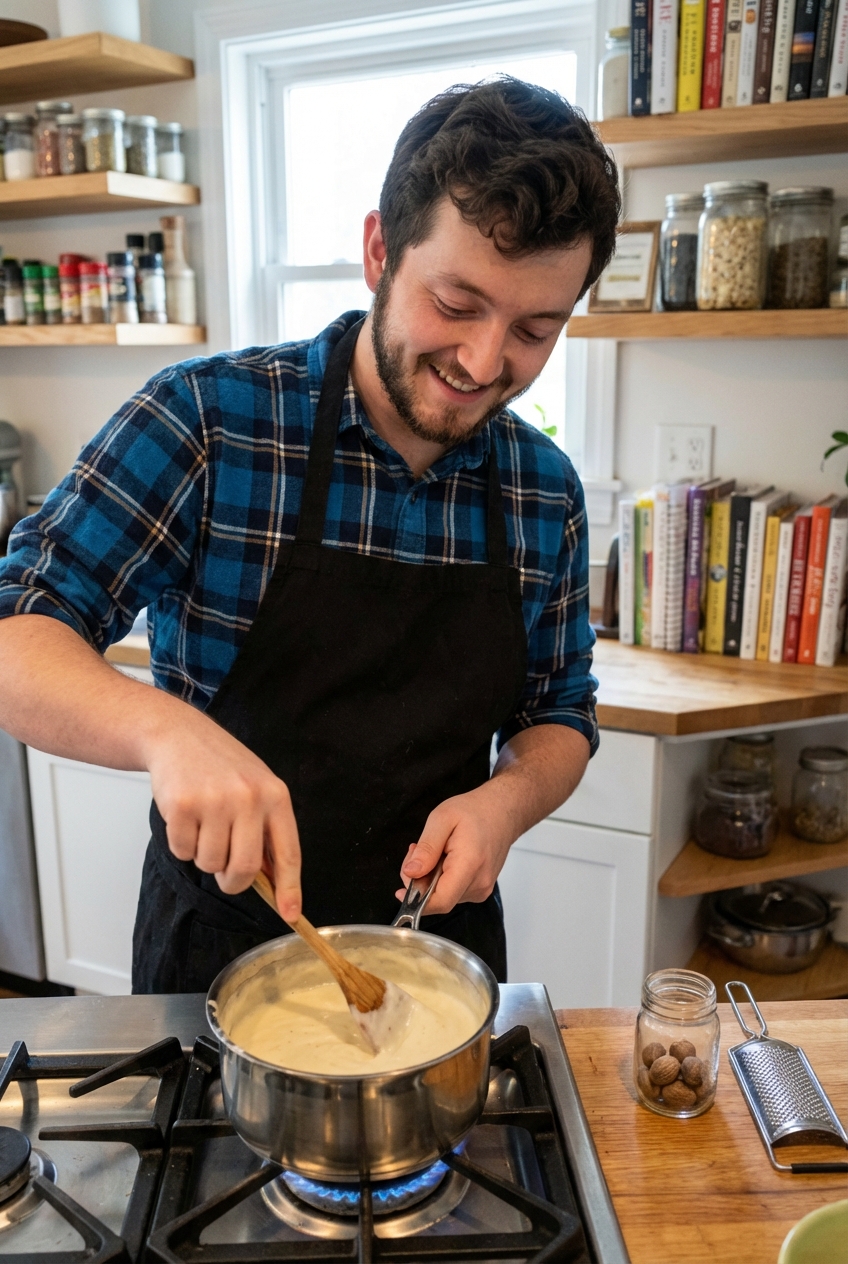
A small saucepan of thick, creamy bechamel sauce being whisked on a stovetop with a wooden spoon and nutmeg nearby

Bechamel is one of those sauces that feels fancy until you actually make it, then you realize it is basically butter, flour, milk, and confidence. This is my rustic version: extra cozy, a little more forgiving, and built for real home kitchens where you might be juggling homework questions, a sink full of dishes, and a pan that is heating faster than you planned.

What makes it “rustic” here is the flexibility: warm milk for smoothness, easy thickness adjustments, and a couple of optional add-ins (garlic, Parmesan) that make it feel like you meant to do all of this on purpose.

We are going for decadent and indulgent without being precious. That means a properly cooked roux (no raw flour taste), warm milk for smoothness, and a finishing move that matters: seasoning that makes the sauce taste like something, not just “white.” Once you have this down, you have a creamy backbone for casseroles, pasta bakes, pot pies, veggies, and anything that deserves a comforting blanket.
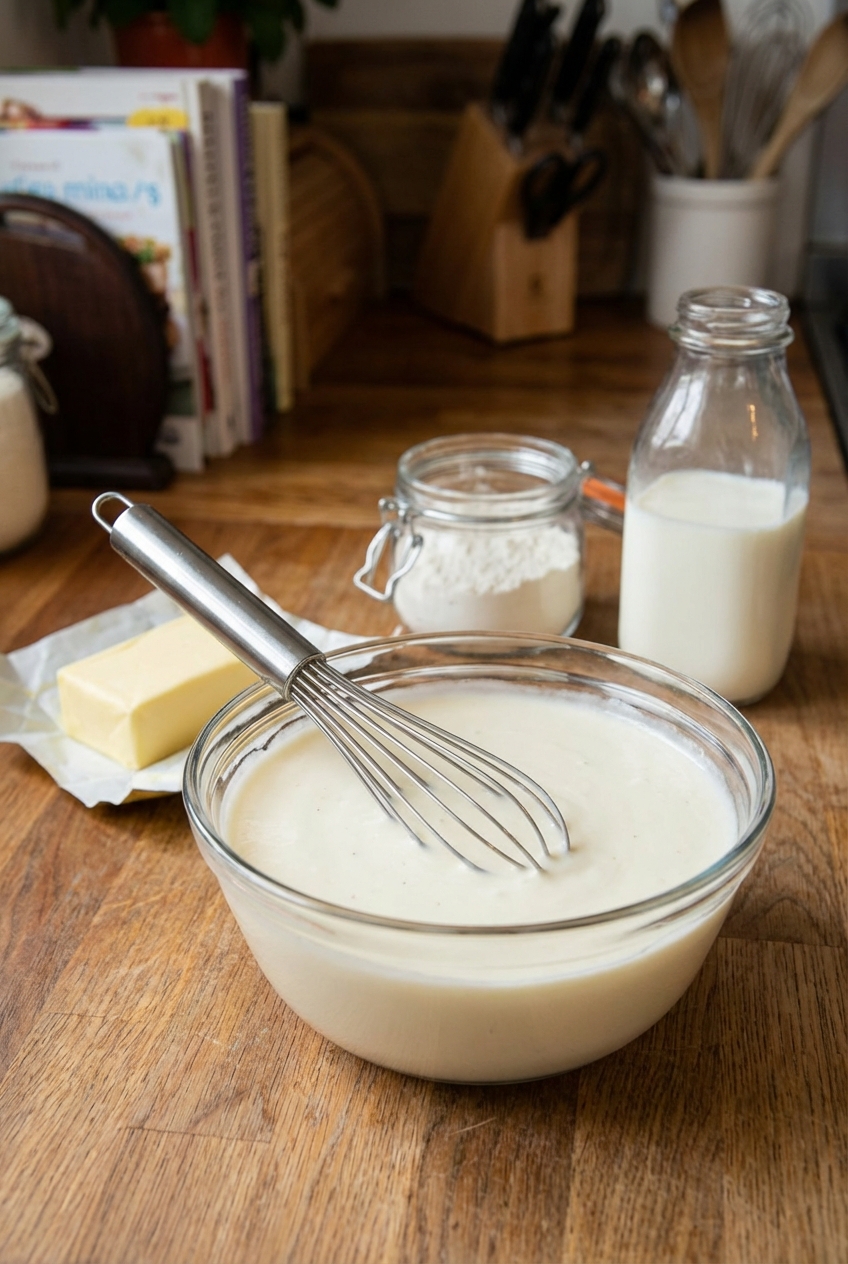
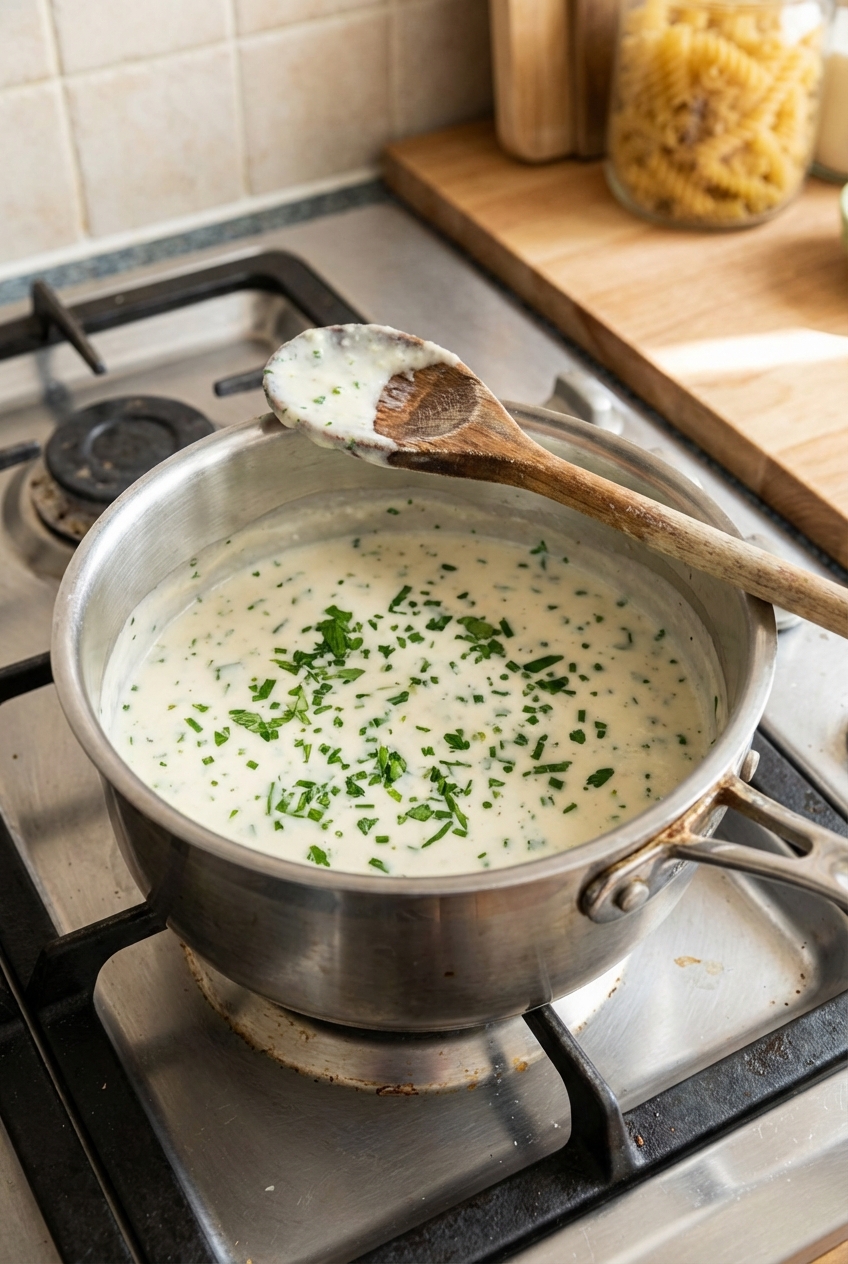
A whisk resting in a bowl of smooth white sauce on a wooden counter with butter, flour, and milk nearby

Why It Works

  • Silky texture without stress: Warm milk plus steady whisking keeps things smooth and lump-free.
  • Flavor that shows up: Salt, white pepper, and nutmeg bring warmth and depth, even if you are using it inside a big baked dish.
  • Rustic flexibility: Works with whatever milk you have, and it is easy to thicken or loosen on the fly.
  • Make-ahead friendly: Stores well and reheats well with one simple trick (a splash of milk).

Pairs Well With

Storage Tips

How to Store Bechamel

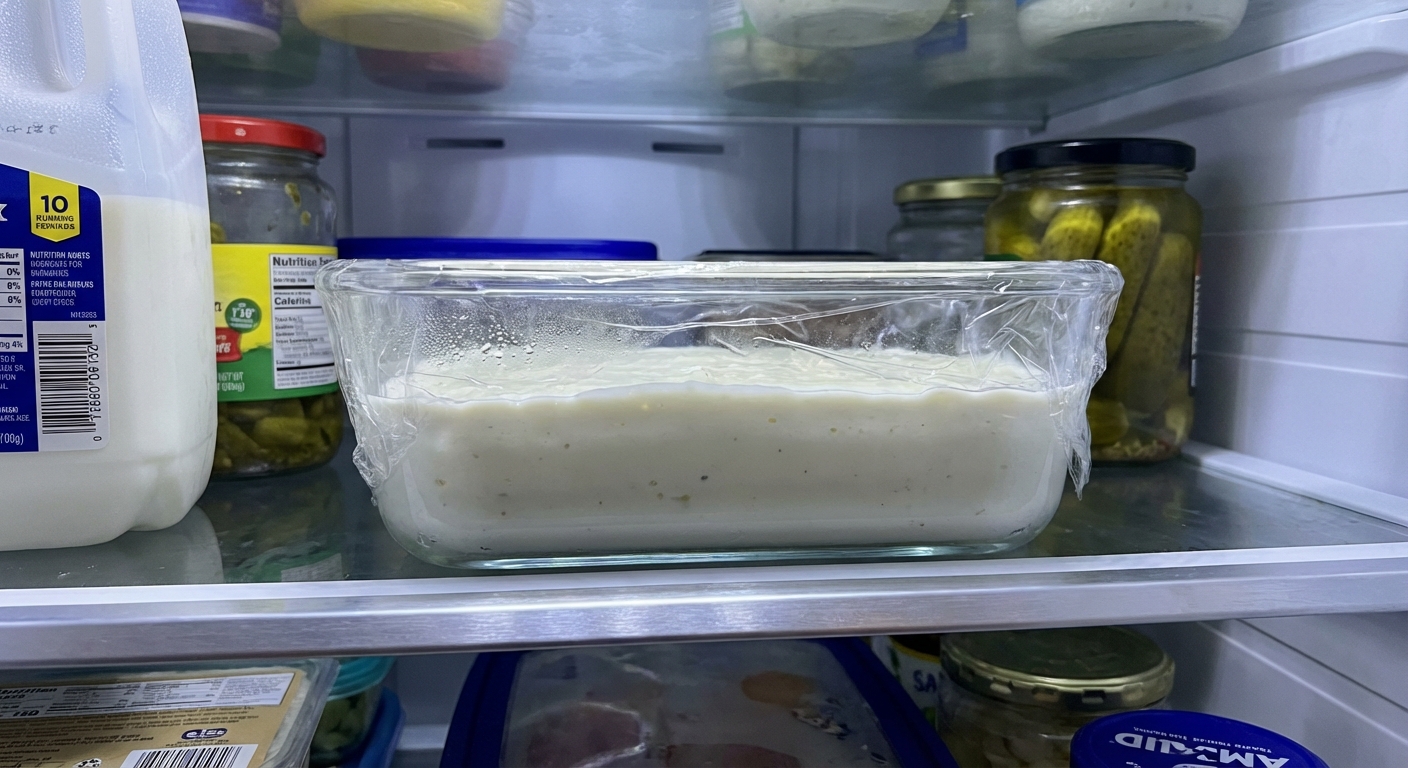
Refrigerator: Cool the sauce, then store in an airtight container for up to 4 days. For best texture, press plastic wrap directly against the surface before sealing. That prevents a skin from forming.

Reheating: Warm gently in a saucepan over low heat, whisking often. Add 1 to 3 tablespoons milk as needed to bring it back to silky. If it looks split or grainy, keep the heat low and whisk steadily and it will often smooth out. If it still will not cooperate, an immersion blender can bring it back.

Freezer: You can freeze it, but separation is common after thawing. If you do freeze, cool completely and freeze up to 2 months. Thaw overnight in the fridge and reheat slowly, whisking with a splash of milk. It is typically best used in baked dishes after freezing.

A glass container of cooled bechamel sauce in a refrigerator with plastic wrap pressed on the surface

Common Questions

Common Questions

Why is my bechamel lumpy?

Usually it is one of two things: the milk was added too fast, or the roux and milk were too far apart in temperature. Fix it by whisking vigorously while simmering gently for a minute or two. If it is still stubborn, blend with an immersion blender or pour through a fine-mesh sieve.

How do I know when the roux is cooked enough?

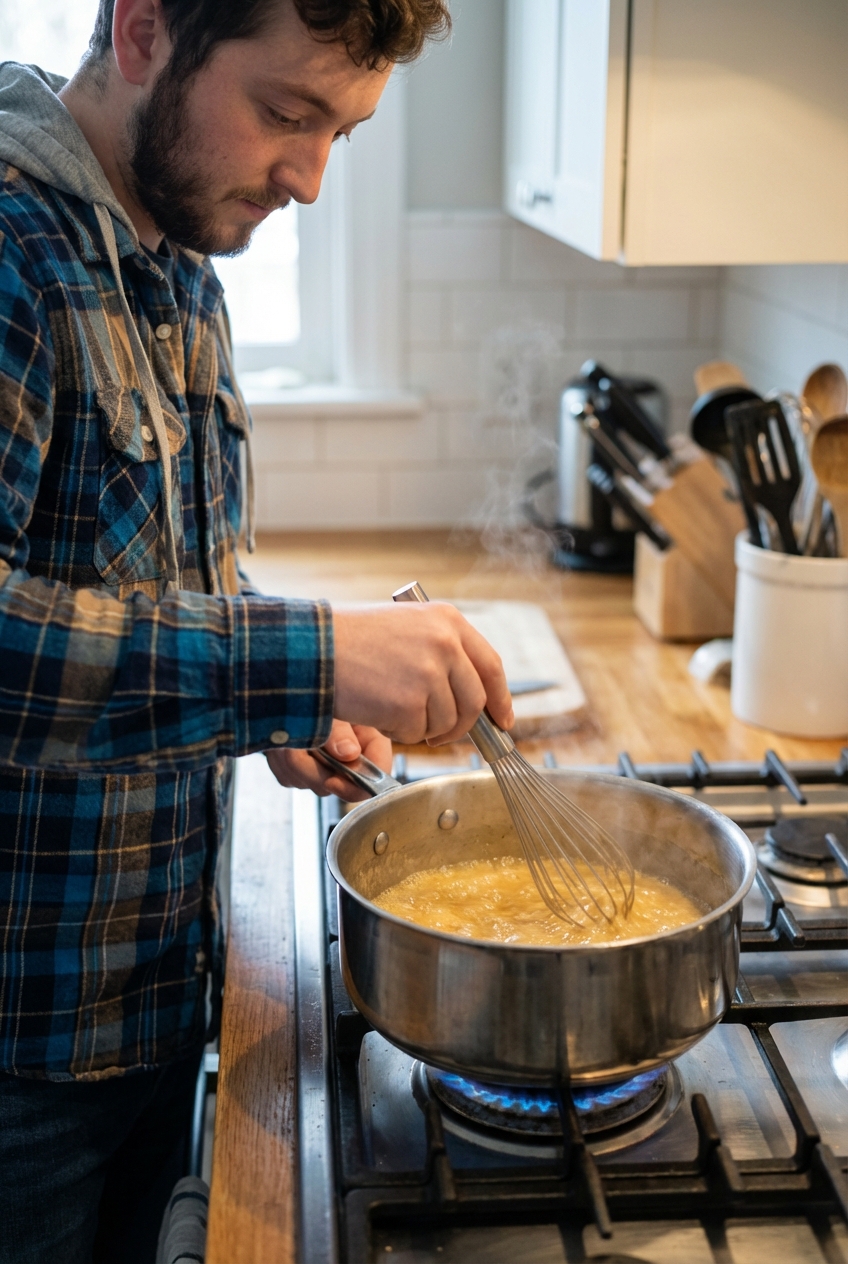
For bechamel, you want a blonde roux: bubbly, pale golden, and it smells lightly nutty, not like raw flour. The exact timing depends on your stove, so follow the color and aroma first. On many stoves it takes around 2 to 4 minutes once the flour is whisked in.

Can I use half-and-half or cream?

Yes. It will be richer and thicker. If using cream, you may want to reduce the flour slightly or be ready to thin with a splash of milk.

Can I use non-dairy milk?

You can, but pick an unsweetened option. Oat milk makes a surprisingly good bechamel. Almond milk works but can be thinner. The flavor will change, so season to taste.

What is the best nutmeg for bechamel?

Freshly grated nutmeg is the move if you have it. If not, ground nutmeg is totally fine. Start small, taste, and add a whisper more.

How do I avoid scorching?

Keep the heat at a gentle simmer, whisk often, and do not walk away during the thickening stage. If you see brown specks or smell anything toasted, it is usually scorched on the bottom. Do not scrape it up. Pour the sauce into a clean pan, leaving the bottom bits behind. If it tastes burnt, it is better to start over.

The first time I made bechamel on my own, I treated it like a high-stakes exam. I was whisking like my life depended on it, convinced it would break, lump, or somehow judge me. Then it clicked: bechamel is not delicate, it just wants your attention for a few minutes.

Now it is one of my favorite “back pocket” sauces because it turns a random Tuesday fridge situation into something that feels like you planned it. Leftover pasta, a little cheese, frozen broccoli, maybe some chicken. Add a cozy white sauce and suddenly everyone is hovering around the stove asking what smells so good.