Mom's Best Recipes
Recipe

Rustic Lamb Shank Recipe

Fall-apart lamb shanks braised low and slow in a red wine, tomato, and herb gravy. Cozy, deeply savory, and built on a classic braise technique with tender vegetables and a sauce worth dragging bread through.

Author By Matt Campbell
4.8
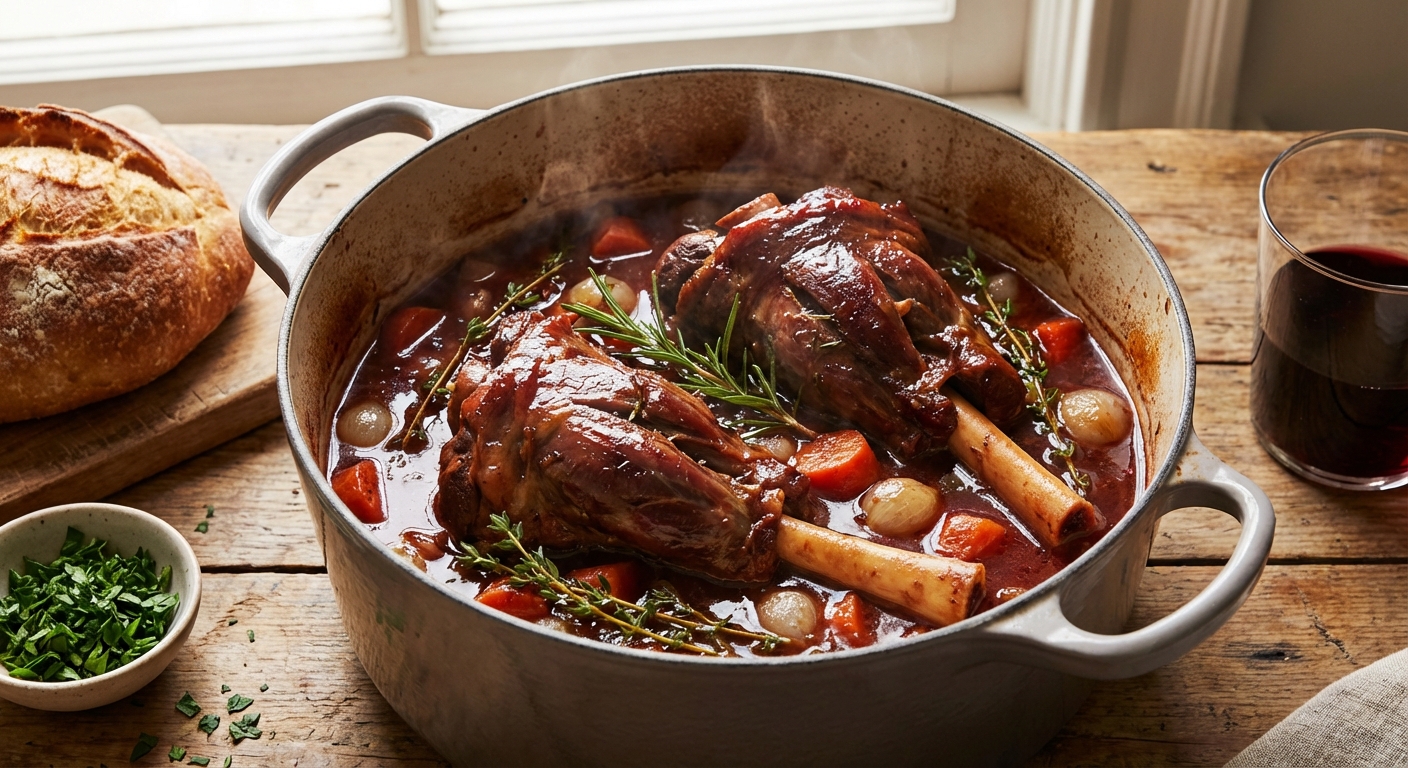
A real photograph of two braised lamb shanks in a Dutch oven with glossy red wine gravy, carrots, onions, and herbs on a wooden table

Lamb shanks are one of my favorite kitchen magic tricks. They start out tough and a little intimidating, then a few hours of gentle heat turns them into spoon-tender, pull-apart greatness with a sauce that tastes like you worked way harder than you did.

This rustic lamb shank recipe keeps the bones of a classic French and Italian style braise: aromatics, tomato paste, red wine, broth, rosemary, and thyme. I also like a small modern boost from Worcestershire and optional smoked paprika. Nothing weird, nothing fussy, just a solid pot of comfort.

Make it for a Sunday dinner, a cold weeknight when you need comfort, or any time you want a meal that makes the table go quiet for a minute. Taste as you go. You are allowed.
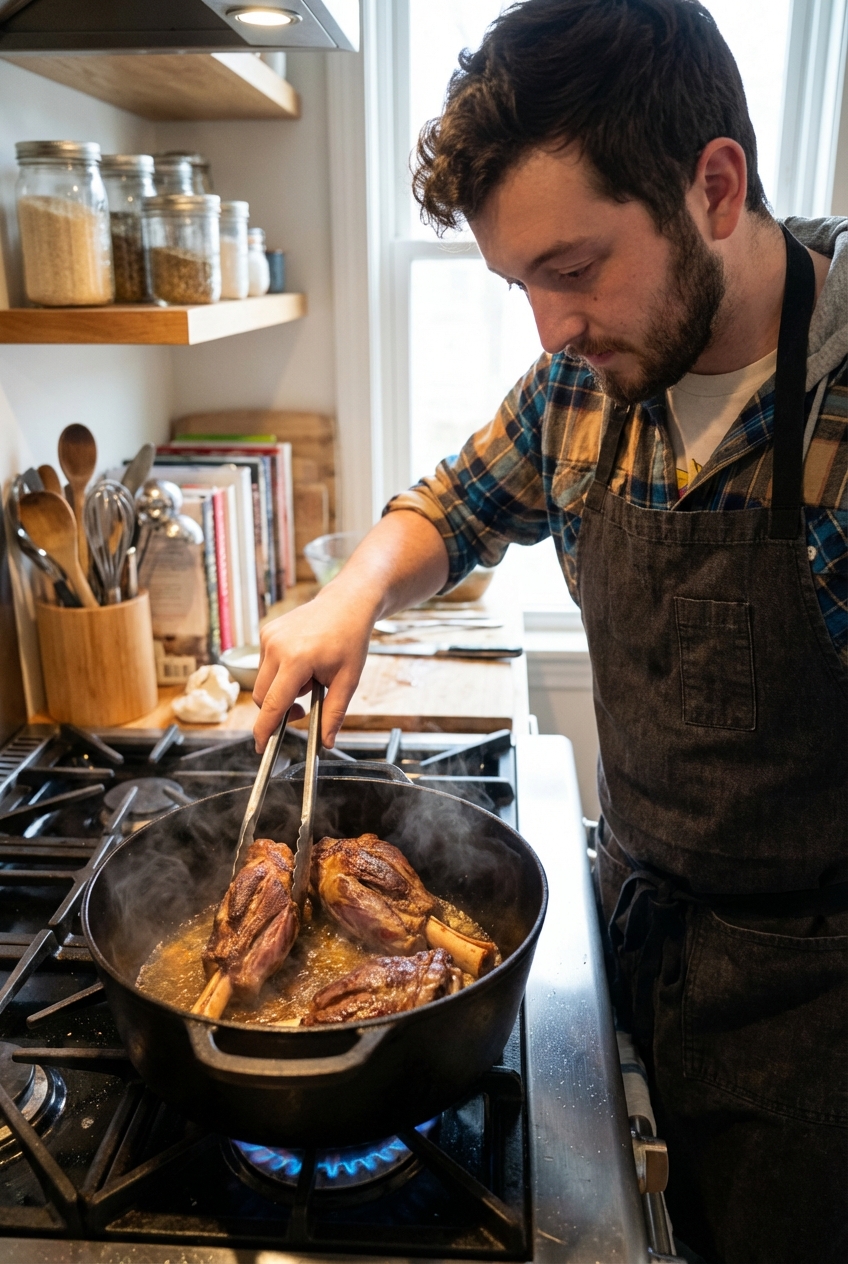
A real photograph of lamb shanks being seared until deeply browned in a Dutch oven on a stovetop

Why It Works

  • Classic braise flavor, with a little extra depth: Browning the shanks and cooking tomato paste until it darkens builds that savory base. Wine and stock do the heavy lifting.
  • Fall-apart texture: Shanks are full of connective tissue, so low and slow braising melts them into silky tenderness.
  • A sauce that actually tastes like something: Aromatics, herbs, and reduction turn the pot liquid into a glossy, clingy gravy.
  • Forgiving timing: If it needs an extra 20 to 30 minutes, it gets better, not worse.

Pairs Well With

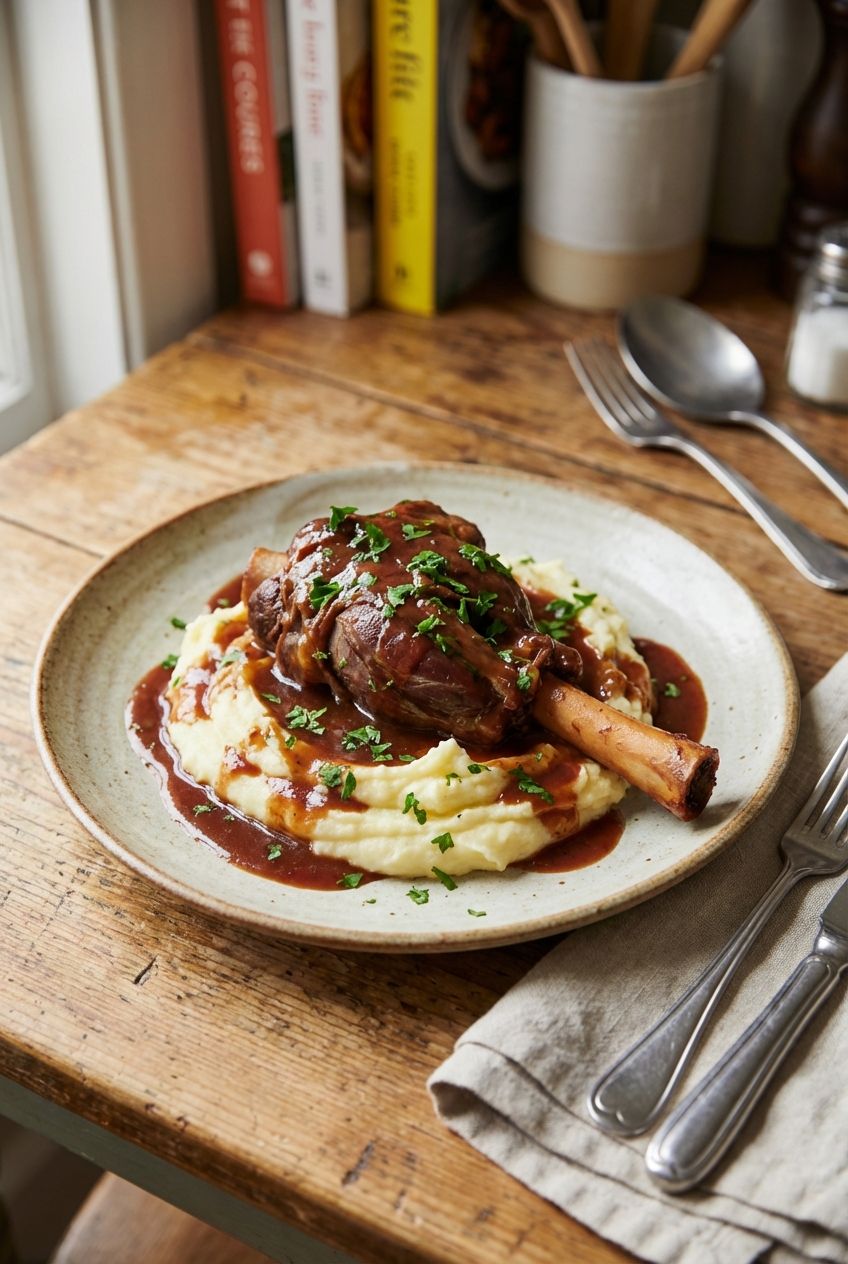
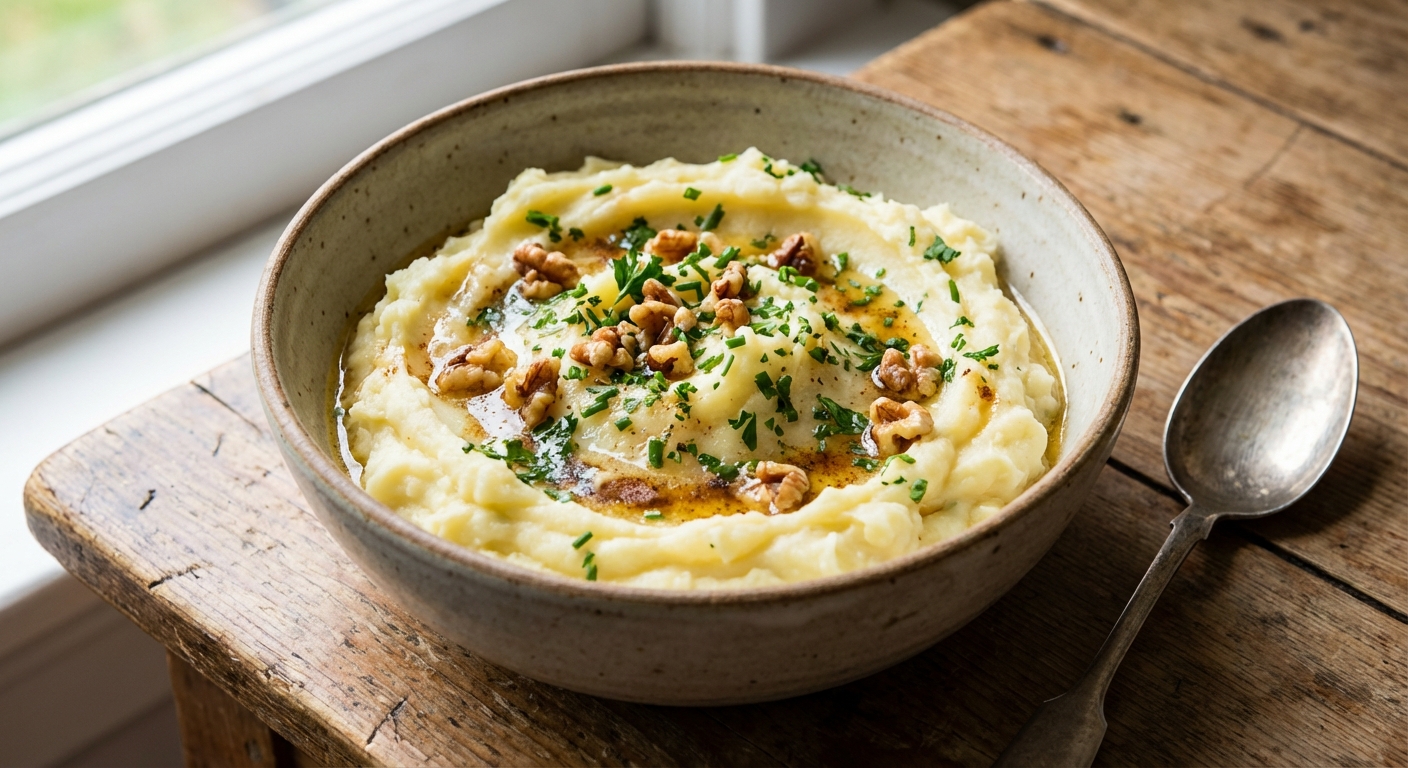
  • A real photograph of creamy mashed potatoes with butter melting on top in a bowl

    Buttery Mashed Potatoes

  • A real photograph of polenta in a shallow bowl topped with parmesan and black pepper

    Creamy Parmesan Polenta

  • A real photograph of roasted carrots and parsnips on a baking sheet with browned edges

    Roasted Root Vegetables

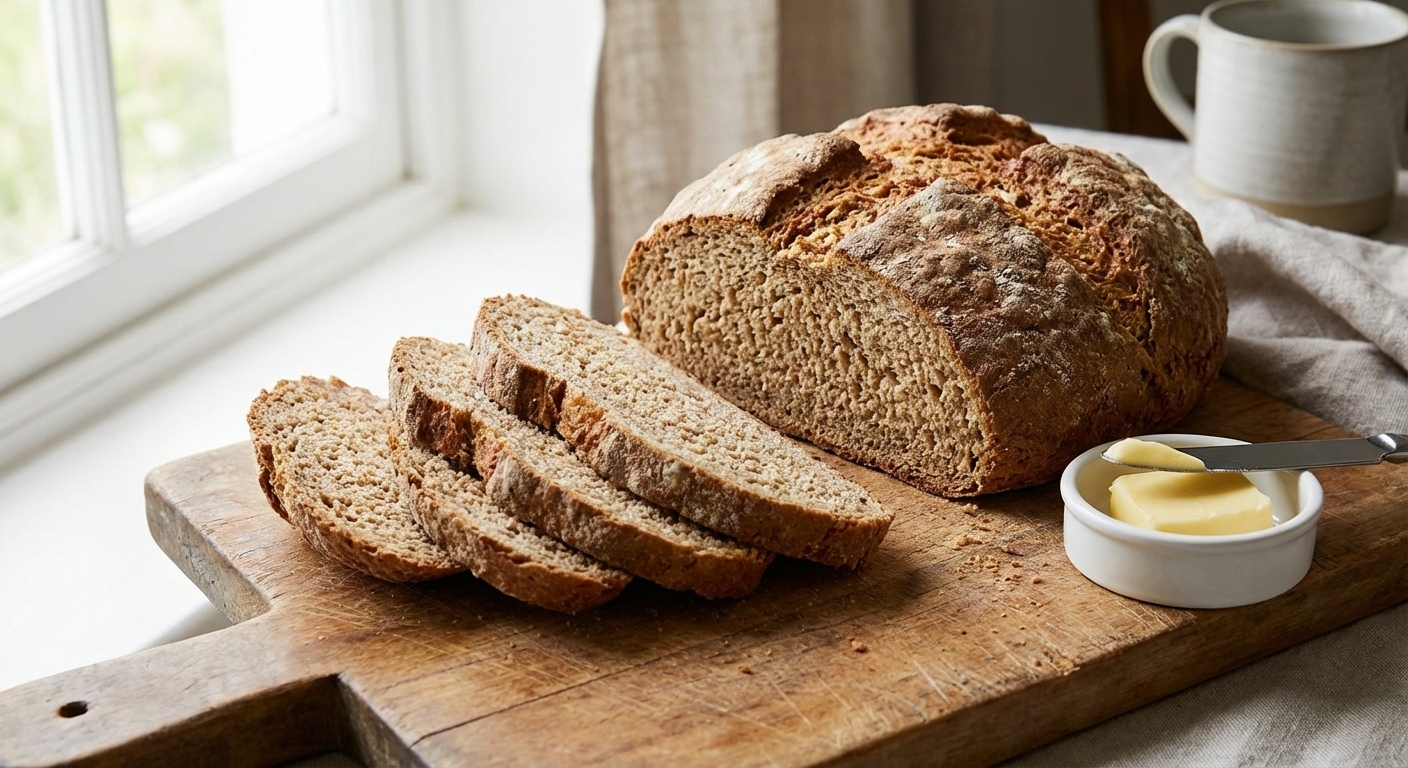
  • A real photograph of rustic bread slices and a small dish of olive oil on a table

    Crusty Bread for Sauce

Storage Tips

Storage and Reheating

  • Refrigerate: Cool lamb and sauce quickly, then refrigerate within 2 hours. Store in an airtight container up to 4 days. Keep the shanks nestled in the sauce so they stay juicy.
  • Freeze: Freeze shanks with sauce (best together) up to 3 months. Thaw overnight in the fridge.
  • Reheat gently: Warm in a covered pot over low heat with a splash of broth or water until hot. Avoid a hard boil, it can tighten the meat.
  • Bonus flavor move: This dish is often better the next day. The sauce settles in and gets even richer.

Common Questions

Common Questions

Do I have to use red wine?

No. You can replace it with more beef or chicken stock. You will lose some of that classic braise depth, so add 1 tablespoon balsamic vinegar at the end for a little backbone.

What kind of wine should I use?

Use a dry red you would drink: Cabernet Sauvignon, Merlot, Syrah, or Chianti are all great. Skip anything labeled “cooking wine.”

How do I know when lamb shanks are done?

The best test is tenderness: a fork should slide in with almost no resistance and the meat should start to pull away from the bone. If they are tough, they just need more time.

If you like a numbers check, aim for roughly 190 to 205°F in the thickest part for that shreddable, collagen-melted texture.

Can I make this in a slow cooker?

Yes. Sear the shanks and cook the aromatics on the stove first, then transfer everything to a slow cooker and cook on low 7 to 8 hours. Reduce the sauce on the stove at the end if you want it thicker.

Can I make it ahead for guests?

Absolutely. Braise a day ahead, chill overnight, skim any solidified fat, then reheat gently. Your future self will feel very smart.

The first time I made lamb shanks, I treated them like a high-stakes project. I hovered, I overthought, and I checked the pot like it was going to escape. Then I finally tasted the sauce and realized braising is basically controlled laziness. Brown things well, add a few honest ingredients, and let time do the heavy lifting. Now it is one of my go-to “feed people and look impressive” meals, especially when I want the table to get quiet for a second after the first bite.