Common Questions
What makes these buns “velvety and rich”?
An enriched dough. Milk tenderizes, egg adds a little extra structure and color, and butter brings richness. The result is soft and plush, not dense.
Can I use instant yeast instead of active dry?
Yes. Use the same amount. If you are using instant yeast, you can skip the “wake up the yeast” step and mix it with the dry ingredients, then add the warm milk and egg. The rise time is usually similar, but always follow the dough, not the clock.
Can I make the dough ahead of time?
Yes. After the first rise, cover and refrigerate the dough for up to 24 hours. Let it sit at room temp for 30 to 60 minutes before shaping, then proceed as written.
Do I need a stand mixer?
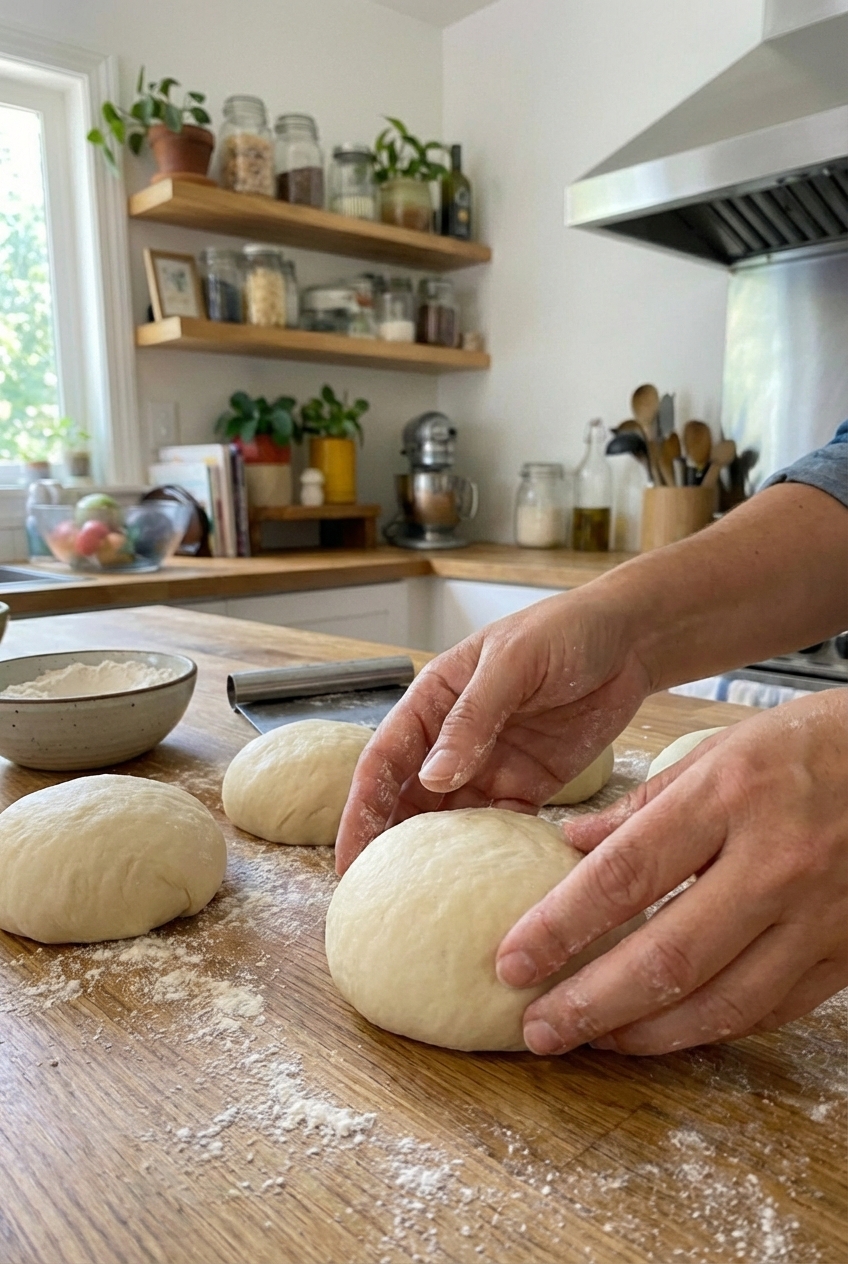
No. It is convenient, but you can knead by hand. Expect about 10 to 12 minutes of kneading until the dough is smooth and stretchy.
Why are my buns dense?
Most common culprits: too much flour, under-kneading, or not letting the dough rise long enough. Use the dough’s feel as your guide. It should be soft and slightly tacky, not stiff.
My dough is not rising. Now what?
Usually it is just cold. Move the bowl to a warmer spot (inside an off oven with the light on works), and give it extra time. If you never saw any bubbles or yeast activity at all, your yeast may be expired.
Why did my buns spread too much?
Most often: overproofing (they rose a little too long) or the dough was too soft from extra liquid or not enough gluten development. Next time, shorten the second rise slightly and make sure the dough passes the “smooth and stretchy” test before shaping.
Can I make these into slider buns?
Absolutely. Divide into 12 pieces instead of 8. Start checking for doneness at 13 to 15 minutes.
Can I skip the egg wash?
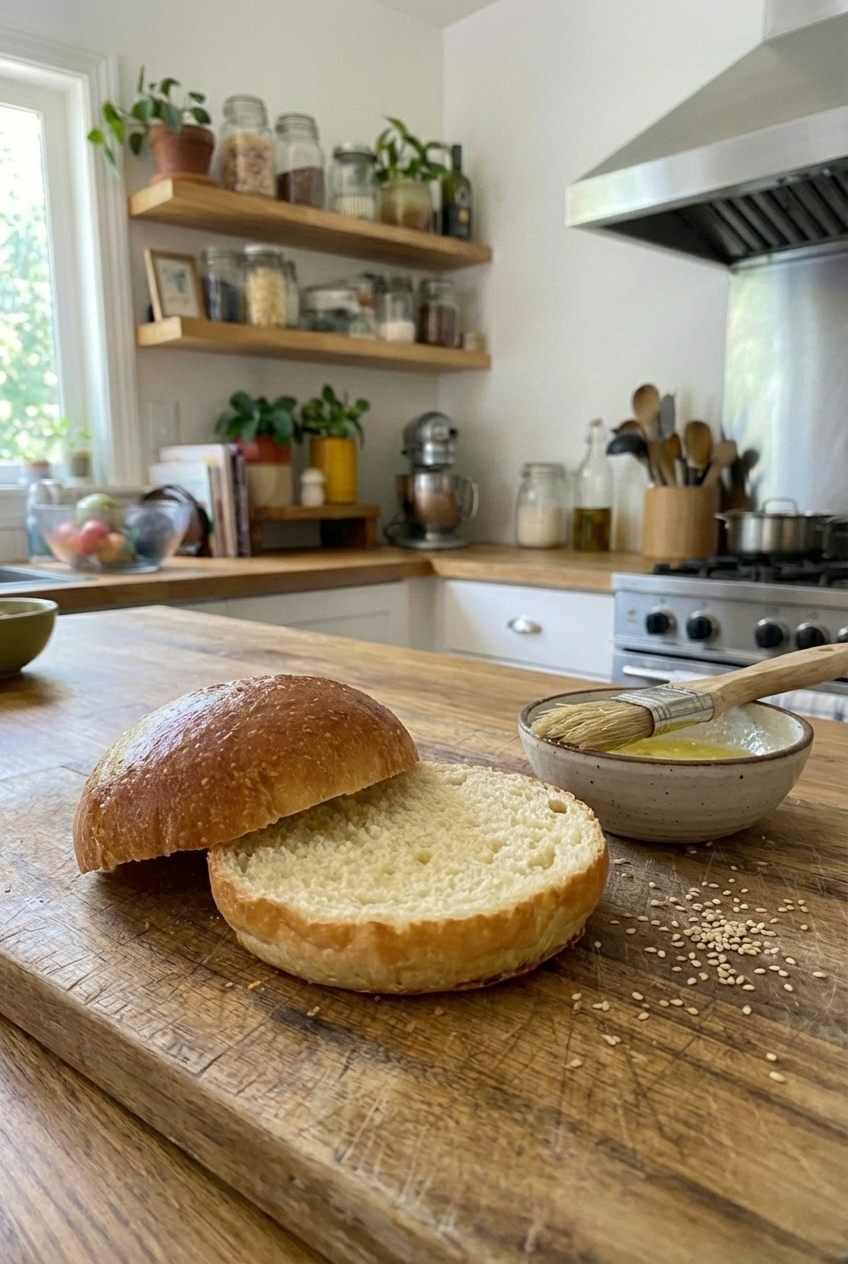
You can, but the buns will look more matte. For a quick substitute, brush with milk or cream. You will still get some browning, just less shine.