Mom's Best Recipes
Recipe

Rustic Duck: Creamy and Dreamy

Crispy-skinned duck legs simmered in a garlic-white wine cream sauce with mushrooms and thyme. Cozy, bold, and shockingly doable at home.

Author By Matt Campbell
4.8
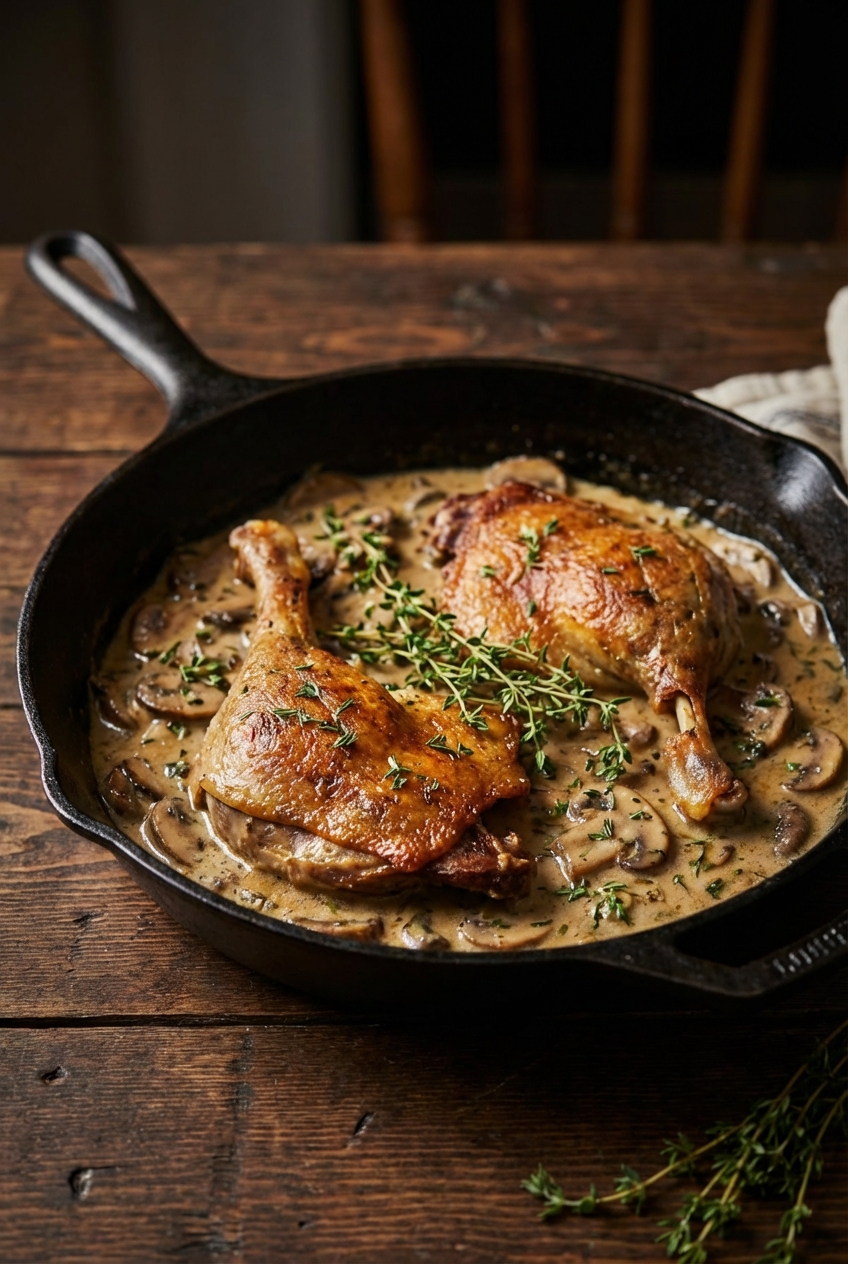
A cast iron skillet with crispy duck legs nestled in a creamy mushroom sauce, garnished with fresh thyme on a rustic wooden table

Duck has a reputation for being a restaurant-only flex, but I promise it can be a Tuesday-level win if you treat it like what it is: rich meat that loves crispy skin, gentle heat, and a sauce that actually tastes like something.

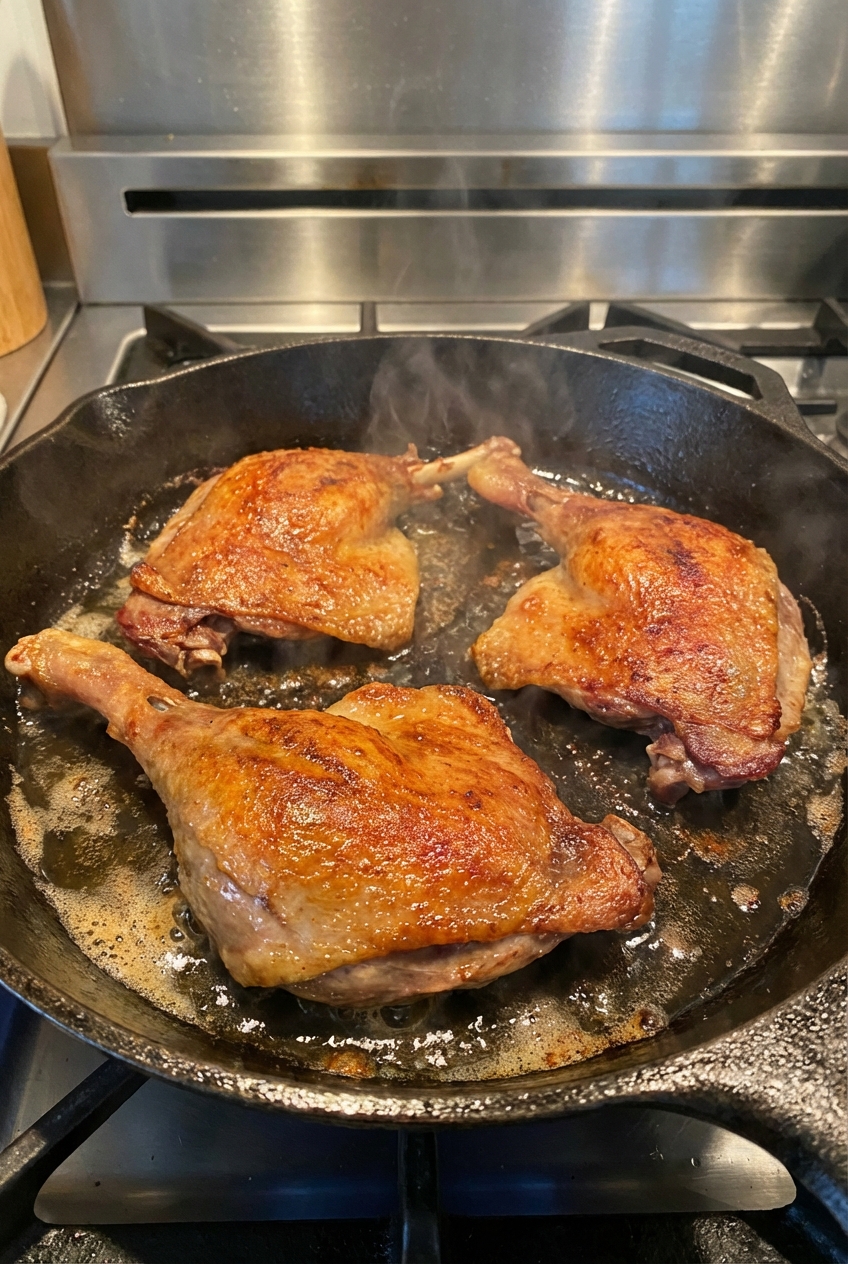
This rustic duck recipe is my favorite kind of “fancy”: simple technique, big payoff. We render the fat slowly so the skin turns crackly and bronze, then we let the legs braise long enough to get properly tender, and finally we build a creamy white wine pan sauce with mushrooms, garlic, and thyme. It is cozy, dreamy, and the kind of dish that makes you stand at the stove doing little spoon tastes like you are “checking seasoning” (you are, but also you are snacking).
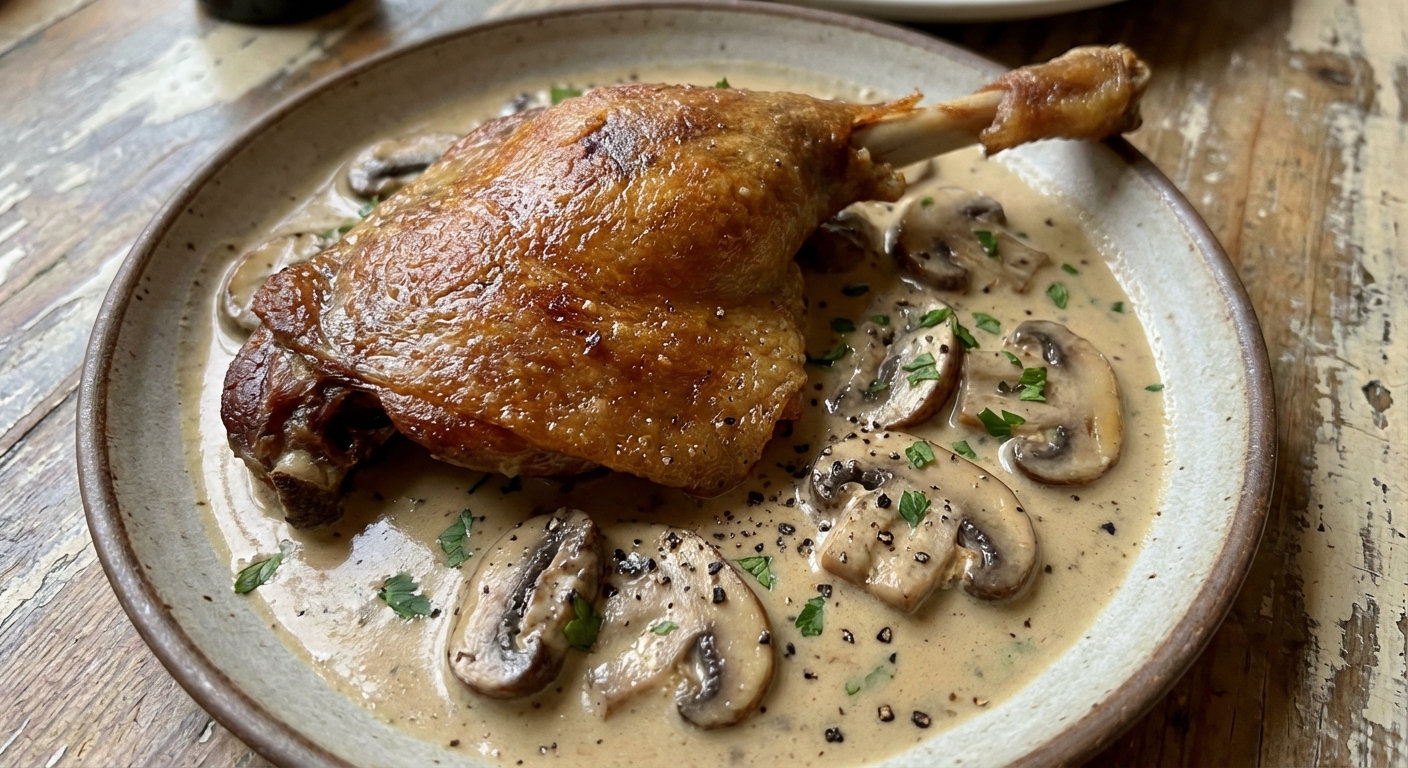
A close-up of a duck leg with crisp golden skin resting in a creamy sauce with sliced mushrooms

Why It Works

  • Crispy skin without deep frying: Starting cold and rendering slowly gives you crisp edges and a ton of flavorful duck fat for later.
  • Tender, braised duck: Giving the legs real simmer time makes the meat rich and pull-apart, not chewy.
  • A sauce that builds itself: Mushrooms soak up the browned bits, wine lifts the fond, and cream turns it into a glossy, spoonable situation.
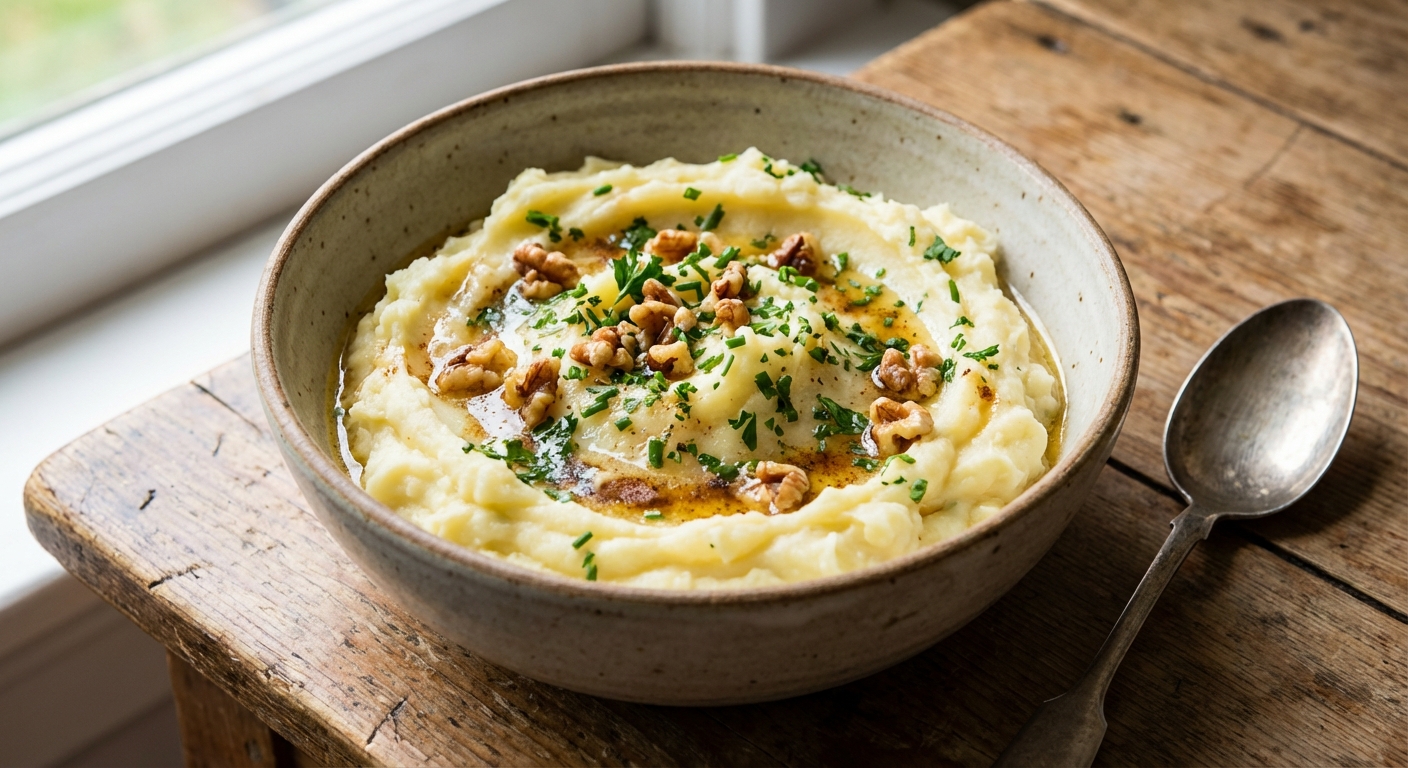
  • Perfect with cozy carbs: Mashed potatoes, polenta, noodles, or crusty bread all become sauce delivery systems, which is the whole point.

Pairs Well With

Storage Tips

Refrigerate: Store duck and sauce in an airtight container for up to 3 days. If you can, keep the duck legs slightly elevated above the sauce so the skin stays less soggy.

Reheat (best method): Warm the sauce gently in a skillet over low heat with a splash of broth, water, or cream. Re-crisp the duck skin in a separate skillet over medium-low heat for 3 to 6 minutes, then spoon sauce around it.

Microwave method: Totally allowed. Just know the skin will soften. Heat in 30-second bursts and stir the sauce between bursts so it stays smooth.

Freeze: Cream sauces can split a bit when frozen. If you must freeze, freeze the duck and sauce for up to 1 month, thaw overnight in the fridge, then reheat very gently while whisking. A spoonful of fresh cream at the end helps bring it back.

Common Questions

What kind of duck should I buy for this?

Duck legs (thigh and drumstick attached) are the easiest and most forgiving. They stay juicy and handle simmering like champs. If you only find duck breasts, you can still do it, but cook them to medium-rare and make the sauce separately.

Do I have to use wine?

No. Swap the wine with 2/3 cup low-sodium chicken stock. Since you are adding extra stock (and losing wine acidity), plan on adding a little more brightness at the end: use the recipe’s 1 to 2 teaspoons lemon juice plus an extra 1 to 2 teaspoons if needed, or finish with 1 teaspoon white wine vinegar. Go by taste. You want that little pop of acid to keep the sauce from tasting flat.

My sauce looks thin. How do I fix it?

Let it simmer a few minutes longer, uncovered. If you are impatient (I get it), whisk 1 teaspoon cornstarch with 1 tablespoon cold water, then stir it into the simmering sauce and cook 1 to 2 minutes.

My sauce broke or looks grainy. Can I save it?

Usually, yes. Turn the heat to low and whisk in a splash of cream. If it still looks rough, pull it off the heat and whisk vigorously. Keeping the simmer gentle is the main move.

What do I do with the leftover duck fat?

Strain it through a fine mesh sieve into a jar. Refrigerate up to 3 months. Use it for roasted potatoes, sautéed greens, or frying eggs that taste like they are wearing a tuxedo.

The first time I cooked duck at home, I treated it like a fragile masterpiece and still managed to smoke up the kitchen. Classic. Now I do the opposite: I go slow, let the fat render, and then I actually give the legs time to get tender before I swirl in the cream. The result is always the same. Crispy edges, cozy carbs, and that moment where everyone gets suspiciously quiet at the table because they are too busy eating.