Why is my hollandaise thin?
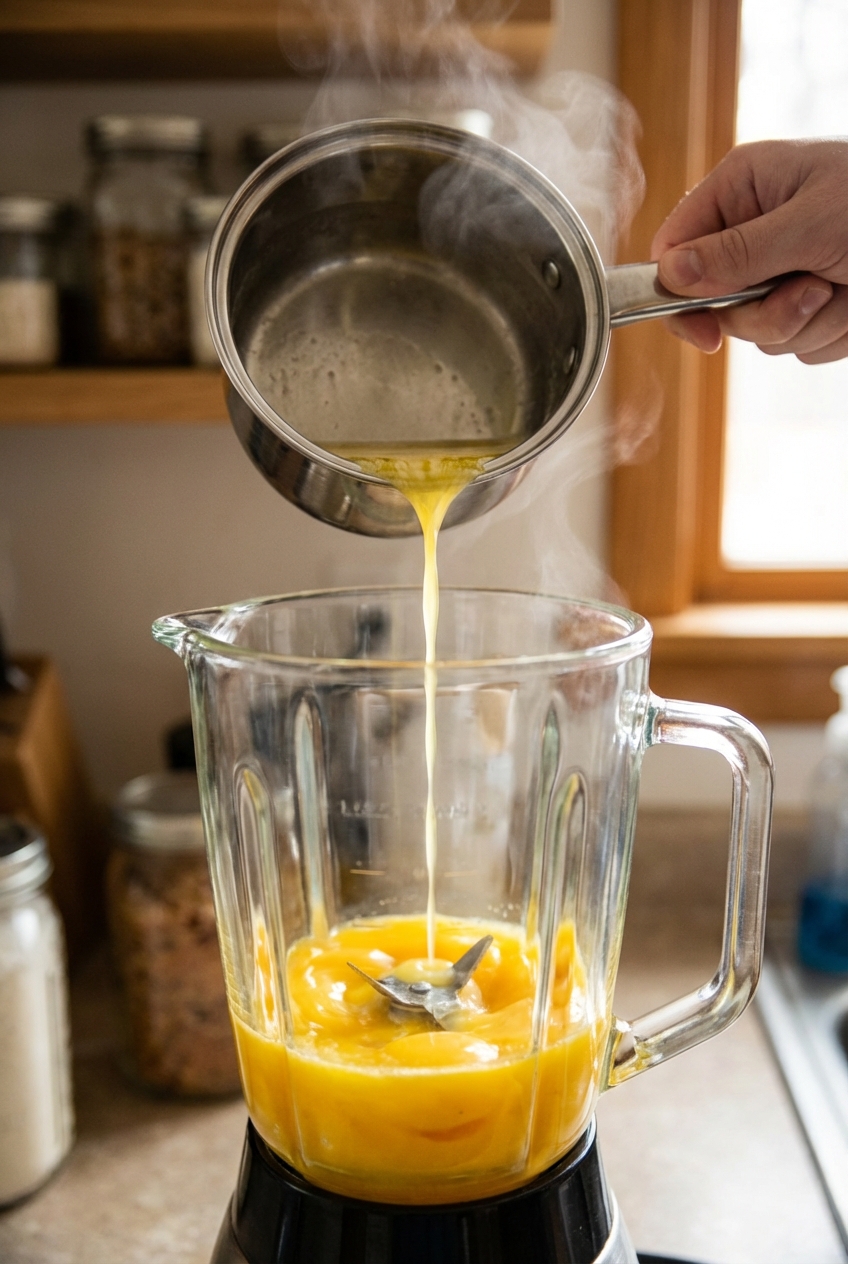
Usually one of two things happened: the butter was not hot enough, or the blender speed was too low to fully emulsify. Aim for butter that is hot and foamy (about 160 to 180°F if you like numbers), and blend on medium-high to high while you stream it in. If it’s still thin, keep blending for 10 to 20 seconds. If you need a little help, blend in 1 teaspoon warm water to encourage it to come together.
Why did it break or look greasy?
With the blender method, the most common culprit is pouring the butter too fast or dumping it in all at once. The fix is usually simple: blend in 1 teaspoon warm water at a time until it snaps back into a smooth, glossy sauce. If it’s really broken, start with 1 egg yolk in the blender, then slowly stream the broken sauce into it to re-emulsify.
Can I make hollandaise without a blender?
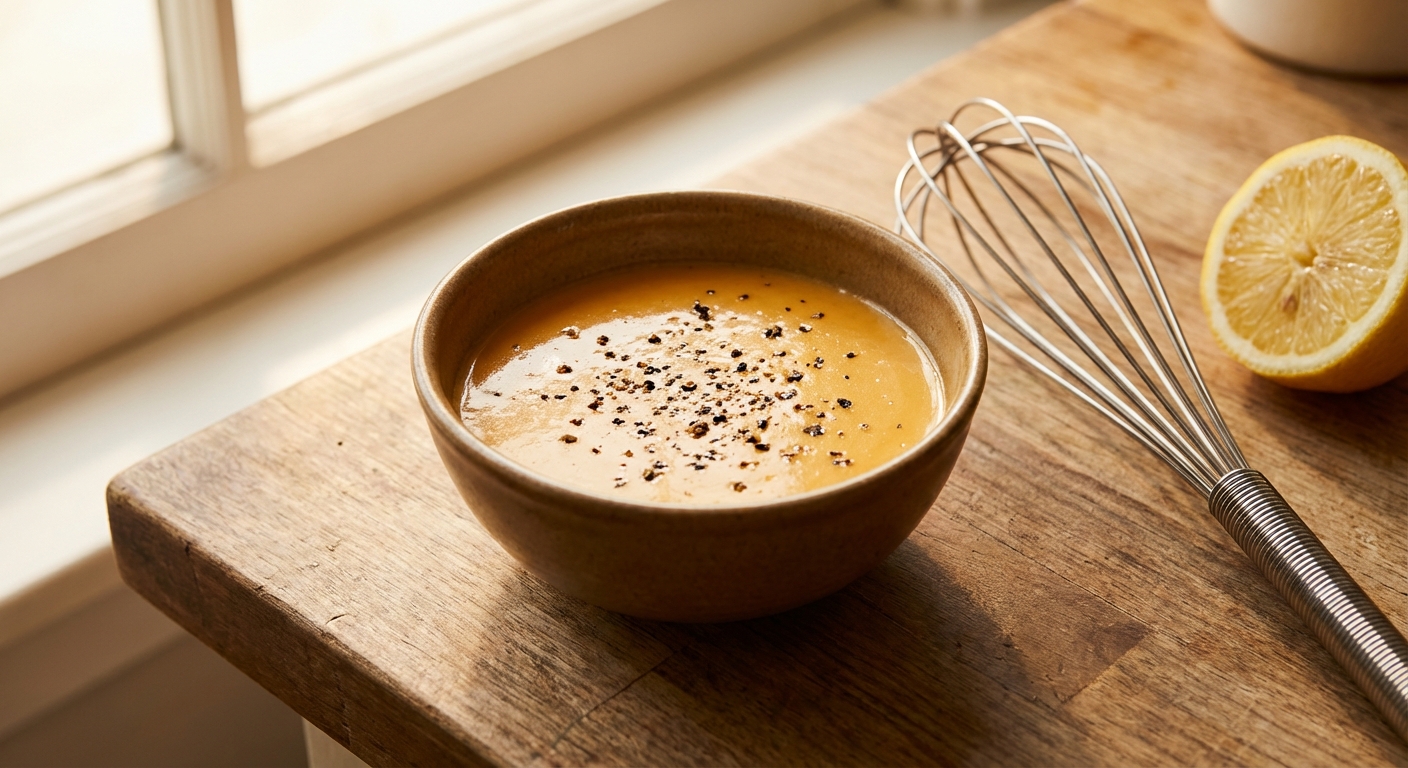
Yes. Use a bowl over barely simmering water and whisk constantly while slowly adding warm butter. The blender method is just faster and easier for most home kitchens.
Is it safe to eat hollandaise?
This method uses hot butter to warm the yolks, but it is not a guarantee of pasteurization. Classic hollandaise often does not reliably reach pasteurization temperatures unless carefully controlled. If you are serving someone who is pregnant, immunocompromised, or very young, consider using pasteurized eggs to reduce risk and serve immediately.
Can I use salted butter?
Absolutely. Just go lighter on added salt and taste at the end.
What makes this one “rustic”?
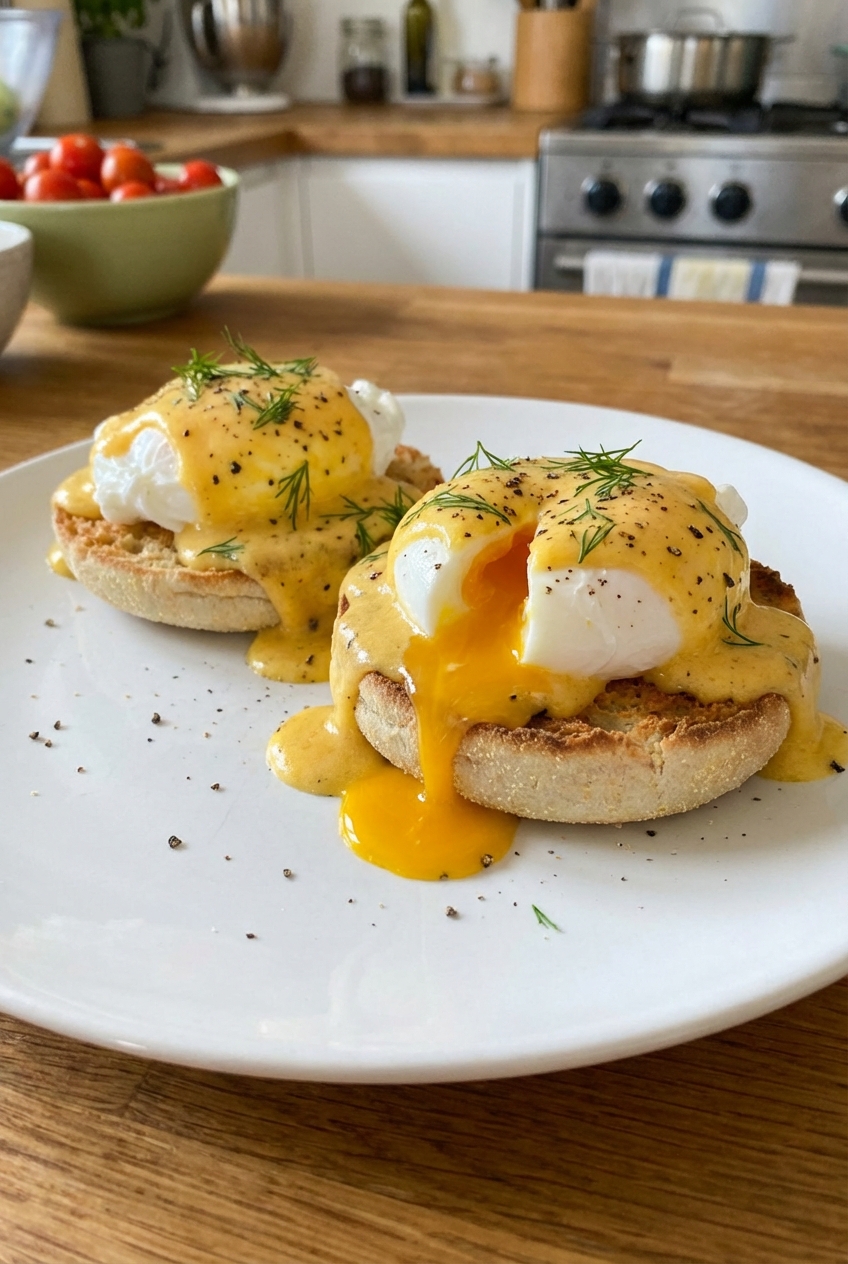
Dijon, black pepper, and a touch of cayenne give it a slightly more assertive, speckled look and a bolder flavor. It feels homemade in the best way.