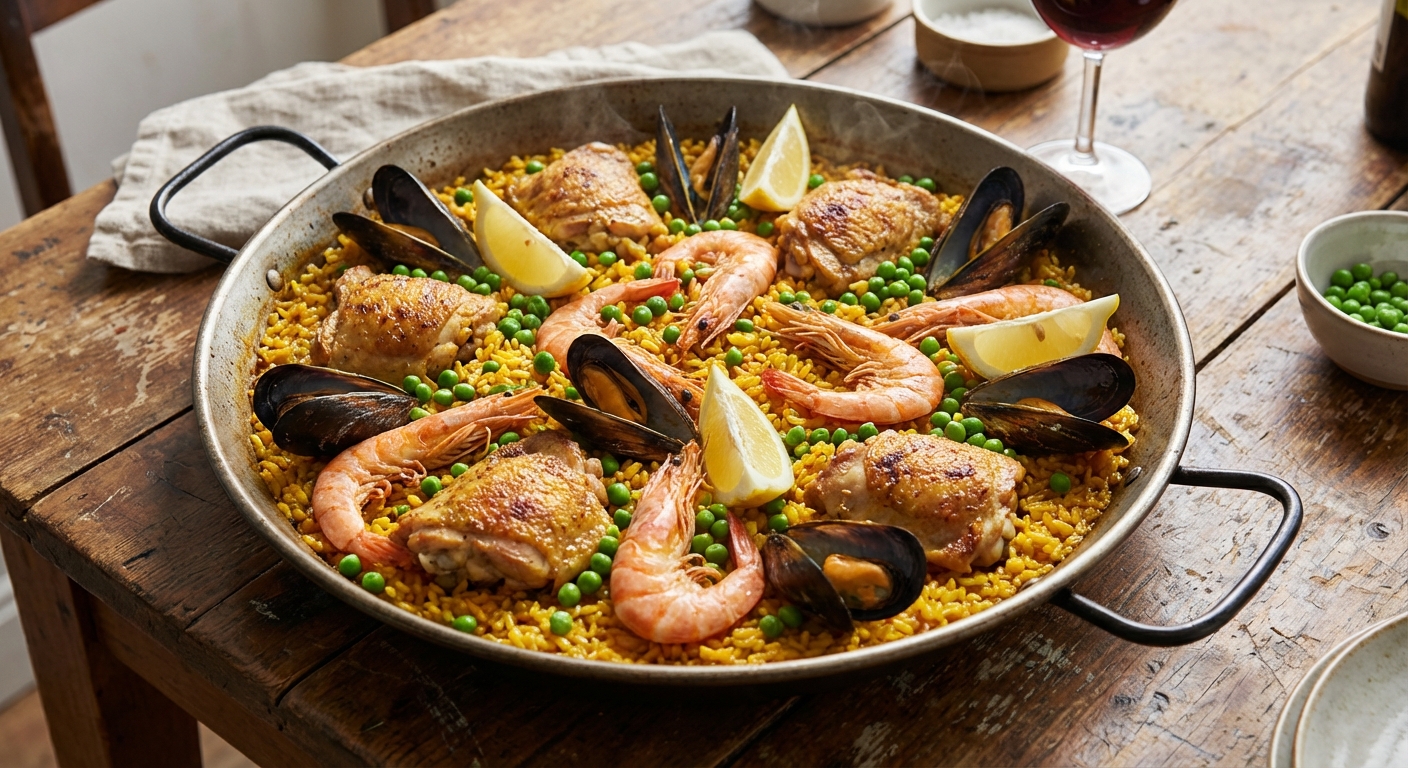
Cook an authentic, flavor-packed classic paella with saffron rice, juicy chicken or seafood, and smoky paprika. Follow easy steps for a crisp socarrat every ...
When people say sangria, a lot of us picture something sugary and neon that tastes like a juice box with a wine problem. This is not that.
This wholesome sangria recipe is rustic and homestyle, meaning it tastes like real fruit, real wine, and a little bit of spice. It is bright and citrusy, lightly sweet, and seriously forgiving. Use what you have. Taste as you go. If your fruit slices are uneven, congratulations, you are doing it correctly.
It is the kind of pitcher drink that fits right in at a backyard dinner, a game night, or that random Tuesday when you want dinner to feel like a small vacation. Bonus: it gets better after a nap in the fridge, which is the energy I aspire to.